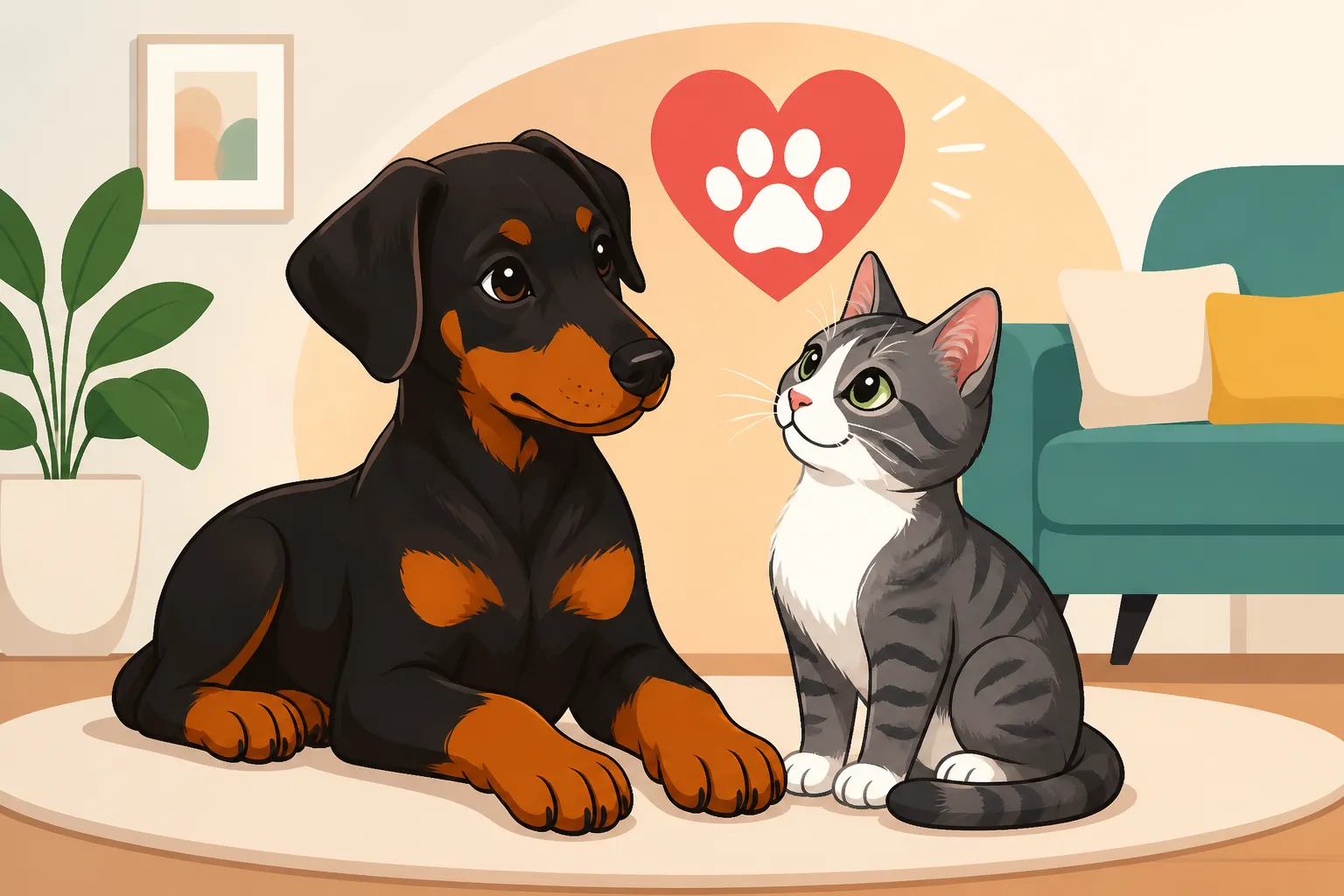
Raising a Doberman Puppy With a Cat
Bringing a high-energy Doberman puppy into a home that already has a resident cat can feel like setting up a high-stakes obstacle course for everyone involved. Owners often worry about their Doberman’s natural prey drive and the cat's safety, leading to immense stress and anxiety about whether peace can ever truly be achieved. This guide is here to walk you through the careful, patient steps to foster a calm, respectful, and hopefully even affectionate relationship between your new Doberman puppy and your feline friend.
Understanding Doberman Instincts and Cat Behavior
Before you even think about letting them share the same air, it’s crucial to understand the inherent dynamics at play. Dobermans are intelligent, powerful dogs bred for guarding, and they often come with a strong chase instinct. Cats, on the other hand, are masters of evasion but also highly sensitive to perceived threats. Ignoring these fundamental truths will set everyone up for failure.
The Doberman's Prey Drive and Energy Levels
Let's be real, Dobermans are athletes. They’re fast, agile, and possess a genetic predisposition to chase. This isn't a flaw; it's part of their breed history and what makes them such dynamic companions. For a Doberman puppy, everything new is an exciting game, and a fast-moving, fluffy cat can easily trigger that chase instinct. It's not about malice; it's about instinct. This is why managing their energy and impulse control is paramount. A bored or under-exercised Doberman puppy is far more likely to see a darting cat as a fun new toy to pursue. You really need to provide outlets for their boundless energy, whether through structured play, long walks, or mental stimulation, before you expect them to coexist peacefully. Living With a Doberman That Follows You Everywhere means they'll be keenly aware of the cat's movements, making proper management even more important.
Moreover, Doberman puppies are often mouthy as they explore the world, a stage sometimes called Doberman Puppy Biting and Adolescent Mouthing. While they learn bite inhibition with humans and other dogs, a cat might not appreciate a playful nip, even a soft one. This emphasizes the need for careful supervision and teaching your Doberman puppy what is and isn't appropriate interaction. Understanding that their size and strength, even as puppies, can accidentally harm a cat is key to preventing unfortunate incidents.
Reading Your Cat's Stress Signals
Your cat is probably already sending you signals, loud and clear, about how they feel about this new intruder. Are their ears flattened? Is their tail tucked tight or lashing? Are they hissing, growling, or trying to make themselves small and invisible? These are all indicators of fear and stress. A cat that feels trapped or overly threatened might lash out, potentially injuring your Doberman puppy, which could then create a negative association for the dog.
It's also important to recognize more subtle signs of stress. A cat that suddenly starts urinating outside the litter box, over-grooming, or becoming withdrawn might be silently suffering. You want to make sure your cat feels secure and has an escape route at all times. A frightened cat can turn an otherwise well-meaning Doberman puppy into a "target" if the cat's fear triggers the dog's prey drive. Their comfort and safety are just as crucial as the Doberman's training.
Preparing Your Home for a Multi-Species Introduction
You can't just open the door and hope for the best. A successful introduction requires thoughtful preparation of your home environment. This means creating distinct zones, investing in some key tools, and setting up the physical space to facilitate positive interactions while preventing negative ones.
Creating Safe Havens for Your Cat
Your cat needs a sanctuary, an inviolable space where the Doberman puppy absolutely cannot go. This might involve setting up a "cat room" with a baby gate that has a small cat-sized opening, or simply installing a cat door in a laundry room or spare bedroom. Vertical space is your cat's best friend. Think tall cat trees, wall-mounted shelves, or even just leaving clear space on top of bookcases or dressers. These high vantage points allow your cat to observe the puppy from a safe distance, making them feel more secure and less threatened.
Ensure all resources for your cat—food, water, litter boxes—are located in these Doberman-free zones or on elevated surfaces the puppy cannot reach. Imagine trying to eat dinner with a boisterous puppy constantly investigating your plate; that's how your cat feels. Providing peace and privacy for their basic needs is non-negotiable. This prevents resource guarding issues from the Doberman and allows the cat to relax.
Essential Tools for Managing Introductions
Having the right equipment on hand will make this process much smoother and safer. You'll want to invest in sturdy pet gates, often called "baby gates," to control the Doberman puppy's access to certain areas. These are excellent for creating visual but no-contact introductions. A long leash (six feet is a good starting point) and a comfortable harness for your Doberman puppy are also essential for controlled, supervised interactions. Avoid using a collar for leash control during introductions, as a puppy pulling on its neck can cause discomfort and make them more agitated. A harness distributes the pressure more evenly and gives you better control.
Consider interactive puzzle toys or long-lasting chews that can keep your Doberman puppy occupied and focused during initial shared-space times. Products like KONGs or durable chew toys are readily available on platforms like Amazon and can be invaluable. For structured training guidance, especially for a new puppy, programs like BAXTER & Bella offer fantastic online resources that cover obedience and impulse control, which are absolutely critical for fostering a peaceful multi-pet home. Choosing a Crate for a Doberman is also a good idea, as a crate can be a safe, quiet space for the puppy when unsupervised, preventing accidental encounters.
Here’s a quick overview of essential tools:
| Tool | Purpose | Where to Use |
|---|---|---|
| Pet Gates | Physically separate spaces; allow visual contact; create cat-only zones. | Doorways, bottom/top of stairs, to block off sections of rooms. |
| Long Leash & Harness | Maintain control during supervised introductions; prevent chasing. | During all initial supervised interactions with the cat. |
| High-Value Treats | Reward calm behavior from both pets; create positive associations. | When either pet is calm and coexisting, even in separate rooms. |
| Interactive Puzzle Toys | Keep Doberman puppy mentally engaged and distracted during initial "together" times. | When the Doberman puppy is in the same room as the cat (controlled separation). |
| Cat Tree/Shelves | Provide safe, elevated escape routes and observation points for the cat. | Living room, common areas where interactions might occur. |
| Crate | Safe containment for the Doberman puppy when unsupervised; prevents accidental encounters. | Puppy's designated sleeping area, or when owner is busy. |
The Step-by-Step Introduction Process
This is where patience becomes your superpower. You cannot rush this. Every step needs to be taken slowly, ensuring both your Doberman puppy and your cat remain calm and comfortable. Pushing too fast will only create fear, stress, and potentially lasting negative associations.
Scent Swapping and Sight Without Contact
Before they ever see each other, introduce their scents. Take a blanket or towel the Doberman puppy has slept on and place it in an area your cat frequents, perhaps near their food bowl or sleeping spot. Do the same with a blanket or toy from the cat for the Doberman puppy. Observe their reactions. Are they curious, relaxed, or showing signs of fear or aggression? This helps them get used to each other's presence indirectly. Next, you can move to sight without contact. Use a sturdy pet gate to separate them in a common doorway, allowing them to see each other through a barrier. Keep these sessions short and positive.
During these sessions, reward both animals for calm behavior. If your Doberman puppy sits quietly and observes the cat without barking or lunging, offer a high-value treat. If your cat remains relaxed on a perch or continues to groom themselves, toss them a treat. The goal is to create positive associations with each other's presence. Remember, they don't need to interact directly yet; just being aware of each other in a neutral, calm way is the first victory. This early positive conditioning is vital, and resources like BAXTER & Bella's online puppy courses often emphasize these foundational steps.
Supervised, Controlled Encounters
Once they are both calm and showing no stress during the "sight without contact" phase, you can move to supervised, leashed encounters. Keep your Doberman puppy on a leash and harness, ensuring you have full control. Start in a large, neutral room with plenty of escape routes for the cat, including those precious vertical spaces. Let the cat approach on their own terms. Never force the cat to interact, and never let the Doberman puppy chase the cat. The moment the Doberman shows too much interest, redirect their attention with a "leave it" command or a toy.
These sessions should be very short, perhaps only 5-10 minutes, and always end on a positive note. If either animal shows signs of stress, end the session immediately. The aim here is still not direct play, but rather teaching the Doberman puppy that the cat is not a plaything or prey. Use high-value treats to reward your Doberman puppy for any calm, neutral behavior towards the cat. You'll want to teach your Doberman Teaching a Doberman to Wait for Permission for many things, and this applies directly to cat interactions. If your Doberman puppy is overly excited, a puzzle toy from Amazon filled with treats can help redirect their focus.
Reinforcing Calm Behavior
Consistency is everything. Every time your Doberman puppy sees the cat and remains calm, reward them. Use verbal praise, gentle pets, or small, delicious treats. If the puppy fixates on the cat, immediately redirect their attention to a training exercise, a toy, or a chew. The goal is to teach the Doberman that good things happen when the cat is around, but only when they are behaving appropriately. Never punish the Doberman puppy for simply looking at the cat; instead, interrupt any escalating behavior and redirect it.
Likewise, ensure your cat has positive experiences during these interactions. Offer them treats, playtime with a favorite toy, or just a quiet cuddle session in their safe space after an encounter. The more both animals associate positive outcomes with the other's presence, the faster they will learn to tolerate, and perhaps even enjoy, each other. Remember, the goal is not necessarily for them to become best friends, but to coexist without stress or danger. It's a journey, not a sprint. Why a Clever Doberman Is Harder to Train means they'll learn fast, but you have to be sharper still.
Ongoing Management and Training for Harmony
Even after successful introductions, the work isn't over. Maintaining peace in a multi-species home with a Doberman often requires ongoing management, consistent training, and sometimes, a little extra help. This breed needs consistent guidance throughout its life.
Maintaining Separate Spaces and Routines
Even when your Doberman puppy and cat seem to be getting along, it's wise to continue maintaining separate spaces and routines, especially when you're not home to supervise. This means ensuring your cat still has access to their safe zones at all times. Feed them in separate rooms or at different times to prevent any potential resource guarding from the Doberman. If your Doberman puppy tends to A Doberman That Chases the Cat, it's important to keep their interactions strictly managed until you are confident in their training.
Consider crating your Doberman puppy or keeping them in a separate, secure room when you leave the house, at least initially. This prevents any unsupervised mishaps that could undo all your hard work and allows both animals a break from each other. Over time, as trust and good habits develop, you might loosen these restrictions, but always prioritize safety. This breed can also develop A Doberman That Cannot Cope When You Go Out, so ensuring they have positive alone time, whether in a crate or a safe room, is good for their overall well-being and prevents them from channeling anxiety onto the cat.
Continued Training and Socialization
Training doesn't stop once the puppy phase is over. Your Doberman will benefit from consistent obedience training throughout their life. Focus on commands like "leave it," "stay," "come," and a solid "place" command. These are invaluable for managing interactions with your cat. Continue to reinforce good behavior around the cat, even if it's just a calm co-existence. Enroll in advanced obedience classes or explore scent work and agility to keep your Training a Doberman That Is Smarter Than You Expect mentally stimulated. A tired Doberman is a good Doberman, and a mentally engaged Doberman is less likely to fixate on the cat.
Socialization is also ongoing. While your Doberman puppy needs to learn how to behave around your cat, they also need exposure to other dogs, people, and environments. This builds confidence and helps them be a well-adjusted, less reactive dog overall, which indirectly benefits their interactions at home. Remember that The Sixteen Weeks That Set a Doberman Up are crucial for early socialization, but it's a lifelong endeavor.
When to Seek Professional Help
Sometimes, despite your best efforts, things don't go smoothly. If you're seeing persistent chasing, aggression, extreme fear from the cat, or if you simply feel overwhelmed, it's absolutely okay—and often necessary—to seek professional help. A certified professional dog trainer or a veterinary behaviorist can assess your specific situation, identify triggers, and develop a tailored plan.
They can offer strategies for behavior modification, provide guidance on environmental management, and help you understand the subtle cues you might be missing. Don't wait until a serious incident occurs; early intervention is always best. A professional can provide an objective perspective and tools you might not have considered, helping you achieve a harmonious household for everyone, furry or otherwise.
Disclaimer
This article is for general informational purposes only and does not constitute professional advice. Laws, prices and regulations vary by location and change over time. Consult a qualified professional for guidance on your specific situation.