Obedience Titles a Doberman Can Earn
It can be incredibly frustrating when you know your Doberman is brilliant, but sometimes that intelligence seems to translate into a knack for outsmarting you or finding creative ways to ignore commands. You see other dogs performing amazing feats of obedience, and you wonder if your clever but often stubborn Doberman could ever reach those heights. This guide is here to shed light on the exciting world of competitive obedience and the various titles your Doberman can earn, proving to yourself and the world just how capable and intelligent these magnificent dogs truly are when their minds are properly engaged.
The Lure of Obedience Titles for Your Doberman
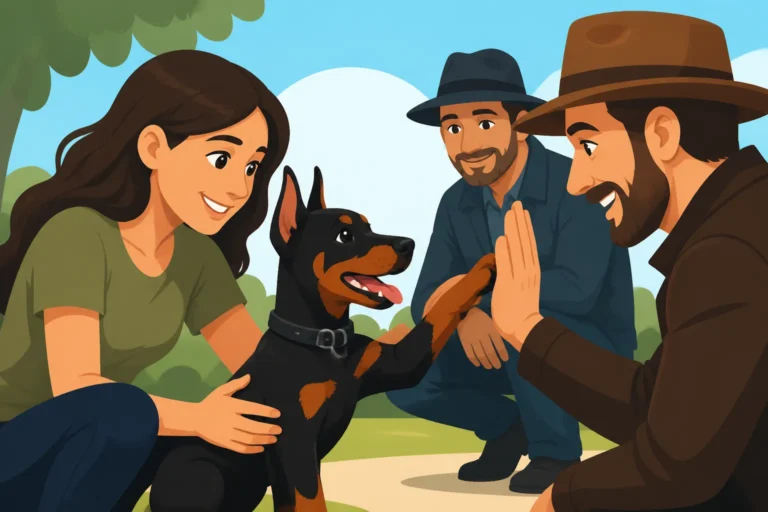
Dobermans are renowned for their sharp minds and their intense desire to work alongside their human companions. It's a breed that thrives on having a job, and competitive obedience offers a fantastic outlet for their mental and physical energy. Pursuing obedience titles isn't just about earning ribbons; it's a journey that deepens your bond, hones your communication, and transforms your Doberman into an incredibly well-mannered and responsive dog.
More Than Just Bragging Rights: The Benefits of Training
Let's be honest, seeing that ribbon or certificate with your Doberman's name on it is a proud moment. But the benefits of competitive obedience training go far beyond the accolades. For starters, it provides unparalleled mental stimulation, which is crucial for a breed as intelligent as the Doberman. A bored Doberman can quickly become a destructive Doberman, finding their own jobs around the house that you might not appreciate. This kind of structured work gives them a constructive purpose.
Beyond that, the rigorous training required to earn titles instills a level of precision and reliability in your Doberman's responses that is invaluable in everyday life. Imagine a dog that heels perfectly on a loose leash through a crowded park, comes instantly when called from across a field, or calmly stays in position while you chat with a neighbor. These are the practical outcomes of competitive obedience. It builds confidence in your dog, knowing what's expected of them, and it builds your confidence as an owner, knowing you have a reliable partner by your side. It's a testament to the powerful connection you've forged and helps channel their inherent smarts. If you've ever felt like you're constantly trying to keep up with their quick wit, this structured engagement can be a game-changer. It’s about building a solid foundation where your Doberman truly understands and respects your guidance, rather than constantly trying to figure out what they can get away with. Think about how much happier and less anxious your dog will be when they have a clear understanding of boundaries and expectations. You’ll find that a Doberman that is constantly learning and being challenged mentally is a much more relaxed and enjoyable companion at home. For more on their intelligence, check out Training a Doberman That Is Smarter Than You Expect.
Understanding the Competitive Obedience Landscape
Competitive obedience events are typically sanctioned by national kennel clubs, like the American Kennel Club (AKC) in the United States, or various independent organizations. These events involve a series of exercises that test a dog's ability to perform specific commands accurately and precisely. Dogs are judged on their performance, and once they accumulate enough "qualifying scores" (usually three) under different judges, they earn a title.
There are different levels, each building on the previous one, and designed to progressively challenge both dog and handler. The atmosphere at these trials is usually supportive, with fellow competitors often cheering each other on. It's a wonderful community where people share a common passion for training and celebrating their dogs' achievements. It’s a space where the unique drive and focus of a Doberman can truly shine, contrasting sharply with the sometimes unfair public perception of the breed. Showing off a well-trained Doberman helps dispel myths and highlights their true nature as intelligent, capable companions.
Navigating the Standard Obedience Titling Levels
The journey through competitive obedience typically starts with the introductory levels and progresses to more advanced stages, each demanding a higher degree of precision, responsiveness, and teamwork. For a Doberman, known for their focus and drive, these challenges often feel like a natural fit.
Companion Dog (CD) – The Foundation
The Companion Dog (CD) title is the first step in the traditional obedience ladder. This level focuses on foundational exercises that demonstrate a dog's basic manners and willingness to work with their handler on and off-leash. It might sound simple, but achieving the precision required for a qualifying score takes considerable effort.
The exercises typically include:
- Heel On Leash: The dog walks happily and precisely at the handler's left side, matching their pace and stopping when they stop, without pulling or lagging.
- Stand for Examination: The dog holds a standing position while the judge approaches and briefly touches them, simulating a vet exam. This tests their composure and acceptance of strangers.
- Heel Free (Off Leash): The same heeling exercise, but without the leash. This truly showcases the bond and attention the Doberman has for its handler.
- Recall (Come): The dog comes promptly and directly to the handler when called, sitting in front of them.
- Long Sit: The dog remains in a sitting position, in a group of other dogs, for a specified period (usually 1 minute), while the handler walks across the ring.
- Long Down: Similar to the long sit, but the dog remains in a down position for a longer period (usually 3 minutes) with the handler again across the ring.
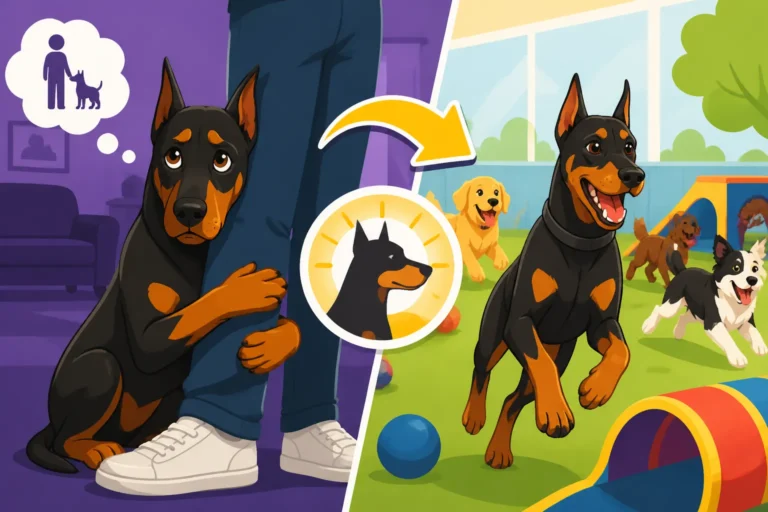
For Dobermans, who can be quite clingy or "Velcro dogs," the long sits and downs can sometimes be a test of their independence and trust. It's about teaching them that even when you're not right beside them, they still need to hold their position and trust that you'll return. Many Dobermans excel at the heeling, as they love to be close to their person. Developing rock-solid Leash Manners for an Eighty-Pound Doberman is absolutely essential here, and you'll find that the skills honed for the CD title translate directly into a much more pleasant experience walking your powerful Doberman in everyday situations. This also reinforces the skill of Teaching a Doberman to Settle in Another Room, a practical behavior that benefits both you and your Doberman at home.
Companion Dog Excellent (CDX) – Stepping Up the Challenge
Once your Doberman has earned their CD title, the next step is the Companion Dog Excellent (CDX). This level introduces more complex exercises, demanding greater focus, control, and a broader skill set. This is where Dobermans often start to truly shine, as their natural athleticism and drive come into play.
Key exercises at the CDX level often include:
- Heel Free and Figure Eight: The off-leash heeling is repeated, but now includes a figure-eight pattern around two stationary stewards, requiring even more precision and attention.
- Drop on Recall: The dog is recalled, but halfway back to the handler, they are given a command to drop into a down position, then recalled again. This tests immediate response and impulse control.
- Retrieve on Flat: The handler throws a dumbbell, and the dog retrieves it promptly and presents it nicely to the handler.
- Retrieve Over High Jump: The dog must clear a jump, retrieve a dumbbell on the other side, and then jump back over with the dumbbell, returning it to the handler.
- Broad Jump: The dog must clear a series of low hurdles (the broad jump) from a sitting position on command.
- Out-of-Sight Stays: The long sit and long down exercises are repeated, but this time the handler leaves the ring completely, testing the dog's trust and reliability to stay for an extended period without their handler in view.
The retrieving and jumping exercises are fantastic for Dobermans, many of whom have a natural love for fetching and possess impressive agility. The "out-of-sight" stays are a true test of the Doberman's focus and confidence. It's not uncommon for a Doberman to look for their handler, but through consistent, positive training, they learn to trust the process and hold their position. These exercises demand not just physical capability, but a high degree of mental fortitude, which Dobermans are certainly capable of mastering.
Utility Dog (UD) – The Pinnacle of Traditional Obedience
The Utility Dog (UD) title represents the highest level of traditional obedience competition. This is where the subtleties of communication, trust, and advanced problem-solving truly come to the forefront. Earning a UD is a significant achievement and a testament to the incredible bond and training prowess of a Doberman and their handler.
Exercises at the UD level are intricate and require a Doberman to use their intelligence and scenting abilities:
- Signal Exercises: The dog performs a series of commands (heel, stand, down, sit, come) solely based on hand signals from the handler, without any verbal cues. This highlights the non-verbal communication between dog and handler.
- Scent Discrimination: The handler's scent is placed on one of several metal or leather articles. The dog must find the correct article, retrieve it, and bring it back to the handler. This truly puts their keen nose to work.
- Directed Retrieve: The handler points to one of several gloves placed in the ring, and the dog must run to only that glove, retrieve it, and return.
- Directed Jumping: The dog is sent to a specific spot in the ring and, on command, must jump over either a high jump or a bar jump, then return to the handler.
- Group Stays (Out of Sight): The advanced versions of the long sit and long down from CDX are repeated, with even longer durations and the handler out of sight for the entire duration.
Scent discrimination and directed retrieves are particularly fascinating for Dobermans, appealing to their natural intelligence and often their Doberman Guarding Instinct and Where It Tips Over if channeled constructively. It's not about aggression here, but about their innate drive to perform a task accurately and bring an item back to their person. These exercises demonstrate an extraordinary level of control and understanding, far beyond simple commands, showcasing the Doberman's capacity for complex thought and problem-solving. This level of training also helps build immense self-control, crucial for a powerful and intelligent breed.
| Obedience Title | Key Skills Tested | Duration of Stays (Handler in/out of sight) | Key Equipment |
|---|---|---|---|
| Companion Dog (CD) | Basic on/off leash heeling, recall, stand for exam | In sight: Sit 1 min, Down 3 min | Leash, Dumbbell |
| Companion Dog Exc. (CDX) | Advanced off-leash heeling, retrieves over jumps, broad jump | Out of sight: Sit 3 min, Down 5 min | Dumbbell, Jumps |
| Utility Dog (UD) | Hand signals, scent discrimination, directed retrieve/jumps | Out of sight: Sit 5 min, Down 7 min | Scent articles, Jumps |
Beyond the Traditional: Advanced and Specialized Obedience
For those Doberman owners who find the competitive obedience bug has truly bitten them, there are even more advanced and specialized titles to pursue. These offer continuous challenges and cater to different styles of training and interests, ensuring that a Doberman's active mind is never left wanting.
Graduate Novice, Graduate Open, Versatility and Obedience Grand Master (OGM)
Once a Doberman achieves their Utility Dog title, the journey doesn't have to end. There are further titles that build upon these foundations, such as Graduate Novice and Graduate Open, which often include optional exercises or variations on existing ones. These are fantastic for continuing to refine skills and keep the training fresh.
For the truly dedicated, the Obedience Master (OM) title requires a dog to qualify in both Open B and Utility B classes a set number of times. The ultimate achievement in competitive obedience is the Obedience Grand Master (OGM), which requires a significant number of scores at the highest levels. These titles are not easily won and represent years of consistent, dedicated training and an incredible partnership between handler and Doberman. They are for those who want to push the boundaries of what their Doberman can achieve and enjoy the journey of perpetual learning and refinement.
Rally Obedience: A More Dynamic Approach
If the strict precision of traditional obedience seems a bit daunting, or you're looking for something that allows a little more interaction and fun, Rally Obedience might be the perfect fit for your Doberman. Rally is often described as a hybrid between traditional obedience and agility, combining elements of both in a dynamic, flowing course.
Instead of performing exercises on a judge's command, handler and dog navigate a course of numbered stations. At each station, there's a sign describing an exercise to perform, such as "Spiral Right – Dog On Outside," "Send Over Jump," or "Figure 8." Handlers are encouraged to talk to and encourage their dogs throughout the course, which makes it a much more interactive and lively sport. This constant communication and movement make it highly engaging for Dobermans who love to be connected to their person.
Rally offers different levels, including:
- Novice (RN): All exercises performed on-leash.
- Advanced (RA): Off-leash exercises, includes a jump.
- Excellent (RE): More challenging off-leash exercises, two jumps.
- Master (RM): The highest level, with complex commands and multiple turns.
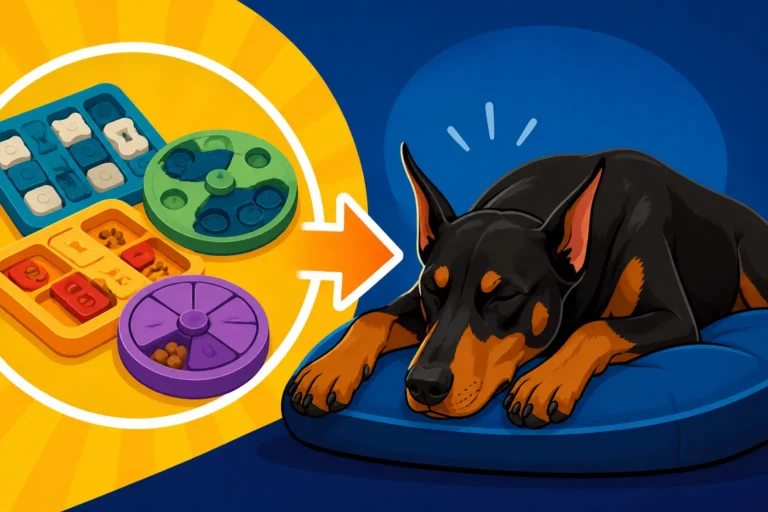
The relaxed atmosphere and continuous communication make Rally a fantastic way to engage your Doberman's mind and body without the intense pressure of traditional obedience. It's a great outlet for their energy and intelligence, a truly fun way to maintain their sharpness and focus, much like solving Puzzle Work That Actually Tires a Doberman. Many owners find that Rally helps build confidence in both dog and handler, creating a fantastic foundation for other dog sports or simply a more harmonious daily life. For those looking for resources to start their rally journey or simply build better obedience at home, online platforms like BAXTER & Bella offer comprehensive training programs that can guide you through the initial steps of foundation work, making these advanced pursuits feel much more accessible.
Beginner Novice & Preferred Classes
For those just dipping their toes into competitive obedience, or for Dobermans (or handlers!) who might need a slightly less demanding introduction, many organizations offer Beginner Novice (BN) titles. This class is designed to be a stepping stone, often including simpler versions of the CD exercises, with some allowances for leash handling and a generally more forgiving environment. It's an excellent way to introduce your Doberman to the trial setting and gain confidence before moving onto the more rigorous CD level.
Additionally, "Preferred" classes (e.g., Preferred Novice, Preferred Open, Preferred Utility) are often available. These classes offer modified exercises or slightly lower scoring requirements, catering to older dogs, handlers with physical limitations, or dogs that might perform better under slightly different conditions. This ensures that the joy of competitive obedience is accessible to a wider range of Doberman teams, proving that age or minor physical challenges don't have to be a barrier to achievement.
Practical Steps for Your Doberman's Obedience Journey
Embarking on the journey to earn obedience titles with your Doberman is incredibly rewarding, but it does require dedication, consistency, and the right approach. Dobermans are highly intelligent and sensitive, so choosing your training methods wisely is paramount to success.
Finding the Right Training Partner
The most crucial step in preparing your Doberman for obedience titles is finding a qualified and experienced trainer. Look for someone who specializes in positive reinforcement and has a deep understanding of working with intelligent, sensitive breeds like Dobermans. A good trainer won't just teach your dog commands; they'll teach you how to effectively communicate with and motivate your Doberman.
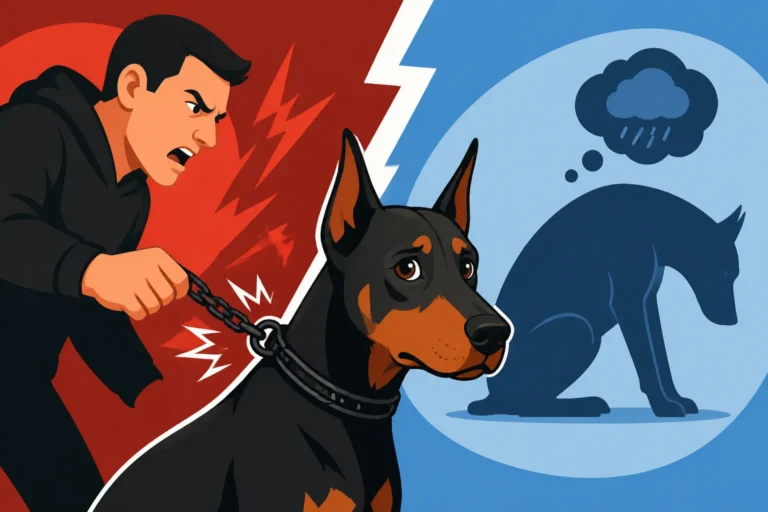
Avoid trainers who rely on harsh corrections, fear, or pain. Dobermans respond much better to clear, consistent, and positive methods that build trust and enthusiasm. A Doberman that is enjoying the work will offer their best performance. Seek out trainers or clubs that have experience specifically with Dobermans, as they understand the breed's unique drive and occasional stubbornness, knowing when to push and when to back off. It's vital to Find a Trainer Who Has Worked With Dobermans before, someone who understands their specific temperament and how to avoid things like Why Yelling Shuts a Doberman Down. Look for classes focused on competitive obedience, as these will specifically prepare you for the trial environment and the precision required for each exercise.
Essential Gear and Resources
You don't need a lot of fancy equipment to get started, but a few key items will make your training more effective:
- A Well-Fitting Collar and Leash: A sturdy 6-foot leash made of leather or nylon and a comfortable flat buckle collar are standard. For competitive work, many handlers use a slip lead or chain collar for optimal control and clear communication during heeling.
- High-Value Treats: Dobermans are often very food motivated. Experiment to find what your dog considers truly irresistible – small pieces of cooked chicken, cheese, or specialized training treats.
- A Comfortable Training Vest or Pouch: You'll need an easy way to carry treats and toys during training sessions.
- A Clicker (Optional but Recommended): A clicker can be a powerful tool for marking precise behaviors and helping your Doberman understand exactly what they're being rewarded for.
- Dumbbells and Jumps: As you progress to CDX and UD, you'll need the appropriate retrieve dumbbells (often wood or plastic) and practice jumps. You can often find durable, regulation-sized equipment on platforms like Amazon.
- Online Training Resources: For supplementary learning, many online courses and forums offer guidance. While not a replacement for in-person instruction, they can be excellent for troubleshooting or learning new techniques.
Remember, the goal is to equip yourself for effective training, not to break the bank. Start with the basics and acquire specialized gear as your Doberman progresses through the titles.
Consistency and Patience: The Doberman's Path to Success
Dobermans are quick learners, often picking up new commands in just a few repetitions. However, achieving the consistency and precision required for obedience titles demands ongoing practice. Short, frequent training sessions are far more effective than long, infrequent ones. Aim for multiple Five-Minute Sessions With a Young Doberman throughout the day, focusing on one or two exercises at a time. This keeps the training fun and prevents your Doberman from getting bored or mentally fatigued.
Celebrate every small success with enthusiastic praise, treats, or a quick game of tug – whatever your Doberman works best for. Knowing Whether a Doberman Works Better for Food or Tug is key to unlocking their full potential. Dobermans thrive on positive reinforcement and your approval. Patience is key, especially when introducing new, complex behaviors or dealing with a Doberman's adolescent phases where they might test boundaries. There will be good days and bad days, but consistent, kind, and clear communication will build an unbreakable bond and a highly successful obedience team. Remember, the journey itself, the daily training, and the growth of your partnership are just as rewarding as any title you might earn.
Disclaimer
This article is for general informational purposes only and does not constitute professional advice. Laws, prices and regulations vary by location and change over time. Consult a qualified professional for guidance on your specific situation.