Why Heavy Corrections Backfire on a Doberman
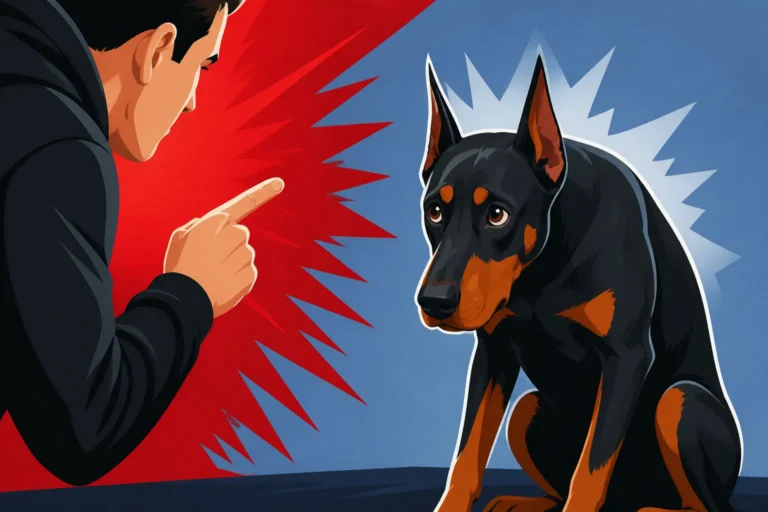
It's a common, heartbreaking scenario: you've got this magnificent Doberman, full of life and intelligence, but maybe also a bit stubborn or boisterous, and someone tells you that what they really need is a "firm hand" or "strong corrections." You try it, because you just want a well-behaved dog, but instead of compliance, you get a Doberman who seems to shrink, get more anxious, or even push back harder. This guide is here to unravel why heavy-handed training methods don't just fail with Dobermans, but actively sabotage the incredible bond and potential they possess, and how to approach their training with understanding and success.
Understanding the Doberman Temperament and Sensitivity
Dobermans are often seen as imposing, powerful dogs, and they certainly are. But beneath that sleek, muscular exterior lies a deeply sensitive and intelligent soul. Misunderstanding this core aspect of their temperament is where many training struggles begin, especially when it leads to the use of heavy corrections.
The Doberman's Innate Intelligence and Drive
Let's be real, Dobermans are smart. Like, really smart. They're often ranked among the most intelligent dog breeds, capable of learning new commands in just a few repetitions. This intelligence, while a huge asset, can sometimes be a double-edged sword. A Doberman who grasps concepts quickly might also get bored quickly if not challenged. They think, they observe, and they make connections, sometimes faster than we do. If a training method involves pain or fear, they won't just learn what to do, but they'll also associate that negative experience with you and the training environment. They're not robots; they're sentient beings actively processing their experiences. This is why attempting to apply strong physical or verbal corrections often leads to a Doberman becoming confused, frustrated, or even shutting down, rather than understanding what you want. They learn quickly, yes, but they also learn negative associations with alarming speed. Training a Doberman That Is Smarter Than You Expect discusses this in more detail.
When you're dealing with a Doberman, you're not just dealing with a dog that can follow commands; you're dealing with a strategic thinker. If they're being corrected harshly, they might figure out how to avoid the correction without actually learning the desired behavior. For example, a dog corrected for jumping on guests might learn to simply not jump when you are present, but the moment you're out of sight, the jumping might resume. Their drive isn't just about pleasing; it's also about figuring things out, and if the "solution" to a problem is to avoid punishment, they'll find that path.
Their Deep Bond and Desire to Please
If you've ever lived with a Doberman, you know the term "Velcro dog" isn't an exaggeration. They crave connection and are intensely loyal to their family. This deep bond means they truly want to be a part of your world and earn your approval. Their desire to please is immense, but it's conditional on trust and understanding. When heavy corrections are introduced, that trust can fracture. Imagine your closest friend constantly criticizing or physically punishing you when you make a mistake, even if you’re trying your best. How long would that friendship last? Your Doberman feels something similar.
They thrive on positive feedback and clear guidance. A wagging tail, an enthusiastic "good boy/girl!", or a favorite toy can motivate them far more effectively than any harsh word or physical correction. Their whole world revolves around their people, and they genuinely want to do what makes you happy. When training relies on fear or intimidation, it undermines this fundamental desire to connect and cooperate. Instead of striving to please, they might start trying to avoid punishment, which is a very different and less joyful motivation. A Doberman truly comes alive when they feel understood and valued, and their loyalty is a gift, not something to be commanded through force.
Sensitivity to Tone and Body Language
Dobermans are highly attuned to human emotions and subtle cues. They pick up on shifts in your tone of voice, changes in your posture, and even the tension in your body. This incredible sensitivity means that even a slightly raised voice or a sharp, angry gesture can be perceived as a significant correction to them. What might seem like a mild reprimand to you could feel like a major threat to your Doberman.
Their expressive eyes and body language will often tell you exactly how they’re feeling. A Doberman that flattens its ears, tucks its tail, or averts its gaze after a correction isn't being stubborn; they're often expressing fear, anxiety, or confusion. Ignoring these signs and pushing harder with more intense corrections only escalates their distress. This sensitivity also means they are fantastic at reading your praise and encouragement, making positive reinforcement incredibly effective. They understand the difference between a playful "No!" during a game and a genuinely angry "NO!" when they've done something wrong. The key is using this sensitivity to your advantage by being clear, consistent, and always communicating with kindness and respect.
The Detrimental Effects of Aversive Training
While it might seem counterintuitive to some, especially those from older schools of dog training, using heavy-handed or aversive methods with a Doberman doesn't just hinder training; it can cause profound and lasting damage to their emotional well-being and your relationship.
Fear, Anxiety, and a Breakdown of Trust
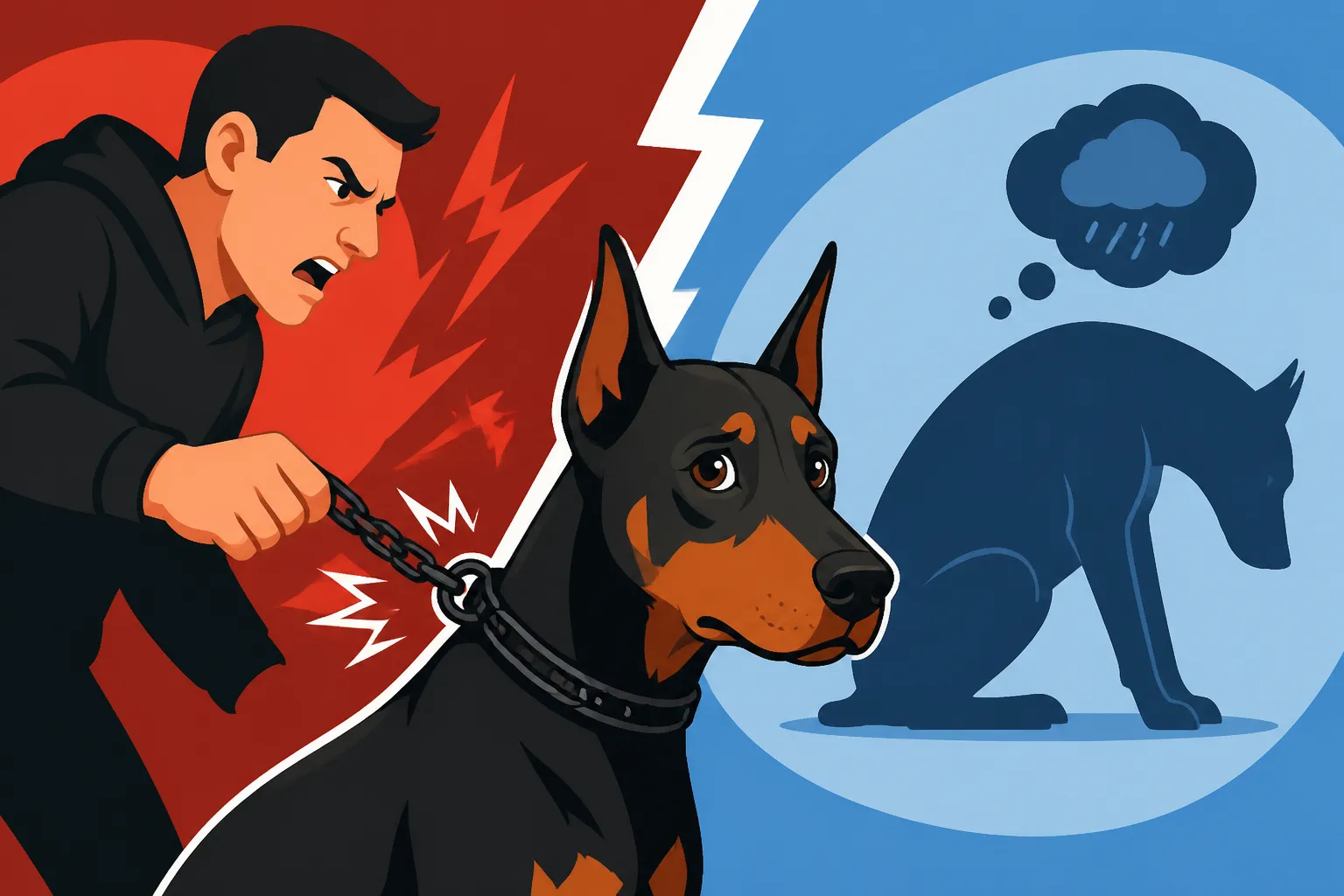
When a Doberman is subjected to heavy corrections, whether it's harsh verbal reprimands, physical punishment, or the use of tools like prong collars or e-collars without proper, humane application, their natural response is often fear. They might not understand why they're being corrected, only that a negative, painful, or startling experience is coming from you, their supposed protector. This creates deep anxiety and erodes the trust they place in you. A Doberman needs to feel safe and secure with their owner, and constant fear of punishment shatters that foundation.
Imagine your Doberman constantly walking on eggshells, unsure when the next correction might come. This isn't a state conducive to learning or forming a healthy bond. Instead of looking to you for guidance, they may start trying to avoid you, or simply freeze up when you approach, unsure of what to expect. They might become hesitant to try new things or offer behaviors, fearing they'll get it wrong and be punished. This breakdown of trust is one of the most tragic outcomes, transforming a potentially joyful partnership into a tense, unpredictable dynamic. You want your Doberman to run to you for help, not away from you in fear. This is something often seen in Rebuilding Trust With a Harshly Handled Doberman.
Learned Helplessness and Shutting Down
One particularly insidious effect of heavy corrections is "learned helplessness." This occurs when a dog repeatedly experiences negative outcomes that they can't control or escape, no matter what they do. Eventually, they give up trying. A Doberman subjected to constant, confusing, or inescapable corrections might simply shut down. They become unresponsive, appearing "obedient" because they've stopped offering any behaviors at all, good or bad, to avoid punishment. They might lie down, refuse to engage, or simply stare blankly, having learned that trying is futile and only leads to pain or discomfort.
This isn't true obedience; it's a state of deep emotional distress. A Doberman in learned helplessness isn't happily complying; they're emotionally broken. They lose their spark, their playful nature, and their ability to think for themselves. Their natural intelligence and drive, which are so central to the breed, become suppressed. It's often mistaken for a dog being "submissive" or "calm," but in reality, it's a sign that their spirit has been crushed. This can manifest as a Doberman that seems perpetually subdued or withdrawn, no longer showing enthusiasm for walks, toys, or even your presence. They simply exist to avoid trouble. When a Doberman begins to show signs of being A Doberman That Freezes When Corrected, it's a clear red flag.
Reactivity and Aggression as a Defense Mechanism
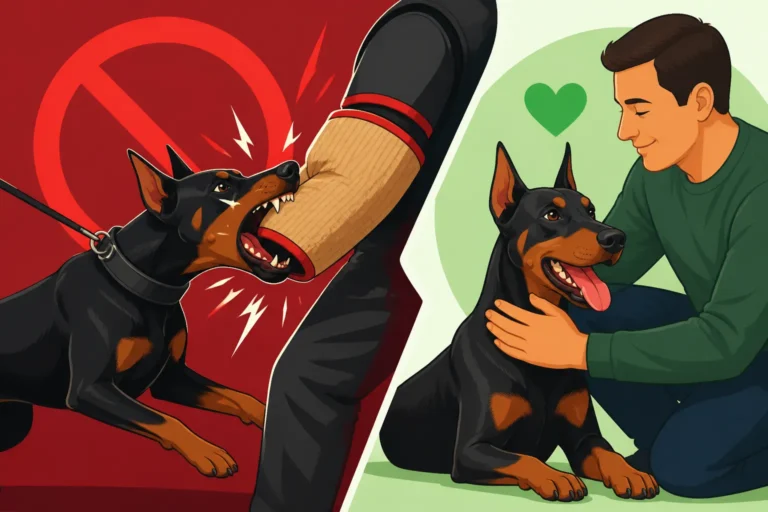
Perhaps the most dangerous outcome of aversive training is the potential for increased reactivity and aggression. A Doberman who constantly fears punishment or feels threatened may eventually lash out as a desperate attempt at self-preservation. When a dog has been repeatedly corrected, especially if they don't understand why, they learn that aggression or fear-based reactions can sometimes make the bad thing stop. This isn't an act of malice; it's a primal defense mechanism.
For example, a Doberman corrected harshly for growling (a natural warning signal) might learn to suppress the growl. But this doesn't mean the underlying discomfort or fear has gone away; it just means they've been taught not to warn. The next step could be a bite with no warning, as they've been stripped of their ability to communicate their distress safely. Moreover, if corrections are painful or frightening, the dog might associate that pain with whatever is present when the correction occurs – another dog, a child, a stranger, or even you. This can create a Doberman who is fearful of novel situations or people, leading to lunging, barking, or even biting out of fear. This is a far cry from the confident, stable Doberman the breed standard describes and is often the tragic result of misapplied "dominance" training methods.
Why Positive Reinforcement is the Doberman's Best Friend
Thankfully, there's a much more humane and effective path for training Dobermans: positive reinforcement. This method leverages their intelligence, desire to please, and deep bond with their owners to create a confident, well-behaved, and happy companion.
Building a Stronger Relationship
Positive reinforcement is fundamentally about strengthening the bond between you and your Doberman. When you reward desired behaviors, you're not just training a trick; you're communicating love, approval, and appreciation. Your Doberman learns that being around you and engaging in certain actions leads to good things – tasty treats, exciting play, cheerful praise, or gentle scratches behind the ears. This builds immense trust and fosters a cooperative spirit. Instead of viewing you as a source of potential discomfort, they see you as a source of all good things, a trusted leader, and their best friend.
This approach creates a dog who wants to work with you, not just because they have to, but because they enjoy it. Training becomes a fun activity for both of you, a chance to connect and engage. This positive cycle makes your Doberman more eager to learn, more resilient when faced with challenges, and more willing to try new things because they know they'll be met with encouragement, not punishment. It nurtures their naturally affectionate and loyal nature, making them not just obedient, but truly engaged members of your family.
Clear Communication and Motivation
One of the great strengths of positive reinforcement is its clarity. When you use a reward to mark a specific behavior, your Doberman quickly understands exactly what you're asking for. There's no ambiguity, no guessing whether they're about to be punished for a wrong move. This clear communication reduces frustration for both dog and owner. For example, if you want your Doberman to sit, you might say "sit," and the moment their rear touches the ground, you offer a treat and praise. They quickly associate the word "sit" with the action and the reward. This process is often detailed in guides for Marker Training a Doberman From Scratch.
Dobermans, with their high intelligence, thrive on this kind of clear feedback. They understand cause and effect beautifully. What truly motivates a Doberman might be different for each dog – some live for a squeaky toy, others for a high-value treat, and some just want a good game of tug. Understanding Rewards a Doberman Will Work For is key to successful motivation. Positive reinforcement allows you to tap into these individual motivations, making training highly effective and enjoyable. It transforms learning from a chore into an engaging puzzle they eagerly solve, knowing a jackpot awaits. This approach avoids the confusion and stress caused by aversive methods, where dogs might not even understand what they're being corrected for, only that something bad happened.
Fostering Confidence and Problem-Solving
Positive reinforcement inherently builds confidence in your Doberman. When they are consistently rewarded for successful attempts and not punished for mistakes, they learn that trying is safe and often leads to good outcomes. This encourages them to be more experimental in their learning, offering behaviors and trying to figure out what you want. They become active participants in their own education, rather than passive recipients of commands. This is crucial for a breed like the Doberman, which benefits greatly from a strong sense of self-assurance and mental stimulation.
A confident Doberman is a joy to live with. They are less likely to react out of fear, more adaptable to new situations, and better equipped to handle stress. Instead of shutting down when confused, they'll look to you for more information, knowing you'll guide them without harshness. This approach helps create a truly balanced and well-adjusted dog, one who isn't just a performer of commands, but a thinking, confident companion. Programs like those offered by BAXTER & Bella, which focus on positive, confidence-building methods, can be a fantastic resource for new Doberman owners looking to build a solid foundation.
Common Misconceptions About Doberman Training
The Doberman's imposing appearance and historical working roles have unfortunately led to a number of persistent myths about their training needs, often perpetuating the idea that they require harsh methods. Let's debunk some of these notions.
The Myth of the "Dominant" Doberman
Perhaps the most enduring and damaging myth applied to Dobermans (and many other breeds) is the concept of "dominance." The idea that dogs are constantly trying to "dominate" their human owners and must be physically or harshly subdued to establish pack leadership is outdated and scientifically disproven. This theory, unfortunately, led to a lot of well-intentioned but misguided training advice, promoting methods like alpha rolls, forced submissions, and punitive corrections.
In reality, most undesirable Doberman behaviors—like jumping, pulling on the leash, or guarding—are not attempts to dominate you. They are usually either untrained behaviors (the dog hasn't been taught an alternative), fear-based reactions, or simply seeking attention and resources in the most effective way they know how. A Doberman who pulls on the leash isn't trying to be "alpha"; they're just excited to get somewhere and haven't learned to walk politely. When you approach these behaviors with understanding and positive reinforcement, you teach them appropriate alternatives, rather than battling for an imaginary "alpha" status. Believing in dominance theory often leads directly to using heavy corrections, which, as we've discussed, backfires completely with a sensitive Doberman.
Believing "Tough Dogs Need Tough Hands"
This misconception often goes hand-in-hand with the dominance myth. Because Dobermans are strong, athletic, and bred for protection work, some people assume they require a "tough hand" to be brought into line. The thinking is: if you're not harder than them, they won't respect you. This couldn't be further from the truth. While Dobermans certainly need consistent, clear boundaries and expectations, "tough" does not equate to "harsh."
In fact, the opposite is true. Their inherent sensitivity means that a heavy hand leads to fear and distrust, not respect. A Doberman might comply to avoid pain, but they won't respect a handler who hurts them. True respect comes from fair leadership, consistent communication, and a strong, positive relationship. If you're constantly yanking their leash, yelling, or punishing them, you're not building respect; you're building resentment or fear. Why Yelling Shuts a Doberman Down is a crucial read here. What these "tough dog" proponents often see as respect is actually a Doberman shutting down or becoming wary. They mistake a lack of engagement for compliance, failing to see the emotional cost to the dog.
Misinterpreting Doberman Behaviors
Dobermans communicate in subtle and not-so-subtle ways, but their body language can sometimes be misinterpreted, leading to inappropriate corrections. For example, a Doberman who appears "stubborn" might actually be confused by what you're asking, or perhaps experiencing discomfort. A Doberman who growls isn't necessarily being aggressive; they might be signaling discomfort, fear, or a need for space. Punishing a growl teaches them not to warn, which can be dangerous.
Their upright posture and cropped ears (if they have them) can sometimes make it harder to read their emotional state compared to breeds with more expressive, natural ears. What Cropped Ears Hide About a Doberman's Mood highlights this challenge. This makes it even more important for owners to understand subtle cues like lip licks, head turns, averted gazes, or changes in muscle tension. Misinterpreting these signals and applying a correction when the dog is actually anxious or confused only exacerbates the problem, creating a cycle of misunderstanding and fear. Learning to truly "listen" to your Doberman's body language is fundamental to effective, humane training.
Practical Strategies for Effective Doberman Training
Now that we've firmly established why heavy corrections are detrimental, let's dive into practical, positive strategies that truly work for Dobermans, fostering a happy, confident, and well-behaved companion.
Understanding Their Motivation
The first step in effective Doberman training is figuring out what truly motivates your specific dog. While many Dobermans are food-motivated, some might value a favorite toy, a game of fetch, or even specific types of praise more. Experiment to find what your Doberman considers the highest value reward. This might mean keeping a variety of treats on hand, from plain kibble for easy wins to pieces of chicken or cheese for more challenging lessons.
Once you know what motivates them, use it strategically. High-value rewards should be reserved for big accomplishments or difficult distractions, while lower-value rewards can be used for everyday practice. Always deliver rewards immediately after the desired behavior, so your Doberman clearly understands what they're being rewarded for. This precision is vital for such an intelligent breed. For instance, if you're teaching a complex chain of commands, break it down into smaller, achievable steps, and reward each small success. This keeps them engaged and prevents frustration. Remember that a Doberman will work tirelessly for something they truly want, so tapping into that desire is far more powerful than trying to force compliance.
Consistency, Patience, and Timing
These three elements are the bedrock of successful Doberman training. Consistency means everyone in the household uses the same commands and expectations. If one person allows jumping while another corrects it, your Doberman will become confused and frustrated. Create a clear set of house rules and stick to them. Dobermans thrive on routine and clear boundaries, so consistency in your approach helps them feel secure and understand what's expected.
Patience is paramount. While Dobermans are smart, they are still dogs, and learning takes time and repetition, especially in new environments or with distractions. There will be days when they seem to "forget" everything they've learned, or when they test boundaries (especially during adolescence!). Losing your temper and resorting to harsh methods will undo weeks or months of progress. Instead, take a deep breath, go back to basics, and set your Doberman up for success with simpler tasks they can ace.
Timing is also critical. Rewards must be delivered within 1-3 seconds of the desired behavior for your Doberman to make the correct association. A clicker can be an invaluable tool here, as it precisely marks the exact moment of correct behavior, giving your Doberman immediate, clear feedback, followed by the reward. This allows for pinpoint accuracy in your communication. Using a clicker for Marker Training a Doberman From Scratch is highly recommended for building these precise associations.
Seeking Professional Guidance (Positive Methods Only)
If you're feeling overwhelmed or encountering specific challenges, don't hesitate to seek professional guidance. However, it's absolutely crucial to choose a trainer who uses only positive reinforcement and humane, science-based methods. Avoid any trainer who advocates for "alpha" theory, harsh corrections, intimidation, or the routine use of tools like prong or e-collars for punishment.
When looking for a trainer, ask about their methodology, their experience with Dobermans, and observe a class or session before committing. A good positive reinforcement trainer will focus on teaching you how to communicate effectively with your Doberman, manage their environment to prevent undesirable behaviors, and build their confidence. They'll also respect your Doberman's emotional well-being above all else. Organizations like the Pet Professional Guild or the Certification Council for Professional Dog Trainers can help you find qualified professionals in your area. For many, starting with online resources such as BAXTER & Bella's comprehensive online training program can provide excellent foundational support and guidance from the comfort of your home, emphasizing humane techniques. If you need help Finding a Trainer Who Has Worked With Dobermans, do your research thoroughly.
Always remember, your Doberman is a partner, not a subordinate. By embracing positive reinforcement, you're not just training a dog; you're nurturing a relationship built on mutual respect, trust, and understanding, unlocking the full potential of your incredible Doberman companion.
Disclaimer
This article is for general informational purposes only and does not constitute professional advice. Laws, prices and regulations vary by location and change over time. Consult a qualified professional for guidance on your specific situation.