Whether a Doberman Guards Without Being Taught
It’s a common misconception that Dobermans are born knowing how to be perfect guard dogs, ready to protect your home and family without a single lesson. The reality is far more nuanced, and leaving a Doberman to figure out "guarding" on their own can lead to a host of behavioral issues that are stressful for everyone involved. This guide will help you understand your Doberman’s natural protective instincts, why undirected guarding is problematic, and how responsible training is essential to channel their loyal nature into a confident, well-adjusted companion who protects appropriately.
The Doberman's Built-In Watchdog Program
Dobermans were indeed bred for protection, for vigilance, and for being acutely aware of their surroundings. This isn't a myth; it's woven into their very genetic fabric. However, understanding this innate predisposition is key to managing it, rather than simply expecting it to manifest perfectly on its own.
Understanding Their Genetic Blueprint
The Doberman Pinscher owes its existence to Karl Dobermann, a tax collector in 19th-century Germany who needed a loyal, fearless protector by his side. The Tax Collector Who Invented the Doberman This origin story highlights why Dobermans possess a strong natural inclination to be watchful, to be alert, and to perceive their family as a flock to be guarded. It's not something you necessarily "teach" them from scratch; it's a deeply ingrained trait.
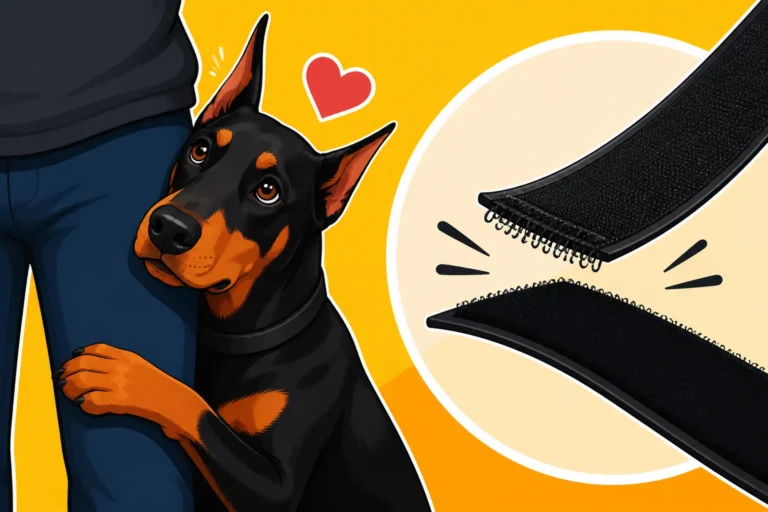
This inherent awareness often presents itself as a keen observation of their territory and their people. Your Doberman might be the first to notice a car pulling up, an unfamiliar sound in the distance, or a stranger walking past your property. They might position themselves between you and a perceived newcomer, or simply watch an unknown person with an intense gaze. This behavior isn't inherently aggressive; it's an expression of their alert and observant nature, a fundamental part of their temperament. It’s also a big reason why they often earn the endearing moniker "Velcro dog," always wanting to be close to their humans, not just for affection, but also to be present and watchful.
It’s crucial to differentiate between this natural vigilance and what constitutes active "guarding" in a trained sense. The natural instinct is the alertness, the awareness, the initial warning. How your Doberman responds to that initial alert—whether it escalates into aggression or remains a controlled notification—is entirely dependent on your guidance and training. Without it, that natural wiring can misfire.
The Difference Between Alertness and Aggression
An alert Doberman is a valuable asset. They might offer a deep, resonant bark when someone approaches the front door or stand with their hackles slightly raised, giving a low growl as a warning signal. This is their natural alarm system, communicating both to you and to the potential intruder that they are present and taking notice. It's a way of saying, "I see you, and I am on duty." This behavior, when managed correctly, is a hallmark of the breed and can be very reassuring for owners.
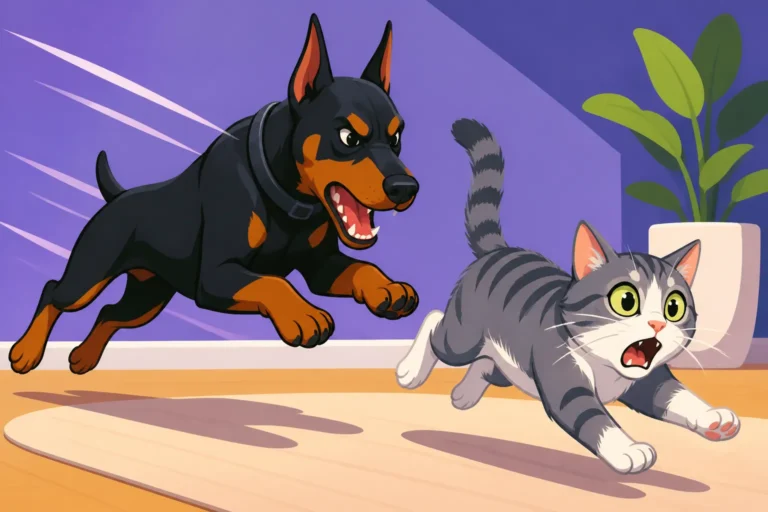
However, true aggression is a dangerous escalation beyond a mere warning. This could involve lunging, snapping, biting, or physically preventing someone from moving or entering. This is the critical juncture where natural instinct, if left unchecked, or worse, inadvertently encouraged, can transform from a protective trait into a serious liability. A Doberman that "guards" without being taught the nuances of appropriate behavior might misinterpret innocent situations, or escalate their response inappropriately because they lack the crucial "off switch" and the ability to accurately assess a real threat.
As owners, it's paramount to be attuned to your Doberman's body language to discern between healthy alertness and an anxious or aggressive reaction. Often, natural guarding behaviors are rooted in a deep sense of loyalty and a protective drive. However, without proper guidance and clear communication from you, this drive can easily morph into fear-based reactivity or uncontrolled aggression, which is harmful to both the dog and those around them. Learning to Spotting the Moment a Doberman Is Uncomfortable can help you intervene before a situation escalates.
Why Untrained Guarding Is a Recipe for Trouble
While the idea of a Doberman instinctively protecting you might sound appealing, allowing them to guard without guidance is fraught with peril. It can lead to misinterpretations, over-protection, and severe behavioral problems that negatively impact your dog and your family.
Misinterpretation and Over-Protection
A Doberman left to develop "natural guarding" skills without human intervention can quickly become a dog that misreads social cues and perceives non-threatening situations as dangers. Think about it: how is a dog supposed to know the difference between the friendly mail carrier, a neighbor jogging down the street, or a child’s boisterous play next door, and an actual intruder, if no one teaches them? Without clear boundaries, all could be flagged as threats, leading to persistent barking, lunging at the fence, or even attempts to bite.
This kind of over-protection isn't a sign of bravery; it's often a symptom of anxiety, insecurity, or a lack of clear boundaries and leadership from the owner. Your Doberman might believe they are solely responsible for handling every single situation, which puts an immense amount of stress on them and creates a tense, unpredictable environment in your home. Imagine the stress of constantly having to explain to every visitor that "he's just guarding naturally" while your Doberman barks incessantly, stiffens, or physically blocks the doorway, as explored in A Doberman That Blocks the Doorway. This scenario isn't just awkward; it's a significant safety concern.
Crucially, without proper training, your Doberman doesn't understand when to stop guarding. They don't know the critical distinction between a welcomed guest and a genuine threat. This lack of discernment can easily lead to dangerous encounters, accidental bites, and severe legal liabilities for you as the owner. The goal should always be a dog that can protect if necessary, but chooses not to, unless explicitly directed or in a truly dire situation.
The Unintended Consequences for Your Doberman
Allowing a Doberman to engage in untrained guarding behaviors is not only dangerous for those around them but also deeply detrimental to the dog's own well-being. A Doberman that feels constantly responsible for security can become chronically vigilant, unable to truly relax and live in a state of perpetual "on-alert." This chronic stress can manifest in various ways, from physical health problems to escalating behavioral issues, making their life a constant burden.
Furthermore, a Doberman prone to uncontrolled guarding will inevitably have a severely limited social life. A dog that growls at delivery drivers, or lunges and barks at passing dogs on walks—a common issue addressed in A Doberman That Lunges at Passing Dogs—will make it nearly impossible to enjoy public outings, dog parks, or even simple walks without incident. This isolation impacts both the dog and the owner, which is a tragic outcome for a breed that thrives on companionship, mental engagement, and shared experiences with their family.
An unchecked guarding instinct can also foster resource guarding behaviors, where your Doberman becomes possessive of their food, toys, resting spots, or even family members. This possessiveness, if not properly managed through training and clear boundaries, can escalate into aggression directed towards other pets or even people within the household, eroding the trust and peace in your home. A truly balanced Doberman is confident enough to allow you to handle perceived threats, understanding that they don't have to carry the weight of the world on their shoulders.
Channeling Instincts: Responsible Training Is Key
Instead of hoping your Doberman will guard "naturally," the responsible approach is to channel their protective instincts through deliberate, consistent training. This process builds a confident, stable dog that understands their role in the family and trusts you to make the right decisions.
Establishing Clear Leadership and Boundaries
The absolute cornerstone of responsible guarding behavior in a Doberman is a strong, trusting relationship where you are the unquestioned, benevolent leader. Your Doberman needs to understand that you are fully capable of assessing threats and that they don't need to shoulder that immense burden themselves. This means committing to consistent training, establishing clear and understandable rules, and utilizing positive reinforcement techniques to build confidence and compliance.
Early and thorough socialization is non-negotiable for a Doberman puppy. Expose your puppy to a vast array of sights, sounds, people of all ages and appearances, and other friendly, vaccinated animals from a young age. Puppy classes are an invaluable resource during this critical period, providing structured opportunities for positive experiences. The Sixteen Weeks That Set a Doberman Up A well-socialized Doberman puppy grows into a confident adult who is not inherently fearful or suspicious of every new encounter, but rather evaluates new situations calmly.
It's also essential to teach your Doberman a reliable "place" command or a "go to mat" command. This gives them a specific job and a designated spot to relax when guests arrive or when you need them to be out of the way but still present. Online puppy programs, such as those offered by BAXTER & Bella, often emphasize these foundational commands, which are incredibly important for managing a Doberman’s interactions with visitors. Having a designated spot helps your Doberman understand that you're in control of the situation, and they don't need to be actively "on guard."
Teaching an "Off Switch" and Discernment
One of the most critical aspects of training a Doberman with natural guarding instincts is teaching them an "off switch." It’s perfectly acceptable for your Doberman to alert you with a bark or a growl; in fact, it’s desirable. However, they also need to understand when to cease that behavior. Commands like "Quiet" or "Enough" are absolutely vital. The training process involves rewarding them for their initial alert, then calmly intervening, and subsequently rewarding them again for becoming quiet and calm. This teaches them that their alert was heard, but you have taken over the assessment.
Practice desensitization regularly. If your Doberman barks excessively at the mail carrier or a delivery driver, stand with them calmly. Acknowledge their alert, perhaps with a quiet "Thank you, I've got it." Then, immediately redirect their attention with a high-value treat or a short training exercise. Over time, they learn to associate these formerly "threatening" situations with positive outcomes and understand that you are handling the situation. This process cultivates discernment: "My human acknowledged my alert, but they've determined it's not a threat, so I can relax."
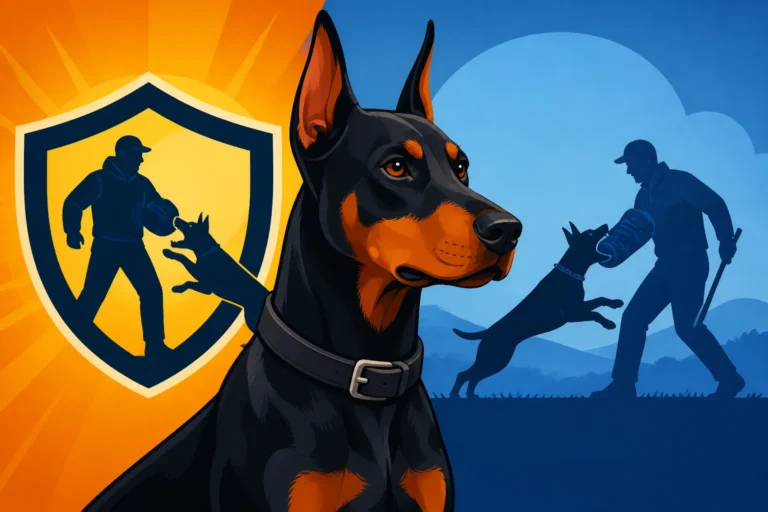
For the vast majority of Doberman owners, the goal is a confident deterrent and an appropriate alerter, not a fully protection-trained dog. If you genuinely desire a dog trained in protection sports, understand that this is a highly specialized field requiring significant commitment, expert guidance from ethical trainers, and a dog with a specific temperament. This is a world away from allowing your pet Doberman to engage in self-taught bite work, which is rarely appropriate or safe for a family pet, as highlighted in Why Bite Work Is Wrong for a Pet Doberman.
Tools and Techniques for a Well-Adjusted Doberman
Effective management strategies are your first line of defense in guiding your Doberman's natural instincts. A sturdy, appropriately sized crate is an indispensable tool. It serves as a safe haven for your Doberman when guests are over, when things are hectic, or when you simply need them to settle down without feeling the need to patrol. You can find a wide range of reliable crates and other training essentials on Amazon, suitable for a Doberman's size and strength. A secure, tall fence around your property is also non-negotiable for a breed with such keen territorial instincts.
For walks and outings, especially if your Doberman has a tendency to react to strangers or other dogs, consider using training equipment that provides better control. Appropriate harnesses that prevent pulling or a head halter can be incredibly effective in managing a strong Doberman on a leash. A knowledgeable, positive-reinforcement trainer can help you select the best tools for your specific dog and teach you how to use them safely and effectively, as discussed in Harnesses That Hold a Strong Doberman.
Finally, don't underestimate the power of mental and physical enrichment. A Doberman is an intelligent, high-energy breed that thrives on having a "job." Boredom is a prime driver for problematic behaviors, including inappropriate guarding. Incorporate activities like puzzle toys, scent work, obedience training, and plenty of vigorous exercise into their daily routine. A mentally and physically tired Doberman is a content Doberman, far less likely to invent their own "jobs" like unwanted guarding. Keeping a Doberman mentally engaged is vital, as explored in Keeping a Doberman Mentally Tired.
| Behavior Feature | Untrained Guarding (Problematic) | Trained Guarding (Responsible) |
|---|---|---|
| Origin | Unchecked natural instinct, potentially fear-driven. | Carefully directed instinct, confidence-based. |
| Response Trigger | Broad, often misinterprets non-threats as dangers. | Specific, discerning between genuine threats and normal activity. |
| Verbal Cues | Constant barking, growling, lack of "off" switch. | Alerts with a purpose, responds to "quiet" or "enough." |
| Physical Action | Lunging, nipping, biting, blocking access. | Holds position, barks, observes; acts only on command or true threat. |
| Owner's Role | Reactive, trying to manage escalating situations. | Proactive, guiding and reinforcing appropriate responses. |
| Dog's Well-being | High stress, anxiety, limited social interaction. | Confident, relaxed, well-adjusted in varied situations. |
When to Seek Professional Guidance
Even with the best intentions and consistent effort, sometimes Doberman guarding behaviors can become overwhelming or dangerous. Knowing when to call in a professional is critical for the safety and well-being of everyone involved.
Recognizing Escalating Behavior
It's absolutely essential to seek professional help if your Doberman's guarding behaviors are consistently escalating into aggression. This includes recurrent growling, lunging, snapping, or attempts to bite people or other animals, even in situations you wouldn't typically deem threatening. Don't wait for a serious incident to occur; early intervention is always best. A Doberman that has bitten, even once, needs immediate professional assessment.
Other red flags that signal a need for professional intervention include intense resource guarding (where your Doberman aggressively protects food, toys, their bed, or even you from other family members), extreme separation anxiety that results in destructive behavior or incessant barking when you leave the house (a topic also covered in A Doberman That Cannot Cope When You Go Out), or a general inability for your dog to relax even in safe, familiar environments. These behaviors are clear indicators that your Doberman is struggling and requires structured intervention beyond what you can provide alone.
It’s important to remember that problematic "guarding" in a Doberman is often rooted in deeper issues like fear, insecurity, or chronic stress, rather than malicious intent. Their inherited predisposition to vigilance, combined with these underlying anxieties, can create a volatile mix. A Doberman that is constantly stressed or afraid is more likely to react aggressively, and they need help to feel safe and confident, not just "disciplined."
Finding the Right Professional
When you decide to seek professional help, it’s crucial to find a qualified expert with specific experience in Dobermans or similar guardian breeds. Look for certified professional dog trainers, certified dog behavior consultants, or veterinary behaviorists. These professionals have the knowledge and experience to understand the breed's nuances and address complex behavioral issues effectively. It’s equally important to avoid anyone who advocates for harsh, punishment-based methods, especially with a Doberman. Such approaches can exacerbate fear, break the bond of trust, and often lead to an increase in aggression, rather than resolving it. Finding a Trainer Who Has Worked With Dobermans is a critical first step.
A reputable professional will conduct a thorough assessment of your Doberman’s individual temperament, analyze the dynamics within your household, and listen intently to your specific concerns. Based on this comprehensive evaluation, they will develop a positive reinforcement-based training and behavior modification plan. This plan will focus on building your Doberman’s confidence, teaching them appropriate coping mechanisms and responses, and establishing clear, consistent communication channels between you and your dog.
Investing in professional guidance early on can save you an immense amount of stress, prevent potential legal issues, and most importantly, ensure a significantly better quality of life for your Doberman and a more harmonious home environment for your family. It's about proactive management and compassionate intervention, allowing your Doberman to fulfill their potential as a loyal, confident companion rather than being burdened by uncontrolled instincts.
Disclaimer
This article is for general informational purposes only and does not constitute professional advice. Laws, prices and regulations vary by location and change over time. Consult a qualified professional for guidance on your specific situation.