Whether Two Dobermans Reduce the Clinginess
Adding a second Doberman does not solve their clinginess because these dogs crave human presence and personal interaction.
Work with the temperament you have.
House-training and crate work, recall, leash manners, separation anxiety, and the behaviors this breed is wired for.
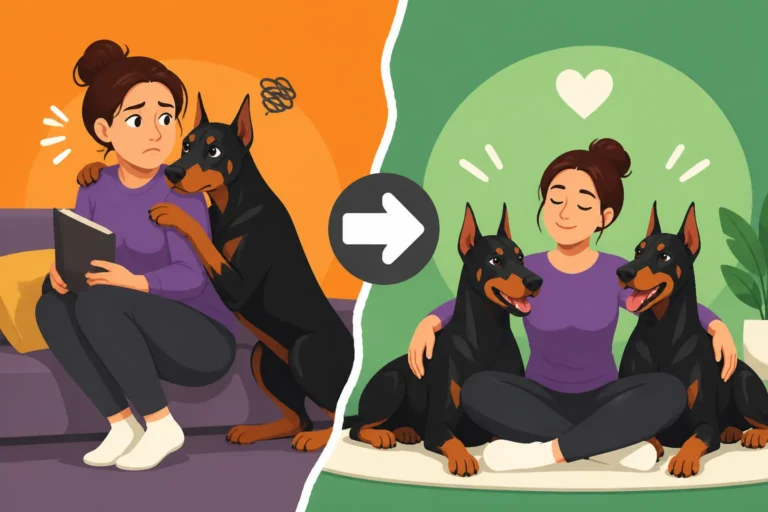
Adding a second Doberman does not solve their clinginess because these dogs crave human presence and personal interaction.
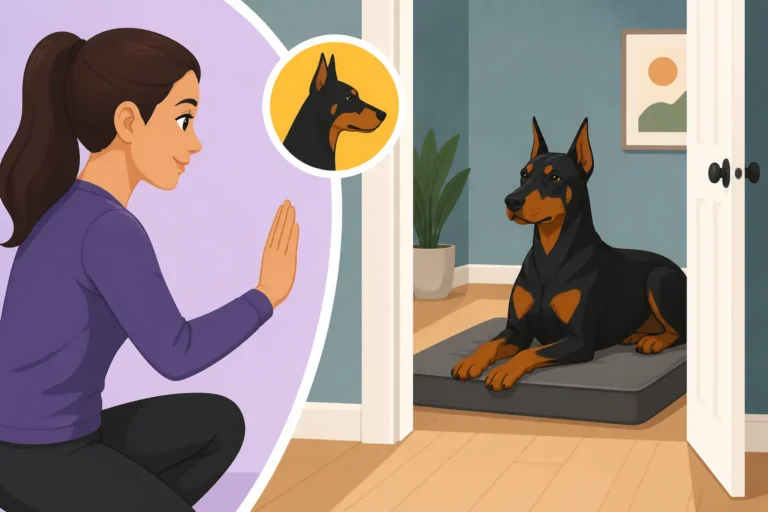
Teaching a Doberman to settle in another room involves step-by-step strategies to build independence and reduce separation distress.

Doberman pushing behavior stems from intense loyalty, requiring clear boundaries and gentle training to restore personal space at home.

Confining a Doberman to the bedroom hinders natural guarding instincts and creates anxiety instead of better home security.
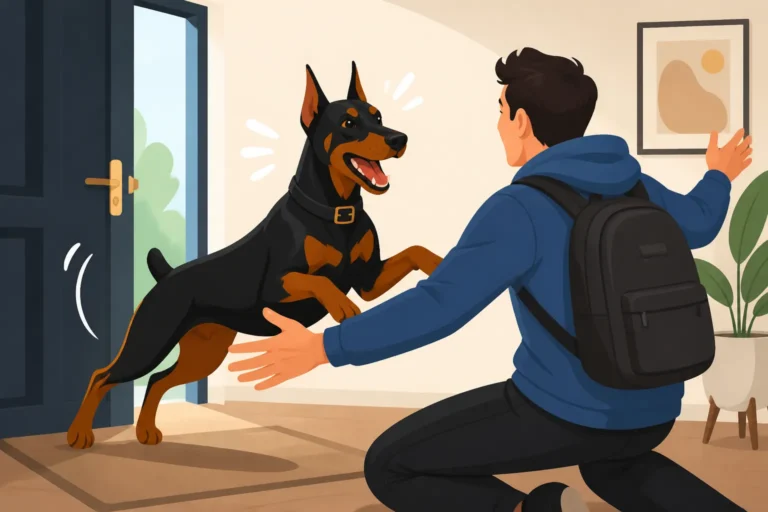
Doberman homecoming behaviors include full-body wiggles, vocalizations, zoomies, and excitement urination, plus methods to manage this overwhelming enthusiasm.

Doberman loyalty and protective instincts explain why a new romantic partner causes stress for your pet during introductions.

Doberman shadowing behavior explains why dogs follow one family member and details how to foster a balanced bond for everyone.

Doberman alone time behavior, separation distress management strategies, and the deep-rooted breed need for human companionship explained.

Doberman foot sitting stems from protective instincts and affection, and owners can gently manage this behavior to stop tripping hazards.

Eighty-pound Doberman dogs block doors due to Velcro instincts, protective guarding, and a constant need for human proximity.