Correcting a Doberman Without Breaking It
Harsh dog corrections cause Doberman fear and anxiety because these intelligent sensitive pets bond deeply with primary handlers.
Work with the temperament you have.
House-training and crate work, recall, leash manners, separation anxiety, and the behaviors this breed is wired for.
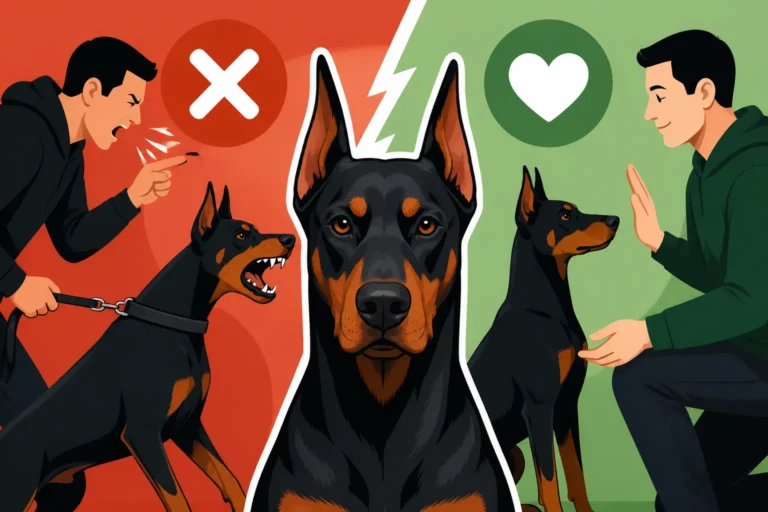
Harsh dog corrections cause Doberman fear and anxiety because these intelligent sensitive pets bond deeply with primary handlers.

Doberman public behavior management strategies help owners navigate fearful reactions and ensure calm walks in shared spaces.

Separation anxiety in Dobermans causes destructive behavior and howling when left alone, requiring empathetic strategies to build confidence.

Doberman temperament, guarding instincts, and training strategies determine if this protective breed is safe around children.

Doberman working sports and competitive obedience provide constructive outlets for their energy, intelligence, and protection instincts.
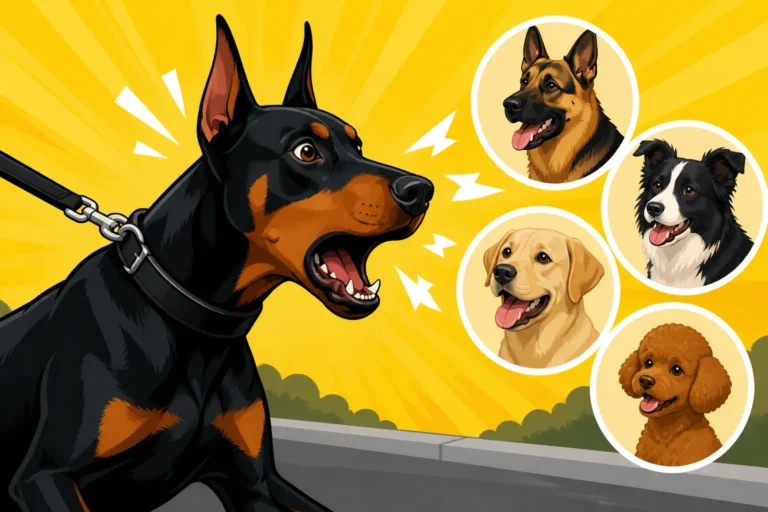
Doberman reactivity toward other dogs stems from fear, frustration, or over-excitement, causing barking and lunging on walks.
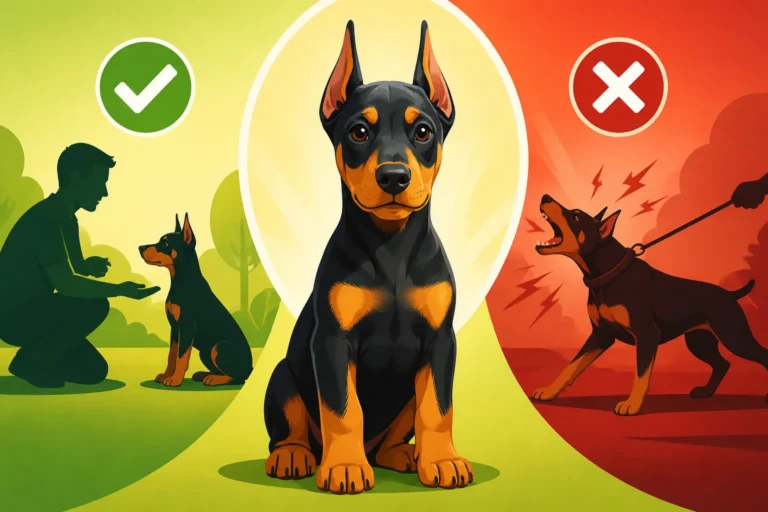
A confident Doberman puppy can be raised by understanding breed instincts, temperament foundations, and early assessment strategies.

Doberman guarding instincts and the history of Karl Dobermann explain how healthy protection turns into problematic behavior.

Doberman intelligence creates unique training challenges and requires constant mental stimulation to prevent unwanted destructive behaviors.

Doberman shadowing behavior stems from historical breeding traits, explaining why these dogs constantly follow owners around.