Whether a Doberman Guards Without Being Taught
Doberman natural protective instincts and genetic vigilance require proper training to prevent aggression and behavioral issues.
Work with the temperament you have.
House-training and crate work, recall, leash manners, separation anxiety, and the behaviors this breed is wired for.

Doberman natural protective instincts and genetic vigilance require proper training to prevent aggression and behavioral issues.
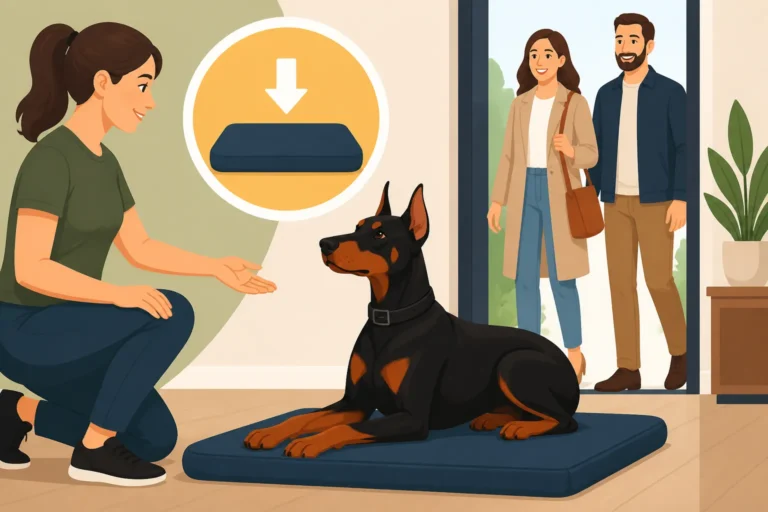
Mat training teaches a Doberman to calmly go to a designated mat or cot when visitors arrive, reducing jumping and barking.
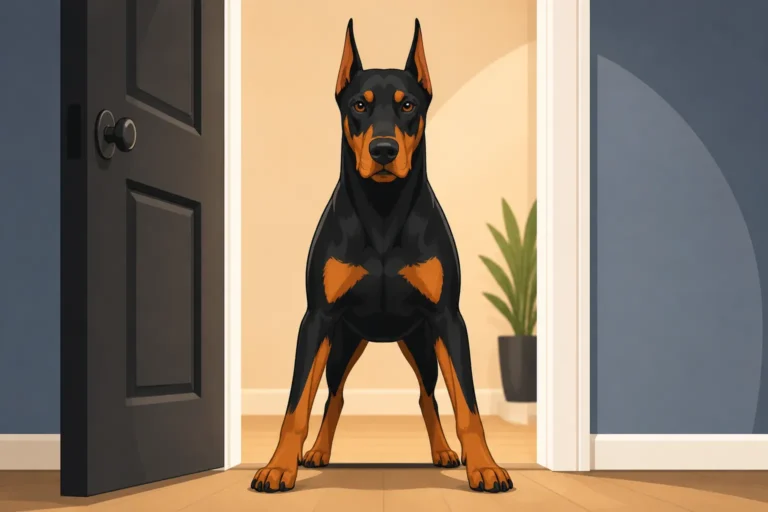
Doberman doorway blocking behaviors, driven by eighty-pound proximity needs and protection instincts, and how to gently stop them.

Doberman barking behavior at strangers, including guardian instincts, alert triggers, and how to interpret vocalizations.

Doberman front door behavior and protective instincts explained, showing owners how to teach calm and polite greeting manners.

Harsh handling causes a sensitive Doberman to cringingly shrink, flinch, or react fearfully, requiring patient steps to rebuild trust.
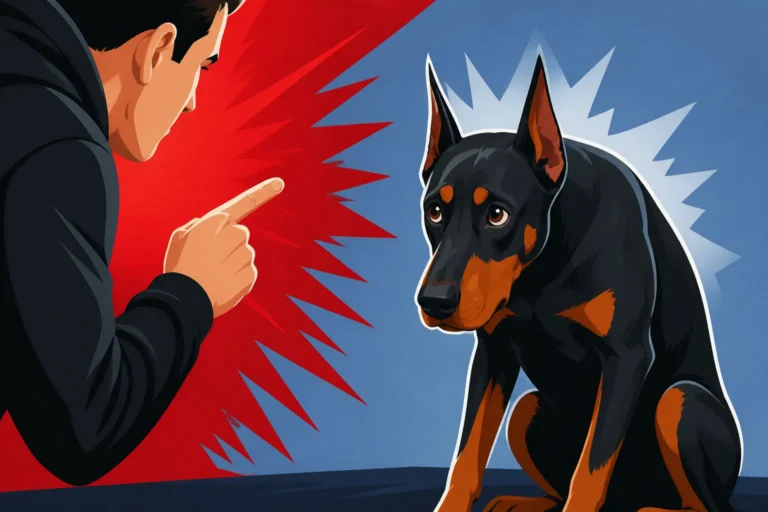
Doberman freezing behavior during correction stems from overwhelm, sensitivity, and confusion, signaling that they need better communication.
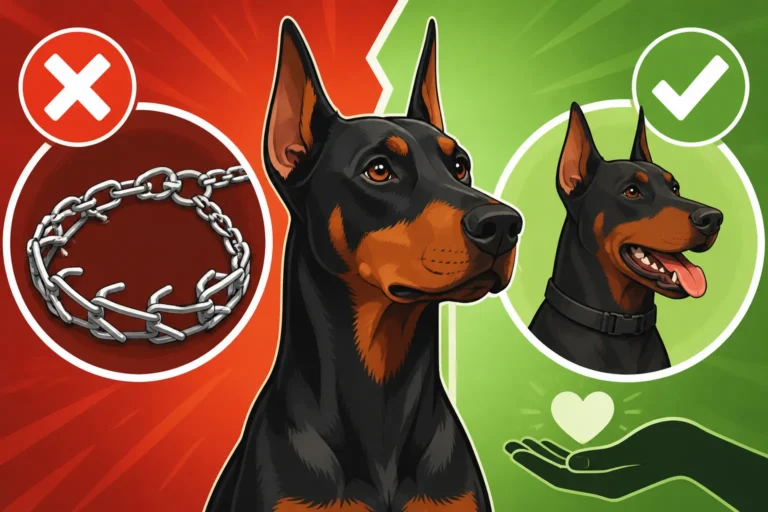
Prong collar use for Dobermans involves mechanics, controversies, drawbacks, and alternatives to help owners make informed decisions.
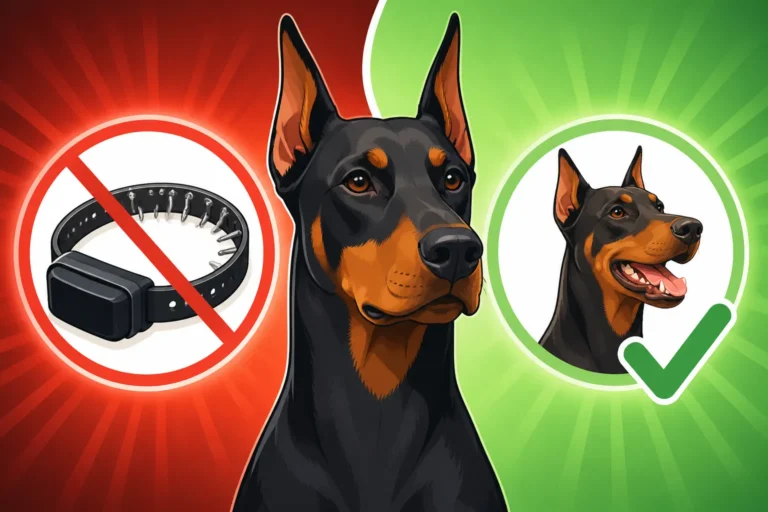
E-collar use for Dobermans involves exploring pros, cons, and alternatives to help owners make informed training decisions.
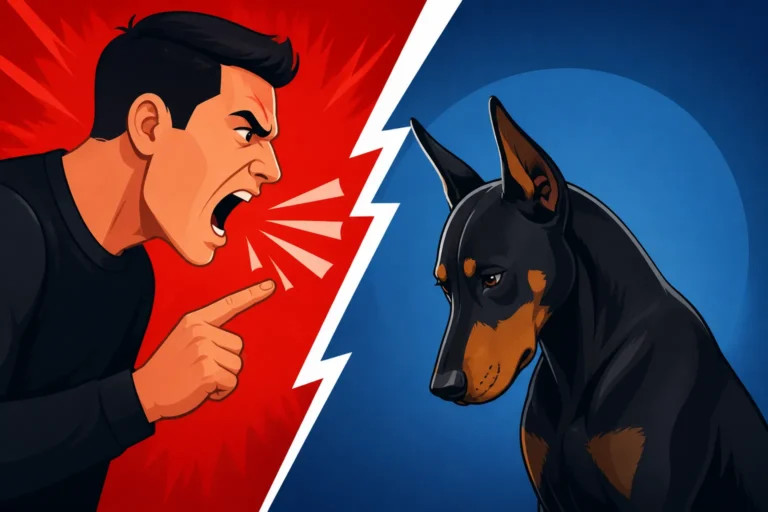
Raising your voice at a sensitive Doberman causes them to freeze and tuck their tail because they process tone intently.