Whether a Doberman Ever Enjoys Being Alone
It’s a question almost every Doberman owner asks themselves at some point: does my Doberman ever actually enjoy being alone? For many of us, it feels like we can't even take two steps without a shadow at our heels, and the mere thought of leaving them home for an extended period can fill us with dread. This isn't just a quirky trait; it's a deep-seated characteristic of the breed, and understanding it is the first step toward helping your Doberman cope, and perhaps even thrive, during solo hours. This guide will explore the Doberman's unique need for companionship, differentiate normal clinginess from true separation distress, and provide actionable strategies to foster a healthier relationship with alone time for your Doberman.
The Doberman's Deep-Rooted Need for Companionship
Dobermans are famously known as "Velcro dogs," and for good reason. They are almost universally described by their owners as shadows, constantly present, leaning, and intensely focused on their people. This isn't just a cute quirk; it’s a fundamental aspect of their temperament, woven into the very fabric of the breed's history and purpose.
A Shadow You Can't Shake: The "Velcro Dog" Phenomenon
If you own a Doberman, you know exactly what I'm talking about. Whether you're moving from the living room to the kitchen, stepping into the shower, or even just shifting in your seat, your Doberman is often right there, nose practically touching your leg, sometimes even letting out a soft "oof" as they lean heavily against you. This isn't a sign of poor training or neediness in a negative sense; it's the manifestation of their profound bond. The term Where the Velcro Doberman Nickname Comes From perfectly encapsulates this constant proximity. They thrive on interaction and being part of every moment, making truly independent behavior feel almost foreign to them. It can be endearing, sure, but it also presents challenges when life requires you to be apart from them.
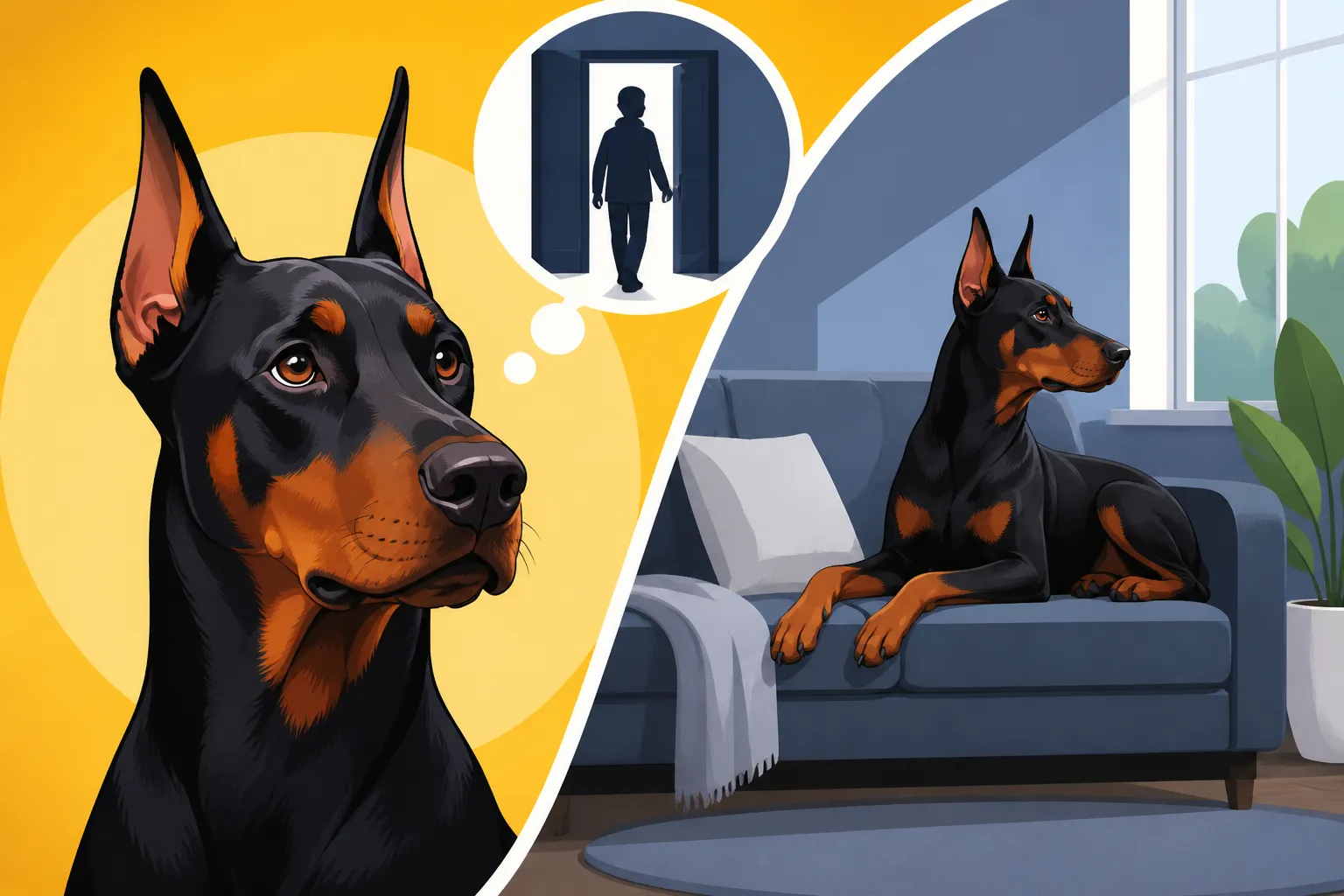
This intense desire to be close also means that Dobermans often struggle with perceived distance, even within the same home. For them, "alone" might not just mean you've left the house; it could mean you've simply gone into another room and closed the door. This can lead to a quiet pacing, soft whining, or even a persistent nudging at the door until you reappear. It’s their way of checking in, ensuring the pack is together, and reaffirming their place right by your side. Understanding that this isn't manipulation but genuine attachment is crucial for developing patience and effective strategies.
Many Doberman owners find themselves asking Whether a Doberman Bonds to One Person more strongly than others. While they are typically devoted to their entire family, it's not uncommon for a Doberman to select one person as their primary "person." This intensifies the "Velcro" effect with that individual, making any separation from them even more pronounced. This isn't to say they don't love everyone else, but that special bond means they'll likely follow that chosen person everywhere, seeking constant physical and emotional connection.
Historical Context: Bred for Partnership, Not Solitude
To truly grasp why Dobermans are so intertwined with their humans, we have to look back at their origins. Karl Dobermann, the breed's creator, wasn't just breeding for looks; he needed a dog with unwavering loyalty and protective instincts. His role as a tax collector and night watchman meant he needed a steadfast companion that would stay by his side, alert and ready to act. This focus on close partnership, rather than independent working capabilities like some herding breeds, is fundamental. They were designed to be extensions of their human, always present and always attentive.
This historical purpose is why you see so many traits that foster intense connection. Their intelligence, coupled with their desire to please, makes them highly trainable, but also means they are constantly observing and anticipating your next move. They learn routines quickly, including when you're likely to leave, and this can heighten their anxiety. They weren't bred to roam pastures or hunt independently for hours; they were bred to guard their human and their belongings, which necessitates a constant presence and awareness of their surroundings and, most importantly, you.
Therefore, expecting a Doberman to be content with long stretches of alone time without any preparation or understanding is asking them to go against generations of selective breeding. Their natural inclination is to be with their people, to observe, to participate, and to protect. This isn't a flaw in their character; it's the very essence of what makes a Doberman a Doberman, and why so many of us fall in love with their devoted nature, even if it comes with the challenge of separation.
The Myth of the "Independent" Doberman
Sometimes, people mistakenly believe that because Dobermans are strong, intelligent, and protective, they must also be inherently independent. Nothing could be further from the truth. While they are certainly capable dogs, their strength lies in their partnership with a human, not in solitary self-reliance. The image of a stoic guard dog patrolling alone might be appealing, but it doesn't align with the Doberman's true nature.
This misconception can lead to unrealistic expectations from owners, causing frustration when their Doberman displays clingy behavior or struggles with being left alone. Owners might wonder why their Doberman whines when they leave for work, even if the dog has a spacious yard and plenty of toys. The answer is simple: a Doberman doesn't just need space or toys; they need you. Their mental well-being is intrinsically linked to your presence and interaction.
Furthermore, a Doberman that appears independent or aloof might actually be exhibiting signs of stress or insecurity rather than true contentment. A healthy Doberman should feel secure enough to relax when you're present, but also secure enough to know you'll return when you leave. True independence in a Doberman isn't about not caring you're gone; it's about being confident that your absence is temporary and that they can manage their emotions until your return.
Understanding the Spectrum of Alone Time Challenges
It's important to distinguish between a Doberman's natural clinginess and actual separation distress, which is a more serious behavioral issue. Every Doberman will prefer your company, but not every Doberman will panic when left alone. Recognizing where your dog falls on this spectrum is key to effective management.
Normal Clinginess Versus Separation Distress
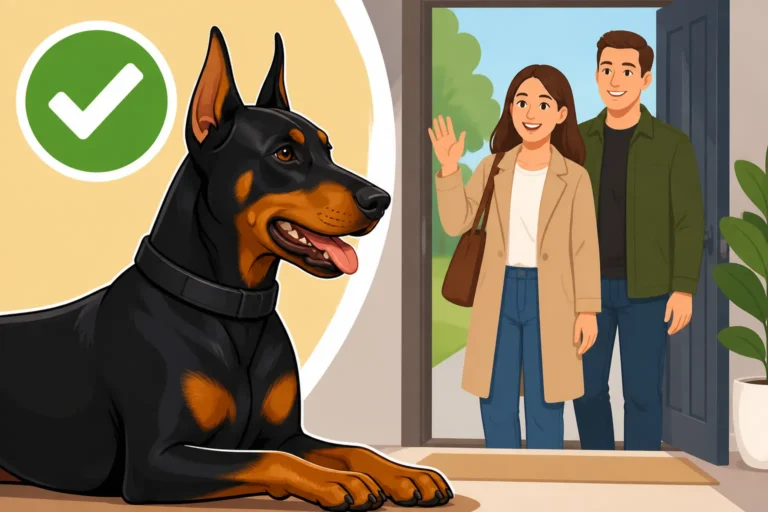
Many Dobermans will follow you from room to room, settle at your feet, or even try to get on the couch with you whenever you sit down. This is typical A Doberman That Leans on You Constantly behavior—it's endearing, and it's their way of staying connected and feeling secure. When you leave the house, a normally clingy Doberman might sigh, perhaps walk to the door, and then settle down to nap or play with a favored toy. They might be a bit bored, but they're not panicking. They trust you'll come back.
Separation distress, however, is a much more intense and often destructive experience for a Doberman. This isn't just missing you; it's a genuine anxiety attack triggered by your absence. Dogs with separation distress often exhibit a range of behaviors almost immediately after you leave, or sometimes even as you prepare to leave. These can include frantic barking or howling, destructive chewing of door frames, furniture, or their own bedding, house-soiling (even if fully housetrained), excessive drooling, or frantic attempts to escape their crate or the house. This level of distress means they are not simply bored; they are genuinely terrified and overwhelmed.
Here’s a simple table to help differentiate:
| Behavior | Normal Clinginess (Mild) | Separation Distress (Severe) |
|---|---|---|
| When owner is home | Follows, leans, seeks proximity, sleeps nearby. | Anxious pacing if owner moves, excessive "checking in," unable to settle unless touching owner. |
| When owner leaves | May sigh, watch you go, then settles down, perhaps naps or plays. | Immediate, frantic barking/howling; destructive chewing of exits; house-soiling; escape attempts; excessive drooling; self-harm. |
| Response to return | Happy greeting, wags tail, perhaps a few excited jumps. | Overly frantic greetings, prolonged excitement, sometimes difficulty calming down for a long time. |
| Emotional state | Content, secure, relaxed. | Panicked, terrified, overwhelmed, unable to cope. |
The Silent Struggle: When Your Doberman Suffers Alone
One of the most heartbreaking aspects of separation distress is that we often don't see the full extent of our Doberman's suffering. They might seem perfectly fine when we walk out the door, giving us a calm gaze, only to devolve into a distressed state moments later. This "silent struggle" can be particularly insidious because owners might not realize the severity of the problem until destructive behaviors or neighbor complaints arise.
Many Dobermans, especially those with cropped ears, are masters at hiding their discomfort. The lack of natural ear movement can make it harder for us to read their subtle body language of anxiety – the flattened ears, the quick glances, the tension in their brow. This is why tools like a pet camera, easily found on platforms like Amazon, can be incredibly insightful. Setting one up to record your Doberman's behavior from the moment you leave until you return can reveal a completely different picture than what you might imagine. You might witness frantic pacing, incessant barking, or attempts to chew through their crate that you would otherwise never know about.
Understanding that a Doberman might appear calm at the moment of departure but still suffer immensely is critical. The idea that A Doberman That Cannot Cope When You Go Out might be suffering in silence is a heavy one, but acknowledging it is the first step towards providing the right support. It's not about them being "naughty"; it's about a deep-seated fear that needs compassionate intervention, not punishment.
Common Triggers for Alone-Time Woes
While Dobermans are prone to separation challenges due to their breed characteristics, certain triggers can exacerbate these issues or even bring them on. One major trigger is inconsistent routines. If your Doberman never knows when you're leaving or for how long, they can become hyper-vigilant and anxious about any cues that signal your departure. A predictable routine, even one that includes alone time, can provide a sense of security.
Another common trigger is a sudden change in environment or schedule. Moving to a new home, a new job that drastically alters your hours, or even the loss of another pet can shatter a Doberman's sense of security and make them more vulnerable to separation distress. Even something as simple as a change in the type of crate or where they are kept while you're away can be unsettling for a sensitive Doberman. For instance, if they were previously allowed free roam and are suddenly confined, this can be a huge stressor.
Finally, inadequate mental and physical stimulation can also contribute. A Doberman that isn't sufficiently exercised or mentally challenged is more likely to be restless and anxious when left alone. Their keen intelligence means they need their brains to be engaged, and their athletic build demands physical exertion. If these needs aren't met, that pent-up energy and mental boredom can quickly turn into anxiety when they're left without their primary source of interaction – you. Providing plenty of Puzzle Work That Actually Tires a Doberman can be a game-changer for many owners.
Cultivating Confidence: Strategies for Healthier Independence
While a Doberman may never truly enjoy being alone in the way a cat might, they can certainly learn to tolerate it, and even relax, with consistent training and a supportive environment. The goal isn't to make them independent of you, but confident in themselves when you're not physically present.
Building a Foundation: Crate Training and Routine
Crate training is one of the most effective tools for teaching a Doberman to be comfortable alone. A properly introduced crate becomes a safe, den-like space where your Doberman can feel secure. It's not a punishment; it's their personal bedroom. Start by making the crate a positive place with treats, chew toys, and meals inside. Never force them in, and ensure the crate is appropriately sized – large enough for them to stand, turn around, and lie down comfortably. Considerations for Crate Sizing for a Doberman at Full Height are important, as a crate that is too small can increase anxiety, while one that is too large might not feel as secure.
Once your Doberman is comfortable spending short periods in their crate with the door open, begin closing it for very brief intervals while you are still in the room, gradually increasing the time. The key is to make these sessions short, positive, and uneventful. A strong daily routine also helps immensely. Dobermans thrive on predictability. If they know when walks happen, when meals are served, and when alone time is expected, it reduces uncertainty and anxiety. For example, if you leave for work at the same time every day, your Doberman will learn to anticipate this and can settle more easily into their routine.
Another crucial aspect of building this foundation is to avoid making a big fuss when you leave or return. Overly emotional goodbyes and ecstatic greetings can inadvertently reinforce the idea that your departure is a major event. Keep departures calm and quiet, and when you return, wait until your Doberman has settled before offering a calm, affectionate greeting. This teaches them that your comings and goings are simply a normal part of life, not a dramatic occurrence.
Mental and Physical Exercise: A Tired Doberman is a Calm Doberman
A Doberman with pent-up energy, both physical and mental, is far more likely to become anxious or destructive when left alone. These are intelligent, athletic dogs who need a job to do. Simply letting them out in the yard isn't enough; they need structured exercise and mental engagement. Think vigorous walks, runs, fetch sessions, or even organized activities like agility or obedience training. This physical output helps to release energy and endorphins, leaving them more inclined to rest when you're gone.
Beyond physical exercise, mental stimulation is equally, if not more, important for a Doberman. Their sharp minds need challenges. Incorporate training sessions daily, even short ones, to keep them thinking. Use puzzle toys that dispense treats, like those you can find readily on Amazon, to engage their problem-solving skills. Learning new tricks, practicing obedience commands, or even simple scent games around the house can be incredibly tiring for their brains. A company like BAXTER & Bella offers online resources that can help new puppy owners incorporate mental enrichment from a young age, setting the stage for more independent behavior later on.
It’s often said that a tired dog is a good dog, and for a Doberman, a mentally and physically exhausted Doberman is a calm Doberman. Prioritizing these activities before you need to leave them alone can significantly impact their ability to relax in your absence. For instance, a long morning walk combined with a short training session and a food puzzle before you head out for work will leave your Doberman far more prepared to nap than one who has been lying around all morning.
Gradual Desensitization: Slowly Stretching the Alone Time Muscle
The process of teaching a Doberman to be comfortable alone is all about gradual desensitization. You wouldn't expect someone to run a marathon without training, and you shouldn't expect your Doberman to cope with hours alone without building up to it. This involves slowly increasing the duration of your absence, always ensuring your Doberman remains calm and comfortable at each step. This closely relates to Building a Doberman's Alone Time From Minutes rather than hours.
Start with very short periods: leave the room for a minute, then two, then five, returning before your Doberman shows any signs of anxiety. The goal is to return when they are still calm, not when they are distressed. Practice "mock departures" where you go through all your leaving rituals (grabbing keys, putting on shoes) but then just sit back down. This helps to desensitize them to these cues, so they don't immediately associate them with your actual departure.
As you progress, gradually increase the time you are out of sight, eventually leaving the house for short periods. Use your pet camera to monitor their progress. If they show signs of anxiety at any stage, you've gone too far too fast; simply dial back to a duration they can handle and slowly build up again. Remember, patience and consistency are your greatest allies here. Every successful, calm period of alone time builds their confidence and reinforces the idea that your departures are temporary and safe.
When Professional Help Becomes Essential
Sometimes, despite our best efforts, a Doberman's anxiety about being alone is too severe for us to manage on our own. It's crucial to know when to seek professional help, as severe separation distress can be incredibly debilitating for a dog and frustrating for an owner.
Recognizing the Red Flags of Severe Anxiety
It can be difficult to admit that your Doberman's clinginess has escalated into a serious problem, but recognizing the red flags is the first step toward getting them the help they need. If you're observing consistent, intense behaviors such as frantic, non-stop barking or howling, destructive chewing that targets exits (doors, windows, crates), persistent house-soiling, excessive drooling, self-mutilation (like chewing their paws raw), or frantic escape attempts resulting in injury, these are clear indicators of severe separation distress. These aren't just signs of a bored dog; they indicate a dog in genuine panic.
Another red flag is the inability of your Doberman to settle even when you are preparing to leave. If the moment you pick up your keys or put on your coat, your Doberman starts to pace, pant, or whine excessively, it indicates a deep-seated anticipatory anxiety. This level of distress is beyond simple training adjustments and usually requires a more comprehensive approach, potentially involving medication in conjunction with behavior modification.
Ignoring these severe signs not only prolongs your Doberman's suffering but can also lead to more entrenched and harder-to-treat behavioral patterns. It's a heavy burden to know your dog is so unhappy, but remember, you're not alone in this challenge. Many Doberman owners face this, and there are resources available to help.
Seeking Guidance from a Qualified Trainer or Behaviorist
If you're seeing the red flags of severe separation distress, the most crucial step is to seek professional guidance. Not just any dog trainer will do; you need someone experienced in addressing separation anxiety specifically. Look for a certified professional dog trainer (CPDT) or, ideally, a certified applied animal behaviorist (CAAB) or a veterinary behaviorist (DACVB). These professionals have specialized knowledge in canine behavior and can create a tailored plan for your Doberman.
A good behaviorist will conduct a thorough assessment, often asking for video recordings of your Doberman when left alone. They'll look at the specific triggers, the intensity of the behaviors, and your Doberman's overall temperament to develop a desensitization and counter-conditioning program. This program will be carefully structured, often involving very gradual increases in alone time and positive associations with your departure. They can also help you identify and avoid inadvertently reinforcing anxious behaviors.
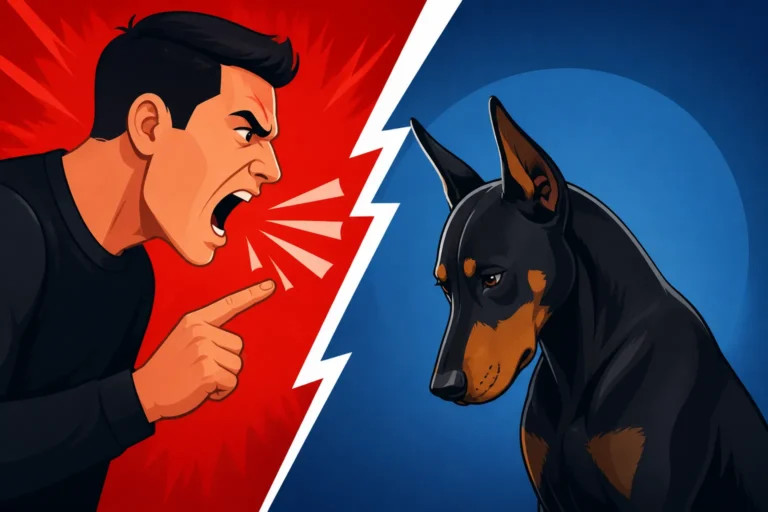
It's vital to choose a professional who uses positive reinforcement and force-free methods. Punishing a Doberman for exhibiting separation anxiety will only increase their fear and anxiety, making the problem worse. Instead, the focus should be on building their confidence and helping them feel safe. Reputable online training programs, like those offered by BAXTER & Bella, can also provide a solid foundation for general obedience and confidence building, which might be a good first step before escalating to an in-person behaviorist if issues persist.
The Role of Veterinary Support and Medication
In cases of severe separation distress, behavioral modification alone might not be enough. The anxiety your Doberman experiences can be so profound that it overwhelms their ability to learn and cope. In such situations, your veterinarian, or a veterinary behaviorist, can discuss the possibility of Medication for a Doberman With Separation Distress. Just as humans might need medication to manage severe anxiety, some Dobermans benefit greatly from anti-anxiety medications that help to lower their overall stress levels, making them more receptive to training.
These medications are not a "magic pill" that solves the problem on their own. Instead, they are typically used as an adjunct to a comprehensive behavioral modification plan. They help to create a window of opportunity where your Doberman can actually learn to be calm in your absence. Your vet can advise on suitable options, potential side effects, and monitor your Doberman's progress. It’s a serious step, but for a Doberman suffering profoundly, it can be life-changing.
Regular health check-ups are also important, as sometimes underlying medical conditions can contribute to behavioral changes or exacerbate anxiety. Pain, hormonal imbalances (like thyroid issues), or even declining senses in older Dobermans can make them more anxious when alone. Your vet can rule out these possibilities, ensuring you're addressing all potential factors contributing to your Doberman's struggles. The Thyroid Numbers That Slow a Doberman Down can sometimes have an impact on their general demeanor and resilience. Don't hesitate to involve your veterinary team as a crucial part of your support network when tackling separation challenges.
Disclaimer
This article is for general informational purposes only and does not constitute professional advice. Laws, prices and regulations vary by location and change over time. Consult a qualified professional for guidance on your specific situation.