How a European Doberman Is Built Differently
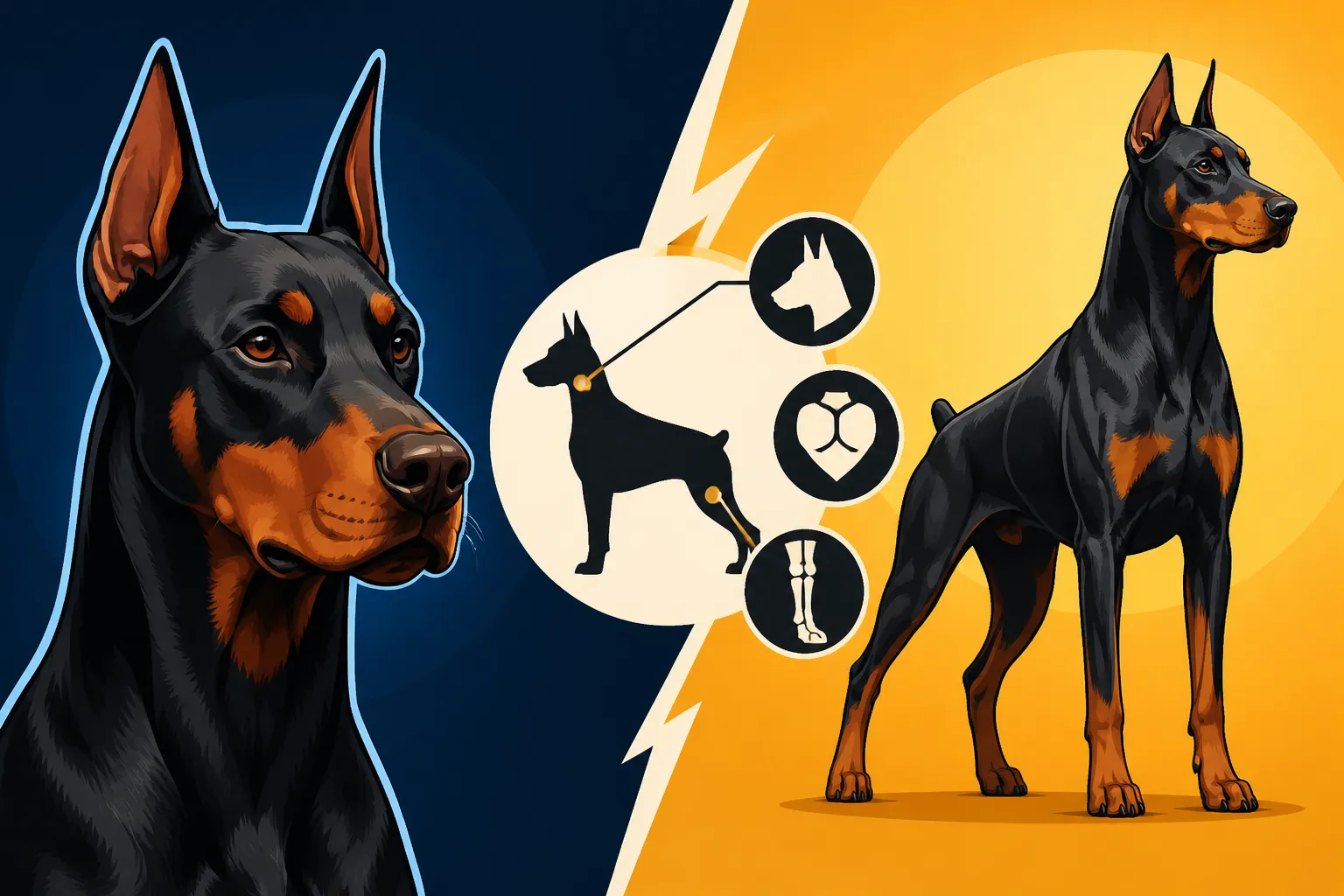
One of the most common questions I hear from Doberman enthusiasts, especially those researching their first dog, is about the differences between American and European lines. It’s easy to get lost in the sea of opinions online, but at the heart of it, European Dobermans are indeed built differently, and these distinctions go far beyond just a slightly "bigger" dog. Understanding these physical nuances can help you appreciate the breed's history, predict potential care needs, and even understand why certain traits manifest the way they do. This guide will meticulously break down the key structural and aesthetic variations that set the European Doberman apart, giving you a clearer picture of what to expect.
The Foundation: Bone Structure and Overall Substance
When you first lay eyes on a European Doberman, one of the most immediate impressions is their undeniable substance. They simply appear more solid than their American counterparts, and this isn't just an illusion; it's rooted in fundamental differences in their skeletal and overall body structure. This more robust build is a direct reflection of their breeding history, where an emphasis was placed on utility and working ability, demanding a dog that could withstand rigorous physical demands.
Skeletal Mass and Density
A European Doberman typically boasts a heavier bone structure. Think of it like comparing a sleek, agile sprinter to a powerful, sturdy lineman. Both are athletic, but their builds are designed for different kinds of exertion. The bones of a European Doberman are generally thicker and denser, contributing significantly to their overall weight and giving them a more substantial frame. This isn't about being overweight; it's about inherent skeletal mass. When you run your hands over a European Doberman, you'll often feel a broader chest, thicker legs, and a more pronounced rib cage. This heavier bone contributes to a sense of "power" that many people associate with the breed's original purpose as a guardian and working dog.
In contrast, the American Doberman, while still a powerful and athletic dog, often has a more refined, lighter bone structure. The American breed standard tends to favor elegance and athleticism in the show ring, leading to a selection for a more graceful, less heavily built dog. This lighter build can make them appear more "airy" or "leggy" to some, particularly when compared side-by-side with a European Doberman. Owners of European Dobermans often find that collars and harnesses designed for typical large breeds might feel a bit flimsy or undersized, and they might need to look for heavy-duty options from retailers like Chewy that cater to more substantial dogs.
Overall Body Proportions and Depth
Beyond bone mass, the overall body proportions of a European Doberman often lean towards a more compact and deep-chested silhouette. Their bodies tend to be slightly shorter in length compared to their height, giving them a more square or blocky appearance. This isn't to say they are squat, but rather that their substance is carried more compactly. The chest, in particular, is often notably broader and deeper, reaching almost to the elbows. This deep chest provides ample room for vital organs, a trait historically valued in working dogs requiring stamina.
The depth of chest and compact body can have practical implications for owners. Finding a well-fitting harness for such a deep chest can sometimes be a challenge, requiring careful measurement to ensure comfort and prevent chafing. Moreover, this deep, narrow chest conformation is also a factor in understanding health concerns like bloat, or gastric dilatation-volvulus (GDV), a risk for all Dobermans but especially those with this body type. Proper meal timing and post-meal rest are crucial. Meal Timing on a Deep-Narrow Doberman Chest delves into this important aspect of care.
American Dobermans, by comparison, often present a slightly longer, more elegant body. The breed standard calls for a body that is nearly square, but in practice, many American show lines exhibit a body that is slightly longer than it is tall, giving them a more sleek, flowing outline. Their chests are still deep, but perhaps less broad and sometimes appear less "full" than their European counterparts. This difference in proportions gives them a different kinetic energy when they move—often described as more agile and fluid, as opposed to the powerful, ground-covering stride of many European lines.
Power and Presence: Musculature and Conditioning
The physical distinctions between European and American Dobermans are not solely about bone; they also manifest strongly in their musculature and the overall impression of their athleticism. These differences again stem from the diverging breeding philosophies that have shaped each line over generations.
Muscle Definition and Mass
A European Doberman is often characterized by pronounced muscle definition and greater overall muscle mass. This isn't just about being "big" but about the quality and quantity of muscle tissue. Their shoulders are typically broader and more heavily muscled, their hindquarters powerful and well-developed, giving them immense driving force. When a European Doberman moves, you can often see the muscles ripple under their short, sleek coat, a testament to their inherent strength. This robust musculature is a direct result of being bred for demanding working roles, where powerful bursts of speed, sustained endurance, and the ability to physically engage were paramount.
This greater muscle mass contributes to their overall weight and imposing presence. Owners of European Dobermans often talk about the sheer physical strength of their dogs, requiring solid leash training and appropriate equipment to manage their power. Leash Manners for an Eighty-Pound Doberman offers great advice on this topic. You might find yourself needing extra sturdy leashes and harnesses, and perhaps even heavier-duty toys, which are readily available from online pet supply stores. For example, Chewy carries a broad selection of durable toys and training gear that can stand up to a strong Doberman's play.
The American Doberman, while undeniably muscular and athletic, tends to have a leaner, more refined musculature. Their muscles are often described as sleek and toned rather than overtly bulky. The emphasis in American lines has been on grace and agility, leading to a physique that embodies speed and elegance. This doesn't mean they are weak; a well-conditioned American Doberman is still incredibly strong and capable. However, the visual impression is typically one of a more aerodynamic and less "heavy" dog. This difference in muscle mass also contributes to the differing weight ranges observed between the two types, with European Dobermans often being at the higher end or exceeding the weight ranges specified in the American Kennel Club (AKC) standard.
Working Dog Physique
The entire physique of a European Doberman often screams "working dog." From their powerful neck that flows into a broad, deep chest, to their well-sprung ribs and substantial hindquarters, every aspect of their build seems designed for endurance and power. They are built to cover ground efficiently, possess formidable strength, and exhibit the stamina required for tasks such as protection work, tracking, or competitive obedience. Their higher bone density and muscle mass make them incredibly durable, capable of withstanding physical stress and recovering quickly.
This working heritage means that many European Dobermans thrive on having a "job" to do. They often possess a strong drive and require significant physical and mental exercise to be truly content. Owners often engage them in activities like Schutzhund, IPO, or other protection sports where their natural build and temperament excel. The Working Sports a Doberman Was Built For explores these activities in detail. Their substantial build allows them to perform these demanding tasks effectively, providing both physical and mental stimulation.
Conversely, while many American Dobermans are also highly capable working dogs and excel in various sports, their physique is often bred with a greater emphasis on the aesthetics of the show ring. The American standard calls for elegance and refinement, which, over generations, has sometimes led to a slightly less "rugged" appearance compared to their European cousins. While they retain their intelligence, drive, and athleticism, the physical manifestation of these traits often presents as more agile and less overtly powerful. This doesn't make them any less of a Doberman, but rather a different expression of the breed's potential, tailored for a different ideal.
The Head: Cranial and Facial Distinctives
Beyond the body, one of the most striking differences between European and American Dobermans can be seen in their heads. These variations contribute significantly to the overall "look" and expression, making it relatively easy to distinguish between the two types once you know what to look for. These cranial differences aren't just cosmetic; they often tie into the broader breeding goals for each line.
Skull Shape and Muzzle Width
The head of a European Doberman is typically described as being broader, heavier, and more substantial than that of an American Doberman. The skull often appears wider between the ears, giving a more robust and powerful impression. The muzzle tends to be deeper and broader, tapering cleanly but not excessively from the stop to the nose. This broader muzzle often means they have a stronger, more powerful bite and jaw structure, again reflecting their working dog heritage where physical capability was prioritized. When you see a European Doberman's head, it conveys an undeniable sense of strength and authority.
This heavier head can sometimes mean finding certain accessories, like specialized muzzles for vet visits or training, requires specific sizing. It's not uncommon for owners to measure their dog's head carefully before ordering to ensure a comfortable fit. The broader skull also contributes to the overall imposing presence that is a hallmark of the European Doberman. Why European Dobermans Have Heavier Heads goes into more detail about this specific trait.
The American Doberman, by contrast, generally has a more refined, elegant head. The skull is typically narrower, and the muzzle is often longer and more finely chiseled, creating a sleeker profile. The overall impression is one of sophistication and elegance, aligning with the American show ring's preference for a more graceful aesthetic. While still powerful, their head structure tends to be less blocky and more streamlined. This difference in head shape is one of the quickest ways to visually differentiate between the two types for an experienced eye, even without seeing the rest of the body.
Eye and Expression Differences
The eyes and overall expression are another key area of distinction. European Dobermans often have eyes that are set a bit deeper and are typically darker, conveying a more serious, intense, and often watchful expression. Combined with their broader skull and more substantial muzzle, their gaze can appear more piercing and formidable. The expression is often described as intelligent, alert, and very self-assured, reflecting the breed's original role as a courageous guardian. Their eyes are rarely light, and indeed, light eyes are often considered a fault in many Doberman standards, as explored in Why a Light-Eyed Doberman Is Marked Down.
This intense expression is part of what makes European Dobermans so visually striking and commanding. Their overall head conformation contributes to this impression, projecting an air of confidence and strength that is deeply appealing to many Doberman enthusiasts. It’s an expression that speaks volumes about their intelligence and their inherent protective instincts.
American Dobermans, while also possessing intelligent and alert expressions, often have eyes that might appear slightly rounder or set a little less deeply, contributing to a somewhat softer or more open look. Their expression is typically described as lively, inquisitive, and intelligent, reflecting their keen awareness and spirited nature. While still watchful, the overall impression tends to be less stern than their European counterparts. This isn't to say one is "better" than the other, but rather that each expresses the Doberman temperament through slightly different facial aesthetics. Both types are undeniably Doberman, but the subtle nuances in their eyes and overall head shape create distinct visual identities.
Coat, Skin, and Practicalities of Care
While the most significant "build" differences are skeletal and muscular, there are also some subtle variations in coat and skin that can affect the practicalities of care and comfort, often linked to the environments and purposes for which each line was historically bred. These aren't as dramatic as bone structure, but they contribute to the overall experience of owning a European versus an American Doberman.
Coat Texture and Thickness
European Dobermans often have a slightly thicker, denser coat compared to many American lines. While still short, sleek, and smooth, the individual hairs can feel a touch coarser, and the coat itself might have a bit more "body" to it. This subtle difference in coat thickness can offer slightly better insulation against colder weather, a trait that would have been beneficial for a working dog potentially spending more time outdoors or in varied climates. It's still not a thick, double coat by any means, but the difference can be perceptible.
This slightly denser coat can sometimes mean they shed a little more noticeably, though Dobermans are generally low-shedding dogs. Regular brushing with a soft brush or grooming mitt can help manage any loose hair and keep their coat gleaming. Many owners of European Dobermans will seek out specific grooming tools designed for short, dense coats. You can find a wide range of these products, including de-shedding gloves and slicker brushes, at major pet retailers like Chewy, which can make routine grooming easier and more effective.
American Dobermans typically boast an exceptionally fine, sleek, and incredibly short coat. It's often described as feeling like satin or velvet to the touch, lying very close to the body. This coat type emphasizes their elegant lines and gives them a highly polished appearance, which is prized in the show ring. While still providing some protection, this thinner coat offers less insulation, making American Dobermans particularly sensitive to cold temperatures. Both types will shiver in chilly weather due to their lack of undercoat, but the American line might feel it more acutely. The Temperature a Doberman Needs a Coat provides further guidance on keeping your Doberman warm.
Considerations for Equipment and Comfort
The more substantial build of the European Doberman often means practical considerations for owners regarding equipment and comfort. Due to their broader chests, heavier bone, and greater muscle mass, standard-sized harnesses, collars, and even dog beds might need to be specifically chosen for larger, more robust breeds. A harness that fits an American Doberman perfectly might pinch or restrict a European Doberman, necessitating a wider strap or a different cut around the shoulders and chest. Finding durable, comfortable gear that can stand up to their strength and size is a common theme for owners.
For instance, when looking for bedding, a European Doberman's greater weight and more prominent joints benefit immensely from orthopedic beds with high-density foam that can provide adequate support and cushioning. Beds That Cushion a Bony Doberman offers excellent advice on selecting the right bed. Similarly, chew toys need to be incredibly robust to withstand their powerful jaws. Investing in high-quality, durable items from the outset can save money and frustration in the long run. Retailers such as Chewy often have "heavy duty" or "extra large" sections that are invaluable for European Doberman owners.
In contrast, while American Dobermans also require sturdy equipment, their more refined build might allow for a broader range of options in terms of style and fit. Their slightly lighter frame might not put as much stress on bedding, though orthopedic support is always a good idea for a breed prone to joint issues later in life. Ultimately, understanding these subtle but important differences in physical build between European and American Dobermans helps owners make informed decisions about their dog's care, training, and overall well-being. It's not about one being "better" than the other, but about recognizing and appreciating the unique traits that each line brings to this magnificent breed.
| Feature | European Doberman | American Doberman |
|---|---|---|
| Overall Build | More substantial, robust, powerful | More refined, elegant, sleek |
| Bone Structure | Heavier, denser bone | Lighter, more refined bone |
| Body Proportions | More compact, often described as blocky or square-ish | Slightly longer than tall, often more elongated |
| Chest | Broader and deeper, well-sprung ribs | Deep, but often less broad and full |
| Musculature | Pronounced muscle definition, greater mass | Leaner, toned musculature, emphasizing agility |
| Head | Broader skull, deeper/wider muzzle, more substantial | Narrower skull, more chiseled/refined muzzle |
| Eye & Expression | Deeper set, darker eyes, intense, serious, watchful | Slightly rounder/less deep set eyes, lively, inquisitive |
| Coat | Slightly thicker, denser, perhaps a bit coarser | Very fine, sleek, satiny, very close to the body |
| Weight | Often at the higher end or exceeding typical ranges | Generally within or at the lower end of typical ranges |
| Temperament Focus | Historically geared towards working roles, protection | Often bred for show ring aesthetics and companionship |
Disclaimer
This article is for general informational purposes only and does not constitute professional advice. Laws, prices and regulations vary by location and change over time. Consult a qualified professional for guidance on your specific situation.