What the First Doberman Standard Demanded
Have you ever looked at a Doberman and wondered how this magnificent, sleek, and formidable breed came to be? Many of us are drawn to their striking appearance and intelligent gaze, but the path from their origins as a tax collector's protection dog to the noble companion we know today was carefully laid out by a foundational breed standard. This guide will take a deep dive into what that very first Doberman standard demanded, helping us understand the blueprint that defined this incredible dog.
The Vision Behind the Early Standard
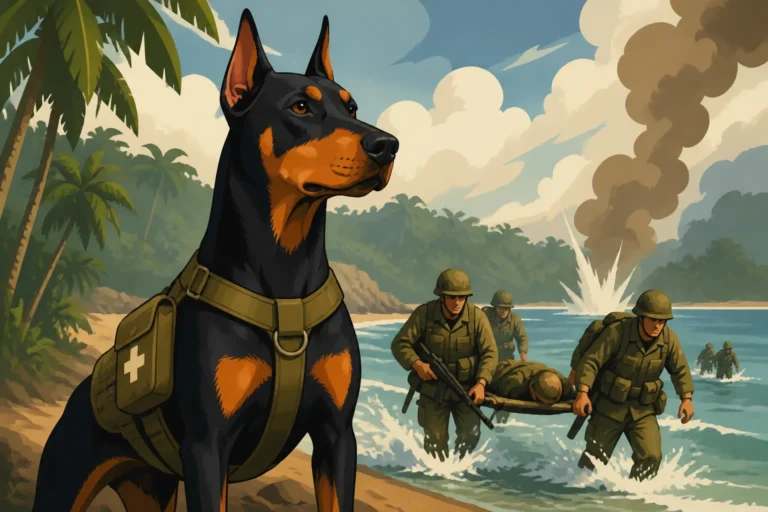
Imagine late 19th-century Apolda, Germany. Karl Friedrich Louis Dobermann, a local tax collector, night watchman, and dog catcher, needed a canine partner that was more than just a pet; he needed a fearless, intelligent, and imposing protector. His vision wasn't about aesthetics alone, but about creating a dog with specific, unyielding working traits. It was from this intensely practical need that the Doberman Pinscher breed began to take shape.
Karl Dobermann's Initial Needs
Karl Dobermann wasn't a show breeder, dreaming of ribbons and accolades. He was a man with a dangerous job, often carrying money through unpredictable streets, and he needed a dog that could deter threats and, if necessary, defend him without hesitation. This meant he sought out dogs known for their courage, sharpness, and loyalty, breeding them selectively to produce offspring with these enhanced qualities. His initial breeding focused on temperament, drive, and physical robustness—traits essential for a guard dog. He wasn't necessarily aiming for a "standard" in the formal sense at first, but rather a functional type of dog that met his immediate, very real safety concerns. It's truly fascinating to think about the direct, hands-on approach that shaped the very foundation of the breed. You can learn more about his story in Karl Dobermann and the Dogs He Needed.
The dogs Dobermann used were likely a mix of local breeds, chosen for their inherent protective instincts and physical prowess. We're talking about breeds that were tough, resilient, and had a natural inclination to guard. This haphazard, yet deeply practical, approach laid the groundwork for the Doberman's core identity. It wasn't about pretty pedigrees or fancy appearances; it was about raw effectiveness. The idea was to combine the best traits from various working dogs of the time, leading to a truly formidable companion. The resulting dogs were sharp, quick, and intimidating, precisely what Dobermann required for his demanding duties.
The Shift Towards a Defined Breed
As Dobermann's dogs gained a reputation for their exceptional guarding abilities, other fanciers and working dog enthusiasts started to take notice. The dogs were proving invaluable for protection, and soon there was a desire to formalize these qualities, to create a consistent breed that could be reproduced reliably. This marked a pivotal shift from a personal project to a recognized breed. It was then that Otto Goeller, another German breeder, took up the mantle, meticulously refining the Doberman's appearance and temperament into a more uniform and consistent type. Goeller, along with others, was instrumental in establishing the first Doberman Pinscher Club in Apolda in 1899, which then led to the formalization of the breed standard. This collective effort ensured that the Doberman's distinct characteristics wouldn't be lost to time, but rather preserved and enhanced for future generations. For a deeper dive into the ancestral dogs, check out What Went Into the First Dobermans.
This formalization was crucial because it meant breeders now had a blueprint, a shared vision of what a Doberman should be. It moved the breed beyond mere functionality to include specific physical attributes that would come to define its iconic look. Think about it: without a standard, every Doberman might look vastly different, lacking the uniformity we recognize today. This shift allowed for structured breeding programs, aiming for specific traits in successive generations, which is how we arrived at the Doberman we cherish today. It was a conscious decision to capture and solidify the essence of Dobermann's original vision, but with an eye towards consistency and breed integrity.
Key Demands of the First Doberman Standard
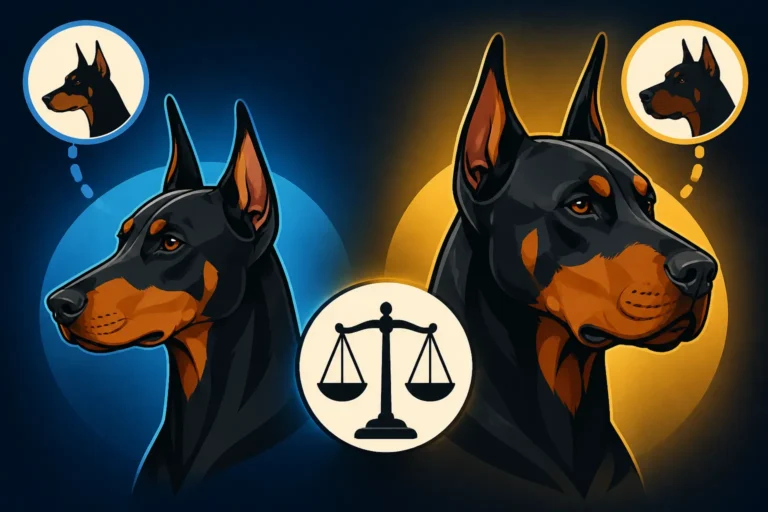
The first official Doberman standard, penned around 1900 in Germany, was a meticulous document that went beyond just describing the dog's appearance. It laid down a precise set of requirements for both physical characteristics and, crucially, temperament. This wasn't just about what the dog looked like; it was about what the dog was and how it behaved. It codified the ideal Doberman, setting the bar high for breeders and owners alike. Understanding these early demands helps us appreciate the breed's historical purpose and its enduring traits.
Physical Characteristics: Form and Function
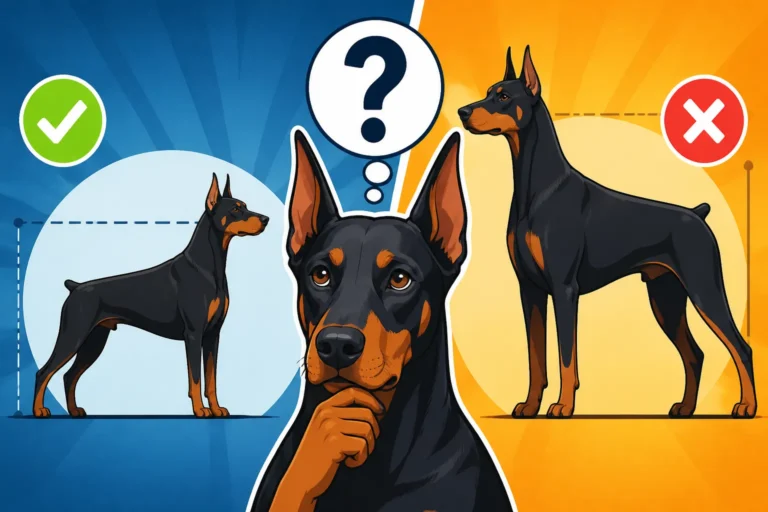
The early standard emphasized a medium-sized dog, powerful and muscular, yet elegant in its lines. This combination of strength and grace was vital for a dog that needed to be agile and fast, as well as imposing. A Doberman wasn't meant to be clunky or overly heavy; it needed to move with purpose and efficiency. The coat was to be short, hard, dense, and lie close to the body, offering protection without hindering movement. The preferred color was black with sharply defined rust markings – a classic combination that still dominates the breed's image today.
| Trait | Original Doberman Standard Demand |
|---|---|
| Temperament | Fearless, sharp, energetic, courageous, yet manageable and intelligent. |
| Build | Medium-sized, powerful, muscular, elegant, with a deep chest. |
| Coat | Short, hard, dense, close-fitting, smooth. |
| Color | Predominantly black with sharply defined rust markings. |
| Ears | Cropped and carried erect (though natural ears were present, cropping was widely practiced). |
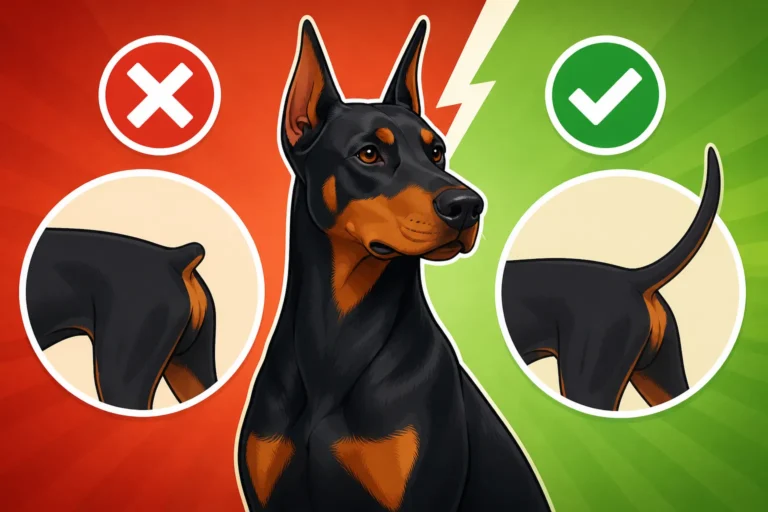
| Tail | Docked short (considered the standard for a working dog). |
Beyond these generalities, the standard delved into specifics, describing the ideal head shape—a blunt wedge—and the dark, intelligent eyes that were to convey alertness and courage. The neck was to be muscular and arched, flowing smoothly into a strong back and powerful hindquarters. Every aspect of the physique was described with an eye toward utility. Legs were to be straight and strong, feet compact—all designed for sustained activity and powerful propulsion. This attention to detail ensured that the Doberman remained a highly functional animal, capable of performing the demanding tasks it was bred for. For those curious about the specifics, you can delve into The 1900 German Doberman Standard.
The practice of ear cropping and tail docking, while controversial today, was an integral part of the early Doberman's working aesthetic. These alterations were performed to reduce vulnerabilities in potential confrontations, making the dog a more effective deterrent and protector. While the standard may not have explicitly demanded these procedures in the same way it described coat color, they were undeniably a defining characteristic of the Doberman’s appearance from its very inception, deeply embedded in the breed's image and function. It's a poignant reminder of how the breed's look was tied directly to its practical, protective roots.
Temperament: Courage and Control
Perhaps even more critical than physical appearance, the first Doberman standard placed immense emphasis on temperament. This wasn't just about being a fierce guard dog; it was about being a controlled and intelligent fierce guard dog. The standard called for a dog that was fearless, sharp, and energetic, possessing undeniable courage. However, crucially, it also stressed manageability and loyalty. A Doberman was expected to be highly trainable, intelligent, and completely devoted to its owner, ready to act on command. This duality of fierce protector and loyal companion is the hallmark of the breed.
The ideal Doberman, as envisioned by the standard, had a strong prey drive and an inherent suspicion of strangers, but these traits had to be tempered with absolute self-control. It was never meant to be a reckless or uncontrollably aggressive animal. Instead, the dog needed to assess situations calmly, reacting only when necessary and with precision. This balance required significant genetic predisposition and dedicated training from an early age. Without this careful cultivation, a Doberman could easily become a liability rather than an asset. It's a powerful testament to the foresight of those who shaped the breed. Many people are still drawn to the breed for its loyal and protective instincts, as described in Doberman Temperament as the Standard Describes It.
This focus on a balanced temperament meant that early breeders were not just selecting for physical prowess, but for sound minds. A Doberman needed to be stable under pressure, intelligent enough to learn complex commands, and willing to work in partnership with its handler. It needed to be confident, not nervous or overly reactive, as true courage doesn't stem from fear but from a deep-seated assurance. This emphasis continues to resonate in the breed today, forming the core of what makes a Doberman such a unique and rewarding companion for the right owner. Choosing the right food from retailers like Chewy, which often offers specialized diets for active working breeds, also contributes to their overall health and mental well-being, supporting that energetic temperament.
How the Original Standard Influenced the Breed's Future
The legacy of the first Doberman standard cannot be overstated. It laid the foundation for every subsequent iteration of the breed standard, guiding breeders for generations and deeply influencing the Doberman we recognize today. While certain aspects have evolved, the core essence — the blend of noble appearance, intelligence, courage, and loyalty — remains firmly rooted in those initial demands.
The Enduring Legacy on Modern Dobermans
Even today, when we look at the American Kennel Club (AKC) standard for the Doberman Pinscher, we can trace a direct lineage back to those early German descriptions. The Doberman the AKC Standard Describes still emphasizes a dog of medium size, muscular strength, and elegant lines, with a proud carriage and an expression of alertness and determination. The expectation of a devoted, intelligent, and trainable companion who is also a formidable protector remains paramount. The standard is a living document, but its historical roots provide a clear blueprint that continues to define the breed's character.
Modern Dobermans are still celebrated for their keen intelligence and their "Velcro dog" tendency to stick close to their human companions. This loyalty and strong bond were inherent in the original vision: a dog that was utterly devoted to its owner, making it a reliable partner in any situation. While the focus might have shifted slightly from strictly guarding a tax collector to being a beloved family member, the underlying traits of attentiveness and protectiveness are still there. Breeders today strive to maintain that balance of courage and stability, ensuring that the Doberman remains true to its heritage. Understanding this legacy helps new owners appreciate the deep-seated traits they encounter in their Dobermans, allowing them to provide appropriate training and socialization.
Early Challenges and Adaptations
The path from the first standard to the modern Doberman wasn't without its challenges. As the breed gained popularity, there were periods where breeders prioritized certain traits over others, sometimes inadvertently diluting the very qualities the standard sought to preserve. For example, there was a time when some lines became overly sharp or nervous, straying from the ideal of controlled courage. This led to conscious efforts by dedicated breeders to realign with the foundational temperament. This constant vigilance is why breed clubs are so important, acting as guardians of the standard.
Furthermore, as Dobermans spread globally, minor variations in interpretation arose, leading to the distinct "American" and "European" types we sometimes hear about today. While both adhere to the core tenets of the original standard, subtle differences in emphasis on conformation or working drive emerged. For instance, after the 1950s, there was a push to refine the Doberman's temperament, making them more suitable as family companions. This evolution is covered in more detail in Why the Doberman Softened After the 1950s. These adaptations weren't about abandoning the original vision, but rather about ensuring the Doberman could thrive in changing societal roles while retaining its fundamental characteristics. This adaptability, guided by the enduring principles of the first standard, has allowed the Doberman to remain a cherished and respected breed. Finding a reputable breeder who prioritizes health and temperament, and who understands these historical demands, is paramount for any prospective owner. Even when looking for supplies, knowing your Doberman's original purpose can inform choices, from sturdy toys found on sites like Chewy to proper training equipment.
The first Doberman standard was a bold declaration of intent, outlining a breed that was as much about inner character as it was about outward appearance. It sought a powerful protector who was also a loyal, intelligent, and manageable companion. This vision, born from necessity, continues to shape the Doberman breed, reminding us of the incredible thought and dedication that went into creating these truly magnificent dogs. Choosing to bring a Doberman into your life means embracing this rich history and committing to an animal whose very essence was defined by purpose and precision. It's a rewarding journey for the dedicated owner who understands The Owner a Doberman Actually Needs and is prepared for What a First Doberman Demands of Its Owner.
Disclaimer
This article is for general informational purposes only and does not constitute professional advice. Laws, prices and regulations vary by location and change over time. Consult a qualified professional for guidance on your specific situation.