Karl Dobermann and the Dogs He Needed
Have you ever looked at a Doberman – that sleek, powerful, and utterly devoted companion – and wondered how such a magnificent creature came to be? Many of us appreciate the Doberman for its protective instincts and sharp intelligence, but few realize the very personal motivations that drove its creation. This guide dives deep into the life of Karl Dobermann, a man whose unique circumstances led him to develop one of the most iconic breeds in canine history, exploring the types of dogs he sought out and the specific traits he painstakingly blended.
The Man Behind the Breed: Karl Friedrich Louis Dobermann's Vision
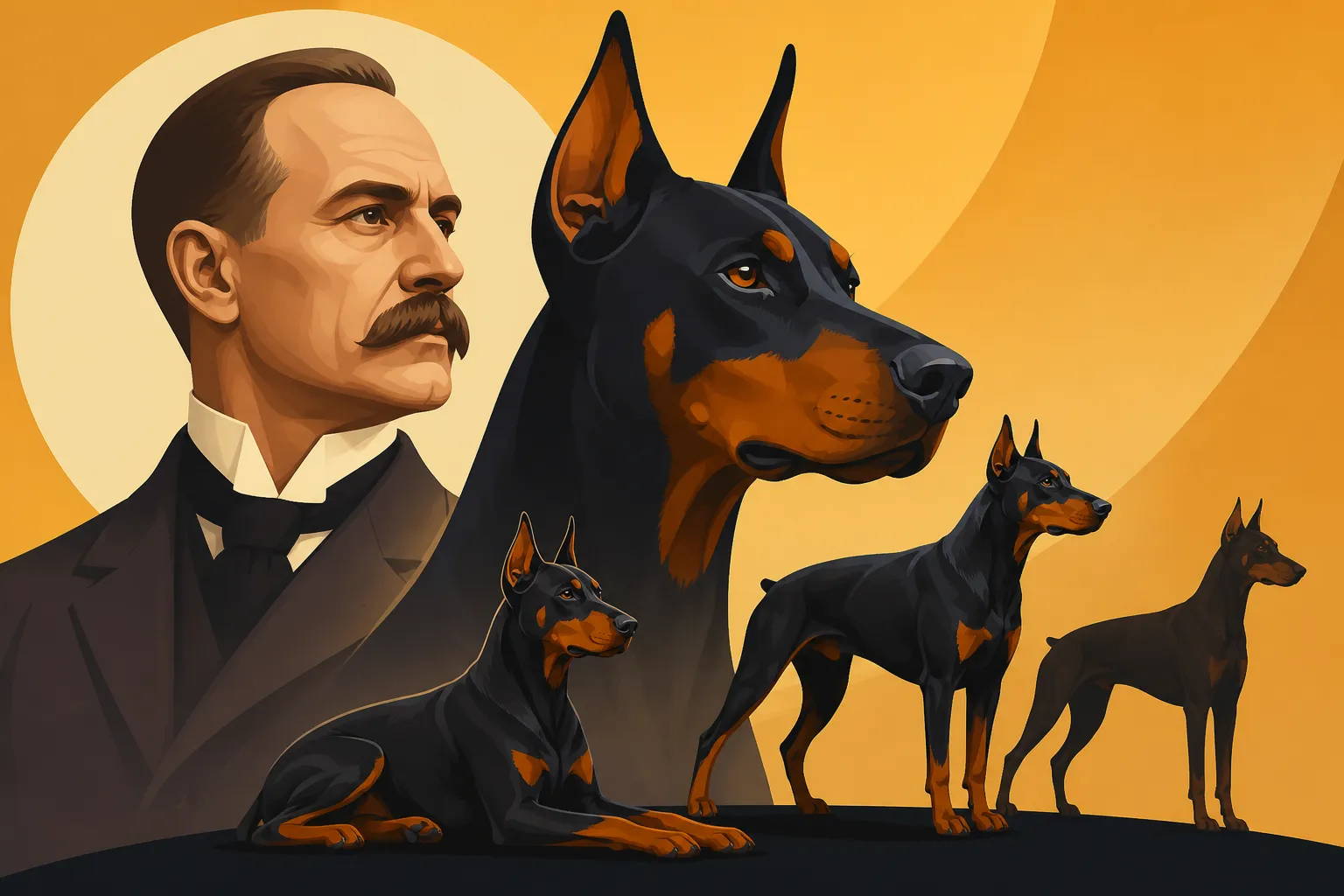
Imagine living in a time and place where your personal safety and the security of your livelihood were constantly at risk. This wasn't some far-flung, ancient era; this was 19th-century Germany, and for Karl Dobermann, a tax collector, dog catcher, and night watchman in the town of Apolda, Thuringia, it was his daily reality. His life was filled with situations where he needed unwavering protection and a reliable companion, driving a very specific vision for the kind of dog he needed by his side.
The Tax Collector's Unique Predicament
Being a tax collector in 19th-century Apolda was not for the faint of heart. Picture yourself knocking on doors, often in less-than-savory neighborhoods, demanding money from people who might be struggling, resentful, or even dangerous. It was a profession that made one a target, plain and simple. Karl Dobermann, carrying sums of money, often had to traverse isolated paths and encounter individuals who might view him as an easy mark. This constant exposure to potential threats, coupled with his other roles, created a deep-seated need for a canine partner that was more than just a pet; it needed to be a deterrent, a protector, and a loyal guardian. The fear of being robbed or harmed was a very real, tangible pressure that shaped his entire breeding philosophy. He wasn't just breeding for aesthetics or sport; he was breeding for survival.
His Need for a Loyal, Fearless Protector
Beyond the threats of his profession, Karl Dobermann also held the role of town dog catcher. This meant he often dealt with stray, potentially aggressive, or frightened dogs. His work required a certain level of courage and authority, and he certainly wouldn't want his own dog to be anything less than confident and unshakeable in such encounters. As a night watchman, he patrolled the quiet, often dark streets of Apolda, a job that called for acute senses, an intimidating presence, and a dog that would alert him to any danger and stand its ground without hesitation. He wasn't looking for a timid shadow; he needed a fearless ally. This combination of roles painted a clear picture of the ideal dog: one that was unequivocally loyal, completely fearless, highly intelligent, and capable of both deterring threats and, if necessary, defending its master. These were the core attributes that would define the emerging Doberman breed. The Tax Collector Who Invented the Doberman truly needed a special kind of canine companion.
The Ancestral Blueprint: Breeds Karl Dobermann Likely Used
Karl Dobermann, as the official dog catcher, had a unique advantage: access to a variety of local dogs, many of them mixes, strays, or working types. He wasn't working with established, purebred lines in the way a modern breeder would. Instead, he was selecting individuals based purely on their traits and temperament, aiming to combine the best attributes of the dogs he encountered. This hands-on, utilitarian approach was fundamental to the Doberman's creation.
Early German Shepherd-Type Dogs and the Rottweiler's Influence
While not the refined German Shepherds we know today, there were certainly local shepherd-type dogs in Dobermann's vicinity. These dogs, often used for herding and guarding livestock, would have possessed a natural protective instinct, intelligence, and a strong work ethic. Their ability to learn quickly and their inherent alertness would have been invaluable. Alongside these, the Rottweiler's influence is widely acknowledged and makes perfect sense given the historical context. Rottweilers, or their ancestors, were cattle-driving dogs, known for their incredible strength, powerful build, and steadfast guarding abilities. They were robust, courageous, and deeply devoted to their owners, making them ideal candidates to contribute to the Doberman's protective nature and physical prowess. Whether the Rottweiler Is in the Doberman is a question that often arises, and the historical evidence strongly suggests a significant role. The Rottweiler’s intimidating presence and inherent guarding drive would have been key elements Dobermann sought to integrate.
The Contribution of Terriers and Hounds
To achieve the Doberman's distinctive athleticism, keen senses, and sharp mind, Dobermann likely incorporated traits from various terriers and even some hound types. Terriers, with their tenacity, fearlessness, and compact, agile builds, would have contributed to the Doberman's quick reflexes and formidable spirit. Imagine a dog that, despite its size, possesses the "never-quit" attitude of a terrier – that's a powerful combination for a protector. The Manchester Terrier, in particular, is often cited as a possible ancestor due to its sleek coat, athleticism, and sharp intelligence, and some believe its genes helped refine the Doberman's appearance and alertness. Whether the Manchester Terrier Shaped the Doberman points to the refinement of the breed’s overall silhouette and inherent drive.
Furthermore, some historians suggest the inclusion of Greyhound-type dogs, or other sighthounds. This might seem surprising for a guard dog, but consider the need for speed and agility. Dobermann needed a dog that could not only deter but also pursue and apprehend if necessary. The incredible speed and graceful movement of a Greyhound would have added that crucial element of swiftness, allowing the Doberman to cover ground rapidly. This blend created a dog that was not only powerful but also incredibly athletic and quick, capable of reacting instantly to a threat. The Greyhound Line Behind Doberman Speed provides a fascinating look into this aspect of their genetic makeup.
The Role of the German Pinscher
The "Pinscher" in Dobermann's original naming of the breed, "Dobermann Pinscher," is a direct nod to the German Pinscher. This breed, and its rougher ancestors, were formidable ratters and farm dogs, known for their high intelligence, energetic nature, and fearless attitude despite their smaller stature. They were quick, alert, and perpetually watchful – exactly the traits a night watchman would desire in a companion. The German Pinscher would have contributed significantly to the Doberman's sharp intellect, its keen observational skills, and its innate desire to patrol and protect its territory. This breed also shared the distinctive "pinscher" type, characterized by its elegant yet robust build, providing a foundation for the Doberman's sleek silhouette. It’s a breed that, in many ways, provided the "essence" of the Doberman's alertness and quick wit.
The Traits Dobermann Sought to Meld
Karl Dobermann wasn't just randomly breeding dogs; he had a very clear mental image of his ideal companion. He was selecting for a very specific set of characteristics, prioritizing utility and function over mere appearance. This intentionality is what makes the Doberman so remarkable, as its core traits are a direct reflection of its founder's needs.
Unwavering Loyalty and One-Person Focus
For a man in Dobermann's precarious line of work, absolute loyalty was non-negotiable. He needed a dog that would stick by his side through thick and thin, unwavering in its devotion and commitment to him alone. This deeply ingrained loyalty is still a hallmark of the Doberman today, often earning them the nickname "Velcro dogs" because of their tendency to shadow their chosen person. This isn't just a charming quirk; it's a genetic echo of Dobermann's original requirement for a dog that was fiercely bonded and singularly focused on its handler. Imagine the comfort of knowing that, no matter the danger you faced, your canine partner would never leave your side. This intense loyalty also made the Doberman less likely to be swayed by strangers, further enhancing its effectiveness as a personal guard dog.
Speed, Agility, and Endurance
The demands of Dobermann's varied roles required a dog that was physically capable in many respects. As a night watchman, he needed a dog that could cover significant ground efficiently and tirelessly. As a tax collector, encountering potentially hostile situations, he needed a dog that could react with lightning speed, whether to intercept a threat or to move out of harm's way. This meant breeding for excellent physical condition, muscular strength, and an agile frame. The Doberman's characteristic powerful, ground-covering gait and its lean, athletic build are direct results of this selective breeding for performance. He wasn't looking for a bulky, slow dog, but rather a streamlined athlete that could sustain effort and explode into action when necessary.
A Formidable Presence and Keen Intelligence
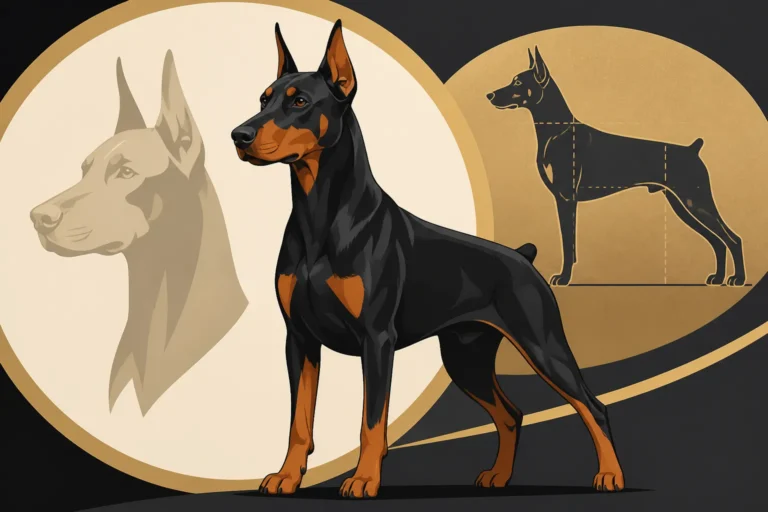
Finally, Dobermann needed a dog that commanded respect and possessed an intelligent mind. A formidable presence was crucial for deterrence; a dog that looked capable of defending its master could often prevent a confrontation from escalating. The Doberman's noble, authoritative stance and intense gaze speak directly to this requirement. But looks alone aren't enough. The dog also had to be intelligent enough to understand commands quickly, assess situations accurately, and make sound decisions under pressure. This intelligence, combined with its biddability, meant that a Doberman could be trained to perform complex tasks and respond appropriately without constant instruction. It was about having a partner who was not just strong, but smart – a true thinking dog that could act as an extension of its master's will. What Went Into the First Dobermans was truly a masterclass in functional breeding.
The "Dobermann Pinscher" Takes Shape
The creation of the Doberman wasn't an overnight process. It involved years of careful observation, strategic breeding, and a relentless pursuit of Dobermann's ideal dog. He laid the foundation, and others would later refine his work, but the essence of the breed truly began with his focused efforts in Apolda.
The Initial Years of Experimentation
For many years, Karl Dobermann was the primary, if not sole, breeder of his unique dogs. He would selectively breed the dogs he acquired, keeping puppies that best exhibited the traits he desired – the deepest loyalty, the most fearless temperament, the quickest mind, and the most athletic build. He wasn't necessarily keeping meticulous pedigree records as we understand them today, but rather operating on an intuitive, results-driven method. Each generation would ideally be a step closer to his vision. It was a true labor of love and necessity, born out of his personal circumstances. The local community quickly recognized the value of these dogs, often referring to them as "Dobermann's dogs," a testament to his distinct breeding efforts. The Years Dobermann Spent Breeding illustrate the dedication required for such a monumental undertaking.
The Importance of Selective Breeding and Refinement
Once Karl Dobermann's dogs gained local recognition, other enthusiasts and breeders began to take an interest. After his death, figures like Otto Goeller stepped in to continue and refine the breed. Goeller, considered the "Father of the Doberman," meticulously documented pedigrees and helped establish the first breed standard, formalizing what Dobermann had started. This period of refinement involved consolidating the desired traits, reducing undesirable ones, and ensuring a consistent type. It was about transforming Dobermann's personal guard dogs into a recognized, stable breed that could be reliably reproduced. This collective effort solidified the Doberman's characteristics and ensured its survival and popularity far beyond Apolda. Otto Goeller and the First Doberman Club played a pivotal role in this crucial phase, turning a functional working dog into a recognized breed.
The Legacy of a Visionary Breeder
Karl Dobermann's motivations were practical, deeply personal, and born out of necessity. Yet, his work inadvertently created a breed that would transcend its original purpose, captivating dog lovers worldwide with its elegance, intelligence, and protective nature. His legacy is etched into the very DNA of every Doberman.
From Local Guard Dog to International Icon
From its humble beginnings as a tax collector's indispensable companion, the Doberman quickly ascended to prominence. Its reputation as an intelligent, fearless, and loyal protector spread, first across Germany, then throughout Europe, and eventually across the globe. The breed's striking appearance, combined with its formidable capabilities, made it highly sought after for various roles, including police and military work, as well as a dedicated family guardian. It became, and remains, a symbol of canine courage and devotion, a far cry from the utilitarian mixed-breed dogs Dobermann initially worked with. The journey from a small German town to international recognition is a testament to the enduring quality of Dobermann's original vision.
Enduring Traits in the Modern Doberman
Even today, the core traits Karl Dobermann bred for are unmistakably present in the modern Doberman. Their intense loyalty, sharp intelligence, and inherent protective instincts are what draw so many to the breed. While selective breeding over the decades has refined their appearance and, in some lines, softened their edge for family companionship, the Doberman’s capacity to be a vigilant guardian and a devoted member of the family remains paramount. When you look into the intelligent, watchful eyes of a Doberman, you're seeing the reflection of Karl Dobermann's original need for a loyal, fearless protector. The breed is a living tribute to a man who, driven by the practical demands of his life, created a canine masterpiece. Understanding What the First Doberman Standard Demanded helps us appreciate how consistent these foundational traits have remained over time.
To further illustrate the blend of attributes Karl Dobermann sought, let's consider a simple comparison of the foundational traits he prioritized:
| Trait Category | Key Characteristics Sought | Ancestral Breeds Likely Contributing | Modern Doberman Manifestation |
|---|---|---|---|
| Temperament | Fearlessness, Loyalty, Confidence | Rottweiler, German Pinscher, Terriers | Unwavering devotion, protective instinct, bold demeanor |
| Intelligence | Quick Learner, Biddable, Alert | German Pinscher, Shepherd-type dogs | High trainability, problem-solving ability, keen awareness |
| Physicality | Speed, Agility, Endurance, Strength | Greyhound-types, Rottweiler, Terriers | Athletic build, powerful gait, quick reflexes, stamina |
| Presence | Intimidating, Dignified | Rottweiler, Shepherd-type dogs | Noble appearance, alert posture, strong deterrence |
This table clearly shows how the diverse backgrounds of the likely ancestral breeds contributed to the Doberman's unique combination of form and function, all guided by Karl Dobermann's specific needs.
Disclaimer
This article is for general informational purposes only and does not constitute professional advice. Laws, prices and regulations vary by location and change over time. Consult a qualified professional for guidance on your specific situation.