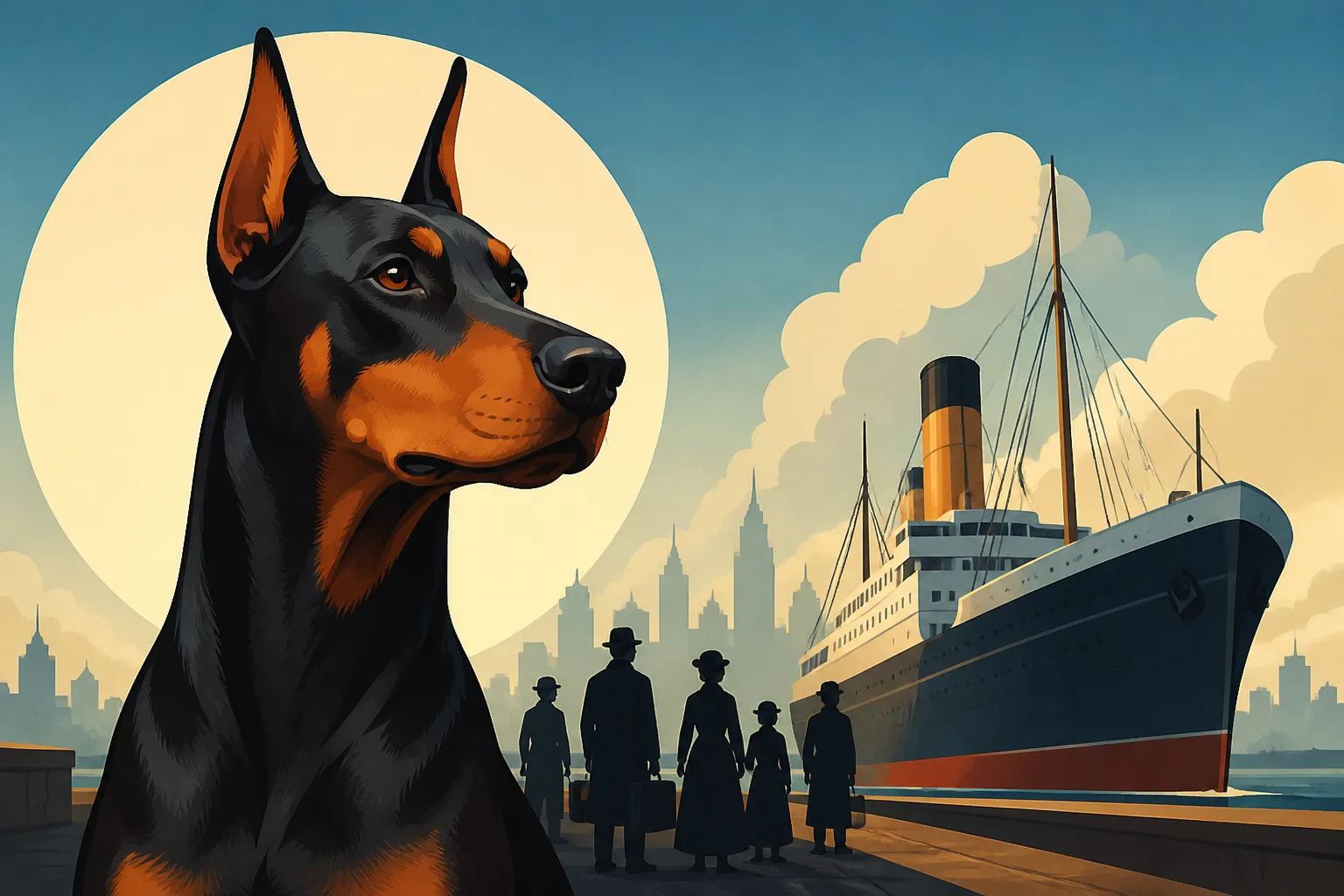
When Dobermans First Arrived in America
Many of us are deeply curious about the journey our Dobermans took to become the powerful, intelligent companions we know and love today. While their origins are firmly planted in the 19th-century German town of Apolda, the story of how these formidable dogs first made their way across the Atlantic and put down roots in America is a fascinating tale, often glossed over. This guide will explore the precise period when Dobermans first arrived in the United States, how they were received, and the pivotal role early enthusiasts played in establishing the breed as a prominent fixture in American homes and hearts.
The Pioneering Journeys: Early Dobermans Arrive in America
It's a common misconception that Dobermans arrived in America as a single, grand import event, but the reality is a little more nuanced. Like many breeds, their presence here was a gradual process, driven by individual enthusiasts and a burgeoning interest in working dogs from Europe. Imagine the sheer undertaking of bringing a dog across the ocean in those days – it wasn't a simple flight or a quick online order from a pet supplier like Chewy! It involved long voyages, significant expense, and a dedication that truly speaks to the captivating nature of these dogs.
When the First Dobermans Set Paw on American Soil
While precise records can be a bit hazy from so long ago, historical accounts suggest that the very first Dobermans likely arrived in the United States in the early 1900s. We're talking about the turn of the 20th century, a time when dog breeding and showing were rapidly gaining popularity, and people were looking beyond purely local stock. These initial imports weren't necessarily part of a coordinated effort by a large kennel but rather the passionate pursuit of individuals who had encountered the breed in its native Germany and recognized its potential. They saw something special in these dogs, a combination of loyalty, intelligence, and protective instinct that was unlike anything commonly seen in America.
Think about what these early dogs represented: not just a new breed, but a testament to the vision of The Tax Collector Who Invented the Doberman, Karl Friedrich Louis Dobermann himself. These were dogs still very close to his original concept of a fearless protector. Their arrival was undoubtedly met with curiosity, and perhaps a little trepidation, given their formidable appearance and reputation. These were not simply pets; they were dogs with a purpose, bred for a specific job, and their traits would naturally intrigue those looking for something beyond a typical companion animal.
The Initial Reception and Interest in the Breed
Once these first Dobermans arrived, they began to slowly gain recognition. Early adopters were often those involved in the burgeoning dog fancy, people who appreciated distinct breeds and their specific attributes. The breed's striking appearance – sleek, powerful, and alert – combined with its reputation as an intelligent and devoted protector, quickly made an impression. It wasn't long before word spread among dog enthusiasts, creating a demand for these "new" German dogs. The initial interest wasn't widespread among the general public, but rather concentrated within a niche group of knowledgeable individuals who understood the potential of a well-bred and properly trained Doberman.
These weren't just random dogs, either. The early imports often came from reputable European kennels that were already working to establish the breed's standards and ensure quality. As such, the dogs that made it to America were typically excellent examples of the breed, showcasing the characteristics that Otto Goeller and other German breeders had worked so hard to cultivate. This quality helped to solidify the Doberman's reputation as a serious, capable dog, setting the stage for its eventual rise in popularity.
Building the Doberman Legacy: Early Clubs and Registration
The true establishment of any breed in a new country isn't just about individual dogs arriving; it's about the formation of clubs, the setting of standards, and official recognition. This infrastructure provides the framework for responsible breeding, exhibition, and the dissemination of accurate information about the breed. For the Doberman, this meant a concerted effort by dedicated individuals to organize and advocate for their beloved dogs.
AKC Recognition of the Doberman
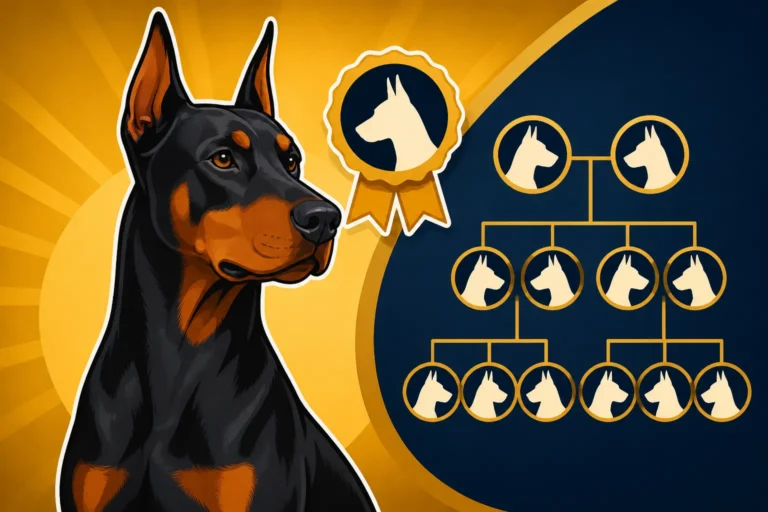
The American Kennel Club (AKC) plays a crucial role in legitimizing and standardizing dog breeds in the United States. For the Doberman, formal recognition by the AKC was a significant milestone, marking its official entry into the American dog world. This recognition didn't happen overnight; it was the culmination of years of individual imports and growing interest. AKC Recognition of the Doberman in 1908 meant that Dobermans could now be officially registered, participate in conformation shows, and have their pedigrees formally documented. This process brought a much-needed layer of organization and legitimacy to the breed, attracting more serious breeders and enthusiasts.
Prior to official recognition, tracking bloodlines and ensuring proper breeding practices could be a chaotic affair. With AKC backing, breeders had a clear standard to work towards and a system for recording their dogs' lineage, which was essential for maintaining breed integrity. This also allowed for the creation of breed-specific education, guiding new owners on what to expect and how to properly care for their Dobermans, much like how today you can easily find breed-specific guides and products on platforms like Chewy.
The Doberman Pinscher Club of America is Formed
No breed can truly flourish without a dedicated parent club, and for the Doberman, this critical step came with the formation of The Doberman Pinscher Club of America (DPCA). Established in 1921, this club became the official guardian of the breed standard in the U.S., working in conjunction with the AKC. The DPCA's mission was, and still is, to promote responsible breeding, protect the integrity of the breed, and educate the public.
The formation of the DPCA was monumental. It meant there was a collective body of passionate owners and breeders committed to the Doberman's future in America. This club would organize specialty shows, educational seminars, and provide a hub for Doberman enthusiasts to connect and share knowledge. They were instrumental in shaping the American Doberman, deciding what traits should be emphasized and which practices were crucial for the breed's health and longevity. Without their tireless efforts, the Doberman might have struggled to gain the widespread acceptance and stable foundation it eventually achieved.
The Evolution of the American Doberman Type
Once established, breeds often begin to evolve, influenced by local breeding priorities, cultural preferences, and differing interpretations of the breed standard. The Doberman in America was no exception, gradually developing characteristics that, over time, would set it apart from its European counterparts. This divergence is a fascinating aspect of breed history, showcasing how environment and human selection can subtly, yet profoundly, reshape a dog over generations.
Divergence from European Lines
The initial Dobermans in America were, naturally, direct descendants of European stock. However, as American breeders began to focus on specific traits and interpretations of the breed standard, the "American Doberman" started to emerge as a distinct type. While both American and American Against European Dobermans still share the fundamental characteristics of the breed, there are noticeable differences in conformation, bone structure, and even temperament that developed over decades.
For example, European Dobermans were often bred with a stronger emphasis on working ability and a slightly heavier, more robust build. American breeders, while still valuing intelligence and loyalty, might have leaned towards a more refined, elegant appearance in the show ring. This isn't to say one is "better" than the other, but simply that the priorities shifted, leading to subtle but distinct variations in type. You can learn more about these differences in How a European Doberman Is Built Differently. This evolution highlights the dynamic nature of breed development and how breeds adapt to the expectations of their respective regions.
| Characteristic | Early Dobermans (European Influence) | American Dobermans (Post-Establishment) |
|---|---|---|
| Build | Often heavier, more robust | More refined, elegant, athletic |
| Working Drive | High, strong emphasis on utility | Still present, but show ring often prioritized aesthetics |
| Head Type | Stronger, broader skull | More refined, distinct wedge shape |
| Temperament Focus | Fearless protector, strong nerves | Loyal companion, alert, intelligent, sometimes perceived as "softer" |
| Primary Purpose | Police, military, protection work | Companion, show dog, various dog sports |
Shifting Desired Traits and Temperament
Over the years, the desired traits in the American Doberman began to lean towards a more refined show dog, while still retaining the intelligence and alertness that are hallmarks of the breed. There was a conscious effort by some breeders to produce a dog that was perhaps a bit "softer" in temperament than its original German ancestors – not less protective or loyal, but perhaps more amenable to being a family companion rather than solely a hardcore working dog. This shift was partly due to changing societal roles for dogs, with fewer Dobermans being used in traditional police or military capacities, and more entering homes as pets.
This isn't to say the working drive was completely lost, but the emphasis in some lines certainly changed. The Doberman still possesses an incredible mental capacity, as discussed in Training a Doberman That Is Smarter Than You Expect, but the expression of that intelligence might be channeled differently in an American show line versus a European working line. The breed's inherent guarding instincts, described in Doberman Guarding Instinct and Where It Tips Over, remained, but breeders worked to ensure these instincts were manageable and appropriate for a pet environment. This continuous refinement shaped the Doberman into the magnificent animal that continues to captivate hearts across America today. Many breeders today strive for a balance, wanting a dog that is both beautiful and biddable, and resources from organizations like the DPCA, or even general pet supply stores like Chewy, help support owners in achieving that balance.
The Doberman's Rise in Popularity
From its humble beginnings as a few imported individuals, the Doberman's presence in America grew steadily. By the mid-20th century, the breed had cemented its place as one of the most recognizable and respected dog breeds in the country. Its striking appearance, combined with an undeniable intelligence and a reputation for fierce loyalty, made it a symbol of prestige and protection. Movies, television shows, and military service further elevated its profile, showcasing its bravery and capabilities.
The breed's journey from a niche import to a widely recognized and cherished companion is a testament to the dedication of its early proponents and the enduring appeal of its unique qualities. It’s a story of passionate individuals, meticulous breeders, and the inherent majesty of the Doberman itself, a dog that truly embodies strength, elegance, and unwavering devotion. Understanding this history helps us appreciate the journey our Dobermans have taken, and the legacy they carry with every proud stride.
Disclaimer
This article is for general informational purposes only and does not constitute professional advice. Laws, prices and regulations vary by location and change over time. Consult a qualified professional for guidance on your specific situation.