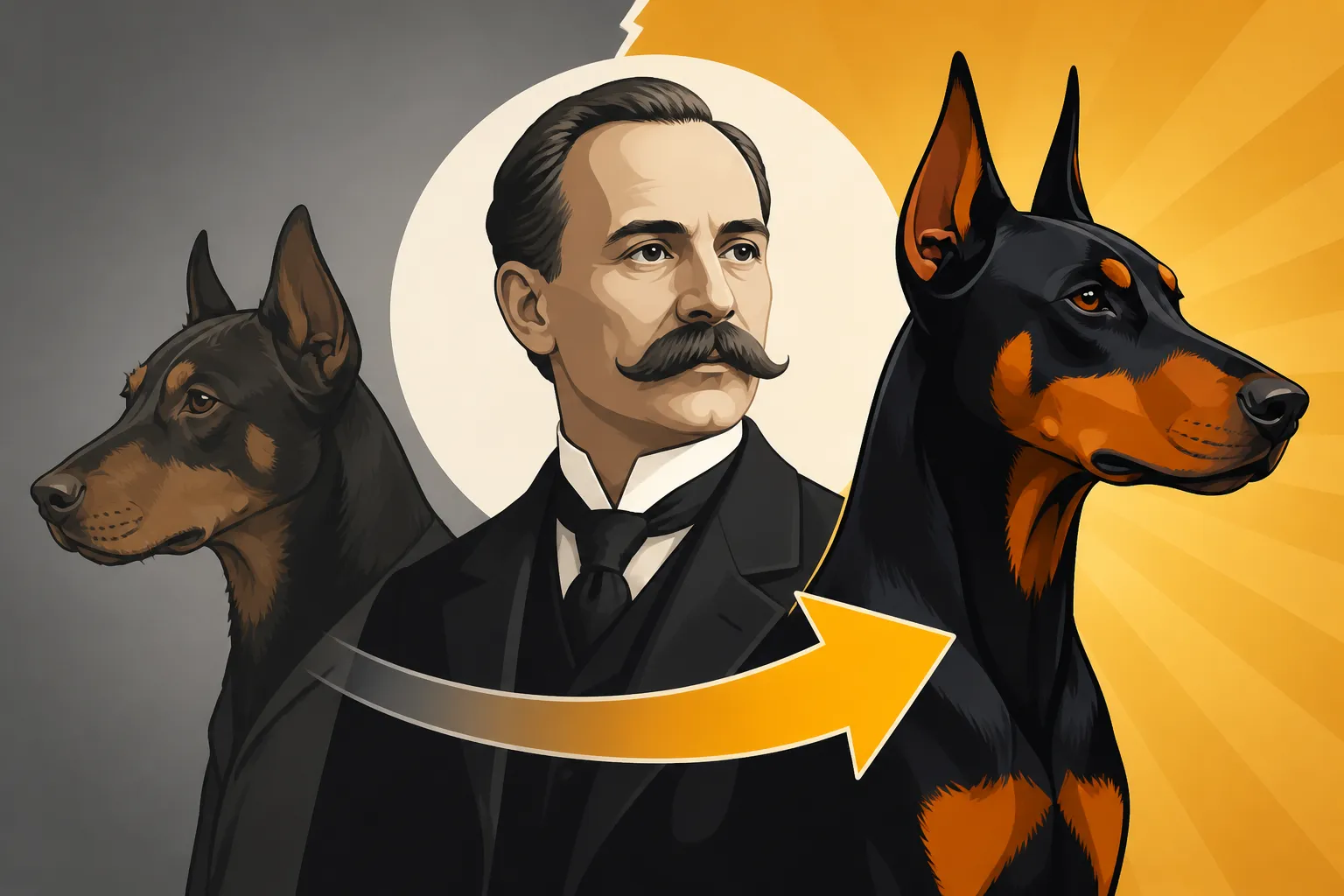
What Otto Goeller Changed in the Doberman
It's easy to think of the Doberman's origin story beginning and ending with Karl Dobermann himself. After all, the breed carries his name! But if you dig a little deeper, you quickly realize that the Doberman we know and love today—that elegant, intelligent, and formidable companion—didn't spring forth fully formed from one man's vision alone. The truth is, a pivotal figure named Otto Goeller stepped in during the breed's crucial early years, making changes that profoundly shaped the Doberman's physical type and, perhaps more importantly, its enduring temperament. This guide will walk you through Otto Goeller's significant contributions and how his foresight continues to influence every Doberman puppy being bred today.
The Raw Canvas: Dobermann's Initial Creation
Imagine the late 19th century in Apolda, Germany. Karl Friedrich Louis Dobermann, a tax collector, night watchman, and dog catcher, needed a truly fearless and protective companion for his dangerous rounds. He wasn't aiming for elegance or a show ring champion; he wanted a dog that could deter potential threats and defend him fiercely. His breeding efforts, while groundbreaking, were pragmatic and likely experimental, involving various local dogs known for their courage, strength, and intelligence.
The exact mix of breeds that went into these first Dobermans is still a topic of lively debate among breed historians, but it's generally accepted that breeds like the Rottweiler, German Pinscher, and even some types of sheepdogs and greyhounds contributed to the original genetic soup. The result was certainly effective: a courageous, alert, and determined dog. However, these early Dobermans were often inconsistent in appearance and could sometimes be quite sharp or unpredictable in temperament. They were a raw, powerful creation, perfectly suited for Dobermann's immediate needs, but perhaps not yet ready for broader acceptance as a refined breed. This is where the story needed another visionary, someone with an eye for consistency and refinement, and that person was Otto Goeller. To understand the early forces at play, you might find it interesting to read about What Went Into the First Dobermans.
Otto Goeller's Standardization and Refinement
Otto Goeller wasn't just another early Doberman enthusiast; he was a meticulous breeder with a profound vision for the breed's future. He saw beyond the raw utility of Dobermann's initial creations and recognized the potential for a dog that could combine formidable protection abilities with elegance, intelligence, and a more stable, predictable temperament. His impact cannot be overstated, as he transitioned the Doberman from a local utility dog into a formally recognized and highly respected breed.
Goeller's dedication began with his famous "von Thüringen" kennel, where he meticulously selected breeding stock based on his evolving ideal. He focused on refining both the physical characteristics and the innate qualities of the Doberman. This wasn't about softening the breed; it was about channeling its formidable attributes into a more consistent and admirable package. He aimed for dogs that were courageous and alert but also possessed a calm disposition and trainability, qualities that would make them suitable companions as well as guardians. His work was instrumental in moving the Doberman away from a "rough around the edges" appearance to the sleek, powerful outline we associate with the breed today.
One of Goeller's most significant contributions was his instrumental role in establishing the National Doberman Pinscher Club of Apolda in 1899. This was a monumental step, as it provided a formal framework for the breed's development. Before the club, individual breeders worked somewhat in isolation, with varying ideas of what an ideal Doberman should be. The club brought these efforts together, allowing for shared goals, standardized breeding practices, and the crucial step of tracking pedigrees. This organizational structure was vital for consolidating the breed's traits and preventing its dissipation into disparate types. You can delve deeper into this aspect by reading Otto Goeller and the First Doberman Club.
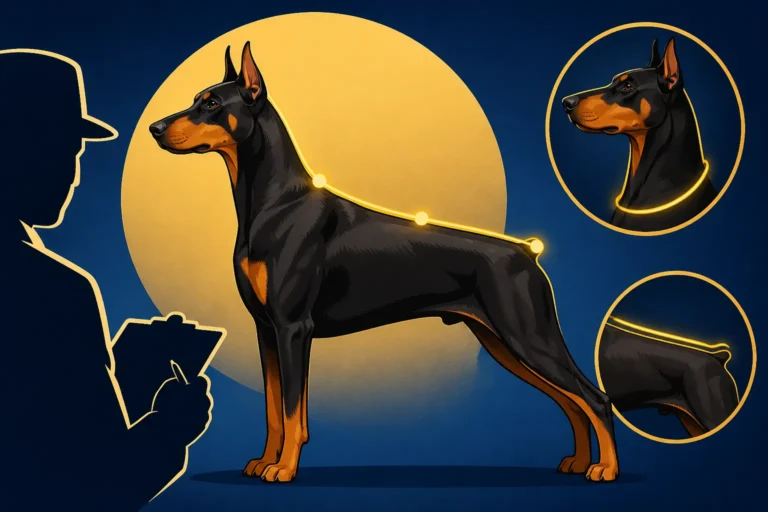
Following the club's formation, Goeller played a leading role in drafting and implementing the first official Doberman breed standard, which was published in 1900. This document was revolutionary. It precisely outlined the desired physical characteristics, from the elegant wedge-shaped head and dark, almond-shaped eyes to the muscular neck, compact body, and powerful gait. But it didn't stop at appearance. Critically, the standard also described the ideal temperament: a Doberman should be brave, alert, and self-assured, yet tractable and loyal. This move from subjective preferences to objective criteria provided a clear roadmap for all future Doberman breeders, setting the stage for the breed's consistent development for generations to come. Understanding this historical document is key to appreciating the breed today, and you can learn more about it in The 1900 German Doberman Standard.
Shaping Doberman Temperament and Working Aptitude
While Karl Dobermann created a fierce protector, Otto Goeller was largely responsible for imbuing the breed with the "nerve stability" that defines the best Dobermans. He sought to create a dog that was courageous and naturally protective, but not prone to unprovoked aggression or extreme nervousness. This was a delicate balance: maintaining the Doberman's inherent guarding instinct while ensuring it was intelligent enough to discern true threats from everyday occurrences, and stable enough to be a reliable member of a family.
Goeller’s breeding philosophy championed a Doberman with a strong, confident character – a dog that wouldn't back down from a challenge but also wouldn't be overly reactive or timid. This focus on a balanced temperament was crucial for the breed's long-term success, allowing Dobermans to excel not just as guardians but also as highly trainable working dogs and loyal companions. This commitment to character is why today's Dobermans are often described as intelligent, biddable, and deeply loyal to their families, as discussed in Doberman Temperament as the Standard Describes It.
He recognized and cultivated the Doberman's innate athleticism and intelligence, seeing its potential for various demanding tasks beyond simply deterring criminals. This foresight laid the groundwork for the Doberman's later success in police work, military roles, and competitive dog sports. Goeller's efforts meant the Doberman wasn't just a tough dog; it was a thinking dog, capable of being taught complex tasks and performing under pressure. This dedication to working aptitude is why many Doberman owners today are drawn to competitive endeavors like Schutzhund, obedience, and agility, building on the foundation Goeller established. If you're curious about the specific activities these dogs thrive in, you might find The Working Sports a Doberman Was Built For insightful.
Consider the journey from the early, perhaps somewhat unpredictable, Dobermans to the refined animals Goeller envisioned. The initial Dobermans, while effective for their creator's specific needs, might have been "hotter" or more prone to extreme reactions due to their less standardized breeding. Goeller steered the breed towards a more reliable, consistent temperament, making it possible for future generations of owners to welcome a Doberman into their homes with a greater understanding of the character they could expect.
Lasting Legacy: Goeller's Influence on the Modern Doberman
It’s truly remarkable how much of Otto Goeller’s vision continues to resonate in the Doberman breed today. The foundational work he did over a century ago established the blueprint for the Doberman Pinscher as we know it, shaping everything from its iconic appearance to its distinctive personality. Without his tireless efforts to standardize and refine the breed, it’s entirely possible the Doberman might have remained a regional working dog, never achieving the global recognition and admiration it enjoys today.
The breed standards used by major kennel clubs worldwide, such as the American Kennel Club (AKC) and the Fédération Cynologique Internationale (FCI), owe a significant debt to the initial German standard that Goeller helped develop. These modern standards still emphasize many of the traits he prioritized: the elegant yet powerful build, the intelligent expression, and, most importantly, the stable, confident, and fearless temperament. When you look at a Doberman in the show ring or interacting calmly yet attentively with its family, you're seeing the direct lineage of Goeller's work. To see how these standards translate today, check out The Doberman the AKC Standard Describes.
Goeller’s emphasis on the Doberman as a versatile working dog also cemented its place in history. His belief in a dog that was not only courageous but also intelligent and trainable directly led to the Doberman's success in roles like police and military service, search and rescue, and protection sports. The Doberman's reputation as a smart, capable animal, always eager to engage its mind and body, stems from these early developmental choices.
His work ensured that future generations of Dobermans would carry forward a predictable set of traits, allowing owners to understand what to expect from their dogs. This predictability is vital when bringing such a powerful and intelligent breed into a home. While breeding continually evolves, and there have been shifts in focus over the decades – some even leading to discussions about why the Doberman temperament "softened" after the 1950s (a topic explored in Why the Doberman Softened After the 1950s) – the core essence established by Goeller remains.
Even in our modern lives, where we often source supplies for our Dobermans from convenient platforms like Chewy, we are benefiting from a lineage of thoughtful breeding that Goeller spearheaded. Whether it's finding the right food to support their lean, muscular build or durable toys to challenge their keen minds, the breed's fundamental characteristics—which necessitate specific care—were largely solidified by his vision. He ensured that the Doberman would be recognized as a dog of substance, character, and undeniable presence, a legacy that continues to define the breed more than a century later.
Below is a table summarizing some of the key shifts Otto Goeller brought about in the Doberman breed:
| Characteristic | Before Goeller's Influence | After Goeller's Standardization |
|---|---|---|
| Appearance | Inconsistent, varied types; raw, less refined | Defined physical standard (wedge head, defined topline, specific size/build), elegant and powerful |
| Temperament | Potentially raw, unpredictable, overly sharp or nervous | Refined, stable nerve, courageous but biddable, intelligent, discerning |
| Purpose | Primarily personal protection, local utility | Versatile working dog, companion, guard, suitable for formal training and sports |
| Recognition | Regional, informal dog type | Formal breed club, written standard, path to international recognition and acceptance |
| Breeding | Individual, less organized, varying goals | Standardized lines, pedigree tracking, ethical breeding guidelines, focus on specific traits |
| Public Image | Feared working dog | Respected working dog and noble companion |
Otto Goeller’s name might not be as widely known as Karl Dobermann’s, but his contributions were absolutely critical. He took a formidable, raw creation and, through careful breeding and the establishment of formal standards, molded it into the elegant, intelligent, and stable companion and protector that continues to capture hearts around the world. Every Doberman owner today owes a debt of gratitude to this visionary breeder who understood the immense potential within this incredible canine.
Disclaimer
This article is for general informational purposes only and does not constitute professional advice. Laws, prices and regulations vary by location and change over time. Consult a qualified professional for guidance on your specific situation.