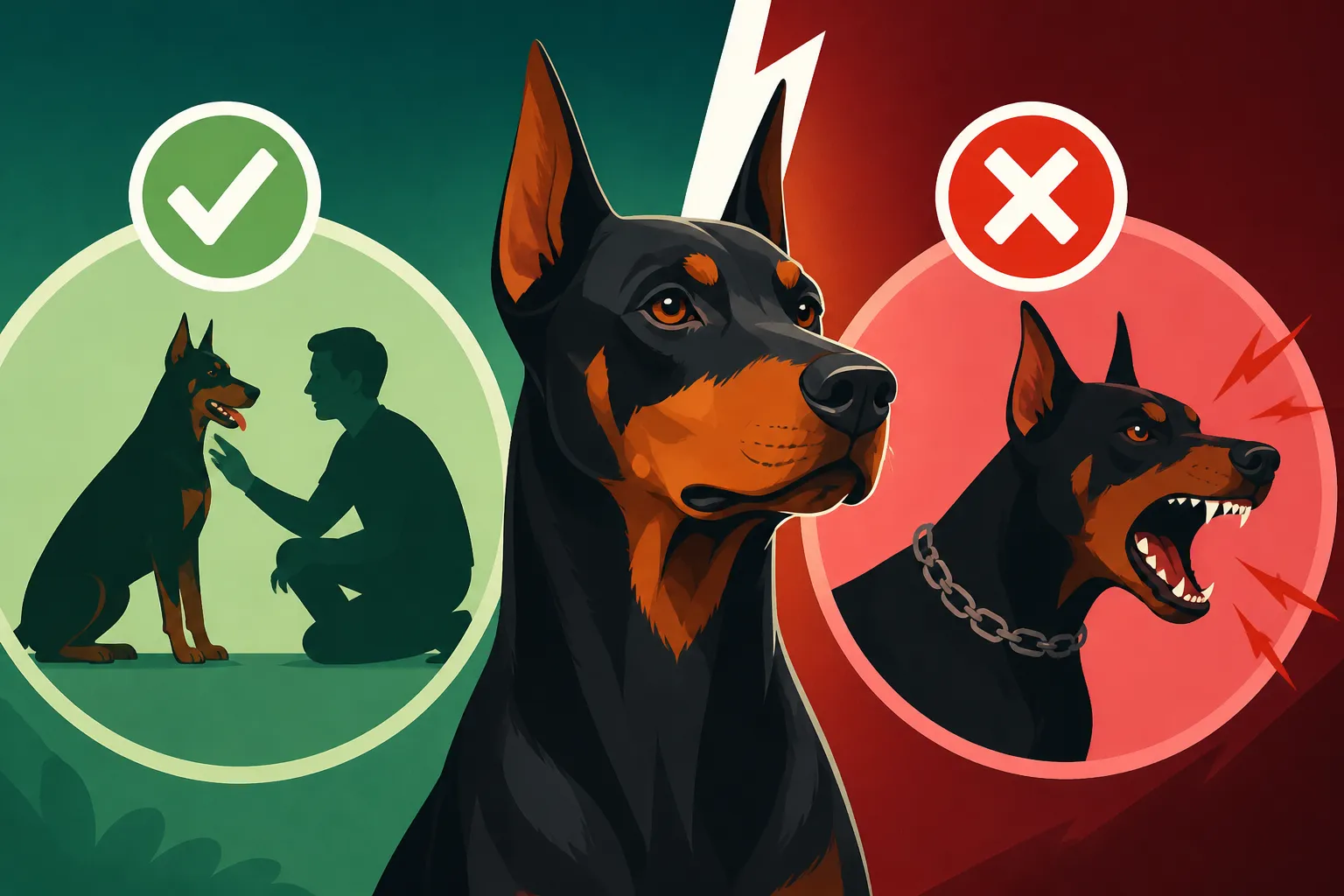
Whether the Standard Calls a Doberman Aggressive
It's a frustrating misconception that Dobermans are inherently aggressive, a belief that often stems from their imposing appearance and historical role. Many people assume the breed standard itself promotes a vicious nature, but that couldn't be further from the truth. This guide will meticulously explore what Doberman breed standards actually say about temperament, helping you understand the true nature of these intelligent, loyal, and often misunderstood dogs.
The Doberman's Temperament in the Breed Standard: A Deep Dive
When you look at a Doberman, it's easy to see why some might jump to conclusions about aggression. Their sleek, powerful build, alert posture, and intense gaze certainly project an air of confidence and watchfulness. But it's crucial to understand that a breed standard is not a blueprint for aggression; it's a detailed description of the ideal dog, encompassing physical traits, movement, and—critically—temperament. For the Doberman, the temperament section is perhaps one of the most important, as it speaks directly to the dog's suitability as a companion and protector.
What is a Breed Standard and Why Does Temperament Matter?
A breed standard is essentially the definitive document for a breed, penned by the national breed club and adopted by registering bodies like the American Kennel Club (AKC) or the Fédération Cynologique Internationale (FCI). It describes the ideal specimen of the breed, covering everything from ear set and coat color to gait and, yes, temperament. The purpose of a standard is to provide a guide for breeders striving to produce healthy, type-correct dogs and for judges evaluating dogs in the show ring. When it comes to temperament, the standard aims to preserve the essential character of the breed while ensuring it can thrive as a companion in society. A dog might be physically perfect, but if its temperament deviates significantly from the standard, it's considered a serious fault.
The Doberman's temperament section is particularly vital because of the breed's working origins. Karl Dobermann, the breed's creator, sought a fearless and intelligent companion to protect him on his rounds as a tax collector and night watchman. This historical purpose ingrained a certain set of traits into the breed, but these were always intended to be under the control of a stable mind. Breeders today still strive to honor this foundation while emphasizing mental soundness and trainability, which are cornerstones of a truly exceptional Doberman.
The Doberman's Historical Purpose and Temperament
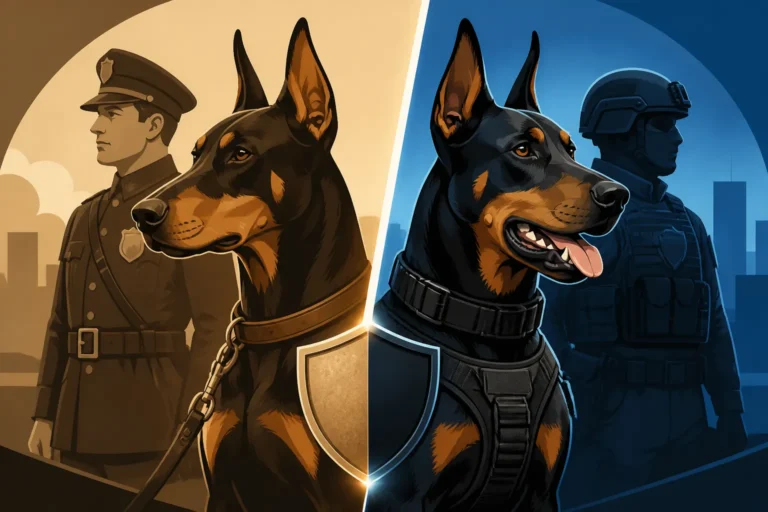
The story of the Doberman Pinscher begins in the late 19th century with Karl Friedrich Louis Dobermann in Apolda, Germany. As a tax collector, dog catcher, and night watchman, Dobermann needed a dog that was fearless, intelligent, and fiercely loyal—a canine bodyguard, if you will. He selectively bred dogs with these desired traits, drawing from various local breeds. The result was a dog with an unmistakable presence and a natural guarding instinct.
It's important to differentiate "guarding instinct" from unprovoked aggression. A dog with a strong guarding instinct is naturally watchful and protective of its family and territory. It observes, assesses, and reacts appropriately to perceived threats, often by alerting its owners or creating a physical barrier. This is a far cry from a dog that is indiscriminately hostile or aggressive without cause. The early Dobermans were prized for their courage and determination in the face of danger, not for being inherently mean or vicious. Their intelligence and trainability were equally valued, allowing them to be formidable protectors who could also be trusted companions. The breed was developed to be an effective deterrent, and a dog that is truly stable and confident is often the most effective at this, as it knows when to stand down.
Key Traits the Breed Standard Celebrates: More Than Just Guard Dogs
When you read through the Doberman breed standard, you'll notice a distinct emphasis on traits that speak to their intelligence, loyalty, and protective nature, rather than any mention of aggression. These are dogs bred to be discerning guardians and devoted family members.
"Determined" and "Alert" – Not Aggressive
Terms like "determined" and "alert" frequently appear in Doberman breed standards. What do these truly mean? An "alert" Doberman is one that is constantly aware of its surroundings. Its ears might swivel to catch distant sounds, its eyes keen on anything new in its environment, and its posture often suggests readiness. This isn't nervousness or fear; it's simply a heightened state of awareness, a natural result of its guarding heritage. They process information quickly, deciding whether something merits attention or is just part of the everyday background noise. This trait makes them excellent watchdogs, quick to notice anything out of place.
"Determined" refers to their strong will and focus. When a Doberman sets its mind to something, whether it's learning a new command, pursuing a game of fetch, or investigating a perceived threat, it does so with unwavering intent. This determination is a double-edged sword: it makes them incredibly trainable and dedicated to tasks, but it also means they need consistent, fair, and clear guidance from their owners. A determined Doberman is not easily swayed, which is why early training is so paramount. Training a Doberman That Is Smarter Than You Expect is a great resource for understanding how to channel this intelligence.
The Concept of "Fearlessness" and "Courage"
Another cornerstone of the Doberman temperament, as outlined in the breed standard, is "fearlessness" and "courage." These aren't just buzzwords; they describe a dog that possesses an inner fortitude. A truly fearless Doberman will stand its ground when necessary, rather than retreating in panic. This courage allows them to act as protectors without resorting to unprovoked aggression stemming from insecurity or fear. They are brave and self-assured, traits that are essential for a dog whose historical purpose was to guard and defend.
However, "fearless" does not mean reckless or belligerent. A well-bred Doberman should be confident enough to assess a situation calmly. They might bark loudly to alert you, or position themselves protectively, but they shouldn't launch into an attack without justification or command. A Doberman that acts out of fear or unprovoked hostility is actually displaying a fault in its temperament, not a desired characteristic. True courage is about controlled bravery, not uncontrolled aggression.
"Watchful" and "Loyal": The Heart of the Doberman Guardian
The breed standard also highlights the Doberman's "watchful" nature and profound "loyalty." To say a Doberman is watchful is to acknowledge its innate awareness of its surroundings and its role as a protector. They take their job seriously, often keeping a vigilant eye on their family, especially when new people or situations arise. This watchfulness isn't always overt; sometimes it's a subtle shift in their gaze or a slight tension in their body, signaling they are absorbing everything around them.
Their loyalty is legendary, earning them the nickname "Velcro Doberman." They form incredibly strong bonds with their primary caregivers and families, often preferring to be in the same room, or even touching, their chosen humans. This deep attachment is the driving force behind their protective instincts. They don't guard out of malice, but out of a fierce devotion to their loved ones. If you've ever had a Doberman, you know exactly what I mean when I talk about Living With a Doberman That Follows You Everywhere. This loyalty means they are always attuned to their family's well-being, ready to act if they perceive a threat. This trait, combined with their intelligence, makes them highly responsive to their owner's commands and desires, wanting nothing more than to please and protect their human pack.
Temperament Faults: What the Standard Explicitly Rejects
It's just as important to understand what the breed standard doesn't want in a Doberman's temperament. The standard is very clear about traits that are considered serious faults or disqualifications, precisely because they undermine the breed's intended character and purpose. These faults are direct opposites of the desired stable, confident nature.
Faults: Shyness and Viciousness
The Doberman breed standard explicitly calls out both extreme shyness and viciousness as serious faults. Let's break down what this means.
-
Shyness (Fearfulness): A shy Doberman is not just a little timid; it's a dog that exhibits fear, nervousness, or even panic in everyday situations. This might manifest as cowering, trembling, snapping out of fear, or attempting to flee from unfamiliar people, objects, or environments. Why is this a fault? Because a fearful dog is unpredictable and potentially dangerous. A dog that is afraid is more likely to react defensively and aggressively when cornered or overwhelmed, making it unsuitable as a reliable companion or protector. A Doberman bred to be fearless should possess confidence, not fear. If you have a Doberman puppy that hides, you may want to check out A Doberman Puppy That Hides From New People.
-
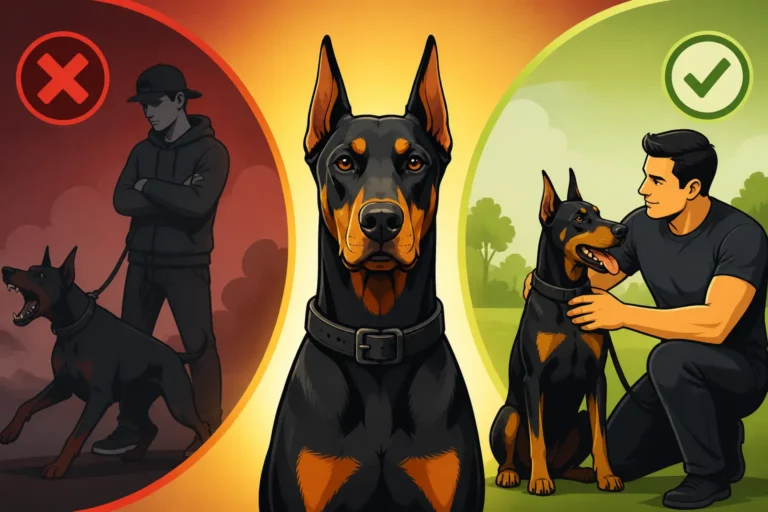
Viciousness (Unprovoked Aggression): This is perhaps the most misunderstood aspect. The standard condemns viciousness—meaning unprovoked, unwarranted aggression towards people or other animals. A truly vicious dog is one that displays hostility without a clear threat or reason, striking out indiscriminately. This is a severe disqualifying fault because it goes against the very core of a stable, controllable working dog. A Doberman is meant to be discerning, able to differentiate between friend and foe, and to react only when appropriate and under control. A dog that is simply "mean" is not a Doberman according to the standard and should never be bred. The standard emphasizes that the Doberman's protective instincts must be channeled and controlled, not allowed to run rampant.
Why a Stable Temperament is Crucial
The emphasis on rejecting both shyness and viciousness underscores the critical importance of a stable temperament. A stable Doberman is one that is mentally sound, confident, and predictable. They are neither overly fearful nor overly aggressive. They can handle new situations, unfamiliar people, and different environments with composure.
This stability is what allows a Doberman to be a versatile and beloved family member. They can be gentle with children, patient with houseguests (once properly introduced), and reliable in public settings, while still maintaining their natural vigilance and protective instincts. A stable temperament means the dog can think clearly, assess situations, and respond appropriately, rather than reacting impulsively out of fear or aggression. Breeders committed to the standard prioritize producing dogs with this mental fortitude, understanding that a beautiful dog with a faulty temperament is no asset to the breed or its owners. The Health Testing a Doberman Breeder Must Show often includes temperament evaluations.
Beyond the Standard: Shaping a Doberman's Real-World Temperament
While the breed standard sets the ideal, a Doberman's real-world temperament is also profoundly influenced by its upbringing. Genetics provide the raw material, but socialization, training, and consistent guidance sculpt the dog into the confident, well-adjusted companion you want.
Shaping the Doberman's Natural Instincts
Dobermans come with natural instincts for guarding, protection, and strong bonding. These aren't things you train into them; they are inherent. What you do train is how these instincts are expressed. Without proper guidance, these powerful drives can become misdirected or overwhelming for both the dog and the owner. For example, a Doberman's natural protectiveness can turn into over-guarding or suspicion of all strangers if not properly socialized and taught discernment.
Positive, consistent training helps channel these instincts in healthy ways. You teach your Doberman when to be watchful (e.g., when a stranger approaches the door) and when not to be (e.g., when guests are welcomed into your home). This involves clear communication, boundaries, and reward-based methods. Many owners find success using puzzle toys and training treats, often found at pet supply stores like Chewy, to keep their clever Doberman mentally engaged. The goal is a Doberman that is always aware but defers to its owner for direction, rather than taking matters into its own paws.
Early Socialization: Key to a Balanced Dog
Early and thorough socialization is perhaps the single most critical factor in ensuring a Doberman develops a stable and well-adjusted temperament. This isn't just about letting your puppy play with other dogs; it's about exposing them to a wide variety of people, sounds, sights, and experiences during their critical developmental period, roughly from 8 to 16 weeks of age.
A well-socialized Doberman puppy will meet men with hats, children on bikes, people of different ethnicities, loud noises, busy streets, and strange objects, all in a positive and controlled manner. This helps them build confidence and understand that the world isn't a scary place where every new stimulus is a threat. It teaches them what is normal and safe, allowing their natural protective instincts to be reserved for genuine dangers. Without this foundation, even a genetically sound Doberman can become fearful or overly reactive. Think of it as building a robust mental framework that allows them to process the world calmly. For more on this, consider reading The Sixteen Weeks That Set a Doberman Up.
Doberman Public Perception vs. Breed Standard Reality
The Doberman's imposing appearance and historical association with guard work have, unfortunately, led to a public perception that often clashes with the reality described in the breed standard and experienced by responsible owners. It's a battle of stereotypes versus lived experience.
Media Portrayals and Misconceptions
Hollywood and news headlines have done the Doberman few favors. For decades, Dobermans have been cast as the quintessential "bad guy" dog—vicious, snarling, and perpetually aggressive. Think of the guard dogs in action movies, always shown as a threat. This portrayal is powerful and deeply ingrained in public consciousness, creating an image that's hard to shake. Similarly, sensationalized news stories about dog bites often fail to distinguish between well-bred, well-trained dogs and those from irresponsible sources or those that have been abused or neglected. This contributes to Why Dobermans Have a Frightening Reputation, perpetuating the myth that aggression is inherent.
The reality is that a Doberman from a reputable breeder, raised with proper socialization and training, is far more likely to be a devoted, gentle, and discerning family member than the snarling beast of cinema. The breed standard directly contradicts the "vicious attack dog" trope by explicitly penalizing aggression and shyness, advocating for a stable, confident, and biddable temperament.
The Doberman as a Family Protector
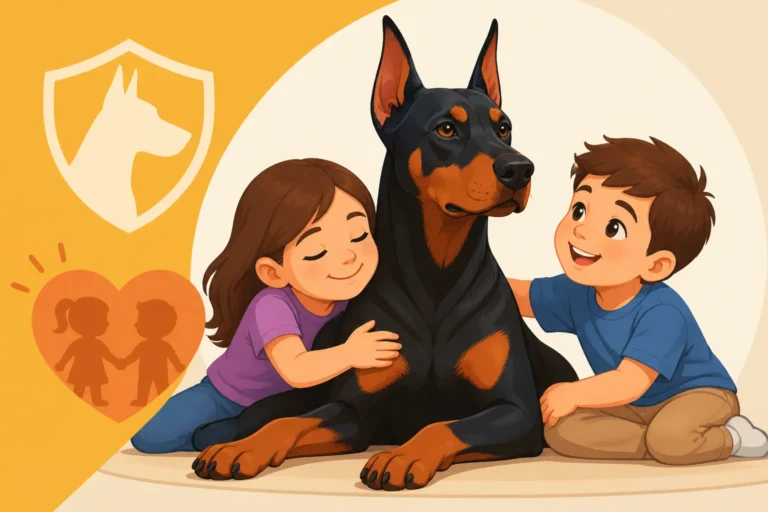
The truth about the Doberman's protective nature is rooted in loyalty, not aggression. A Doberman loves its family fiercely and considers them its pack. This deep bond activates a natural instinct to keep them safe. This isn't about being inherently mean; it's about being vigilant and ready to act if a threat arises.
Consider this scenario: A stranger approaches your house in a way that feels menacing. A well-bred, well-trained Doberman will likely stand between you and the perceived threat, bark deeply, and appear formidable. Its posture will be alert, its eyes fixed on the stranger. This is the Doberman fulfilling its role as a protector. It's not randomly attacking; it's responding to a specific situation to defend its family. Once you signal that the threat is resolved—perhaps by inviting the person in—the Doberman should be able to calm down and accept the individual, albeit with a watchful eye. This measured response, driven by loyalty and guided by its owner, is the hallmark of the Doberman's true temperament, and it's precisely what the breed standard aims to preserve. These dogs are truly amazing family members, as long as their owners understand and respect their nature.
Temperament Traits: Standard vs. Misconception
Here's a quick comparison of common Doberman traits as described in the breed standard versus how they are sometimes misinterpreted:
| Trait in Breed Standard | Actual Meaning | Common Misconception |
|---|---|---|
| Alert | Attentive and aware of surroundings; keen observation. | Nervous, jumpy, or looking for trouble. |
| Determined | Focused, strong-willed, persistent in tasks or defense. | Stubborn, uncontrollable, or aggressive. |
| Fearless / Courageous | Confident, brave, stands ground when necessary. | Reckless, eager to fight, or without self-preservation. |
| Watchful | Vigilant guardian of family and property; discerning. | Suspicious of everyone, hostile to strangers. |
| Loyal | Deeply devoted to family; forms strong bonds. | Possessive, prone to separation anxiety, or "one-person" aggressive. |
| Energetic | Needs regular mental and physical exercise; active. | Hyperactive, destructive, or impossible to calm down. |
| Intelligent | Quick learner, problem-solver; needs mental stimulation. | "Too smart for its own good," manipulative. |
Conclusion
So, does the Doberman breed standard call for an aggressive dog? Absolutely not. While it clearly outlines a dog that is alert, determined, fearless, and intensely loyal—traits that make them exceptional guardians—it simultaneously condemns both shyness and unprovoked viciousness. The ideal Doberman, according to the standard, is a confident, stable, and discerning protector, not a mindless aggressor. Their powerful protective instincts are meant to be channeled and controlled through early socialization and consistent training, leading to a loyal and balanced companion who understands its role within the family. Understanding the true essence of the Doberman's temperament, as described by the very people who uphold the breed, is the first step in appreciating these magnificent animals for who they truly are.
Disclaimer
This article is for general informational purposes only and does not constitute professional advice. Laws, prices and regulations vary by location and change over time. Consult a qualified professional for guidance on your specific situation.