Omega Oils for a Doberman With Coat Loss
It’s incredibly disheartening when you start to notice your beloved Doberman’s beautiful, sleek coat looking a little less lustrous, perhaps even thinning in patches. This isn't just a cosmetic concern; often, it's a sign that something deeper is going on with their skin health or overall nutrition, and you're left wondering what steps you can take to bring back that healthy shine. This guide will delve into how omega fatty acids can play a vital role in supporting your Doberman's skin and coat health, helping you understand the underlying issues and how to choose and implement the right supplements.
Understanding Doberman Coat Loss and Omega Oils
Seeing your Doberman's coat start to thin or lose its natural luster can be a real worry. They're known for their short, dense, and glossy coats, so any change is often quite noticeable. It's not just about aesthetics; a dull or sparse coat can often be a warning sign that your Doberman's skin isn't as healthy as it should be, or that they're lacking something vital in their diet. Before we dive into how omega oils can help, it's helpful to understand what might be causing that coat change in the first place.
The Root Causes of Doberman Coat Thinning
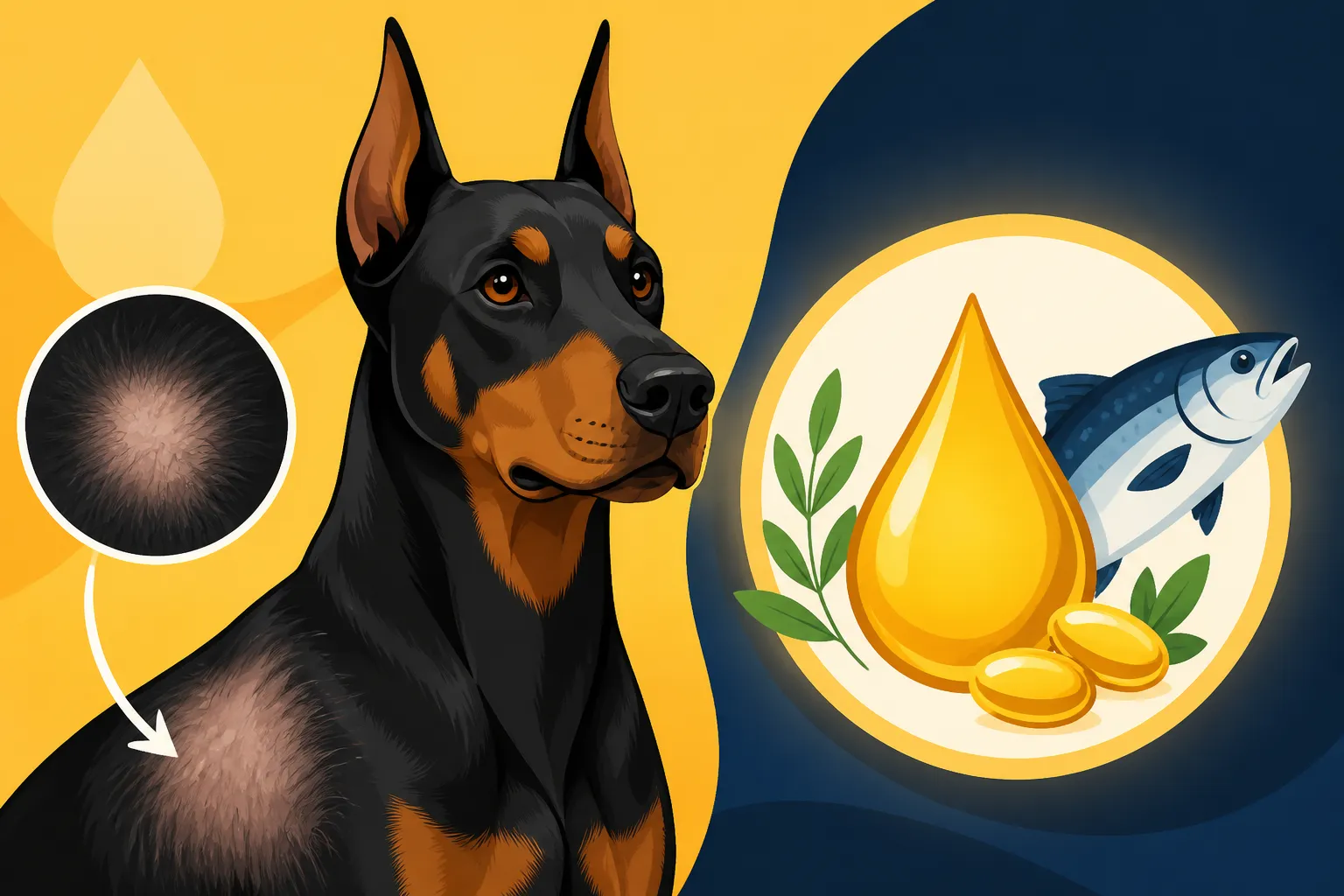
Dobermans, while generally robust, are prone to a few specific issues that can manifest as coat thinning or loss. One of the most well-known culprits, especially for those with unique coat colors, is Color Dilution Alopecia (CDA). If you have a blue or fawn Doberman, you might unfortunately be quite familiar with this. CDA causes the hair shaft to be fragile, leading to breakage and ultimately thinning or bald patches, particularly on the trunk. It's not usually painful, but it certainly impacts their appearance and can predispose them to skin infections. You might find yourself searching for Hair Loss on a Blue Doberman or How Common Coat Loss Is in Fawn Dobermans if you have one of these beautiful, but sensitive, pups.
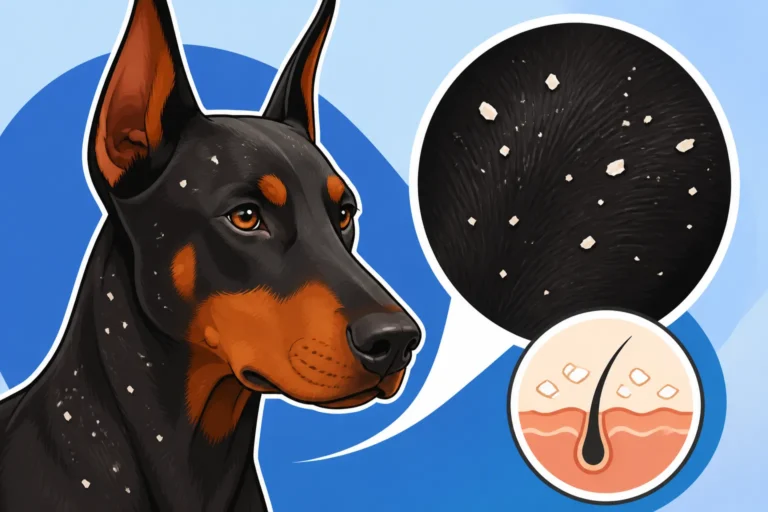
Beyond CDA, other common causes include hypothyroidism, where a sluggish thyroid can lead to a dry, brittle coat and symmetrical hair loss. Allergies, whether environmental or food-related, can also cause itching, excessive licking, and subsequent hair loss. Parasites like fleas or mites are always a possibility too, leading to irritation and scratching. Even simple dry skin, common in breeds with short, thin coats and no undercoat like the Doberman, can lead to flaking and a less-than-ideal coat condition. It’s important to remember that coat loss is a symptom, not a diagnosis, and often requires a vet's keen eye to pinpoint the exact issue.
What Are Omega Fatty Acids and How Do They Help?
Omega fatty acids are a group of polyunsaturated fats that are absolutely essential for your Doberman's overall health, much like they are for us. The two main types we often talk about are Omega-3 and Omega-6. Think of them as the building blocks for healthy cells, especially those in the skin.
Omega-3 fatty acids, primarily Eicosapentaenoic Acid (EPA) and Docosahexaenoic Acid (DHA), are powerful anti-inflammatories. For a Doberman dealing with allergies, skin irritation, or even the inflammation associated with CDA, these can be a game-changer. They work at a cellular level to reduce the body's inflammatory response, which can lessen itching, redness, and the cycle of scratching that contributes to hair loss. They also play a crucial role in maintaining the skin's barrier function, helping to lock in moisture and protect against environmental irritants.
Omega-6 fatty acids, mainly Linoleic Acid (LA) and Gamma-Linolenic Acid (GLA), are also important, but often over-represented in modern dog diets. While essential for normal skin and coat development, too much Omega-6 without enough Omega-3 can actually promote inflammation. The goal isn't to eliminate Omega-6, but to ensure a proper balance, tilting the scales more towards Omega-3's anti-inflammatory benefits when tackling coat issues. When these fatty acids are in the right balance, they nourish the skin from within, promoting stronger hair follicles and a healthier, shinier coat that’s more resistant to breakage and less prone to flaking.
Choosing the Right Omega Supplement for Your Doberman
Once you and your vet have determined that omega oils might be beneficial for your Doberman's coat loss, the next step is navigating the myriad of options available. It can feel a bit overwhelming, but understanding the differences between sources and formulations will help you make an informed decision. Remember, quality truly matters here.
Omega-3 Sources: Fish Oil vs. Algae Oil
When it comes to Omega-3s, the most common and effective sources for dogs are derived from marine life. Fish oil, typically from cold-water fish like salmon, sardines, and anchovies, is rich in EPA and DHA. These are the "active" forms of Omega-3s that your Doberman's body can readily use. When looking at fish oil supplements, always seek out products that clearly state the EPA and DHA content per dose, not just the total fish oil amount. High-quality fish oils also undergo purification processes to remove heavy metals and other contaminants, which is a big deal when you're giving it to your beloved Doberman long-term. Many reputable brands sell their supplements through retailers like Chewy or Amazon, making them easy to access.
For those looking for a plant-based or more sustainable option, algae oil is an excellent choice. Algae are actually where fish get their Omega-3s in the first place! Algae oil primarily provides DHA, and some formulations might also contain EPA. It’s a fantastic alternative, especially if your Doberman has sensitivities to fish or if you prefer to avoid animal products. While not as common as fish oil, its availability is growing, offering a good route to direct, usable Omega-3s.
Balancing Omega-3 and Omega-6
This is where many owners get a little confused. While both are essential, it's the ratio that's key. Most commercial kibbles already contain a good amount of Omega-6 fatty acids, often from ingredients like chicken fat, sunflower oil, or corn oil. This isn't inherently bad, as Omega-6s are vital for normal physiological functions and a healthy skin barrier. However, an imbalance where Omega-6 far outweighs Omega-3 can worsen inflammatory conditions, which might be contributing to your Doberman's coat issues.
The goal when supplementing is usually to increase the Omega-3 intake to help rebalance this ratio, shifting it towards a more anti-inflammatory state. You typically won't need to supplement Omega-6 unless advised by a vet for a very specific and rare deficiency. Instead, focus on adding high-quality Omega-3s. Look at your Doberman's current food label; if it's already high in Omega-6s, adding more of them would be counterproductive. Some premium fresh dog food brands, like Ollie, aim for a more balanced fatty acid profile in their base recipes, but even then, targeted Omega-3 supplementation might still be beneficial for specific conditions like coat loss.
Forms of Omega Supplements and Dosage Considerations
Omega supplements come in a few different forms, each with its pros and cons:
- Liquid Oils: Often the most potent and easiest to measure for precise dosing. They can be poured directly over food. The downside is they can oxidize quickly once opened, so proper storage (refrigeration) is crucial.
- Soft Gels/Capsules: Convenient, less prone to oxidation, and usually tasteless. However, some Dobermans might be picky about swallowing pills, and larger dogs often require multiple capsules per dose, which can get expensive.
- Chews/Treats: Highly palatable and easy to administer, making them a favorite for many owners. The main drawback is that the concentration of active Omega-3s (EPA/DHA) can be lower than in liquid or capsule forms, meaning your Doberman might need to eat several to get an effective dose.
Dosage is paramount and should always be discussed with your veterinarian. Factors like your Doberman's weight, the severity of their coat loss, any underlying health conditions, and their current diet all play a role in determining the right amount. Too little might yield no results, while excessive amounts could lead to side effects like digestive upset, or even issues with blood clotting, especially if your Doberman has a pre-existing condition like von Willebrand Disease (a bleeding disorder common in Dobermans). Your vet can provide guidance based on the EPA/DHA content of your chosen supplement, ensuring safety and efficacy.
Integrating Omega Oils into Your Doberman's Routine
Bringing a new supplement into your Doberman's daily life should be a smooth process, and understanding what to expect can ease any anxieties you might have. Consistency is key here, just like with any routine involving their health.
How to Administer Omega Oils
Most Dobermans are pretty food-motivated, which makes administering liquid omega oils relatively straightforward. The simplest method is to add the recommended dose directly to their food at mealtime. Many fish and algae oils have a natural aroma that dogs find appealing, but if your Doberman is a bit finicky, you can try mixing it thoroughly into a small amount of their favorite wet food, plain yogurt, or even a spoonful of peanut butter (xylitol-free, of course!) to ensure they consume it all.
If you’re using soft gels, you can often hide them in a pill pocket, a piece of cheese, or a dollop of cream cheese. For Dobermans that are resistant to taking pills, some owners find success by gently opening their mouth and placing the pill at the back of the tongue, then holding the muzzle closed and stroking the throat until they swallow. Regardless of the method, make it a positive experience, perhaps following up with praise or a small, extra treat. This helps prevent them from associating the supplement with anything unpleasant.
Expected Timeline for Results
Patience is definitely a virtue when it comes to seeing the benefits of omega oil supplementation. These aren't magic pills that will transform your Doberman's coat overnight. Skin and hair cell turnover takes time, so you'll typically need to commit to at least 4-6 weeks of consistent supplementation before you start noticing subtle improvements. For more significant coat regeneration, especially in cases like Whether Coat Loss in a Doberman Can Be Treated which might involve genetic factors, it could take 2-3 months or even longer.
What you might notice first is a reduction in scratching or skin irritation if that was part of the problem. Then, the coat might start to feel softer, look less dull, and eventually, new hair growth may become visible, leading to increased density. Keep a journal or take weekly photos to track progress; sometimes, gradual changes are hard to spot day-to-day. If you're not seeing any improvement after a couple of months, it's definitely time to revisit your veterinarian. It could be that the dosage needs adjusting, or perhaps there's an underlying issue that hasn't been fully addressed yet.
Monitoring for Side Effects or Over-Supplementation
While generally safe, omega oil supplements aren't entirely without potential side effects, especially if given in excessive amounts. The most common issues are gastrointestinal, such as soft stools, diarrhea, or an upset stomach. If you notice these, try reducing the dose slightly or splitting the daily dose into two smaller portions given with different meals. Introducing the supplement gradually, starting with a smaller amount and slowly increasing over a week, can also help prevent digestive upset.
Another less common but more serious concern, particularly for Dobermans already prone to bleeding issues, is that very high doses of Omega-3s can potentially interfere with blood clotting. This is why discussing dosage with your vet, especially if your Doberman has a known condition like von Willebrand Disease, is crucial. If your Doberman is scheduled for surgery, your vet might recommend discontinuing omega oils for a period beforehand. Other potential signs of over-supplementation could include weight gain (since oils add calories) or an oily coat/skin. Always communicate any concerns or changes you observe in your Doberman to your veterinarian.
Beyond Omega Oils: A Holistic Approach to Coat Health
While omega oils are fantastic allies in the battle against coat loss, they're just one piece of a larger puzzle. A truly healthy, gleaming Doberman coat, especially when addressing underlying issues, comes from a holistic approach that considers diet, grooming, and consistent veterinary care.
Dietary Considerations for a Healthy Coat
Your Doberman's diet forms the foundation of their overall health, including their skin and coat. High-quality protein sources are essential for building strong hair. Look for foods where a named meat source (e.g., "chicken meal," "lamb") is among the first ingredients. Avoid foods with excessive fillers or unnamed meat by-products, as these often offer less nutritional value.
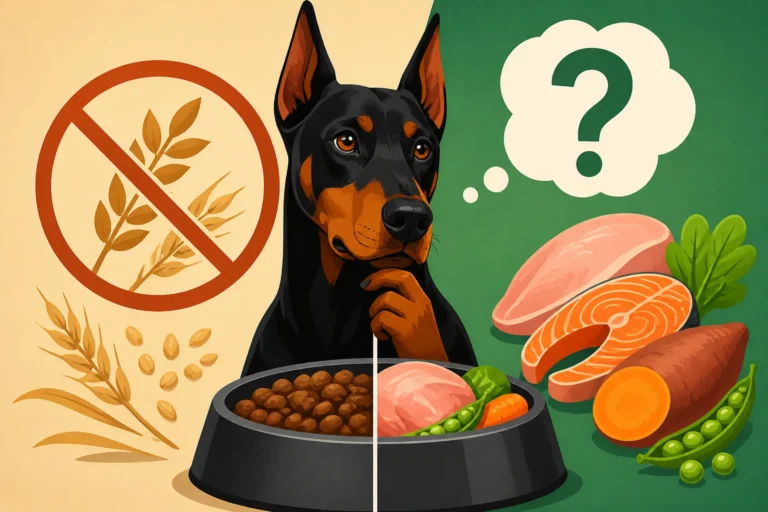
Beyond protein, a balanced array of vitamins and minerals also supports coat health. Zinc, biotin, and Vitamin E are particularly important for skin integrity and hair growth. Some Dobermans can also have sensitivities to certain ingredients, which might be manifesting as skin irritation and coat issues. If you suspect a food allergy, a veterinary-supervised elimination diet might be necessary. It's also worth noting the ongoing discussion around The Grain-Free Question in a Doberman's Bowl and heart health; always consult your vet before making significant dietary changes, especially if it involves grain-free options, to ensure it doesn't negatively impact other aspects of their health.
Here’s a quick overview of key dietary components for coat health:
| Nutrient Category | Why It Matters for Doberman Coat Health | Food Sources/Considerations |
|---|---|---|
| Protein | Essential for hair growth & repair | Lean meats, fish, eggs, legumes |
| Omega-3 Fatty Acids | Anti-inflammatory, skin barrier | Fish oil, flaxseed, algae |
| Omega-6 Fatty Acids | Skin & coat structure, normal function | Chicken fat, vegetable oils (in balance) |
| Zinc | Supports cell division, wound healing | Meat, shellfish, whole grains |
| Biotin (Vitamin B7) | Keratin production, hair strength | Eggs, liver, yeast |
| Vitamin E | Antioxidant, skin health | Nuts, seeds, spinach |
Grooming Practices to Support Skin and Coat
Even with the best diet and supplements, proper grooming plays a crucial role. Dobermans have short, single coats, meaning they don't have a thick undercoat to protect their skin. This makes their skin more exposed and sensitive. Regular, gentle brushing with a soft bristled brush or a grooming mitt can help stimulate blood flow to the skin, distribute natural oils, and remove loose hairs and dander. This can be especially beneficial for Dobermans dealing with Shampoo That Helps a Bald Doberman or Daily Skin Routine for a Thinning Blue Doberman.
Bathing should be done with a mild, moisturizing shampoo formulated for dogs, ideally one that is sulfate-free to avoid stripping natural oils. Over-bathing can dry out their skin, so stick to baths only when truly necessary, or every 4-6 weeks unless advised otherwise by your vet for a specific skin condition. After bathing, ensure your Doberman is thoroughly dried, especially in colder weather, as damp skin can lead to irritation or fungal growth. For Dobermans prone to dry skin, a moisturizing conditioner or leave-in spray can also be helpful.
Veterinary Diagnostics and Ongoing Care
It cannot be stressed enough: supplements are not a substitute for professional veterinary care. If your Doberman is experiencing coat loss, especially if it’s sudden, extensive, or accompanied by itching, redness, or behavioral changes, a trip to the vet is the first and most important step. They can perform diagnostic tests, such as skin scrapes, blood tests (to check for conditions like The Thyroid Numbers That Slow a Doberman Down), or even biopsies, to accurately diagnose the underlying cause.
Once a diagnosis is made, your vet can recommend a comprehensive treatment plan that might include medication, a specialized diet, and, yes, appropriate supplementation with omega oils. Regular check-ups are also vital to monitor progress, adjust treatments, and catch any new issues early. For Dobermans with chronic conditions like CDA or environmental allergies, ongoing management in partnership with your vet will be crucial for maintaining their comfort and coat health throughout their lives. Remember, you're not alone in navigating these challenges, and your vet is your best resource.
Disclaimer
This article is for general informational purposes only and does not constitute professional advice. Laws, prices and regulations vary by location and change over time. Consult a qualified professional for guidance on your specific situation.