A Doberman That Cannot Hold Down Kibble
It's incredibly distressing and frankly, pretty alarming, when your Doberman can't keep their food down. You see them eat with gusto, only to have it come right back up, leaving you worried about their health, nutrition, and what on earth could be going wrong. This guide aims to walk you through the common reasons why a Doberman might struggle to hold down their kibble and practical steps you can take to help, from adjusting their mealtime routine to knowing when it's time to call the vet.
Understanding Why Kibble Might Not Stay Down
When your Doberman brings their food back up, it's natural to immediately jump to the worst conclusions. Is it a serious illness? Are they choking? The truth is, it could be a range of issues, from something relatively benign like eating too fast, to more complex medical conditions. Distinguishing between regurgitation and vomiting is the first crucial step, as they point to different problems.
Regurgitation Versus Vomiting
Many people use "vomiting" and "regurgitation" interchangeably, but from a veterinary perspective, they are distinctly different events with different implications for your Doberman's health. Understanding the difference can help you describe the problem more accurately to your vet, which is key to getting the right diagnosis.
Regurgitation is generally a passive process. It happens quickly, often without much warning or effort from your Doberman. The food, usually undigested and still in its original kibble shape, simply comes back up, often in a cylindrical shape, almost like it was just swallowed. You might notice a bit of drooling beforehand, but there's typically no heaving, retching, or abdominal contractions. It's often associated with problems in the esophagus, the tube that carries food from the mouth to the stomach. Your Doberman might just lower their head and poof, there's the meal. Sometimes it looks like they’re just spitting up, and they might even try to re-eat it, which is definitely not something you want them doing. This kind of event suggests the food never even made it to the stomach to begin the digestion process properly.
Vomiting, on the other hand, is a much more active and forceful process. You'll usually see signs of nausea first: excessive drooling, licking lips, pacing, looking anxious, or even panting. Then comes the unmistakable abdominal heaving and retching as your Doberman's body actively expels contents from the stomach and sometimes the upper small intestine. The expelled material will often be partially digested, possibly yellow with bile, or even liquid. It smells, it's messy, and it’s clearly an unpleasant experience for them. Vomiting can be caused by a myriad of issues, from dietary indiscretion (eating something they shouldn't have) to pancreatitis, kidney disease, or even certain medications.
Common Causes of Regurgitation in Dobermans
Given a Doberman's deep chest and sometimes enthusiastic eating style, certain physical and behavioral factors can make them prone to regurgitation.
One of the most frequent culprits is simply eating too fast. Dobermans, with their strong drive and sometimes competitive nature (especially if other pets are around), can inhale their food. When they eat at lightning speed, they swallow a lot of air along with their kibble, and their esophagus can struggle to move such a large, unchewed bolus of food down to the stomach effectively. This can lead to a quick "up-chuck" shortly after eating. It's often alarming for owners but relatively harmless if addressed.
Another, more serious, cause of regurgitation can be a condition called megaesophagus, where the esophagus loses its ability to contract and push food down, becoming enlarged and floppy, like a stretched-out sock. Food then just sits there until gravity or head movements might cause it to come back up. While not always common, certain breeds, including Dobermans, can be predisposed to congenital forms or acquire it later in life due to underlying conditions like Addison's disease or myasthenia gravis. If you suspect this, you'll need veterinary intervention, possibly even specialized feeding strategies like elevated bowls or Bailey chairs.
Other less common but possible causes include esophageal foreign bodies (something stuck in the throat), strictures (narrowing of the esophagus), or even certain tumors, though these are rarer, especially in young, otherwise healthy dogs. It’s why proper observation and veterinary consultation are so important.
Addressing Eating Habits and Pace
Once you've determined that your Doberman is likely regurgitating, rather than vomiting, the most immediate and impactful changes you can make revolve around their eating habits. Many Dobermans are simply enthusiastic eaters, and managing their mealtime can make a world of difference.
Slowing Down Mealtime
If your Doberman is a "speed eater," gulping down their kibble in seconds, you're not alone. This behavior is incredibly common, and thankfully, there are many strategies to help them slow down. The goal is to reduce air intake and allow the esophagus to do its job more effectively.
One of the easiest and most effective methods is to use a slow feeder bowl. These bowls have various ridges, mazes, or pillars inside that force your dog to work around obstacles to get their food. Instead of a clear path to a mouthful, they have to nudge individual kibble pieces out, significantly extending mealtime. You can find a huge variety of these on Chewy or Amazon, from simple designs to more intricate patterns. I've personally seen Dobermans go from finishing their meal in 30 seconds to taking 5-10 minutes, which is a huge improvement. This slower pace allows for better chewing, less air swallowing, and a more relaxed digestive process.
Another excellent option is a puzzle feeder or dispensing toy. Instead of a bowl, your Doberman has to actively interact with a toy to release individual pieces of kibble. This turns mealtime into a mental exercise as well, which is a bonus for intelligent breeds like Dobermans. Imagine spreading their dinner into a KONG Wobbler or a similar treat-dispensing ball. They'll have to push it around, bat it, and figure out how to get the food out. This engages their brain and makes eating a slower, more deliberate activity.
You can also simply spread their meal out on a large, flat baking sheet or scatter it across a clean floor. This forces them to pick up one or two pieces at a time rather than inhaling a whole mouthful. It’s not as elegant as a slow feeder, but it’s a quick fix that uses things you already have at home. For Dobermans that are particularly food-motivated, this can be a very effective way to make them work for their meal and slow down.
Elevated Bowls and Meal Timing
There's often a debate about whether elevated bowls are beneficial or detrimental for deep-chested breeds like Dobermans, particularly concerning bloat. However, for a Doberman struggling with regurgitation due to esophageal issues or eating too fast, an elevated bowl might actually help gravity assist the food's journey down the esophagus. If your Doberman is constantly bending far down to eat, raising their bowl slightly could make the swallowing process more comfortable and efficient. It's worth trying with caution and observation, discussing it with your vet if regurgitation persists. Remember, what works for one dog might not work for another. Bowl Height for a Tall Doberman is a good article to review for more details on this topic.
Beyond how they eat, when and how often they eat plays a significant role. Instead of one or two large meals a day, consider splitting their total daily ration into three or even four smaller meals. Splitting a Doberman's Ration Into Three can significantly reduce the volume of food in the stomach and esophagus at any given time, making it easier to digest and less likely to come back up. A Doberman is never meant to be fed one massive meal, especially considering the risks of bloat. This can also help reduce the ravenous hunger that often drives fast eating.
Also, establish a consistent feeding schedule and stick to it. Dobermans thrive on routine, and knowing when their next meal is coming can reduce anxiety and frantic eating. Avoid strenuous exercise immediately before or after meals. Give them at least an hour to settle before and after eating to allow for proper digestion. Rushing them out for a vigorous walk right after they've eaten a large meal can definitely upset their stomach and lead to regurgitation or even more serious issues like bloat, which is a major concern for the breed. Recognizing a Doberman Stomach Twist in Time is critical knowledge for all Doberman owners.
Dietary Adjustments and Alternatives
Sometimes, the issue isn't just how your Doberman eats, but what they're eating. The type, texture, and ingredients of their food can all play a role in digestive upset and regurgitation. It's time to become a detective and figure out if their current kibble is truly working for them.
Exploring Different Kibble Formulas
Not all kibbles are created equal, and what works for one Doberman might not agree with another. If your Doberman is consistently regurgitating, especially after trying slow-feeding methods, it might be time to look at the food itself.
Consider a kibble formulated for sensitive stomachs. These often contain fewer ingredients, novel proteins (like duck or venison instead of chicken or beef), and sometimes prebiotics or probiotics to support gut health. The size and shape of the kibble can also make a difference. Some Dobermans do better with smaller kibble that's easier to swallow, while others benefit from larger pieces that force them to chew more. If you're switching foods, remember the golden rule: do it slowly. Changing a Doberman's Food Slowly over 7-10 days, gradually mixing the new food with the old, is essential to avoid further upset. A sudden switch can definitely trigger digestive problems.
Pay close attention to ingredients. Some Dobermans might have sensitivities to common allergens like chicken, beef, corn, wheat, or soy. While true food allergies leading to regurgitation are less common than general sensitivities, they do happen. Looking for limited ingredient diets (LID) might be a good starting point. You can find a vast selection of these specialized kibbles on platforms like Chewy, with detailed ingredient lists to help you make an informed choice. It's also wise to consider the protein and fat levels – extremely rich diets can sometimes be too much for a sensitive stomach.
Another point of consideration, particularly for Dobermans, is the ongoing discussion around grain-free diets and their potential link to dilated cardiomyopathy (DCM). While some dogs do genuinely have grain sensitivities, for the vast majority, grain-inclusive diets are perfectly healthy. If you're currently feeding a grain-free diet and experiencing regurgitation, it might be worth discussing with your vet whether a switch to a high-quality, grain-inclusive food could be beneficial, addressing both potential digestive issues and the broader DCM concerns. Whether Grain-Free Food Adds to Doberman DCM is a topic every Doberman owner should be aware of.
Wet Food, Fresh Food, and Prescription Diets
If traditional kibble continues to be a problem, even with slow feeding and formula changes, it might be time to consider other forms of food. Wet food, fresh food, or even specific prescription diets could be the answer.
Wet food is often much easier to digest because of its higher moisture content and softer texture. It can be a great option for dogs with sensitive stomachs or esophageal issues. You can feed it on its own, or mix a portion with kibble to soften it up and make it more appealing. The added moisture is also a bonus for overall hydration.
Fresh food diets, like those offered by Ollie, are gaining popularity for their digestibility and high-quality, human-grade ingredients. These diets are typically less processed than kibble and can be easier on a sensitive digestive system. The texture is often softer and more uniform, which might be helpful if your Doberman struggles with the hardness or shape of kibble. However, fresh food can be more expensive and requires proper storage.
For Dobermans with specific medical conditions contributing to their regurgitation, your vet might recommend a prescription diet. These diets are formulated to address particular health issues, such as gastrointestinal sensitivities, liver disease, or kidney problems. They are only available through veterinary recommendation and can be life-changing for dogs with chronic issues. Brands like Purina Pro Plan Veterinary Diets or Royal Canin Veterinary Diets offer various prescription formulas tailored to specific needs. Prescription Diets for a Doberman are often a last resort, but a very effective one when needed.
| Food Type | Pros | Cons | Best For |
|---|---|---|---|
| Dry Kibble | Economical, convenient, good for dental health (some types) | Can be difficult to digest for some, higher risk of fast eating | General feeding, healthy dogs without sensitivities |
| Wet Food | High moisture, palatable, easier to digest, good for hydration | More expensive, shorter shelf life once opened, less dense calories | Dogs with sensitive stomachs, dental issues, or low thirst drive |
| Fresh Food | Highly palatable, easily digestible, human-grade ingredients | Higher cost, requires refrigeration, less convenient for travel | Dogs with severe sensitivities, picky eaters, or specific health needs |
| Prescription | Targeted nutrition for specific medical conditions | Vet-prescribed, often expensive, limited ingredient choices | Dogs with diagnosed medical conditions requiring strict dietary management |
When to Seek Veterinary Help
While many cases of regurgitation can be managed at home with simple adjustments, it's absolutely crucial to know when to bring in the professionals. Your Doberman's health is paramount, and some underlying issues require prompt veterinary attention.
Signs That Warrant a Vet Visit
Never hesitate to contact your veterinarian if you're concerned about your Doberman's health, even if it seems like a minor issue. However, there are specific signs related to regurgitation or vomiting that should trigger an immediate call.
If the regurgitation or vomiting becomes frequent or constant, say more than once or twice a week, or if it suddenly starts happening multiple times a day, it's a red flag. A Doberman cannot get adequate nutrition if they're constantly bringing up their food, and dehydration can set in quickly. If your Doberman shows any signs of distress during or after an episode—like lethargy, weakness, excessive drooling, dry heaving without producing anything, or pain in their abdomen—get them to the vet. These could be symptoms of a serious condition like bloat (Gastric Dilatation-Volvulus), which is a life-threatening emergency in Dobermans. A Doberman That Faints on a Walk or Coughing and Breathlessness in a Doberman could also be signs of underlying conditions exacerbated by digestive issues.
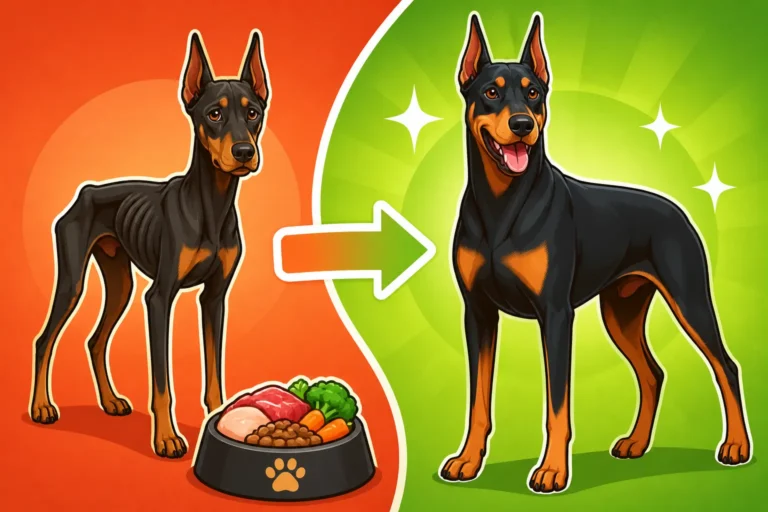
Other concerning signs include weight loss, even if your Doberman is eating normally between episodes. If they're not absorbing nutrients, they'll start to look thin and lose muscle mass. Changes in appetite (either refusing to eat or becoming ravenously hungry all the time), changes in stool consistency (diarrhea or constipation), or any blood in the regurgitated material or vomit are also urgent reasons for a vet visit. Dark, coffee-ground-like material indicates digested blood, which is particularly concerning. Even subtle changes in their normal behavior, like being less playful or withdrawn, could signal an underlying health problem.
Diagnostic Tests Your Vet Might Recommend
When you bring your Doberman to the vet for persistent regurgitation or vomiting, they'll start with a thorough physical examination. They'll ask you a lot of questions about the frequency, timing, and appearance of the material, which is why it's so important to observe closely.
Based on the physical exam and your observations, your vet might recommend a series of diagnostic tests. Blood work, including a complete blood count (CBC) and a biochemistry panel, can help identify systemic issues like infections, inflammation, kidney disease, liver problems, or imbalances in electrolytes. For Dobermans, screening for conditions like Addison's disease (which can cause gastrointestinal upset) might also be considered. Liver Enzyme Results in a Doberman can be an important diagnostic indicator.
Radiographs (X-rays) of the chest and abdomen can help visualize the esophagus and stomach, looking for foreign bodies, tumors, or signs of megaesophagus. They might also look for signs of a twisted stomach if bloat is suspected. Sometimes, contrast radiography, where your Doberman swallows a special liquid that shows up on X-rays, is used to get a clearer picture of esophageal function and identify strictures or blockages.
Ultrasound is another powerful imaging tool that can provide detailed views of abdominal organs like the stomach, intestines, pancreas, and liver, helping to diagnose conditions that cause vomiting. For a deeper look at the esophagus or stomach lining, an endoscopy might be recommended. This involves inserting a thin tube with a camera down the esophagus into the stomach, allowing the vet to directly visualize the tissues and even take biopsies.
The cost of these tests can add up, so it's always a good idea to discuss the proposed diagnostic plan with your vet and understand the rationale behind each test. Having a clear picture of The Vet Bills a Doberman Runs Up Outside Screening can help you prepare. Early diagnosis and intervention can often prevent more serious complications, so don't delay in seeking help if your Doberman is struggling to keep their kibble down.
Disclaimer
This article is for general informational purposes only and does not constitute professional advice. Laws, prices and regulations vary by location and change over time. Consult a qualified professional for guidance on your specific situation.