Bowl Height for a Tall Doberman
As a Doberman owner, you’ve probably spent countless hours wondering if you’re doing everything right for your beloved companion, and the question of feeding—specifically, the height of their food bowl—often brings up a lot of conflicting advice. It’s a genuine source of anxiety, particularly given our breed's predisposition to life-threatening issues like bloat. Navigating these discussions can be confusing, but this guide is designed to clarify the science and offer practical, realistic insights into choosing the best feeding setup for your tall Doberman, prioritizing their health and comfort.
The Long-Standing Debate: Are Elevated Bowls Right for a Doberman?
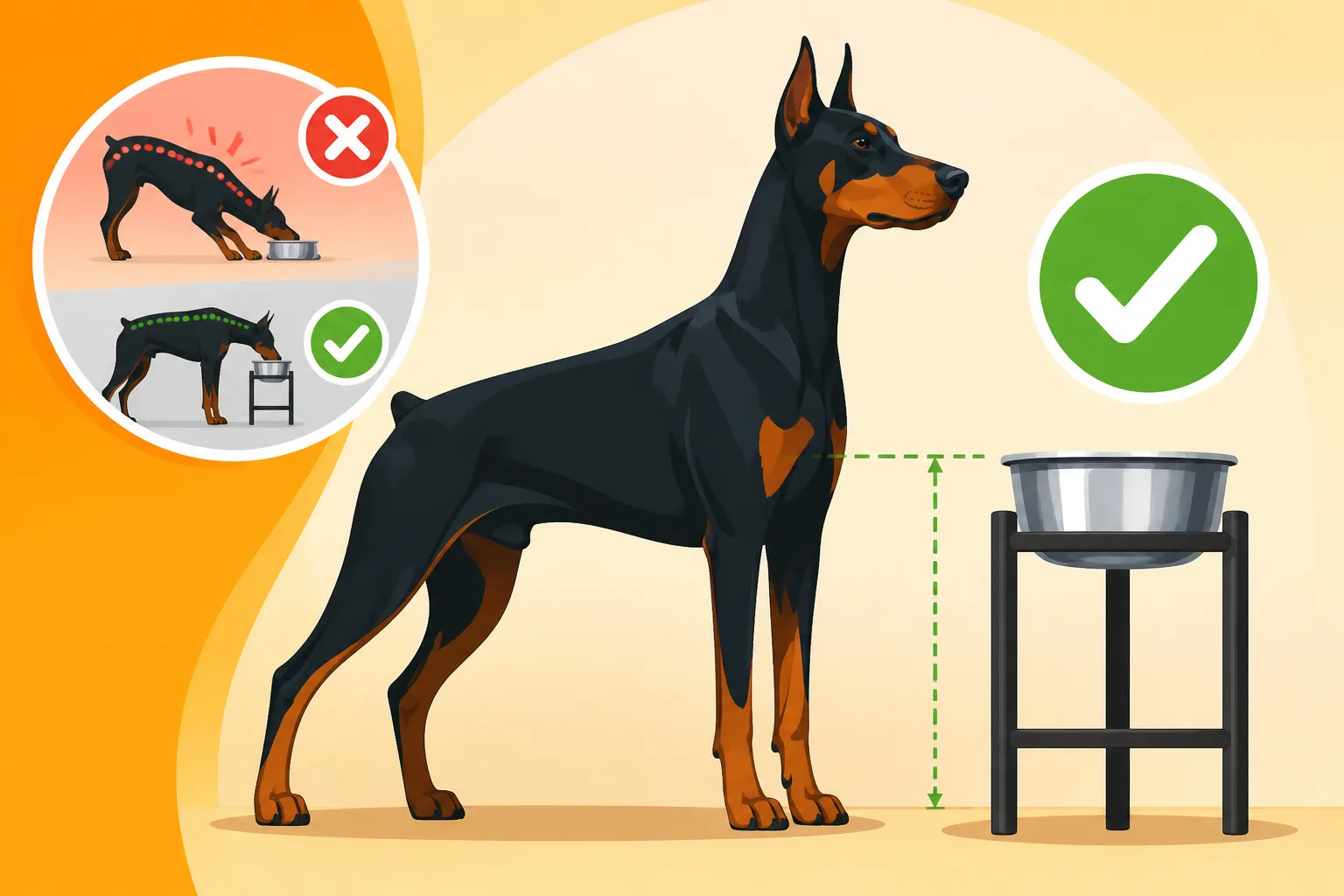
For years, it felt like common wisdom among large breed owners, Doberman enthusiasts included, that elevated food and water bowls were the way to go. The reasoning seemed sound on the surface: a tall dog shouldn't have to crane their neck down to eat, right? It seemed more comfortable, more natural, and many believed it aided digestion and, crucially, helped prevent Gastric Dilatation-Volvulus (GDV), commonly known as bloat. This thinking was pervasive, and if you’ve been around Dobermans for a while, you’ve undoubtedly seen or used raised feeders yourself, convinced you were doing the absolute best for your dog.
The idea was that by raising the bowl, a Doberman would ingest less air while eating and drinking, thereby reducing the risk of their stomach filling with gas. It also appeared to make swallowing easier, as food wouldn't be traveling "uphill" against gravity. For Dobermans, with their elegant, often deep and narrow chests, the concern about bloat is always at the forefront of our minds. Anything that promised to reduce that terrifying risk was eagerly adopted, and elevated feeders became a staple in many large dog households. We want our dogs to be comfortable, and watching them reach awkwardly for a floor bowl just felt… wrong, especially as they got older.
Beyond bloat prevention, some proponents of elevated bowls also pointed to orthopedic benefits. For Dobermans prone to conditions like Wobbler Syndrome or arthritis in their neck and spine, the thought was that an elevated bowl would reduce strain, making mealtime a more pleasant experience. Imagine trying to eat your dinner off the floor if you had a stiff neck; it just makes sense from a human perspective that our dogs might feel the same. This perceived comfort factor, combined with the strong belief in bloat prevention, solidified the elevated bowl's place in the Doberman care routine for many years.
The Surprising Truth: Elevated Bowls and Doberman Bloat Risk
This is where things get a bit counter-intuitive, and it’s completely understandable if this information challenges what you’ve always believed. For a long time, the advice to use elevated bowls for bloat prevention was widespread. However, significant research, most notably a large-scale study conducted by Purdue University, actually found the opposite to be true for large, deep-chested breeds like our Dobermans. This study indicated that using elevated food bowls might increase the risk of bloat, rather than decrease it.
The Purdue study, which looked at hundreds of cases, suggested that eating from a raised bowl could lead to a faster intake of food and possibly an increased ingestion of air, which are both factors believed to contribute to bloat. This was a bombshell for many owners and veterinarians alike, as it directly contradicted years of conventional wisdom. It’s important to remember that bloat is a complex condition, and no single factor is solely responsible, but this research certainly shifted the conversation significantly. The science suggested that for our beloved Dobermans, keeping their bowls on the floor might actually be the safer bet when it comes to mitigating bloat risk.
So, if you’re currently using an elevated feeder and feeling a pang of worry, please know you’re not alone. Many of us have been there, operating under the best intentions based on the information available at the time. The key is to adapt our practices as new, robust scientific evidence emerges. The veterinary community, for the most part, now advises against elevated feeders specifically for bloat prevention in at-risk breeds like Dobermans. It's a tough pill to swallow when you've invested in a setup you thought was beneficial, but our Dobermans' health is always the top priority, and sometimes that means challenging long-held beliefs. If you're concerned about Why a Doberman's Narrow Deep Chest Twists, understanding all potential risk factors is crucial.
Choosing the Best Bowl for Your Doberman's Unique Needs
Given the updated understanding regarding elevated bowls and bloat risk, many Doberman owners are now wondering what the best feeding solution is. The general recommendation for Dobermans, especially as a preventative measure against bloat, is to feed them from bowls placed directly on the floor. This encourages a slower eating pace and, theoretically, less air gulping. Of course, "directly on the floor" doesn't mean just any old bowl will do. We still want to ensure comfort, hygiene, and durability.
When selecting a floor bowl, consider the material. Stainless steel bowls are often recommended because they are durable, easy to clean, and less likely to harbor bacteria than plastic. Ceramic can also be a good option, provided it's heavy enough not to be pushed around by an enthusiastic Doberman and free of lead glazes. You can find a vast array of options on sites like Chewy or Amazon, making it easy to compare different materials and designs. For fast eaters, a slow-feeder bowl can be a game-changer. These bowls have ridges or obstacles that force your Doberman to work a little harder to get their kibble, significantly slowing down their mealtime. This alone can be a huge help in reducing air intake, regardless of bowl height.
| Feature | Elevated Bowl (Traditional View) | Floor Bowl (Current Veterinary View) | Slow Feeder Bowl (Beneficial for fast eaters) |
|---|---|---|---|
| Bloat Risk | Historically thought to reduce, but studies suggest increase | Generally considered safer (may encourage slower eating) | Greatly reduces fast eating, a bloat risk factor |
| Digestion | Believed to aid digestion | No significant difference | Encourages thorough chewing |
| Comfort for Tall Dogs | Perceived as more comfortable for neck/joints | May require more bending, but generally not an issue | Comfort level depends on design, can be messy |
| Air Intake | Believed to reduce, but may increase | Generally believed to reduce | Helps reduce rapid gulping of air |
| Hygiene | Keeps food off floor, but stands can collect dust | Direct contact with floor, but easy to clean | Can be harder to clean due to intricate design |
| Best for: | Dogs with specific medical conditions (e.g., Megaesophagus) under vet guidance | Most healthy Dobermans | Fast eaters, Dobermans at higher bloat risk |
Now, there are always exceptions to the rule, and this is where individual needs and veterinary advice come into play. If your Doberman has a confirmed medical condition like Megaesophagus, where food struggles to reach the stomach, an elevated feeder might be necessary and prescribed by your vet to help gravity assist the food down. Similarly, if your senior Doberman is battling severe arthritis or has mobility issues, and your vet confirms that a slightly raised bowl would significantly improve their quality of life without increasing bloat risk (perhaps due to a slower eating pace or other compensatory factors), then a modest elevation might be considered. Always have an open conversation with your veterinarian about these specific circumstances. For senior Dobermans, you might also consider What an Old Doberman Should Eat Differently to support their overall health.
Beyond the Bowl: Comprehensive Strategies for Doberman Digestive Health
While the bowl height conversation is important, it's just one piece of the puzzle when it comes to your Doberman's digestive health and managing the risk of bloat. There are several other crucial feeding practices that, when implemented together, can make a significant difference. Focusing on these broader habits can offer a much more comprehensive approach to keeping your Doberman happy and healthy.
Firstly, breaking up your Doberman's daily food allowance into two or even three smaller meals, rather than one large one, is highly recommended. This reduces the sheer volume of food in the stomach at any given time, potentially lessening the risk of bloat. Think about it: a full, distended stomach is more likely to twist than one that's only partially full. For example, if your Doberman eats 4 cups of kibble a day, instead of one massive breakfast, consider giving them 2 cups in the morning and 2 cups in the evening. This strategy is also discussed in Meal Timing on a Deep-Narrow Doberman Chest.
Secondly, ensure your Doberman has a period of rest before and after eating. High-impact exercise, intense play, or even significant stress right around mealtime can be risk factors for bloat. A good rule of thumb is to avoid strenuous activity for at least an hour before and after meals. This allows their body to focus on digestion. A calm environment during mealtime is also beneficial; avoid feeding your Doberman immediately after a high-energy training session or a long walk. This also plays into general well-being and is touched upon in What a Doberman Learns a Cue in Three Repetitions – a calm dog is often a more receptive dog, even at mealtime.
Consider the type and quality of food you're offering. While the "grain-free" debate has its own complexities, focusing on a high-quality diet that agrees with your Doberman is paramount. Some owners find success with brands like Ollie, which offer fresh, human-grade ingredients, while others stick to premium kibble available through retailers like Chewy. Regardless of your choice, ensure the diet is complete and balanced for your Doberman's age and activity level. Rapid diet changes can also upset a sensitive Doberman stomach, so always transition gradually over several days. The ongoing conversation about Whether Grain-Free Food Adds to Doberman DCM also means being mindful of broader dietary choices.
Finally, always ensure your Doberman has access to fresh water. While some studies suggest gulping excessive amounts of water immediately after eating can be a minor risk factor for bloat, restricting water is not the answer. Instead, ensure water is always available in a steady supply. If your Doberman tends to drink large quantities very quickly, especially after exercise, you might consider offering smaller amounts more frequently, or using a slow-drink bowl designed to reduce gulping. Paying attention to these comprehensive care practices, in addition to bowl height, gives you the best chance at a long, healthy life with your Doberman. Understanding How Many Cups an Adult Doberman Eats and adjusting based on activity levels is also a part of responsible feeding.
Disclaimer
This article is for general informational purposes only and does not constitute professional advice. Laws, prices and regulations vary by location and change over time. Consult a qualified professional for guidance on your specific situation.