Whether a Doberman Overheats in Summer Too
Many Doberman owners spend a good portion of the year worrying about keeping their sleek, short-coated companions warm. We bundle them up in sweaters, snuggle them under blankets, and often wonder, The Degrees at Which a Doberman Starts Shivering. But what happens when the temperatures swing the other way? It's a common misconception that because Dobermans struggle with cold, they must be fine in the heat. The reality is far more complex, and overlooking the dangers of summer can be just as perilous as neglecting their needs in winter. This guide will walk you through why Dobermans can and do overheat, how to spot the signs, and what practical steps you can take to ensure your beloved companion stays safe and comfortable when the mercury rises.
Understanding the Doberman's Thermoregulation Challenges
The Doberman's Unique Coat and Body Composition
Our Dobermans are truly magnificent creatures, aren't they? That sleek, shiny coat is one of their hallmarks, but it's often misunderstood when it comes to temperature regulation. Unlike breeds with thick double coats designed to insulate against both cold and heat (think a husky or a German Shepherd), the Doberman's single, short layer offers very little insulation against anything. While it does nothing to trap body heat in winter, it also offers minimal protection from direct sun exposure or ambient heat in summer. It's a double-edged sword: great for staying cool if the air is cool, but terrible at shielding them when the environment itself is sweltering.
Beyond the coat, consider their lean, muscular build. Dobermans are athletes, built for speed and endurance. This means they have a higher metabolic rate than some other breeds, and that metabolism generates heat. When they're active, that internal heat production increases significantly. Combine this with their minimal ability to dissipate heat through their skin (dogs primarily cool themselves by panting), and you have a recipe for rapid overheating if not managed carefully. It's not just the direct sun beating down, but the cumulative effect of body heat, environmental heat, and lack of efficient cooling mechanisms that puts them at risk.
Another factor is their overall body mass. While lean, they are still large dogs, often weighing in at 70-100 pounds. Larger bodies naturally retain and generate more heat than smaller ones. This isn't to say small dogs can't overheat – any dog can – but the sheer volume of a Doberman's body means they have more thermal mass to contend with, and once they start heating up, it can take longer to cool them down. This physical characteristic, coupled with their dense musculature, makes them more susceptible than many owners might initially believe, especially if they are accustomed to other breeds.
Beyond the Cold: How Doberman Physiology Handles Heat
The common wisdom that Dobermans "feel the cold" is absolutely true. We all know that feeling of guilt when our Doberman is Keeping a Doberman Warm in a Cold Car or shivering on a chilly morning walk. But the physiological mechanisms that make them susceptible to cold also don't magically make them robust in heat. Dogs don't sweat like humans do; their primary method of cooling is panting, which allows moisture to evaporate from their tongue and respiratory tract, taking heat with it. They also have sweat glands in their paw pads, but these are minor players in the overall cooling process.
For a Doberman, whose short muzzle offers less surface area for heat exchange than a longer-nosed breed, efficient panting is paramount. However, if the ambient air is already hot and humid, the effectiveness of evaporative cooling through panting is severely diminished. Imagine trying to cool down by blowing hot, wet air over a hot surface—it's just not going to work well. This is particularly critical in regions with high humidity during summer, where even moderate temperatures can become dangerous. The air is already saturated with moisture, making it harder for your Doberman's panting to evaporate enough to cool them.
Furthermore, some Dobermans may have underlying health issues that compromise their ability to handle heat. For instance, Dobermans are prone to heart conditions like Dilated Cardiomyopathy (DCM). A Doberman with a compromised heart might have a harder time coping with the stress that overheating puts on their cardiovascular system. Even The Silent Years Before a Doberman's Heart Shows can mean a dog is less resilient than they appear. Similarly, older Dobermans or those with respiratory issues might find it more challenging to pant effectively enough to regulate their body temperature. It's not just about what you see on the surface; it's about their whole internal system.
Recognizing the Signs of Overheating in Your Doberman
Subtle Early Warning Signals
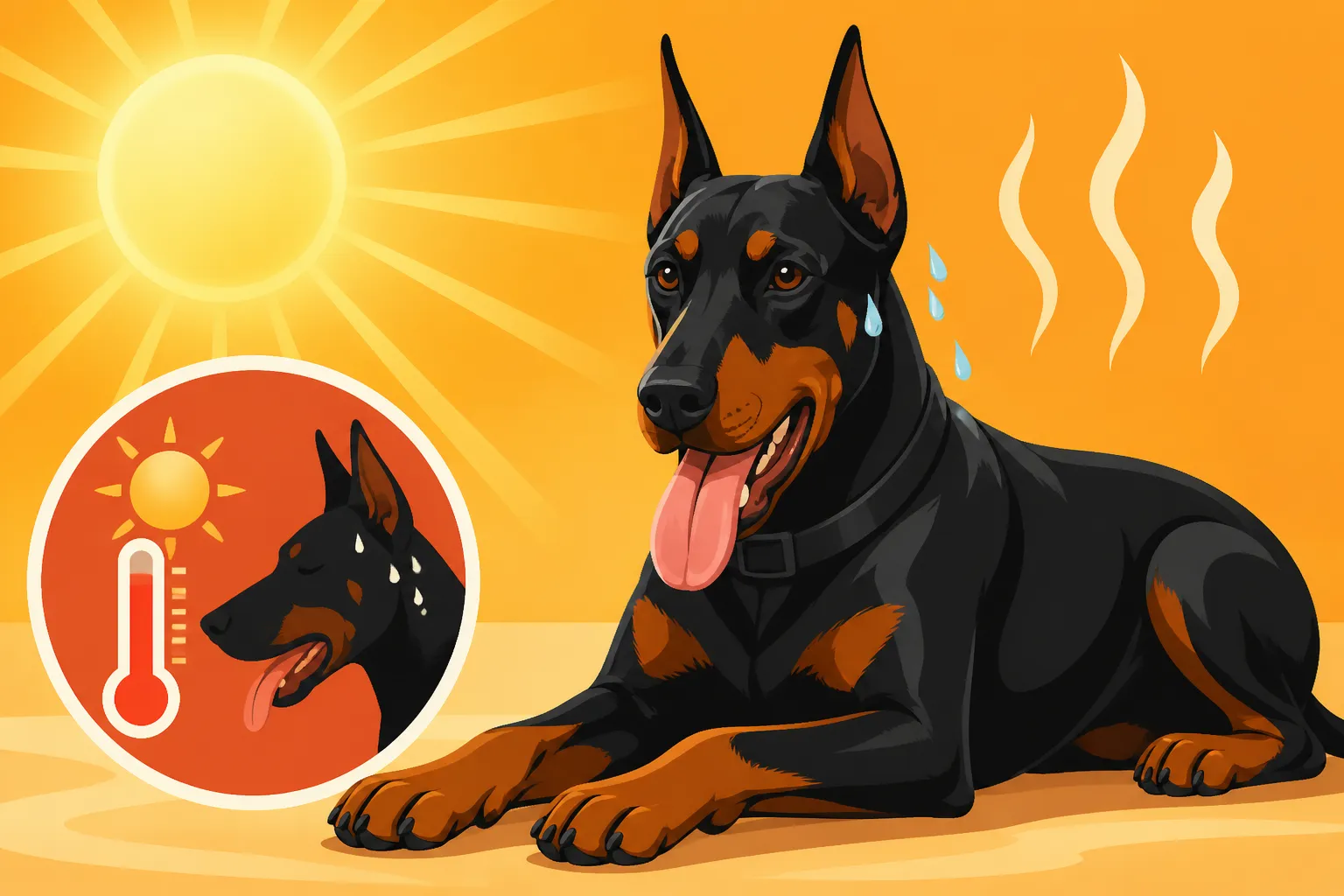
It's easy to miss the early signs of overheating because Dobermans are often stoic and want to please us. They might push through discomfort, especially if they're enjoying an activity with you. One of the first things you might notice is excessive panting, beyond what's normal for the level of activity. Their breaths might become shallower and faster, and they might start panting with their mouth open wider, exposing more of their tongue. Watch for a change in their gums—they might appear a brighter red than usual due to increased blood flow trying to dissipate heat.
Another subtle sign is a change in their demeanor. Your usually energetic Doberman might become lethargic, slow down, or seek shade more frequently than usual. They might even lie down and refuse to move, which, while appearing lazy, could be their body's way of telling you they've had enough. You might also notice their skin feels unusually warm to the touch, especially their belly or inner thighs where blood vessels are closer to the surface. A Doberman that starts to drool heavily, more than just a little moisture from panting, is also waving a red flag that their body is struggling to cool itself down. Pay attention to these small shifts; they're your dog's quiet way of asking for help.
They might also start exhibiting what looks like restlessness, pacing, or an inability to settle. This isn't anxiety about the heat directly, but rather discomfort as their body temperature rises. They are trying to find a cooler spot or a way to alleviate the feeling of being too warm. It’s crucial not to dismiss this as just being "fussy." If your Doberman, who usually curls up happily, is instead shifting positions, trying to dig at the floor, or repeatedly going to the water bowl without actually drinking much, take note. These behaviors are subtle clues that they are entering the initial stages of heat stress and need intervention before it escalates.
Urgent Symptoms Requiring Immediate Action
When signs progress beyond subtle, you're entering dangerous territory. Severe overheating, or heatstroke, is a medical emergency. One of the most alarming signs is very loud, labored panting that seems unproductive, sometimes accompanied by gasping or struggling to breathe. Their gums might turn from bright red to pale, gray, or even bluish as their circulation becomes compromised. Their saliva can become thick and ropey, almost foamy, indicating severe dehydration and stress on their respiratory system.
You might observe staggering, stumbling, or a complete collapse, as their central nervous system begins to be affected by the extreme heat. Vomiting and diarrhea, sometimes with blood, are also critical indicators of systemic failure. Seizures or unconsciousness are the gravest signs, signifying that organs are shutting down. At this point, every second counts. If you see any of these urgent symptoms, you need to act immediately to cool your Doberman and get them to an emergency veterinary clinic. There's no time to wait and see if they improve. Understanding Emergency Vet Fees for a Collapsing Doberman might be helpful, but the priority is always rapid treatment.
It’s important to understand that a Doberman can go from looking slightly uncomfortable to being in full-blown crisis very quickly. This isn't a slow progression like some other illnesses. Their athletic build and high metabolism, which make them prone to rapid heating, also mean that once they do overheat, the damage can occur with frightening speed. Organ damage, particularly to the kidneys, liver, and brain, can be irreversible even if the dog survives the initial heatstroke. This is why vigilance and proactive measures are so important, rather than waiting for obvious distress.
Practical Strategies for Keeping Your Doberman Cool
Adjusting Exercise Routines and Outdoor Exposure
This is perhaps the most critical adjustment for Doberman owners in warmer months. The usual hour-long run in the middle of the day simply won't cut it, and frankly, it's dangerous. Shift all strenuous exercise to the very early morning, before the sun has a chance to heat up the pavement and the air, or late in the evening after the sun has set and things have cooled considerably. Even then, observe your Doberman closely for any signs of discomfort. On truly scorching days, skip the long walk entirely and opt for indoor mental stimulation or short potty breaks in the shade. How Long a Doberman Can Be Out at Thirty-Five Degrees is a good question to ask yourself. If it's too hot for you to comfortably walk barefoot on the pavement, it's too hot for your Doberman's paws, and for their entire body.
Consider the surfaces your Doberman walks on. Asphalt and concrete absorb and radiate heat, becoming significantly hotter than the ambient air temperature. A Doberman's bare paw pads can burn very quickly. Stick to grass, dirt trails, or shaded areas. If outdoor time is unavoidable during warmer parts of the day, keep it brief and ensure plenty of access to shade. Never, ever leave your Doberman unattended in a car, even for "just a minute" with the windows cracked. The interior temperature of a car can rise to lethal levels in minutes, even on a moderately warm day. It's a risk simply not worth taking, and Whether a Doberman Should Be Left in a Car is an emphatic no.
If your Doberman thrives on high-energy activities, explore alternative ways to burn off steam without risking heatstroke. Water play can be fantastic! A shallow wading pool in the backyard, or supervised swimming in a safe, clean body of water, can be excellent for cooling down while still getting exercise. Just remember to always supervise your Doberman around water, and make sure they have a way to easily exit. Even something as simple as scattering treats in a cool, grassy area can provide mental stimulation without the physical exertion of a long run.
Here's a quick guide on safe summer exercise:
| Activity Level | Temperature Range (Fahrenheit) | Humidity (Relative) | Recommendations for Dobermans |
|---|---|---|---|
| Normal | Below 70°F | Low (below 50%) | Normal exercise, monitor hydration. |
| Caution | 70-80°F | Moderate (50-70%) | Exercise early/late, shorter duration, frequent water breaks. Avoid peak sun. |
| High Risk | 80-90°F | High (above 70%) | Only short potty breaks. Focus on indoor activities. Water play if supervised. |
| Extreme Danger | Above 90°F | Any | Minimal outdoor time, strictly for potty. Stay indoors with AC. |
Hydration and Cooling Aids
Constant access to fresh, cool water is non-negotiable. Place multiple water bowls around your home and yard, making sure they're always full and clean. Consider adding ice cubes to their water bowl to keep it cooler longer, or even offering a shallow dish of ice chips for them to crunch on. When you're out and about, always carry water and a portable bowl for your Doberman. There are many great options available, including collapsible bowls from brands you can find on Chewy or Amazon, making it easy to keep your Doberman hydrated no matter where you are.
Beyond just water, cooling aids can make a huge difference. Cooling vests or bandanas, which you soak in water and then wring out, can help with evaporative cooling on their torso and neck. Cooling mats, often filled with gel or water, can provide a cool spot for your Doberman to lie down on indoors or outdoors in the shade. Some Dobermans even enjoy a gentle spray from a hose (not directly in their face, of course!) on their belly and legs after a brief outdoor excursion. You can find a wide array of these products online, including on platforms like Amazon, often with detailed reviews to help you choose what's best for your Doberman's specific needs.
Remember, the goal is to prevent overheating, not just react to it. Strategic use of fans and air conditioning inside your home is vital. If you don't have central AC, consider a window unit for the room your Doberman spends most of their time in, or at least strategically placed fans to create air circulation. For outdoor kennels or shaded areas, a sturdy, elevated cot can help keep them off hot surfaces, allowing air to circulate underneath them. Small changes in their immediate environment can yield big results in their comfort and safety.
Considering Dietary Adjustments for Summer
While food itself might not seem like a primary factor in overheating, certain aspects of your Doberman's diet and feeding routine can play a role. Digestion generates heat (known as the thermic effect of food), so feeding very large meals in the hottest part of the day can contribute to internal heat production. Instead, consider splitting their daily ration into two or three smaller meals, fed in the cooler morning and evening hours. This can help minimize the internal heat surge associated with digestion when their body is already working hard to stay cool. Splitting a Doberman's Meals Around Exercise is good practice year-round, but especially vital in summer.
For Dobermans who might be less enthusiastic about drinking plain water in the heat, you can also explore ways to incorporate more moisture into their diet. Adding a splash of low-sodium chicken broth (make sure it's onion- and garlic-free) to their kibble, or offering wet food mixed with a bit of water, can boost their fluid intake. Some owners even freeze a portion of their Doberman's wet food or appropriate pureed vegetables (like pumpkin or green beans) into a Kong or lick mat for a long-lasting, cooling treat. Just be mindful of their overall calorie intake if you're adding extras. Brands like Ollie offer fresh, human-grade food options that often have a higher moisture content than traditional kibble, which can be beneficial in encouraging hydration.
It's also worth noting that some supplements, like certain fatty acid combinations (omega-3s), can support overall skin and coat health, which indirectly contributes to their ability to regulate temperature by maintaining a healthy barrier. However, always consult with your veterinarian before making significant dietary changes or introducing new supplements, especially if your Doberman has any pre-existing health conditions like Copper Liver Disease in Doberman Females or heart issues. Their advice will be tailored to your Doberman's individual needs.
When to Seek Veterinary Help for Heat-Related Issues
Emergency Measures and Transport
If you suspect your Doberman is suffering from heatstroke, immediate action is crucial, but it also needs to be measured. First, get them out of the heat source immediately—move them to air conditioning, a shaded area, or even into your car with the AC blasting. Begin active cooling by wetting their body with cool (not ice-cold) water. Focus on their head, neck, armpits, and groin area, where major blood vessels are close to the surface. You can use a hose, wet towels, or even your hands to apply water. Continue this while you are on your way to the veterinary emergency clinic.
Do not use ice water or immerse them in an ice bath. While it might seem intuitive, very cold water can cause the blood vessels on the surface of the skin to constrict, trapping heat inside their body and potentially worsening the situation. It can also induce shivering, which paradoxically generates more heat. Aim for cool tap water. While cooling, monitor their temperature if you have a rectal thermometer, and stop active cooling when their temperature reaches around 103°F (39.4°C) to prevent overcooling, which can also be dangerous. The priority after initial cooling is always transport to a vet, as rapidly as possible. Call ahead to the clinic so they can be prepared for your arrival.
During transport, keep the air conditioning on full blast. If your Doberman is unconscious or has severe breathing difficulties, keep their head extended to ensure their airway is open. Be prepared for the vet to start intravenous fluids, oxygen therapy, and potentially medications to address shock, organ damage, or swelling in the brain. The prognosis for heatstroke varies widely depending on the severity and how quickly treatment is initiated, but early and decisive action greatly improves the chances of survival and minimizes long-term complications.
Long-Term Concerns After a Heat Incident
Even if your Doberman recovers from an acute heatstroke episode, there can be lasting repercussions. Heatstroke can cause damage to various internal organs, including the kidneys, liver, brain, and gastrointestinal tract. In some cases, this damage can lead to chronic health issues that require ongoing management. For example, kidney damage might necessitate a special diet and regular blood work for the rest of their life. Brain damage, though less common, could manifest as behavioral changes, seizures, or neurological deficits. It's a sobering reminder that prevention is always far better than treatment.
Your veterinarian will likely recommend follow-up appointments and diagnostic tests to assess for any lingering organ damage. This could include blood tests to check kidney and liver function, and possibly even imaging if there are neurological concerns. A Doberman who has suffered heatstroke is also more susceptible to future heat-related incidents, as their body's thermoregulatory mechanisms may be compromised. This means you'll need to be even more vigilant in subsequent warm weather seasons, taking extra precautions to keep them cool and comfortable. Consider reading Screening an Older Doberman More Often to be aware of other potential issues.
Ultimately, the best approach is to learn from the experience and recommit to stringent heat safety protocols. This might mean investing in better cooling gear, altering your summer lifestyle significantly, or even exploring daycare options in climate-controlled environments for days when you can't be home to monitor them. It’s about recognizing that your Doberman, despite their impressive physique, is not impervious to the heat, and that proactive, continuous care is key to their long-term health and well-being. Keeping them cool is just as important as keeping them warm, ensuring they live their best, healthiest life.
Disclaimer
This article is for general informational purposes only and does not constitute professional advice. Laws, prices and regulations vary by location and change over time. Consult a qualified professional for guidance on your specific situation.