Apolda and the Night Rounds That Shaped the Doberman
The image of the sleek, powerful Doberman we know today often belies the rugged, demanding origins from which the breed emerged. Many people struggle to grasp how a dog so elegant could have such a gritty beginning, especially when they hear whispers of "night rounds" and "tax collectors." This guide will take you back to the late 19th century in Apolda, Germany, unraveling the compelling story of Karl Dobermann and the unique circumstances that forged a loyal and formidable companion.
The Man Behind the Breed: Karl Friedrich Louis Dobermann's Vision
It's easy to picture a dedicated breeder meticulously planning crosses in a quiet kennel, but the reality of the Doberman's inception was far more pragmatic and driven by sheer necessity. Karl Friedrich Louis Dobermann wasn't a gentleman of leisure; he was a working man with a dangerous job, and his environment demanded a dog unlike any other. His vision wasn't about aesthetics at first, but about survival and security.
The Tax Collector and His Dangerous Rounds
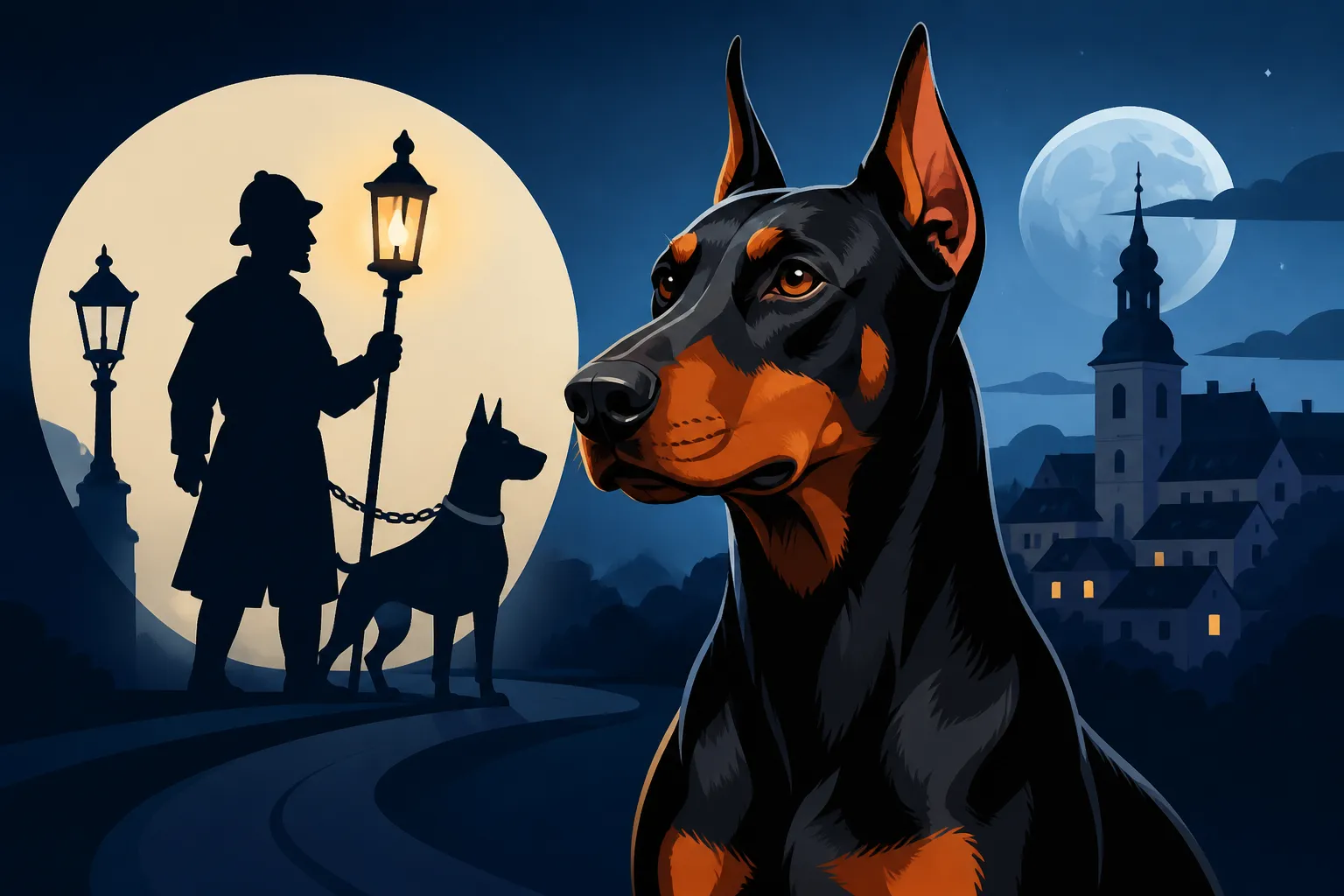
Imagine Apolda, Germany, in the late 1800s. It wasn't exactly a beacon of law and order. Karl Dobermann held many hats – tax collector, dog catcher, and even night watchman. Think about that for a moment: collecting taxes in an era without electronic transfers, often in cash, from people who might not be thrilled to see you, all while carrying substantial sums through unlit, often dangerous streets. This wasn't a job for the faint of heart, nor for a man without robust protection. Dobermann literally put his life on the line every day, and he needed a partner who would do the same. This personal need was the primary catalyst for the creation of what we now call the Doberman Pinscher. For a deeper dive into the man himself, check out The Tax Collector Who Invented the Doberman.
His role as the town's dog catcher also gave him a unique vantage point. He had access to a diverse pool of dogs, often strays or those deemed "undesirable" by others, which he could observe and evaluate for the very traits he desperately needed. He wasn't relying on pedigrees or fancy show lines; he was looking for raw courage, intelligence, tenacity, and an unwavering loyalty that would translate into an effective guard. This hands-on, utilitarian approach meant he saw dogs not for their breed purity but for their potential to contribute to his ultimate goal: a personal protector.
The Need for a Fearless Companion
Dobermann's life demanded a dog that wasn't just a pet, but a constant, vigilant bodyguard. He wasn't looking for a cuddly lapdog, but a canine equivalent of a trusted security detail. This need for a fearless companion shaped every decision he made in his breeding efforts. He sought out dogs that possessed an innate guarding instinct, an alertness that wouldn't waver, and the physical prowess to back it up if needed. This meant focusing on dogs with strong nerves, quick reactions, and an intimidating presence that could deter potential threats before they escalated.
The Doberman he envisioned, and eventually created, was a direct reflection of his own occupational hazards. This dog had to be capable of assessing danger, acting decisively, and protecting its handler without hesitation. It was a matter of life and death, not just a preference. The intensity of this demand is crucial to understanding the foundational temperament of the Doberman, a breed known even today for its profound loyalty and protective nature. If you've ever wondered why Dobermans are so dedicated to their people, it all traces back to these very roots.
Apolda: The Cradle of the Doberman Breed
Apolda, a small town in Thuringia, Germany, might seem like an unassuming place, but it holds immense historical significance for Doberman enthusiasts. It was here, within the specific social and environmental context of this town, that Karl Dobermann began his groundbreaking work. The locale itself played a silent, yet vital, role in the breed's formative years, providing both the challenges that spurred its creation and the resources for its development.
Apolda's Role in Early Doberman Development
Apolda in the late 19th century was a hub of activity for Karl Dobermann. It was the backdrop for his various roles, from tax collector to dog catcher, and it was where he sourced his breeding stock. The socio-economic conditions of the time meant there was a demand for working dogs—dogs that could earn their keep, whether by guarding property, herding, or providing protection. This utilitarian mindset permeated the dog-owning culture of the area. Dobermann wasn't operating in a vacuum; he was responding to a very real, local need for a highly capable protection dog, a need that was particularly acute for someone in his line of work.
The relatively contained nature of the town and its surrounding areas also meant that Dobermann had a somewhat localized gene pool to draw from, at least initially. He wouldn't have been importing dogs from far-flung regions. Instead, he worked with the dogs available to him, selecting those that best exhibited the desired traits. This local focus, combined with his specific selection criteria, allowed for a relatively rapid, albeit informal, development of a distinct type of dog that would eventually become the Doberman.
The Dogs of Apolda and Their Influence
What kind of dogs were running around Apolda that Dobermann could use? We don't have perfect records, but historical accounts and educated guesses suggest he worked with a mix of local breeds and types. Think of dogs common to working-class homes and farms: various types of Pinschers, sheepdogs, and "butcher's dogs" – dogs used by butchers for guarding property and cattle. These weren't necessarily purebreds in the modern sense, but dogs valued for their courage, strength, and guarding instincts. The term "Pinscher" itself often referred to a terrier-like dog used for pest control and guarding.
It's likely Dobermann was looking for a combination of attributes from these local dogs: the intelligence and trainability of some herding types, the grit and determination of Pinschers, and the physical presence of larger guarding breeds. He was essentially blending traits to create a superior product tailored to his needs. Imagine visiting the local market or surrounding farms, seeing dogs that caught his eye, and then acquiring them for his breeding program. These unglamorous "dogs of Apolda" were the unheralded ancestors that provided the raw material for a future global breed.
Piecing Together the Ancestry: A Mix of Utility and Grit
While Karl Dobermann meticulously created his ideal protection dog, he wasn't a record-keeper in the way modern breeders are. He didn't keep detailed stud books documenting every single cross. Because of this, pinpointing the exact lineage of the Doberman is a bit like piecing together a puzzle with some missing pieces. However, historical speculation and the physical and temperamental traits of the early Dobermans give us a strong indication of the contributing breeds. For more on this topic, consider reading What Went Into the First Dobermans.
The Likely Breeds in the Doberman's Blueprint
Though precise records are scarce, most historians and breed experts agree on several key contributors to the Doberman's genetic makeup. The Old German Shepherd Dog (a precursor to the modern German Shepherd) is often cited for its intelligence, trainability, and protective instincts. This would have provided the sharp mind and willingness to work that Dobermann needed. Another significant influence is believed to be the Rottweiler, or "butcher's dog," which contributed its robust build, powerful presence, and formidable guarding capabilities. This breed's fearless nature and protective drive were exactly what Dobermann required for his dangerous rounds.
The Black and Tan Terrier (similar to today's Manchester Terrier) is also frequently mentioned. These dogs were known for their tenacious nature, quick reflexes, and sleek, short coats. They would have added agility and a certain "snap" to the Doberman's temperament, essential for a dog meant to deter or confront threats. It's also speculated that various types of Pinschers, with their inherent alertness and guarding tendencies, played a role. Less commonly, some theorize that breeds like the Greyhound or Weimaraner might have been introduced to impart speed and elegance, though this is debated. This melting pot of working breeds created a dog that was more than the sum of its parts.
The "Butcher's Dogs" and Their Legacy
Among the most frequently mentioned and impactful contributors were the "butcher's dogs" – a type of dog often associated with butchers and tradesmen in Germany. These weren't necessarily a distinct breed as we define them today, but rather sturdy, courageous dogs used to guard property and sometimes drive cattle. The ancestors of the modern Rottweiler fall into this category, and it's their influence that many believe provided the Doberman with its powerful build, fearless demeanor, and unwavering protective instinct. These dogs were selected for their ability to intimidate and defend, traits that were paramount for Dobermann.
The legacy of these "butcher's dogs" is evident in the Doberman's physique and innate protective nature. They were dogs bred for hard work and serious guarding, not for show. They possessed a certain gravity and presence that would make anyone think twice before approaching their charge. This foundation of strength and inherent guardian ability is a cornerstone of the Doberman temperament, making them formidable protectors while also being intensely loyal to their family. This duality of fierce protector and devoted companion is a direct result of their working-class ancestry.
| Likely Ancestral Breed | Key Traits Contributed to Doberman |
|---|---|
| Old German Shepherd Dog | Intelligence, trainability, herding instincts, protective drive |
| Rottweiler (Butcher's Dog) | Robust build, power, fearless guarding, loyalty |
| Black and Tan Terrier | Tenacity, alertness, quick reflexes, sleek coat |
| German Pinscher/Other Pinschers | Alertness, sharp senses, determination, compact size |
| Greyhound/Weimaraner (Speculated) | Speed, elegance, refined appearance |
Shaping Temperament: Protection and Devotion
The temperament of the Doberman, particularly its balance of protection and devotion, is not accidental. It was deliberately cultivated by Karl Dobermann through generations of careful, albeit informal, selection. His life's demands meant he couldn't afford a dog that was just "pretty" or "nice to have." He needed a canine partner that understood the gravity of its role and executed it flawlessly.
Instilling Fierce Loyalty and Guarding Instincts
Karl Dobermann's primary goal was to create a dog with unparalleled loyalty and a strong, inherent guarding instinct. For him, a dog that would protect him on his night rounds, safeguarding his tax collections, was paramount. This meant selecting for dogs that not only barked at intruders but were also willing to physically defend. He needed a dog that bonded fiercely with its owner, viewing them as their sole charge and dedicating itself completely to their safety. This intense loyalty is one of the most defining characteristics of the Doberman today, making them the ultimate "Velcro dog" for many owners. This early focus on protection also meant selecting for dogs that possessed a natural wariness of strangers, not outright aggression, but a discerning nature that could quickly differentiate friend from foe.
This selective breeding meant fostering a dog that was confident and courageous, never timid or flighty. A fearful dog would be a liability in a dangerous situation. So, Dobermann sought out dogs with stable nerves and a strong will, capable of standing their ground. This fierce loyalty, combined with a potent guarding instinct, laid the groundwork for the Doberman's reputation as a formidable protector. It's also why Dobermans often struggle with being left alone; their inherent programming is to be by your side, ever vigilant. Read more about this in Living With a Doberman That Follows You Everywhere.
The Balance Between Courage and Trainability
While fierce loyalty and guarding instincts were essential, Dobermann also needed a dog that was highly intelligent and trainable. A powerful, protective dog that couldn't be controlled or directed would be as dangerous to its owner as to potential threats. Therefore, a crucial part of his breeding program involved selecting dogs that showed a keen ability to learn and respond to commands. This required a certain level of mental acuity and a desire to please their handler, despite their strong protective drive. He needed a dog that could assess a situation and act appropriately, not just react blindly.
This balance between raw courage and refined trainability is what makes the Doberman such a unique breed. They possess the bravery to confront perceived threats, but they also have the intelligence and biddability to be guided by their human companion. This allowed Dobermann to have a dog that was not just a deterrent, but a controllable weapon if the situation truly demanded it. This foundation of intelligence is why Dobermans excel in various dog sports and working roles today, from obedience to protection work. Their brains are as powerful as their brawn, something you'll quickly discover when you're Training a Doberman That Is Smarter Than You Expect.
From Utility Dog to Recognised Breed
The journey of the Doberman from Karl Dobermann's personal bodyguard to a globally recognized breed was a testament to its exceptional qualities. It wasn't long before others in Apolda and beyond recognized the unique value of these dogs, leading to a more formalized approach to their development and recognition. The transition from a utilitarian necessity to a standardized breed involved the contributions of many, carrying forward Dobermann's initial vision.
Early Doberman Standards and Recognition
After Karl Dobermann's passing in 1894, the mantle of developing the Doberman was taken up by others who saw the immense potential in his creations. Individuals like Otto Goeller were instrumental in formalizing the breed. Goeller, considered one of the most influential early breeders, established the first Doberman club in 1899, the "National Doberman Pinscher Club" in Apolda. This was a pivotal moment, as it marked the beginning of a concerted effort to standardize the breed's appearance, temperament, and health. The creation of a breed standard meant moving beyond simply breeding for utility, and starting to define what a "Doberman" should look and act like, ensuring consistency across litters. You can learn more about this foundational period in Otto Goeller and the First Doberman Club.
The first official Doberman breed standard was drafted around 1900. This document outlined the desired physical characteristics – head shape, body conformation, coat color, and size – as well as the essential temperament traits that Karl Dobermann had so carefully selected for. It codified the ideal Doberman: a powerful, elegant, alert, and determined dog with a loyal disposition. This standardization was crucial for the breed's future, allowing it to gain acceptance and recognition beyond the local confines of Apolda. For a fascinating look at these early guidelines, delve into The 1900 German Doberman Standard.
The Evolution of the Doberman Beyond Apolda
Once a breed standard was established, the Doberman's popularity began to spread rapidly. Its reputation as a fearless protector and intelligent companion resonated with people far beyond Apolda. Breeders in other parts of Germany and eventually across Europe and North America started to acquire Dobermans, further developing the lines. The breed's inherent qualities made it suitable for various roles, from police and military work to loyal family guardianship, cementing its place as a versatile and respected working dog.
Over the decades, as Dobermans were selectively bred for different purposes and in different regions, some variations in appearance and temperament emerged, leading to distinctions such as the "American" and "European" Doberman lines. However, the core essence – the loyalty, intelligence, and protective drive that Karl Dobermann painstakingly cultivated in Apolda – remained at the heart of the breed. The Doberman's evolution from a necessary utility dog born of dangerous night rounds into a beloved and iconic breed is a powerful story of purpose-driven breeding and enduring canine character. Even today, when searching for quality food or supplies for your Doberman, brands like Chewy offer options that cater to the needs of these active, intelligent dogs, a testament to how far the breed has come from its humble beginnings in a small German town. Finding durable toys for a Doberman is also easy on Chewy, supporting their energetic nature.
Disclaimer
This article is for general informational purposes only and does not constitute professional advice. Laws, prices and regulations vary by location and change over time. Consult a qualified professional for guidance on your specific situation.