The First Dobermans Shipped Out of Germany
Many Doberman enthusiasts today are captivated by the breed's origins, often wondering how this magnificent German creation spread across the globe from its humble beginnings in Apolda. It's a journey filled with both ambition and logistical hurdles, far removed from our modern, interconnected world. This guide delves into the fascinating early history of the Doberman's journey from Germany to international shores, exploring the motivations, methods, and lasting impact of these crucial initial exports.
The Doberman's Ascent in Its Homeland
Before Dobermans were gracing homes and working alongside handlers across continents, they had to first solidify their place in their native Germany. The breed’s development was a focused effort, driven by a specific vision and quickly gained traction. Understanding this initial phase is key to appreciating why the rest of the world soon took notice.
The Foundation Laid by Karl Dobermann
The story, as many of us know it, begins with Karl Friedrich Louis Dobermann, a tax collector, night watchman, and dog catcher from Apolda, Germany. He wasn't a professional breeder in the modern sense, but a man with a clear need for a capable, fearless canine companion. Imagine his daily rounds, collecting dues in potentially hostile neighborhoods, or patrolling the streets at night, relying on nothing but his own wits and the protection of his dogs. This personal safety need was the catalyst for the Doberman breed. He started crossing various local dogs, selecting for traits like intelligence, courage, and a strong protective instinct. We talk about Karl Dobermann and the Dogs He Needed extensively, detailing his motivations and the types of dogs he likely used in his early breeding program. This wasn't about aesthetics initially; it was about function and survival.
His early Dobermans were not the sleek, elegant animals we recognize today. They were rugged, perhaps a bit rough around the edges, but undeniably effective. They were the ultimate "personal protection" dogs for a man who put himself in risky situations. He focused intensely on selecting for an unwavering loyalty to their handler and an inherent suspicion of strangers, traits that would become hallmarks of the breed. This raw, unrefined version of the Doberman was the blueprint from which all future Dobermans, both within Germany and eventually beyond its borders, would be built.
It's truly remarkable to think that one man's personal need could lead to the creation of such an iconic breed. Dobermann himself may not have envisioned the global phenomenon his dogs would become, but his meticulous selection for specific working characteristics laid an incredibly strong foundation. The reputation of these dogs as formidable protectors spread quickly within his local area, creating a demand that began to extend beyond his immediate circle.
Early German Recognition and Breed Standards
As the Doberman gained local notoriety, others began to see the potential in Dobermann's work. One pivotal figure was Otto Goeller, who, unlike Dobermann, was a dedicated dog breeder and exhibitor. Goeller took Dobermann’s initial efforts and applied a more structured, systematic approach, refining the breed and establishing the first official Doberman Pinscher Club in Apolda in 1899. This was a critical step in formalizing the breed and moving it beyond a collection of working dogs to a recognized, distinct entity. You can learn more about Otto Goeller and the First Doberman Club and his significant contributions to shaping the breed.
This club was instrumental in creating the first official breed standard, which was adopted in 1900. This standard wasn't just a guide for physical appearance; it also articulated the desired temperament. It aimed to create a uniform ideal for breeders to strive for, ensuring that the Doberman’s working attributes were preserved while also establishing a consistent look. Before this, there was more variation, but with a standard, judges could assess dogs consistently, and breeders had a clear goal. This standardization made the Doberman more appealing to a broader audience, both domestically and internationally, as it offered a predictable set of characteristics.
The establishment of the breed club and standard meant that Dobermans could be officially registered, pedigrees could be tracked, and organized breeding programs could flourish. This structured approach, a hallmark of German dog breeding, gave the Doberman a legitimacy that was essential for its eventual global expansion. It transformed the Doberman from a local curiosity into a respected and sought-after working dog breed within Germany's growing dog fancy.
The Temperament That Captivated Early Adopters
What truly captured the hearts and minds of early Doberman enthusiasts in Germany was the breed's extraordinary temperament. These weren't just pretty faces; they were dogs of unparalleled loyalty, sharp intelligence, and fearless determination. The early Doberman was lauded for its ability to learn quickly and its inherent protective instincts, making it an ideal guard dog and personal companion for those who valued security and a steadfast partner. The description of Doberman Temperament as the Standard Describes It highlights these core traits, emphasizing alertness, fearlessness, and a strong sense of self-possession.
This combination of traits meant that a Doberman wasn't merely a pet; it was an active participant in its owner's life, a vigilant protector, and an intelligent companion. Farmers used them to guard livestock, police forces began to employ them for patrol work, and families sought them out for home protection. The Doberman offered a package of utility and companionship that few other breeds could match. Their imposing presence, coupled with their unwavering devotion to their human family, made them truly unique.
It’s important to remember that this early temperament was also marked by a certain intensity. They were bred for serious work, and this translated into dogs that required firm, consistent handling and extensive socialization. While devoted, they weren't necessarily "easy" dogs; they demanded an owner who understood their needs and could channel their formidable intelligence and protective drive appropriately. This inherent drive, however, was precisely what made them so desirable for those seeking a truly capable working dog.
The World Takes Notice: International Demand
Once the Doberman's reputation was cemented in Germany, it was only a matter of time before its fame spread beyond national borders. The late 19th and early 20th centuries saw a growing interest in purebred dogs, and the Doberman, with its striking appearance and formidable capabilities, was perfectly positioned to capture international attention.
Early European Expansion
Germany shared borders and cultural ties with many European nations, making it a natural first step for the Doberman's international journey. Neighboring countries like Holland, Belgium, and France were quick to recognize the breed's qualities. Breeders and enthusiasts in these areas, already familiar with various German working breeds, saw the Doberman as an exciting addition to their own canine landscapes. These initial exports were often facilitated through personal connections between German breeders and their European counterparts, fostering a network of Doberman fanciers across the continent.
The appeal in Europe was much the same as in Germany: the Doberman was a superior guardian, an intelligent working dog, and a loyal companion. As the breed established itself in these countries, local clubs began to form, mirroring the success of the German Doberman Pinscher Club. This cross-border exchange of dogs and breeding philosophies helped to solidify the Doberman's presence across Europe, laying the groundwork for even wider global reach. It wasn't long before dogs from established German kennels were highly sought after throughout the continent, forming the foundation of many long-standing European Doberman lines.
These early European lines, in turn, began to develop their own characteristics, influenced by local breeding priorities and preferences. While they retained the core Doberman traits, subtle differences started to emerge, contributing to the rich diversity of the breed we see today. The robust health and working prowess of these early exports were critical, as they demonstrated the Doberman's adaptability and consistent quality, ensuring continued demand.
America's Introduction to the Doberman
The journey to North America represented a much larger leap, both geographically and logistically. The first Dobermans are believed to have arrived in the United States in the early 1900s, igniting a fascination among American dog enthusiasts. The American Kennel Club (AKC) officially recognized the breed in 1908, a significant milestone that legitimized the Doberman's presence in the country. This recognition was crucial for tracking pedigrees, establishing show careers, and formally integrating the breed into the American dog world. If you're curious about this, AKC Recognition of the Doberman in 1908 provides a deeper dive into how this happened.
Early American adopters were drawn to the Doberman's sleek appearance and its reputation for intelligence and loyalty. These were often wealthy individuals or those involved in the burgeoning sport of dog showing, keen to acquire the latest and most impressive breeds from Europe. Imagine the excitement of these pioneers, receiving their imported Doberman, a breed unlike many they had seen before. These initial imports formed the bedrock of the American Doberman population, and their progeny would eventually populate kennels across the nation.
However, bringing a dog from Germany to the US in those days was no small feat. It involved considerable expense, time, and navigation of complex shipping regulations. Only the most dedicated and well-resourced individuals could undertake such an endeavor. This exclusivity initially limited the Doberman's numbers but also contributed to its mystique and desirability among those who valued rare and exceptional breeds.
The Appeal of the "Ideal Working Dog"
Beyond its striking looks and fierce loyalty, the Doberman's primary appeal, both in Germany and abroad, was its unparalleled ability as a working dog. The breed was marketed and celebrated for its intelligence, trainability, and courage, making it a favorite for police, military, and protection work. This wasn't just about personal guarding; it was about a dog capable of performing complex tasks under pressure. The Doberman quickly earned a reputation for being an all-around utility dog, adaptable to various roles.
Its use in law enforcement and by military units, especially during the World Wars, cemented its image as a formidable and reliable partner. Stories of Dobermans serving with distinction, from patrol duty to search and rescue, only amplified their appeal. The Doberman's War Record is a testament to their bravery and dedication in service. This "working dog" image resonated deeply with those who valued dogs for their capability and utility, rather than just companionship.
This emphasis on working ability meant that early breeders, even those focused on conformation, paid close attention to temperament and health. They understood that a Doberman that couldn't perform its intended duties wasn't a true Doberman. This dedication to function played a significant role in ensuring the breed's quality and enduring appeal in its early international expansion. Many sought Dobermans because they needed a dog that could truly do something, and the Doberman delivered.
Navigating the Challenges of Overseas Travel
Bringing a Doberman from Germany to a distant land like America in the early 20th century was a monumental undertaking, fraught with challenges that modern pet owners can scarcely imagine. It wasn't a simple matter of booking a flight; it was a complex logistical puzzle that required careful planning and a good deal of resilience from both the dogs and their human companions.
The Journey Across Oceans
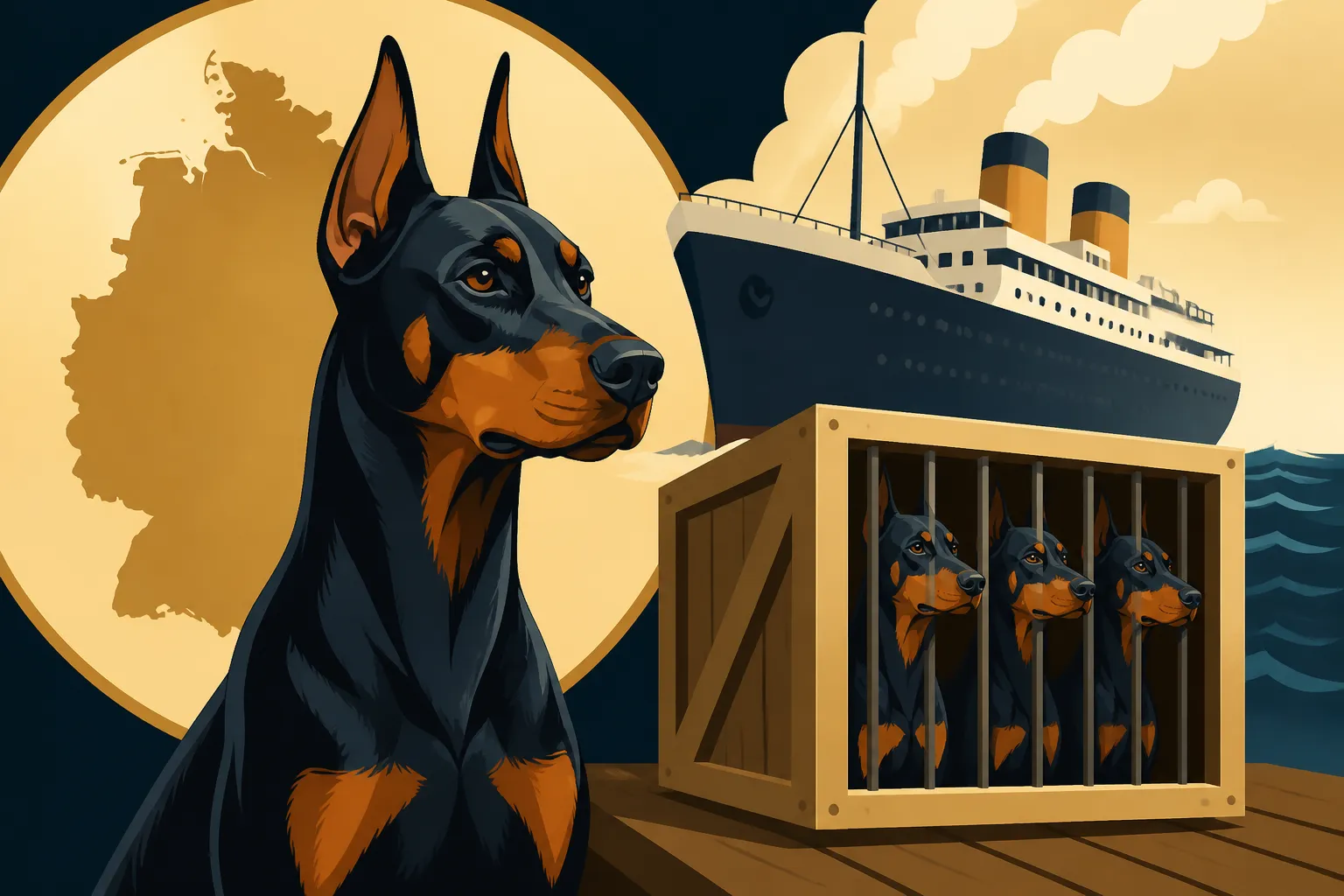
Picture the conditions of international travel for dogs over a century ago. There were no climate-controlled cargo holds specifically designed for live animals. Dogs were typically shipped in wooden crates as freight, often enduring long voyages by ship across the Atlantic or other major bodies of water. These journeys could last weeks, and the conditions were far from ideal. Imagine the stress on a Doberman, confined to a crate, exposed to the sounds and smells of a bustling ship, and completely reliant on the crew for care.
Food and water provision during these long voyages was basic, and constant monitoring was often not possible. Dogs would need to be checked on, fed, and watered by ship personnel, who might not have had specific experience with canines, let alone a high-energy, intelligent Doberman. The quality of care could vary wildly, and sadly, some dogs didn't make the journey. The robust constitution of the Doberman, bred for resilience, was certainly put to the test during these demanding trips.
Beyond the physical discomfort, there was the immense psychological toll. These were intelligent, sensitive animals, suddenly removed from everything familiar and thrust into an unpredictable, often frightening environment. The journey itself was a crucible, and only the toughest and most adaptable individuals arrived at their destination in good health, ready to begin their new lives.
Quarantine and Health Protocols of the Era
Upon arrival in a new country, a Doberman’s journey wasn't over. Quarantine regulations, though perhaps not as stringent as today's, still existed. Dogs entering new territories often faced periods of isolation, sometimes for weeks or even months, to ensure they weren't carrying diseases. This was especially true for countries like the United Kingdom, which had strict rabies prevention policies. For an intelligent and highly bonded breed like the Doberman, this enforced solitude after a stressful journey could be particularly difficult.
Veterinary care during transit and quarantine was also rudimentary compared to today's standards. There were no sophisticated diagnostics or extensive preventative treatments. Importers had to rely on basic health checks and the general good health of the dog they were receiving. A dog that fell ill during quarantine might not have received the advanced medical attention we take for granted now, adding another layer of risk to the entire process.
The rigorousness of these early health protocols, combined with the sheer duration of travel, meant that only very healthy, resilient dogs were likely to survive the journey and successfully integrate into their new homes. This inadvertently created a selective pressure, ensuring that the founding Dobermans in new countries were often robust specimens, contributing to the breed's overall hardiness.
The Human Element: Dedicated Importers
Behind every successful Doberman export was a dedicated human being. These early importers weren't just buying a dog; they were investing significant time, money, and emotional energy into bringing a piece of German heritage to their own country. They corresponded with German breeders, arranged complex shipping logistics, and navigated unfamiliar customs and veterinary regulations. Their passion for the Doberman was undeniable.
These pioneers were often prominent figures in the nascent dog fancy of their respective countries – individuals with the financial means and the organizational skills to orchestrate such an endeavor. They understood the value of good genetics and sought out the best available Dobermans from established German kennels. Without their foresight and determination, the Doberman's international spread would have been significantly slower, if it happened at all.
Moreover, these individuals often became the first champion breeders and advocates for the Doberman in their new lands. They worked tirelessly to educate the public about the breed, promote responsible ownership, and establish ethical breeding practices. Their commitment laid the foundation for the Doberman clubs and communities that thrive today, ensuring the breed's legacy for future generations.
Establishing the Doberman Abroad
Once the Dobermans successfully made their arduous journey, the real work of establishing the breed in new territories began. This involved more than just breeding dogs; it meant building infrastructure, educating the public, and adapting the breed to new environments and cultural contexts.
Founding Kennel Clubs and Registries
A critical step in solidifying the Doberman's presence in any new country was the establishment of local breed clubs and the registration of imported dogs with national kennel clubs. For example, in the United States, after the AKC recognized the Doberman, a dedicated breed club, the Doberman Pinscher Club of America, was formed. These clubs served as crucial hubs for enthusiasts, offering a platform for sharing knowledge, coordinating breeding efforts, and promoting the breed.
These nascent clubs faced the challenge of educating both the public and potential judges about the Doberman standard, often translating and adapting the German standard for local interpretation. They organized shows and trials, providing venues for Dobermans to be evaluated against the breed ideal and to demonstrate their working abilities. This structured environment was essential for ensuring that the integrity of the breed, as envisioned by its German founders, was maintained.
Without these dedicated clubs and reliable registries, the Doberman's lineage could easily have become muddled, and its unique characteristics diluted. They provided a framework for responsible breeding, helping to prevent indiscriminate crosses and ensuring that the breed developed consistently and thoughtfully in its new home. The initial growth of these clubs was often slow but steady, built by a core of passionate individuals. You can trace how the Doberman's standing increased in The Doberman Pinscher Club of America.
Pioneering Breeders in New Territories
The success of the Doberman in new countries ultimately rested on the shoulders of pioneering breeders. These individuals took the precious imported stock and began their own breeding programs, striving to produce high-quality Dobermans that met the breed standard and possessed the desired temperament. They meticulously studied pedigrees, sought out suitable mates, and often worked in close consultation with German breeders to ensure they were on the right track.
These early breeders were faced with a limited gene pool, often having to make difficult decisions about how to best utilize their initial imports to create a sustainable population. They were also responsible for the early socialization and training of their puppies, ensuring that these intelligent and powerful dogs developed into well-adjusted companions and working partners. This was a hands-on, deeply involved process, often a labor of love.
The reputation of these pioneering kennels grew quickly, and their puppies became highly sought after. They laid the genetic foundation for generations of Dobermans, and their influence can still be seen in many modern pedigrees. Their dedication to producing healthy, typy, and temperamentally sound Dobermans was paramount in establishing the breed's excellent reputation in their respective countries.
Adapting the Breed to Different Climates and Cultures
As the Doberman spread across the globe, it encountered a diverse array of climates and cultural expectations. A Doberman thriving in a temperate German forest might need different considerations in the scorching heat of an American desert or the chilly winters of the Canadian plains. Early breeders and owners had to learn how to best care for their Dobermans in these new environments, from dietary adjustments to exercise routines.
Culturally, the Doberman's role also subtly shifted. While always revered as a protector, in some countries, it became more prominently a show dog or a companion animal, even if its working drives remained. This sometimes led to different breeding priorities, with some lines emphasizing conformation over hardcore working ability, or vice versa. This divergence, however, still kept the breed’s core characteristics intact.
The fact that the Doberman adapted so successfully to such varied conditions speaks volumes about its inherent hardiness and intelligence. Whether guarding a ranch in the American West, performing obedience in a British show ring, or simply being a beloved family member in a suburban home, the Doberman proved its versatility. Many considerations about care, such as Winter Coats and Cold-Weather Gear for a Doberman, were learned and adapted over time as the breed moved into new climates.
The Enduring Legacy of the First Exports
The journey of the first Dobermans out of Germany wasn't just a historical footnote; it profoundly shaped the breed's future, leading to the diverse and globally beloved Doberman we know today. These early exports were the seeds from which entire national Doberman populations grew, each with its own nuances and characteristics.
The Development of Distinct Breed Lines
One of the most significant consequences of the early international exports was the gradual divergence into distinct breed lines, most notably the American Doberman and the European Doberman. As Dobermans were bred in different countries, local preferences for appearance, temperament, and working ability began to influence breeding decisions. In the United States, for example, there was often an emphasis on a more refined, elegant physique for the show ring, whereas in some European countries, a sturdier, more powerfully built dog with an intense working drive might have been preferred. We have explored How a European Doberman Is Built Differently in previous discussions.
These differences accumulated over generations, leading to recognizable variations between the lines. While both still undeniably Dobermans, a keen eye can often spot the distinctions. This wasn't a planned outcome but a natural evolution as breeders in different regions interpreted the original German standard and tailored their breeding programs to suit their specific goals, whether for show, sport, or family protection.
This divergence has presented both opportunities and challenges for the breed. It has allowed for a broader range of Doberman types to thrive, catering to different owner preferences and lifestyles. However, it also means that potential owners need to understand these differences to choose the right Doberman for their home.
Genetic Diversity and Health Implications
The initial exports also played a crucial role in shaping the genetic landscape of the Doberman breed worldwide. By spreading the original German stock across multiple continents, these early efforts inadvertently helped to increase the breed's overall genetic diversity, at least within various geographical populations. Had the breed remained confined to Germany, it might have been more susceptible to a smaller gene pool and its associated risks.
However, the limited number of initial imports into any given country also meant that these founding populations often started with a relatively narrow genetic base. This is why ongoing responsible breeding, careful health screening, and occasional infusions from different lines are so vital. Understanding the genetic origins and potential predispositions of a Doberman is paramount for responsible ownership and breeding. For instance, The Health Testing a Doberman Breeder Must Show emphasizes the importance of understanding the genetic background of your Doberman.
Today, Doberman enthusiasts often look to European lines for certain traits or to broaden their own breeding programs, reflecting a continued global exchange that began with those very first exports. This interconnectedness, facilitated by modern transport and communication, helps to mitigate the risks associated with isolated gene pools and aims to strengthen the breed's health and vitality for the future.
A Global Breed, Rooted in Germany
From a tax collector's specific need in Apolda to a globally recognized and beloved breed, the Doberman's journey is a testament to its enduring qualities. The first Dobermans shipped out of Germany weren't just animals; they were ambassadors, carrying the torch of their breed's legacy across oceans and continents. Their powerful presence, intelligent minds, and unwavering loyalty quickly won over hearts, establishing the Doberman as a premier working and companion dog worldwide.
Today, whether you encounter an American Doberman with its elegant lines or a more robust European Doberman, you are seeing the direct result of those pioneering efforts. The breed's popularity endures, a testament to the dedication of its founders and the countless breeders and owners who have championed it over the decades. The early chapters of the Doberman's story are a powerful reminder of how a breed's origins can shape its destiny and its lasting impact on the global canine community. It's truly a story that makes you appreciate every Doberman you encounter, knowing the rich history behind them.
Here is a quick overview of some key aspects of the early Doberman export journey:
| Aspect | Description |
|---|---|
| Origin Point | Apolda, Germany, spearheaded by Karl Dobermann, and later refined by Otto Goeller and the first Doberman Pinscher Club. |
| Primary Motivation | Export was driven by international demand for the Doberman's reputation as an intelligent, fearless protector and working dog, following its establishment and standardization in Germany. |
| Early Destinations | Initially neighboring European countries (e.g., Holland, Belgium), soon followed by significant exports to the United States. |
| Travel Methods | Predominantly by ship, involving long and often arduous sea voyages in basic crating conditions, lasting weeks. |
| Challenges Faced | Long transit times, basic animal care on ships, rudimentary veterinary support, and post-arrival quarantine periods, all of which placed significant stress on the dogs. |
| Key Enablers | Dedicated individual importers with financial means and passion, the formalization of breed standards, and the establishment of local Doberman clubs in recipient countries. |
| Lasting Impact | Formation of distinct Doberman lines (e.g., American vs. European), expansion of the global gene pool, and the Doberman's enduring worldwide recognition as a versatile working and companion breed. |
Remember, caring for a Doberman, especially one with a strong heritage, involves understanding its needs. Reputable suppliers like Chewy can provide excellent food, training gear, and health supplies to ensure your Doberman thrives. If you're planning to get a Doberman, consider A Doberman's Whole-Life Total to truly understand the commitment. For continued learning, you might find articles such as The Nine to Twelve Year Doberman Lifespan or Whether European Dobermans Live Longer to be particularly insightful as you consider the health and longevity of these magnificent dogs. It’s a journey, and having the right resources from places like Chewy from the start makes a world of difference.
Disclaimer
This article is for general informational purposes only and does not constitute professional advice. Laws, prices and regulations vary by location and change over time. Consult a qualified professional for guidance on your specific situation.