AKC Recognition of the Doberman in 1908
Many Doberman enthusiasts today might not realize the intricate journey their beloved breed took to gain official standing, nor the profound impact a single year had on its development. For new owners, trying to navigate the history can feel like piecing together an ancient puzzle, especially when it comes to understanding why Dobermans in America sometimes look and act a little differently from their European cousins. This guide will delve into the pivotal year of 1908, exploring what AKC recognition meant for the Doberman Pinscher, how it shaped the breed's identity in the United States, and its enduring legacy on the dogs we cherish today.
The Doberman's Transatlantic Journey Before AKC Recognition
Before the Doberman Pinscher became a household name and a recognized breed in the United States, it had already lived a fascinating, albeit brief, history across the Atlantic in Germany. The breed's origins are deeply rooted in the late 19th century, a time when a tax collector named Karl Friedrich Louis Dobermann set out to create the ultimate protection dog. His vision was a fearless, intelligent, and formidable companion to accompany him on his rounds, a dog that would deter any would-be aggressors.
From Apolda, Germany to American Shores
Karl Dobermann, hailing from Apolda, Germany, meticulously selected dogs from various local breeds, including Rottweilers, German Pinschers, and possibly even Greyhounds and Weimaraners, to achieve his desired traits. The result was a dog of impressive stature, keen intelligence, and unwavering loyalty – the prototype of the Doberman Pinscher we know today. These early Dobermans were working dogs through and through, valued for their courage and protective instincts. They quickly gained a reputation in Germany, admired for their striking appearance and formidable capabilities. People were drawn to their elegant yet powerful build, and their sharp minds made them highly trainable for various tasks, from police work to personal protection. To learn more about the breed's founder, you might be interested in reading The Tax Collector Who Invented the Doberman.
As word spread and the breed solidified its characteristics, it wasn't long before intrepid dog enthusiasts in America took notice. Shipping dogs across the ocean in those days was no small feat, but the allure of this new, impressive guardian breed was strong. The first Dobermans likely arrived on American shores in the late 1800s or very early 1900s, brought over by individuals who recognized their potential for both companionship and utility. These initial imports were often direct descendants of the German lines, carrying with them the traits and temperament that had made them so popular in their homeland. These early dogs, while few in number, laid the foundation for the Doberman's future in the New World.
Early American Enthusiasts and the Unofficial Doberman
Upon arrival in the United States, these pioneering Dobermans began to gather a small but dedicated following. Early American enthusiasts were captivated by their intelligence, loyalty, and imposing presence. These were not simply pets; they were partners, protectors, and symbols of strength. However, in these nascent years, the Doberman Pinscher existed largely outside the formal structures of American dog fancy. There was no official breed club, no unified standard, and certainly no widespread recognition from organizations like the American Kennel Club (AKC). This meant that while Dobermans were certainly present and admired, their development was somewhat decentralized.
Breeders, often working independently, aimed to produce healthy, sound dogs, but without a national standard, there was room for variation in type and temperament. Imagine a group of dedicated individuals, each with a slightly different vision for the perfect Doberman, all importing dogs from various German kennels. While this organic growth allowed for some diversity, it also meant that a cohesive breed identity had yet to fully form in America. The dogs were often admired for their individual merits rather than as representatives of a consistently bred lineage. This period, before official recognition, was a crucial time of establishment, setting the stage for the formal acceptance that would dramatically alter the breed's trajectory. You can delve deeper into their initial journey in When Dobermans First Arrived in America.
Understanding the American Kennel Club and Breed Recognition
For any breed to truly flourish and maintain consistent characteristics within a country like the United States, it often seeks official recognition from the American Kennel Club. This isn't just about getting a fancy stamp of approval; it’s a critical step that brings structure, prestige, and a framework for responsible breeding. It helps ensure the breed's future, guiding its development for generations to come.
The Purpose of AKC Recognition for a Developing Breed
When a breed gains AKC recognition, it’s like being granted membership to an exclusive club, but with a lot of responsibility. Primarily, it means that the breed now has an official written standard – a detailed blueprint describing the ideal physical characteristics, temperament, and gait. This standard becomes the guiding document for breeders, judges, and owners, helping to maintain uniformity and prevent drastic deviations from the established type. Without such a standard, a breed can easily fragment, with different lines developing distinct appearances or temperaments, potentially diluting the core essence of what makes the breed unique.
Beyond the standard, AKC recognition opens doors to competitive events, such as conformation shows, obedience trials, and agility competitions. These events provide a platform for breeders to evaluate their stock against the ideal standard and for owners to showcase their dogs' talents. This visibility also helps educate the public about the breed, fostering responsible ownership and attracting new enthusiasts. Moreover, recognition ensures that dogs of the breed can be officially registered, tracking pedigrees and allowing for the systematic collection of health data, which is invaluable for addressing common breed-specific health issues. For the Doberman, a breed with strong protective instincts, understanding its temperament as defined by the standard is crucial, which you can read more about in Doberman Temperament as the Standard Describes It.
The Process of Gaining Official Status
The journey to AKC recognition is rarely a quick one; it's a rigorous, multi-step process designed to ensure a breed is well-established, genetically stable, and has a dedicated following. It typically begins with a "Foundation Stock Service" (FSS) where an emerging breed can record its pedigrees with the AKC. This allows for the tracking of dogs before they are eligible for full recognition. During this phase, enthusiasts form a national breed club, whose primary role is to develop and maintain the breed standard, ensure ethical breeding practices, and promote the breed's welfare.
The national breed club then applies for Miscellaneous Class status, allowing their dogs to compete in certain AKC events like obedience and agility, though not in conformation shows. This period is vital for demonstrating that the breed has a sufficient population, geographical distribution, and consistent type across many individual dogs. It’s also a time for judges and the public to become more familiar with the breed. Finally, after meeting strict numerical and geographical distribution requirements, and proving breed stability, the national club can petition for full recognition into one of the AKC's seven groups. This meticulous process ensures that when a breed finally achieves full AKC recognition, it has demonstrated a robust foundation and a clear path for its future development. For the Doberman, this journey culminated in that landmark year of 1908.
The Landmark Year: Doberman Pinscher AKC Recognition in 1908
The year 1908 holds a special place in the history of the Doberman Pinscher in the United States. It was the year this relatively new German import officially stepped onto the grand stage of American purebred dogdom, gaining full recognition from the American Kennel Club. This wasn't just a bureaucratic formality; it was a defining moment that would shape every aspect of the Doberman's journey in America for decades to come.
The Formal Application and Acceptance
By the early 1900s, the Doberman Pinscher had proven itself to be more than just a passing fad in the United States. Enough dedicated breeders and owners had committed themselves to the breed, consistently importing quality stock from Germany and striving for a unified vision. There was a burgeoning enthusiasm, a clear indication that the Doberman was here to stay. This momentum naturally led to the desire for formal acceptance by the AKC, which would legitimize the breed and provide the necessary framework for its organized growth. The national breed club, likely the nascent Doberman Pinscher Club of America (DPCA) or its precursor, would have prepared a formal application, submitting detailed pedigrees, photographs, and a proposed breed standard based on the German standard already in place.
The AKC's acceptance in 1908 meant that the Doberman Pinscher was officially listed in their stud book, and individual Dobermans could now be registered as purebreds. This marked a significant milestone, shifting the Doberman from a collection of imported dogs to a recognized, distinct breed within the American canine landscape. This acceptance wasn't just a nod to its German heritage but a testament to the efforts of American fanciers who saw the breed's immense potential. It signaled to the wider dog community that the Doberman was a breed worthy of serious consideration, breeding, and exhibition.
Immediate Implications for American Doberman Breeders
For American Doberman breeders, AKC recognition was akin to a beacon of opportunity. Suddenly, their efforts were validated, and their dogs could participate in the most prestigious conformation shows, competing for championship titles that brought immense prestige to their kennels and breeding programs. This elevated status often translated into higher demand and prices for well-bred Doberman puppies, particularly those from champion lines. The new emphasis on showing meant breeders had a clear goal: to produce dogs that conformed as closely as possible to the newly adopted AKC breed standard. This spurred a focus on selective breeding, with an eye towards specific physical traits, temperament, and movement.
Furthermore, registration with the AKC provided a reliable system for tracking pedigrees, which became crucial for preventing inbreeding and maintaining genetic diversity within the growing American Doberman population. Breeders could now meticulously plan breedings, knowing the lineage of prospective mates. This official recognition also fostered a greater sense of community among Doberman owners and breeders. The national breed club could now operate with the full backing of the AKC, organizing events, publishing information, and setting guidelines that would unify efforts across the country. It created a collective responsibility for the breed's future, ensuring that the Doberman Pinscher would develop robustly and responsibly in the United States. You might find it interesting to explore The Doberman Years When Everything Shows Up, which discusses how health and type issues manifest over time, influenced by these foundational breeding decisions.
Shaping the American Doberman: Early Breed Standards and Identity
With AKC recognition firmly in place, the Doberman Pinscher embarked on a new chapter in America. This formal acceptance wasn't just about showing off; it imposed a structured framework through the breed standard, which began to mold the Doberman's physical appearance and character to fit an American ideal. This was a critical divergence point, slowly creating the nuances we observe between American and European Dobermans today.
The First Written Standard: Defining the Doberman in the US
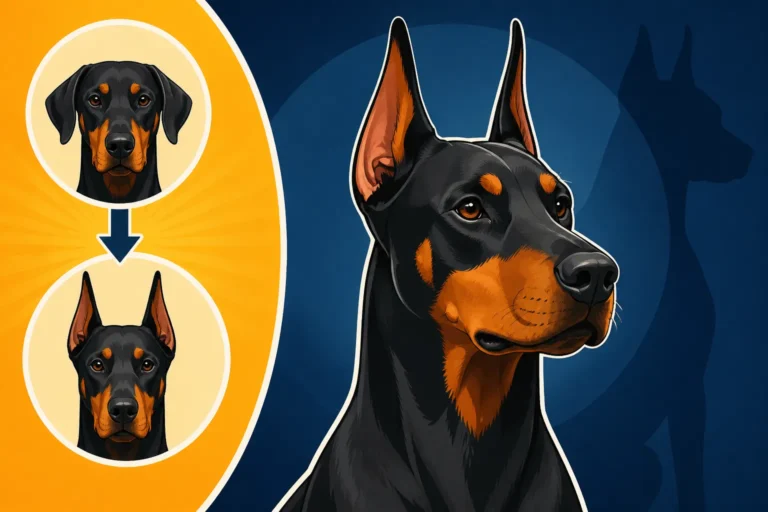
The bedrock of AKC recognition is the breed standard, a detailed document that describes the ideal Doberman Pinscher. In 1908, or shortly thereafter, a formal standard would have been adopted by the AKC, largely based on the existing German standard but adapted and interpreted by American fanciers. This standard outlined everything from the desired height and weight to the shape of the skull, the set of the ears (which, at the time, explicitly encouraged cropping), the length of the tail (docked, of course), and the preferred coat colors. It even touched upon the ideal temperament, emphasizing qualities like alertness, fearlessness, and loyalty. This wasn't merely a suggestion; it was the rulebook for what constituted a "correct" Doberman in the eyes of the American show ring and, by extension, for breeders aiming to produce top-quality dogs.
This standardization had profound effects. It provided a clear target for breeders, encouraging them to selectively breed for specific traits that conformed to the written word. It also allowed judges to make objective decisions, ensuring consistency across different shows and regions. However, the interpretation and emphasis on certain traits could subtly shift over time, leading to a distinct "American type" of Doberman. For example, while both German and American standards value elegance, the American standard might have subtly nudged breeders towards a slightly more refined, longer-necked, and perhaps more attenuated body type compared to the often heavier-boned, more robust European lines. This early standard was foundational, laying the groundwork for the divergence that would become more pronounced in later decades. If you’re curious about the specific visual attributes, take a look at The Doberman the AKC Standard Describes.
Tailoring the Doberman for the American Fancy
The American fancy, meaning the community of breeders, exhibitors, and judges, began to subtly, and sometimes not so subtly, tailor the Doberman to their preferences within the bounds of the new standard. There was an appreciation for athleticism and elegance, but also a growing desire for a dog that could excel in the show ring, often emphasizing certain aesthetic qualities. This focus on "type" as interpreted by American judges led to breeding choices that, over time, accentuated specific characteristics. For instance, the length of leg and neck might have become more pronounced, and the overall silhouette might have become sleeker and more streamlined.
This tailoring wasn't necessarily a conscious decision to deviate from the original German type, but rather a natural evolution influenced by aesthetic tastes and the competitive nature of the show ring. Breeders wanted to win, and winning meant producing dogs that best exemplified the American interpretation of the standard. This also had an impact on temperament, with some anecdotal observations suggesting a gradual shift towards a slightly softer dog compared to the often harder-edged working Dobermans of Europe. While the core protective instinct remained, the emphasis in American lines often leaned towards a more tractable, companionable temperament suitable for suburban life and family environments. This continuous refinement and specialization within the American context meant that by the mid-20th century, the American Doberman was recognizably distinct, even if only by a subtle margin, from its European ancestors. Understanding these subtle differences is key to appreciating American Against European Dobermans.
The Doberman's Rising Popularity and Evolving Image Post-1908
AKC recognition didn't just provide a framework for breeding; it catapulted the Doberman Pinscher into the public consciousness, dramatically increasing its popularity and solidifying its image in America. From a niche working dog, it began its journey to becoming a widely recognized and often admired, sometimes feared, companion.
The Show Ring as a Catalyst for Breed Growth
Once recognized by the AKC, the Doberman Pinscher gained entry into the competitive world of conformation dog shows. This was a game-changer for the breed's growth and visibility. Imagine a time before the internet or widespread media; dog shows were premier events, drawing crowds and newspaper coverage. A Doberman winning Best in Show at a prestigious event like Westminster was huge publicity, showcasing the breed's elegance, athleticism, and intelligence to a broad audience. This exposure created immense demand, as people saw these magnificent animals and wanted one for their own.
Breeders, now with a clear standard and a competitive outlet, pushed to produce dogs that not only won but also embodied the ideal Doberman. The show ring became a powerful engine for selective breeding, where judges evaluated dogs on their adherence to the AKC standard, rewarding those with the most desirable traits. This fierce competition, while sometimes controversial in terms of prioritizing aesthetics, undoubtedly propelled the breed's rapid expansion across the country. It also provided a forum for breed enthusiasts to connect, share knowledge, and collaborate, fostering a stronger, more organized Doberman community. Whether it's for performance or simply aesthetics, proper feeding is key for these active dogs, and good options can be found online at retailers like Chewy. The breed's participation in these events also set the stage for crucial health testing requirements, as seen in topics like The Health Testing a Doberman Breeder Must Show.
Public Perception and the Doberman's Growing Reputation
As the Doberman's presence grew in dog shows and subsequently in homes across America, its public image began to coalesce. Early perceptions were often polarized. On one hand, the Doberman was seen as the epitome of a loyal guardian: intelligent, elegant, and fearless. Its striking appearance, coupled with tales of its bravery and protective nature, made it a symbol of status and security. Many saw it as the ultimate personal protection dog, a capable deterrent against intruders, and an unwavering family protector. This reputation was further bolstered by the breed's use in various working roles, including military service, which cemented its image as a noble and courageous animal.
However, this very reputation also led to a degree of misunderstanding and fear. The Doberman's intense gaze, powerful build, and keen alertness, combined with its cropped ears and docked tail (which were customary for the time and often enhanced its intimidating look), led some to view it as inherently aggressive or dangerous. Media portrayals, often sensationalized, sometimes amplified these fears, contributing to a stereotype that the Doberman was a "mean" dog. For responsible owners, this often meant having to contend with prejudiced views and work harder to demonstrate their Doberman's true, balanced temperament. While the breed's popularity soared, this duality of admiration and apprehension became an enduring part of the Doberman's narrative in America, a narrative that continues to evolve.
The Lasting Legacy of 1908 on Today's Doberman
The AKC's recognition of the Doberman Pinscher in 1908 was far more than a historical footnote; it was a foundational moment that set the trajectory for the breed's development in the United States. Its legacy continues to influence the Dobermans we share our lives with today, from their physical characteristics to the health considerations we face.
How Early Decisions Influenced Modern Breed Lines
The decisions made and the priorities set in the immediate aftermath of AKC recognition in 1908 profoundly influenced the genetic makeup and characteristics of American Doberman lines. With a written standard as their guide, breeders began to select for specific traits, aiming for consistency. Over decades, this led to a distinct American type, often characterized by a more refined bone structure, a longer, more elegant neck, and a typically more laid-back temperament compared to their European counterparts. This isn't to say one is superior to the other, but simply that the selective pressures and aesthetic preferences within the American show ring fostered a specific look and feel. The emphasis on line breeding to achieve and solidify these desired traits created distinct family trees, where certain physical attributes and temperaments became strongly inherited.
This legacy is evident in many Dobermans today, where you can trace back characteristics to early influential sires and dams that epitomized the American standard. Even traits like the prevalence of certain health issues, such as Dilated Cardiomyopathy (DCM), can be indirectly linked to early breeding decisions, where health testing was not as advanced or prioritized as type. While no one intended to propagate health problems, the focus on conformation and temperament, combined with limited genetic understanding at the time, meant that certain hereditary conditions could silently persist and spread through otherwise desirable bloodlines. Many breeders today rely on comprehensive tools and supplies, which can often be found readily available at places like Chewy, for the ongoing health and well-being of their dogs. The importance of understanding genetics in Dobermans is underscored by topics such as The Heart Disease That Reaches Most Dobermans.
Ongoing Debates and the Continuous Evolution of the Doberman Standard
Even today, over a century after its initial recognition, the Doberman Pinscher breed standard, and its interpretation, remains a subject of ongoing discussion and evolution. One of the most prominent debates revolves around the practice of ear cropping and tail docking. While these were historically mandatory and integral to the breed's original working appearance, modern sensibilities and veterinary ethics have led to a significant shift. Many countries have banned these procedures, and even within the United States, there's growing advocacy for natural ears and tails. Despite this, the AKC standard still describes the cropped ear and docked tail as traditional, reflecting the historical image of the breed. This creates a tension between tradition and contemporary welfare concerns.
Beyond aesthetics, there are continuous conversations about temperament. While the standard calls for a "fearless" and "alert" dog, there's a delicate balance to strike between confidence and reactivity. Breeders continually strive to produce Dobermans with stable, outgoing personalities, avoiding extreme shyness or aggression. Health is another major point of evolution. As scientific understanding advances, particularly concerning conditions like DCM and Wobbler Syndrome, the breed community pushes for more comprehensive health testing and ethical breeding practices to improve the Doberman's overall lifespan and quality of life. The journey initiated in 1908 is not static; it's a living, breathing history, continually shaped by dedicated owners and breeders striving to preserve and improve this magnificent breed for generations to come. For specific concerns about the breed's health, topics like Wobbler Syndrome in the Doberman are crucial reading.
| Year | Event | Impact on Doberman in America |
|---|---|---|
| Late 1800s – Early 1900s | First Dobermans Arrive in US | Small, dedicated groups of enthusiasts begin importing dogs from Germany, laying groundwork for the breed. Unofficial breeding and varied types. |
| 1908 | AKC Recognition | Formal acceptance, official breed standard adopted, Dobermans can be registered and compete in conformation shows. Unified direction for American breeding begins. Increased public awareness and popularity. |
| Post-1908 | Development of American Type | Breeders focus on refining traits according to the AKC standard, emphasizing elegance and a slightly lighter build compared to European lines. |
| Mid-1900s | Increased Popularity & Working Roles | Dobermans gain widespread recognition as guard dogs, family companions, and even military dogs (e.g., WWII). Public perception solidifies, both admired and feared. |
| Late 1900s – Present | Health Concerns & Ethical Debates | Growing awareness of genetic health issues (e.g., DCM) leads to increased health testing. Debates over ear cropping/tail docking, and temperament refinement become central to breed stewardship. |
Disclaimer
This article is for general informational purposes only and does not constitute professional advice. Laws, prices and regulations vary by location and change over time. Consult a qualified professional for guidance on your specific situation.