Blue and Fawn Dobermans and the Dilution Gene
The elegant and imposing Doberman is truly a sight to behold, and while most people are familiar with the classic black and rust, or even the striking red and rust varieties, there's an undeniable allure to the less common blue and fawn Dobermans. However, their unique coats come with a specific genetic story and, often, a set of challenges that potential owners absolutely need to understand before falling in love with that rare hue. This guide aims to shed light on the genetics behind these diluted colors and the important health considerations associated with them.
Understanding the Doberman's Standard Colors
Before we dive into the fascinating world of diluted colors, it’s helpful to ground ourselves in what the breed standard traditionally accepts. These are the colors you’ll see most frequently and those considered the foundation of the Doberman breed.
The Dominant Black and Rust
When you picture a Doberman, chances are the image in your mind is of a sleek, powerful dog with a deep, glossy black coat and sharply defined rust markings. This is the black and rust Doberman, the most common and often considered the quintessential look for the breed. Genetically, this color is dominant. The black is a rich, true black, not faded or dull, and the rust markings are a clear, reddish-brown, appearing precisely where you'd expect: above the eyes, on the muzzle, throat, chest, legs, and under the tail.
These dogs are stunning, and their coat care usually revolves around maintaining that impressive shine. Their skin beneath is generally robust. It’s the color that many breeders strive for, not just for its beauty but because it represents the foundational genetics of the breed. When we talk about The Doberman the AKC Standard Describes, the black and rust is often implicitly at the forefront, setting the benchmark for type and appearance.
The Striking Red Doberman
Next in line, and equally accepted by breed standards, is the red and rust Doberman. Sometimes referred to as "chocolate," these dogs possess a rich, vibrant reddish-brown coat, again with the characteristic rust markings. The intensity of the red can vary, from a deep, almost mahogany hue to a lighter, more burnished copper. Whatever the shade, the red should be solid and even, presenting a warm and captivating alternative to the black.
Genetically, red is recessive to black. This means a Doberman needs to inherit two copies of the red gene to express this color. Much like their black counterparts, The Red Doberman typically enjoys good coat health, without the specific dermatological issues we'll discuss with the diluted colors. Owners of red Dobermans often rave about their dog’s striking appearance, especially when the sun catches their rich, warm tones.
The Genetics Behind Diluted Colors
Now, let's talk about what happens when those standard colors get a genetic "wash" – this is where the dilution gene comes into play, creating the blue and fawn Dobermans that capture so much attention.
What is the Dilution Gene?
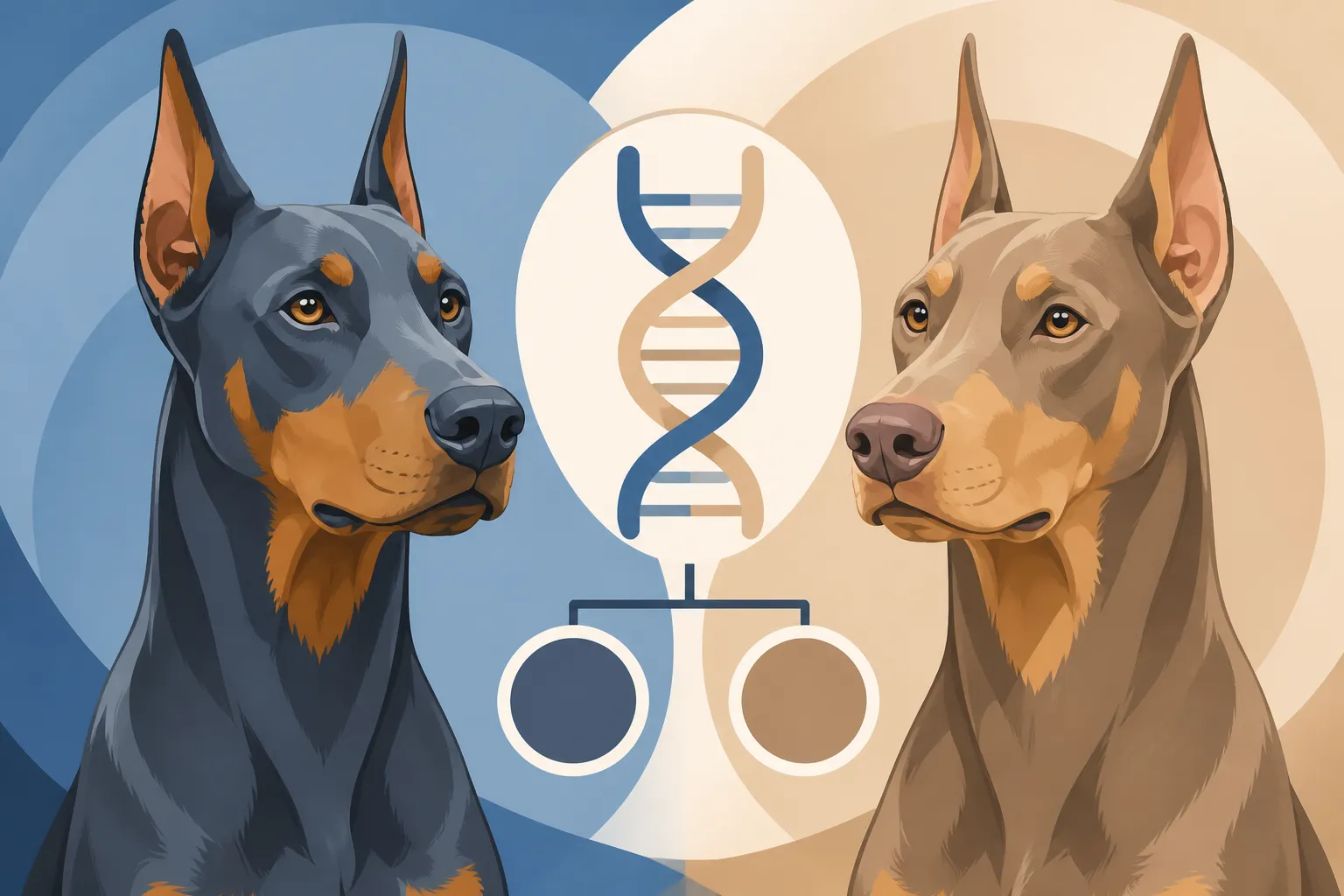
The dilution gene, often denoted as the "d" locus in canine genetics, is responsible for lightening or diluting the base coat colors. In Dobermans, it primarily affects the black and red pigments. If a dog inherits two copies of this recessive gene (dd), the dilution becomes evident in their coat color. It's not about adding a new color, but rather changing how the existing pigment is expressed. Think of it like taking a concentrated paint color and adding white to it – the original color is still there, but it's now a softer, paler version.
This genetic mechanism is crucial to understand because it's not just about aesthetics; it's about a specific gene mutation that can have wider implications for the dog's health. The dilution gene affects the melanocytes, the cells that produce pigment, altering their ability to distribute pigment evenly throughout the hair shaft. It’s a fascinating, albeit sometimes problematic, aspect of canine genetics.
How the Dilution Gene Affects Coat Pigment
When the dilution gene acts on black pigment, it transforms it into blue. This "blue" isn't the vibrant blue you might see on some dogs like certain Great Danes; instead, it's a grayish-blue, often described as slate or gunmetal. The rust markings on a blue Doberman also lighten, taking on a more muted, almost tan shade.
Similarly, when the dilution gene acts on red pigment, it turns it into fawn, also known as Isabella. Fawn Dobermans have a beautiful, light tan or beige coat, again with corresponding lighter rust markings. The effect is a uniform softening of the original red color. This dilution is why you see such distinct differences. It's all about how that underlying black or red pigment is being expressed, or rather, not fully expressed, due to the action of that specific pair of recessive "dd" genes. This genetic interaction is what makes these colors so unique, but it's also the root of potential health issues.
Diving Deep into Blue Dobermans
The "blue" Doberman is arguably the most recognized of the diluted colors. Their striking, almost metallic-gray coats are often quite breathtaking, making them highly sought after.
The Appearance and Appeal of Blue Dobermans
A blue Doberman typically has a coat that ranges from a dark charcoal gray to a lighter slate blue, almost shimmering in certain lights. Their rust markings are present, but instead of being a vibrant red-brown, they usually appear as a soft, silvery-tan. Their eyes often reflect this dilution too, appearing lighter than the deep brown of a black or red Doberman, sometimes with a greenish or amber cast when they are young. The overall impression is one of ethereal elegance, a muted sophistication that draws many admirers.
The appeal of a blue Doberman is undeniable. They look distinct, almost exotic, compared to their more common black and red counterparts. Many owners are simply captivated by this unique coloration, finding it incredibly beautiful. However, this aesthetic appeal often overshadows the very real health challenges that are intimately linked to the dilution gene in Dobermans. It's easy to fall in love with the look, but it’s critical to understand what that look can entail in terms of care.
Health Concerns Associated with Blue Dobermans
Unfortunately, the same gene that creates that stunning blue coat is also strongly associated with a condition known as Color Dilution Alopecia (CDA). This isn't just a minor cosmetic issue; it's a serious skin and coat disorder. Dogs with CDA often experience progressive hair thinning and loss, starting from puppyhood or early adulthood. The coat can become sparse, brittle, and dull, eventually leading to large patches of baldness. Beyond the hair loss, their skin in affected areas becomes dry, flaky, and highly susceptible to secondary bacterial infections. These infections can be chronic, painful, and require ongoing veterinary treatment.
Imagine your beautiful blue Doberman, once covered in a sleek, shimmering coat, now developing thin, brittle hair, followed by bald spots and itchy, infected skin. It's heartbreaking to witness, and frustrating to manage. Many owners find themselves on a never-ending cycle of medicated baths, antibiotics, and special dietary supplements. Color Dilution Alopecia in Blue and Fawn Dobermans is not a guarantee for every blue Doberman, but the risk is significantly high, making it a critical consideration for anyone thinking of bringing one into their home.
Managing the Unique Needs of a Blue Doberman
Living with a blue Doberman, especially one affected by CDA, requires dedication and specific care. Their sensitive skin and compromised coat demand a tailored grooming routine. This often includes regular bathing with gentle, moisturizing, or medicated shampoos, as recommended by a vet, to prevent and treat skin infections. These specialized products can sometimes be found at pet supply retailers like Chewy. Avoiding harsh brushes and excessive scrubbing is also important to protect their fragile hair shafts and skin.
Additionally, due to their thinning coat, blue Dobermans are more vulnerable to environmental factors. They can get cold easily in winter, necessitating warm coats or sweaters even indoors, and their exposed skin is prone to sunburn in warmer months, requiring protective clothing or pet-safe sunscreens. Their diet might also need adjustment, with many owners opting for high-quality foods rich in omega fatty acids to support skin and coat health. Sometimes, a vet may recommend specific supplements. Regular vet check-ups are paramount, not just for routine health but for proactive skin and coat assessment. While they are beautiful, the extra layer of care cannot be overstated.
Exploring Fawn (Isabella) Dobermans
The fawn Doberman, often called "Isabella," is the other diluted color derived from the dilution gene. They share many of the same genetic and health considerations as their blue counterparts.
The Distinctive Look of Fawn Dobermans
Fawn Dobermans present a soft, delicate palette compared to the blues. Their coats range from a light beige to a warm, sandy tan, with rust markings that are equally subdued, often appearing as a pale cream or off-white. Like blue Dobermans, their eye color tends to be lighter, sometimes a striking amber or golden hue that complements their overall coloration beautifully. The overall impression is one of gentle warmth, a stark contrast to the strong, dark presence of black Dobermans.
The fawn color, while less common than blue, certainly has its admirers. There's a certain elegance to their soft tones, making them stand out in a crowd. Owners often find their fawn Dobermans to be uniquely beautiful, with a gentle aesthetic that matches their usually sweet temperaments. But just like blue Dobermans, this lovely appearance comes directly from the presence of the dilution gene, which carries inherent risks.
Health Implications for Fawn Dobermans
Just like blue Dobermans, fawn Dobermans are highly susceptible to Color Dilution Alopecia (CDA). The mechanism is precisely the same: the dilution gene impacts the normal development and distribution of pigment in the hair shafts, leading to weakened hair follicles. Owners of fawn Dobermans may observe their dog's coat becoming progressively thinner, brittle, and sparse, particularly along the back and flanks. Bald patches can form, and the skin beneath often becomes dry, scaly, and prone to bacterial or yeast infections.
This isn't a minor concern; it's a chronic condition that requires consistent management. Seeing Hair Loss on a Blue Doberman or a fawn Doberman can be distressing, and the discomfort and itching that comes with secondary skin infections can significantly impact a dog's quality of life. Owners report ongoing vet visits and specialized treatments to keep their dogs comfortable and minimize outbreaks. Understanding that this risk is inherent to the fawn color is vital for responsible ownership.
Daily Care for a Fawn Doberman's Coat
Caring for a fawn Doberman, especially one with CDA, is very similar to caring for a blue Doberman. The primary focus is on managing their fragile coat and sensitive skin. Regular, gentle grooming is essential, using soft brushes to avoid damaging the already weak hair shafts. Medicated or moisturizing shampoos, often prescribed by a veterinarian, are typically part of the routine to prevent and treat skin infections. You can usually find a good selection of these specialized products at online retailers like Chewy, ensuring you have access to what your vet recommends.
Protection from the elements is another critical aspect. Their thin coats offer less insulation against cold weather, so warm coats are a must during winter outings. Conversely, their exposed skin is highly vulnerable to sunburn in the summer, requiring pet-safe sunscreens or protective vests. A high-quality diet, often supplemented with skin-supporting nutrients like omega fatty acids, is also frequently recommended to bolster coat health from the inside out. Owners must be vigilant for any signs of skin irritation or infection and seek veterinary advice promptly to maintain their fawn Doberman's comfort and health. For more detailed information, consider researching How Common Coat Loss Is in Fawn Dobermans.
Breeding Considerations and Ethical Choices
The decision to breed or acquire a Doberman of a diluted color involves significant ethical and practical considerations, especially concerning the breed standard and the health risks.
The Doberman Standard and Diluted Colors
Most major kennel clubs, including the American Kennel Club (AKC), recognize blue and fawn as acceptable, albeit non-standard, colors for Dobermans. However, the recognition often comes with a caveat. While they can be registered and compete in certain events, they are frequently faulted in the conformation ring. The AKC Doberman Pinscher standard, for example, specifies "Colors: Black, red, blue, and fawn (Isabella). All colors have rust markings." However, issues related to coat quality, which are common with diluted colors, can be considered faults.
It's a nuanced situation. While the colors exist and are recognized, their propensity for health issues often places them outside the ideal representation of the breed's physical soundness. In many competitive circles, a blue or fawn Doberman might struggle to place due to coat deficiencies or skin problems that are seen as deviations from the desired healthy, robust coat. Whether a Blue Doberman Can Be Shown often depends heavily on the individual dog's health and the judge's interpretation of coat quality versus just color. This often leads to The Doberman Faults a Judge Cannot Overlook being related to health outcomes of these colors.
| Doberman Coat Color | Genetic Basis | Associated Health Risks | AKC Recognition | Breed Standard Status (Conformation) |
|---|---|---|---|---|
| Black & Rust | BBDD, BbDD | General Doberman health | Yes | Standard |
| Red & Rust | bbDD, bbDd | General Doberman health | Yes | Standard |
| Blue & Rust | BBdd, Bbdd | High risk of CDA, skin infections | Yes | Recognized, often faulted on coat quality |
| Fawn & Rust | bbdd | High risk of CDA, skin infections | Yes | Recognized, often faulted on coat quality |
Responsible Breeding Practices for Dobermans
Given the inherent risks of Color Dilution Alopecia, responsible breeding practices for Dobermans, especially those carrying the dilution gene, are paramount. Ethical breeders prioritize health, temperament, and longevity above mere aesthetics. This means carefully considering whether to breed dogs that carry or express the dilution gene, particularly if they or their lineage have a history of severe CDA. The goal should always be to produce healthy puppies that live long, comfortable lives, not merely to produce a rare color.
A responsible breeder will be transparent about the genetic history of their dogs, including any known carriers of the dilution gene. They should provide comprehensive health testing results for their breeding stock, going beyond basic certifications to specifically address risks like CDA. They might even be able to explain the genetic tests available to identify carriers. They should also educate prospective puppy buyers about the potential health challenges of dilute colors and be upfront about the long-term care commitments. Always ask about Whether a Doberman Breeder Should Show Echo Results and inquire about skin and coat health in their lines. Opting for a breeder who actively works to minimize known health issues, even if it means not producing "rare" colors, is always the most ethical choice for the long-term health of the breed.
Disclaimer
This article is for general informational purposes only and does not constitute professional advice. Laws, prices and regulations vary by location and change over time. Consult a qualified professional for guidance on your specific situation.