The Doberman Traits That End a Show Career
For many Doberman enthusiasts, the dream of stepping into the conformation ring with their magnificent dog is a powerful one. However, the path to a successful show career is often paved with strict adherence to the breed standard, and discovering that your beloved Doberman possesses traits that disqualify them can be heartbreaking. This guide will walk you through the specific characteristics and conformational aspects that can unfortunately end a Doberman's eligibility for the show ring, helping you understand what judges are looking for and why certain traits are considered an absolute no-go.
Understanding the Doberman Standard: Your Blueprint for the Ring
Before a Doberman ever sets a paw in the show ring, prospective owners and breeders must familiarize themselves with the official breed standard. This document, published by organizations like the American Kennel Club (AKC) in the United States, isn't just a guideline; it's the very blueprint that defines the ideal Doberman Pinscher. It describes everything from the dog's physical appearance and gait to its temperament and substance, acting as the ultimate reference point for judges.
The Importance of Breed Standards in Conformation
A breed standard exists for a crucial reason: to preserve the unique characteristics, health, and working abilities of a specific breed. For the Doberman, this means maintaining the elegant yet powerful physique, keen intelligence, and fearless loyalty that defines them. Judges interpret this standard to determine which dog most closely embodies the breed's ideal form and function. Without a clear standard, breeds would quickly diverge, losing their distinct traits and potentially compromising their health and temperament.
Think of it like this: the standard ensures that a Doberman bred today will still possess the core qualities that made it famous decades ago. It's a living document, yes, but its essence remains consistent to ensure breed integrity. Every line in that standard is there for a reason, often tied to the Doberman's original purpose as a guardian and companion, demanding both athleticism and a balanced mind. Judges take this very seriously, as their role is to uphold the standard for future generations.
How a Judge Evaluates a Doberman in the Show Ring
Stepping into the ring with your Doberman is a complex dance between presentation and examination. A judge's evaluation is thorough and methodical, starting the moment your dog enters the ring. They observe the dog's overall balance, presence, and how it carries itself at a distance. Then comes the hands-on examination, where the judge will physically assess the dog's structure, head details, bite, coat, and muscle tone. This is where subtle deviations from the standard can become obvious.
The Doberman will typically be asked to move in a pattern, such as a triangle or up and back, allowing the judge to evaluate its gait, reach, and drive. They want to see an efficient, powerful, and graceful movement, characteristic of a dog built for speed and endurance. Finally, the judge will ask the handler to stack the dog, presenting it in its most flattering pose to highlight its conformation. Every angle, every muscle, every bone is compared against that exacting standard.
Structural Disqualifications: Where the Dream Ends Abruptly
When we talk about disqualifications in the conformation ring, these are traits that are so significant that they immediately remove a dog from contention, regardless of its other qualities. For Dobermans, many of these relate to their fundamental structure and build.
Incorrect Size: Too Tall, Too Short, or Too Fine
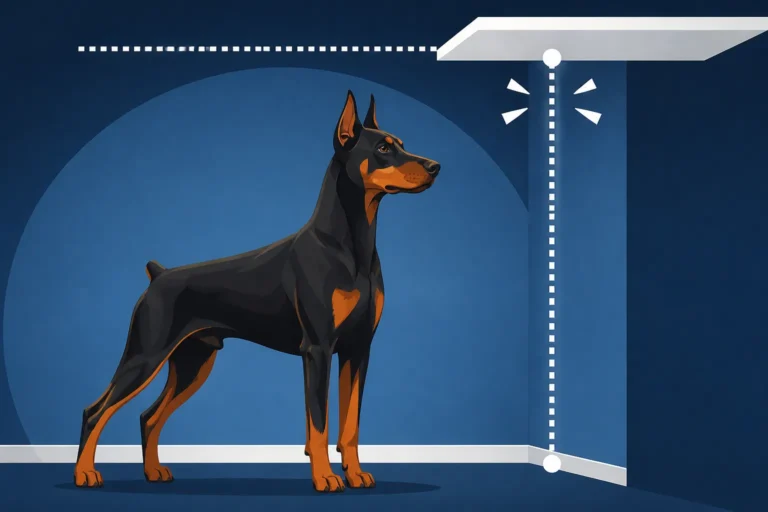
The Doberman Pinscher standard specifies a clear height and weight range, both to ensure appropriate breed type and to maintain the dog's functional athleticism. For males, the ideal height at the withers is typically between 26 to 28 inches, and for females, 24 to 26 inches. Deviations outside these ranges are considered serious faults, and significant departures can be disqualifying. Similarly, the standard calls for a dog of "medium size, squarely built," meaning there's an expectation of robust bone and substance, not a delicate, fine-boned appearance.
If your Doberman is significantly undersized, appearing leggy and fragile, or conversely, overly large and cumbersome, it fails to meet the fundamental structural requirements. This isn't just about aesthetics; it impacts the dog's balance, endurance, and agility—qualities crucial to the Doberman's historical role. A judge is looking for a powerful and athletic dog, not one that is disproportionate or lacking in proper bone. Even if your Doberman is otherwise stunning, an incorrect height can be an immediate end to its show aspirations. This is why paying close attention to a puppy's projected growth and the parents' sizes is so critical when seeking a show prospect. You can read more about what the judges look for in Doberman Height and Weight in the Ring.
Serious Gait and Movement Issues
A Doberman's movement is a cornerstone of its breed standard. Judges are looking for a powerful, free, and balanced gait with good reach and drive. The ideal Doberman should move with purpose, its topline remaining firm and level, conveying an impression of effortless power and grace. Anything that significantly disrupts this ideal movement pattern is considered a serious fault or, in severe cases, a disqualification.
Issues like "crabbing" (where the dog moves with its body at an angle to its direction of travel), crossing over (feet crossing in front of each other), hackneying (exaggerated, high-stepping front action), or severe cow hocks (hocks turning inward) can spell disaster for a show career. These aren't just minor quirks; they indicate fundamental structural flaws that would hinder the dog's ability to perform its original duties efficiently. A judge will watch your Doberman move from all angles—from the side to assess reach and drive, and from the front and rear to ensure proper limb placement and tracking. Any significant deviation from the powerful, efficient movement described in The Reaching Stride a Doberman Is Judged On will not be overlooked.
Dental and Bite Anomalies
The Doberman Pinscher standard calls for a "scissor bite," meaning the outer side of the lower incisors just touches the inner side of the upper incisors. This specific bite ensures optimal strength and functionality for gripping. Deviations from this precise alignment are major faults, and several can lead to disqualification. An "overshot" bite, where the upper jaw extends significantly beyond the lower, or an "undershot" bite, where the lower jaw extends beyond the upper, are immediate disqualifiers.
Furthermore, a "wry mouth," where the jaws are twisted or misaligned, is also unacceptable. Beyond the bite, missing teeth can also be a disqualification, particularly certain permanent teeth that are crucial for a functional bite. Judges will perform a thorough mouth examination to count teeth and assess alignment. While a broken tooth might be forgiven if clearly an injury, congenitally missing teeth or severe malocclusions are signs of genetic faults that go against the standard's emphasis on a fully functional and strong jaw.
Color and Coat Disqualifications: Beyond Black and Rust
While many might think Dobermans only come in black and rust, the standard actually allows for a few other beautiful color variations. However, certain color or marking deviations are considered disqualifying.
The Four Accepted Colors and Their Markings
The AKC Doberman standard officially recognizes four acceptable color combinations: black and rust, red and rust, blue and rust, and fawn (Isabella) and rust. Each of these colors is defined by distinct, clearly defined rust markings on specific areas of the dog's body, including above each eye, on the muzzle, throat, chest, legs, and under the tail. These markings should be rich and clearly demarcated from the main body color.
While black and rust is the most common and widely recognized color, the red, blue, and fawn varieties are equally acceptable in the show ring, provided they meet all other aspects of the standard. The key is the clear definition of the rust markings and the overall health and quality of the coat. A beautiful red Doberman, for instance, must have vibrant, distinct rust markings, just like its black counterpart. For a deeper dive into the accepted hues, refer to The Four Doberman Colors the AKC Allows.
Why White, Albino, or "Z" Dobermans Are Disqualified
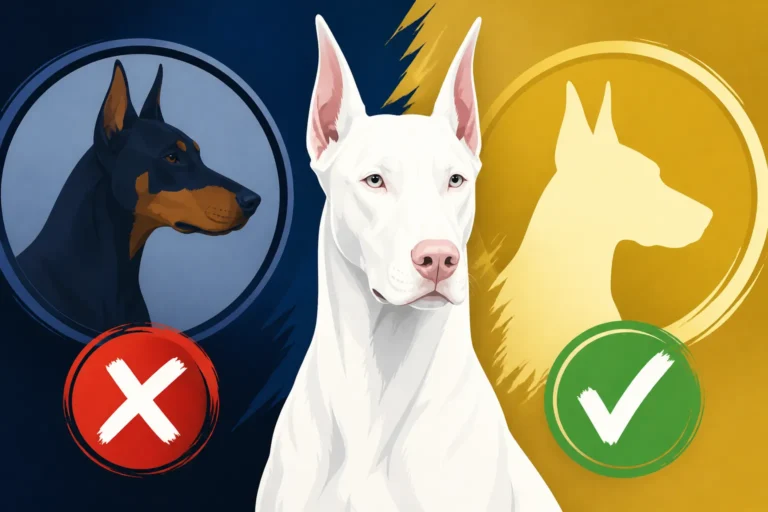
Perhaps one of the most significant and often misunderstood disqualifications is the presence of a "white" Doberman. It's crucial to understand that these dogs are not merely a rare color; they are albinos, carrying a genetic mutation that prevents the production of melanin, resulting in a lack of pigment in their skin, coat, and eyes. This isn't just a cosmetic issue; it's associated with a range of health problems, including severe light sensitivity (photophobia) and increased risk of skin cancers due to UV exposure.
Because of these inherent health and welfare concerns, albino Dobermans are explicitly disqualified from conformation events and are registered with a "Z" prefix to denote their albino status. This disqualification is a strong statement from the breed club and the AKC that albinism is detrimental to the breed and should not be perpetuated. Owners of these unique dogs often face challenges in daily care due to their sensitivities. For more information, you can explore The White Doberman and Where It Came From, Why a White Doberman Is Really an Albino, and Why the Doberman Club Opposes White Dogs.
Coat Texture and Markings
Beyond color, the Doberman's coat texture and any additional markings are also scrutinized. The standard describes the ideal coat as "short, hard, thick, and close lying." It should feel smooth and sleek to the touch, without any woolliness or softness. Any deviation from this, such as a soft, long, wavy, or sparse coat, is considered a fault. While not usually disqualifying on its own unless extreme, a poor coat texture can definitely detract from a dog's overall presentation and push it down in the rankings.
Furthermore, white markings beyond a small patch on the chest (which is often a fault, not a disqualification, depending on size and location) are considered a disqualification. This means a Doberman with a white blaze, white feet, or large white patches elsewhere on the body cannot compete. The Doberman's sleek, single coat, designed for minimal grooming and weather resistance, is an integral part of its breed type. Ensuring your Doberman maintains that athletic, lean physique often means carefully selected nutrition, and many owners find a great selection of high-quality kibble or raw food options on platforms like Chewy. Beyond diet, a gleaming coat comes from regular grooming. You'll want to invest in a good quality brush and perhaps a specific shampoo for short-coated breeds, all easily found on sites like Chewy, to keep their coat in top condition.
Temperament and Presentation Issues: Not Just About Looks
The show ring isn't just a beauty contest; it's also a test of a dog's temperament and its ability to present itself confidently and cooperatively. A Doberman might have perfect conformation, but if its personality or presentation falls short, its show career is over.
Unacceptable Temperament in the Ring
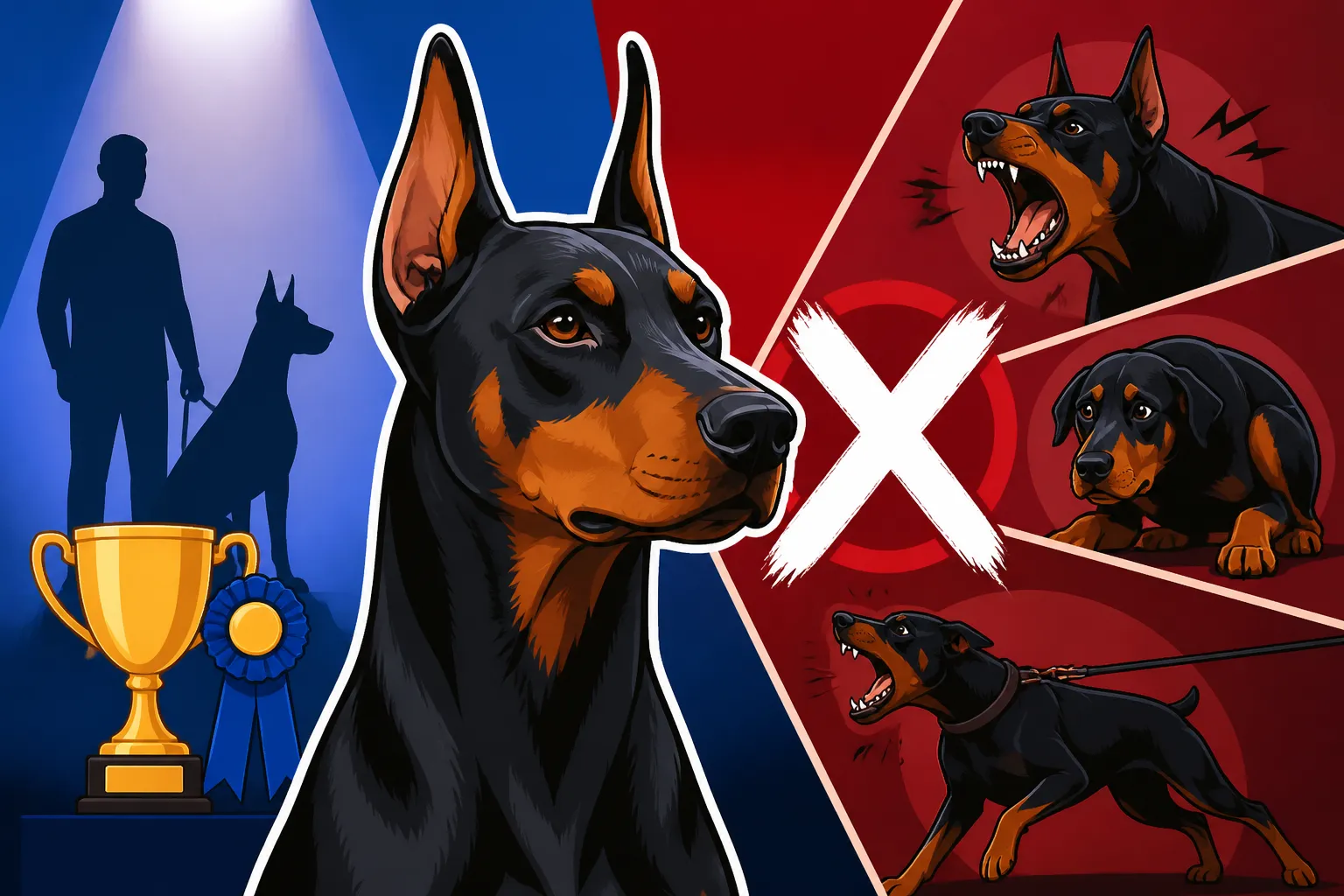
The Doberman standard emphasizes a temperament that is "energetic, watchful, determined, alert, fearless, loyal and obedient." Crucially, it also states that the dog should be "amenable to command" and "courageous." In the show ring, this translates to a dog that is confident, self-possessed, and willing to be examined by a stranger (the judge). Any display of shyness, fear, or overt aggression is an immediate disqualification.
A Doberman that cowers, pulls away from the judge's touch, or shows signs of fear-biting is unacceptable. Likewise, a Doberman that exhibits unprovoked aggression towards the judge, handler, or other dogs will be excused from the ring. These behaviors indicate a fundamental departure from the breed's stable and reliable temperament. Showing a Doberman requires a dog that is not only physically sound but also mentally robust and well-socialized, capable of handling the noise, crowds, and intense scrutiny of a show environment. A shy Doberman puppy might be cute, but if that shyness persists and prevents examination, it can end a show career, as explored in articles like A Doberman Puppy That Hides From New People.
Poor Presentation and Conditioning
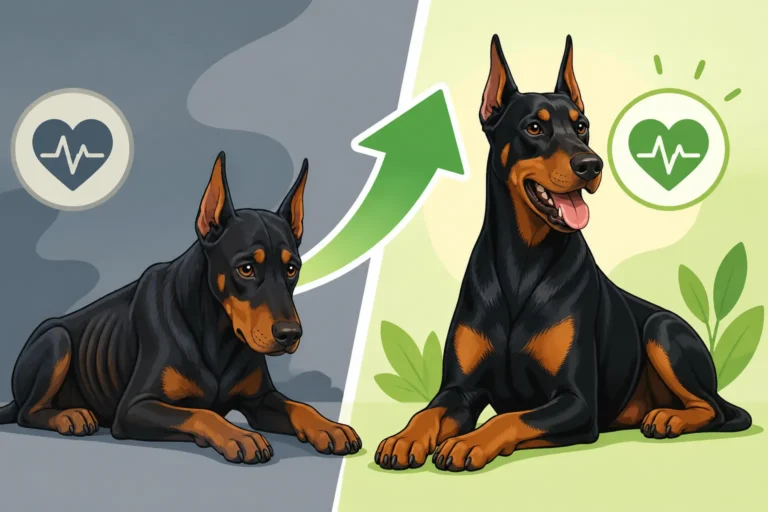
While not an official disqualification in the same way structural faults are, poor presentation and conditioning can effectively end a Doberman's chances of winning. A judge expects to see a Doberman in peak physical condition: lean, muscular, with a hard topline and excellent muscle tone. An overweight Doberman looks cumbersome and lacks the athletic elegance of the breed standard. Conversely, an underweight dog can appear frail and unhealthy.
Beyond physical condition, meticulous grooming is essential. A dull, dirty coat, untrimmed nails that distort the foot, or even subtle signs of poor hygiene will negatively impact a judge's perception. The Doberman should be presented as a shining example of the breed, a testament to its care and conditioning. Getting a Doberman accustomed to standing and being examined takes practice, and having the right training tools – from show leads to grooming stands – can make a huge difference. You can often find a wide variety of these specialized items through retailers such as Chewy. A handler's skill in presenting the dog, highlighting its virtues and minimizing its flaws, also plays a crucial role. A truly competitive Doberman is a team effort, combining excellent genetics with dedicated care and training.
Ear Cropping and Tail Docking: The Evolving Standard
The Doberman's iconic silhouette, with its erect ears and short tail, is deeply ingrained in the breed's history and aesthetic. However, the practices of ear cropping and tail docking are increasingly debated and regulated globally.
The Traditional Doberman Look
Historically, and as described in the original Doberman breed standard, Dobermans were presented with surgically cropped ears and docked tails. The cropped ears, when correctly done and posted, stand erect, contributing to the Doberman's alert and elegant expression. The tail is typically docked very short, often to two vertebrae, to maintain a clean, powerful outline. For many years, these modifications were considered an integral part of the breed's "type" and contributed to its formidable appearance.
In countries where these procedures are still legal and accepted, the vast majority of Dobermans competing in conformation events will have cropped ears and docked tails. This traditional look is what many judges and breeders envision when they interpret the standard. You can learn more about the specifics of the procedure and its role in the standard by reading Doberman Ear Cropping in the Standard.
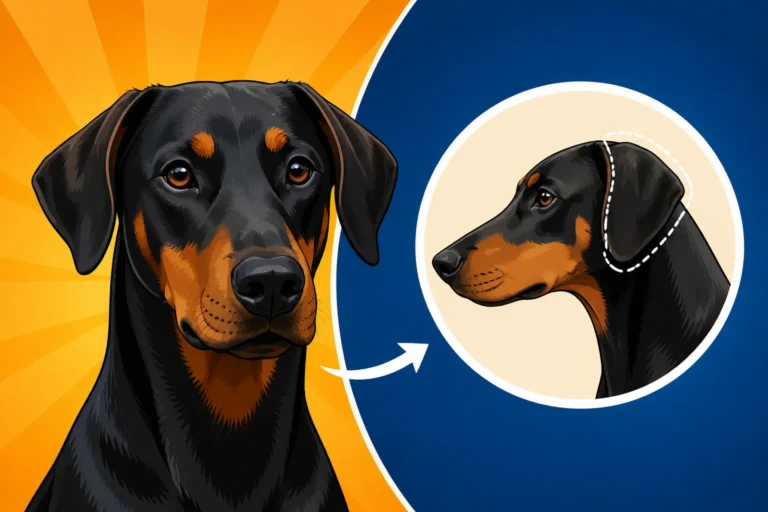
Natural Ears and Tails in the American Ring
In the United States, under the AKC, a Doberman with natural (uncropped) ears and a natural (undocked) tail is eligible to compete in conformation shows. The breed standard explicitly states that "ear cropping and tail docking are permitted but not required." This means that judges are instructed not to discriminate against a Doberman solely because it retains its natural ears or tail.
However, the reality in the show ring can be complex. While legally acceptable, a Doberman with natural ears and tail may still face an uphill battle against traditionally presented dogs. Some judges, often subconsciously, may still prefer the classic silhouette, feeling it better embodies the "breed type" they've known for decades. While it won't lead to a disqualification, it might put a natural-eared Doberman at a perceived disadvantage in a tight competition. This is a point of ongoing discussion and personal preference within the Doberman community, as explored in the nuances of Whether an Uncropped Doberman Can Win. Ultimately, the decision to crop or not often comes down to individual owner preference, local regulations, and their specific goals in the show ring.
Summary of Disqualifying and Severe Faults
To give you a clearer picture, here's a table summarizing some of the key traits that can end a Doberman's show career, either through official disqualification or by being such a severe fault that winning becomes impossible.
| Category | Disqualifying Traits | Severe Faults (Highly Detrimental to Show Career) |
|---|---|---|
| Size/Structure | – Height significantly outside standard range | – Lack of substance or excessive coarseness |
| – Undershot or overshot bite (wry mouth) | – Poor topline (swayback, roach back) | |
| – Missing teeth (specific permanent teeth) | – Severe structural imbalance (e.g., disproportionate length of leg) | |
| Movement | – Any gait that severely impedes efficient movement | – Crabbing, crossing over, paddling, hackneying |
| (e.g., severe lameness due to structural fault) | – Cow hocks, bowed legs, poor rear angulation | |
| Color/Coat | – White (albino/Z-factored) Doberman | – Soft, long, or sparse coat |
| – White markings on body beyond allowed chest patch | – Faded or poorly defined rust markings | |
| – Any color not listed in the standard (e.g., solid black) | – Wavy or woolly coat texture | |
| Temperament | – Overt shyness, fear, or aggression | – Lack of confidence or aloofness when being examined |
| – Inability to be examined by the judge | – Exaggerated or nervous reactions to stimuli | |
| Other | – Cryptorchidism (undescended testicles in males) | – Poor muscle tone, being overweight or underweight |
| – Evidence of intentional alteration or tampering | – Untrimmed nails, dirty coat, poor grooming |
This table highlights that while some issues are absolute deal-breakers, many other severe faults, though not outright disqualifications, make it virtually impossible for a Doberman to win against well-conformed and presented competitors.
Ultimately, the breed standard exists to guide the preservation and improvement of the Doberman Pinscher. For those hoping to compete in conformation, understanding these traits is not just about winning ribbons, but about appreciating the depth and detail that goes into defining such a magnificent breed. While every Doberman is a beloved companion, the show ring sets a very high bar, looking for that ideal example of form and function.
Disclaimer
This article is for general informational purposes only and does not constitute professional advice. Laws, prices and regulations vary by location and change over time. Consult a qualified professional for guidance on your specific situation.