The Doberman’s Place in the Working Group
A breed-group label can sound like a tidy explanation of what a dog is like, but it does not tell you how a Doberman will behave in your home. This guide explains why the Doberman belongs to the Working Group, what that classification means in practice, and what it does not predict about an individual dog.
Why the Doberman Is in the Working Group
The group reflects a job, not a personality test
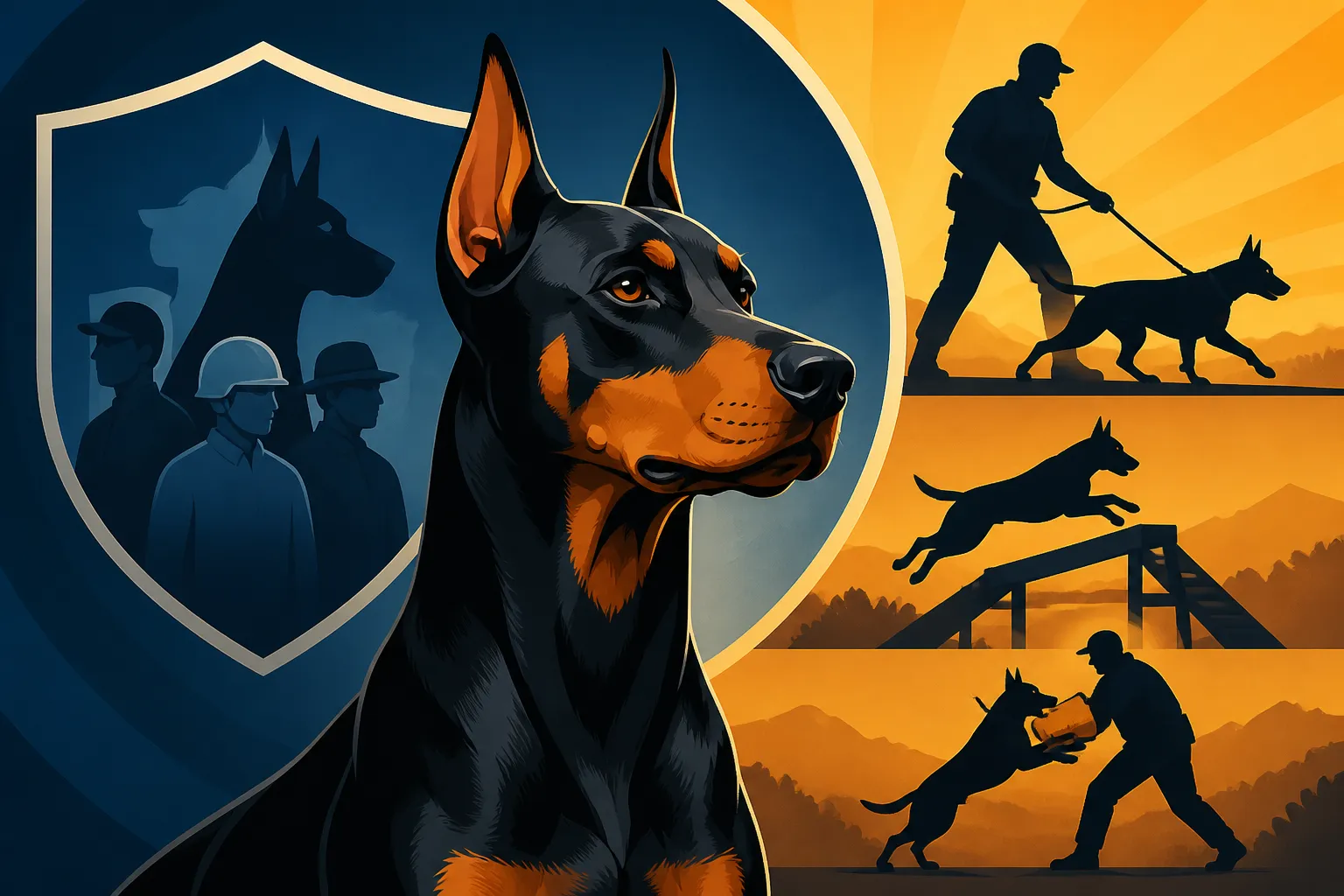
The American Kennel Club places the Doberman Pinscher in its Working Group. The group brings together breeds developed to perform practical tasks alongside people, including guarding property, pulling loads, and carrying out rescue work. Dobermans were developed as alert, capable protection dogs, so the category fits their original purpose.
That history helps explain the breed’s reputation for being observant and athletic. It does not mean every Doberman will automatically guard a home well, enjoy a particular sport, or act confidently in every new situation. A group label describes a broad breed role; a dog’s temperament also reflects genetics, early experiences, training, health, and the environment its family provides.
It is useful to think of the Working Group as context rather than a promise. A Doberman may be watchful at the front window, but still need patient introductions to visitors. Another may be more interested in a scent trail than in monitoring the yard. Learning Karl Dobermann and the Dogs He Needed and What Went Into the First Dobermans can provide more background on the practical needs that shaped the breed.
What the Doberman’s original work involved
The breed is named for Karl Friedrich Louis Dobermann, a German tax collector who is widely associated with developing dogs for personal protection and practical work. Historical accounts describe a need for a capable, loyal dog that could accompany him during his rounds. The exact mix of dogs behind the early Doberman is not fully documented, but the breed’s purpose was closely tied to alertness, athleticism, and working alongside a person.
Over time, the Doberman became more than a personal escort. Dobermans have served in police and military roles, and some take part in modern dog sports such as obedience, tracking, and protection sports. Those examples demonstrate what well-prepared dogs can learn; they are not instructions for what every pet Doberman should be expected to do.
A family dog does not need formal protection training to fit the breed’s history. In fact, deliberate bite or guard training is not a sensible default for a household pet. Most owners are better served by building reliable everyday skills: settling when guests arrive, walking calmly on leash, responding to recall, and remaining comfortable around ordinary people and places. For breed expectations in more detail, see The Doberman the AKC Standard Describes It.
The AKC label is not the only classification system
Breed groups depend on the registry or organization doing the classifying. The AKC places the Doberman in the Working Group, while other kennel organizations may use different group names or organize breeds according to their own framework. A different label does not mean the breed’s history has changed; it means the organization sorts breeds differently.
This distinction matters when you read a show schedule, browse a breed encyclopedia, or compare rankings from different countries. If one source calls the Doberman a working breed and another places it in a group with a different title, look at the organization behind the classification before treating the terms as contradictory.
The same care helps when comparing American and European Dobermans. Those labels refer to different breeding traditions and standards, not to separate AKC breed groups. The article American Against European Dobermans explores those differences, while Doberman Temperament as the Standard Describes It explains the temperament language used to describe the breed.
What Working Group Membership Means for Owners
Expect a capable dog that needs guidance
Dobermans are often intelligent, attentive, and physically active. Those traits can make training rewarding, but they can also make inconsistency difficult. A dog that learns quickly may notice that “wait” is optional when the door opens, or that pulling toward another dog sometimes gets rewarded with a closer look. Clear, kind practice helps turn ability into reliable manners.
A useful routine does not have to mean hours of intense exercise every day. Many Dobermans benefit from a thoughtful combination of walks, play, training, and chances to sniff and explore. A short training session during a quiet part of the day can be more useful than endlessly repeating a cue while the dog is tired or overstimulated.
The goal is not to make a Doberman busy every minute. Dogs also need to learn how to rest. Rewarding calm behavior on a mat, providing a predictable wind-down routine, and teaching the dog to spend time independently can help prevent the household from becoming a constant cycle of activity. The Owner a Doberman Actually Needs offers a broader look at the responsibilities that come with the breed.
Socialization and training matter more than the label
A Working Group classification does not mean a Doberman should be suspicious of everyone. Good socialization is not about making a puppy greet every person or dog; it is about helping the puppy experience everyday life without being pushed past its comfort level. A calm look at a person in a hat from a comfortable distance may be a better learning experience than a forced greeting.
Training works best when it is practical and repeatable. Practice a loose-leash walk on a quiet street before expecting the dog to pass a busy café. Teach a reliable “go to your bed” cue at home before using it when friends arrive. Gradually add distractions so the dog can succeed rather than repeatedly rehearsing unwanted behavior.
If you are choosing activities, start with the dog in front of you. One Doberman may thrive in tracking games; another may enjoy obedience practice or structured fetch. A breed’s working background can suggest useful outlets, but it should not become pressure to pursue protection work or competitive sports. For a comparison with other guardian breeds, see Dobermans Against the Other Guardian Breeds.
Care needs are individual, not assigned by group
The group label does not tell you what to feed your dog, how much exercise it needs, or whether it will tolerate cold weather. Those decisions depend on age, body condition, health, activity, and the individual dog. A lean young adult who trains regularly will have different needs from a senior dog with joint discomfort, even though both share the same breed label.
Because Dobermans have a short coat and little insulation compared with heavily coated breeds, some are uncomfortable in cold or wet weather. A well-fitting coat may help on chilly walks, but the right choice depends on the weather and the dog’s comfort. When shopping for everyday equipment, check fit and function rather than choosing items simply because they are marketed to a “working dog.” Chewy is one option owners may use to browse basics such as coats and leads, alongside local pet shops and veterinary recommendations.
The same practical approach applies to food and enrichment. Choose a complete diet appropriate for the dog’s life stage and health needs, and ask a veterinarian before making major dietary changes or adding supplements. If you use an online retailer such as Chewy to compare food or toys, check that the product suits your dog rather than relying on the breed-group label as a buying guide. For exercise planning, Whether a Doberman Needs More Exercise Than a Boxer can help frame the discussion, but your dog’s condition and behavior should guide the final routine.
Understanding the Classification Without Overreading It
Working Group does not mean every Doberman is a guard dog
People sometimes hear “Working Group” and assume a dog should be naturally protective, intimidating, or ready to defend its family. That is too simple. Breed history may help explain tendencies such as alertness, but it cannot guarantee a particular response. A dog’s behavior around visitors depends on inherited traits, learning, health, and the situation it is facing.
A family should not rely on a breed label as a home-security plan. Nor should owners encourage a dog to threaten people because they expect that behavior from a working breed. Good management, secure doors and fencing, and humane training are safer foundations for everyday life than trying to intensify guarding instincts.
If a Doberman barks, stiffens, hides, or lunges, treat that behavior as information rather than proof that the dog is “doing its job.” Fear, frustration, pain, and lack of experience can all affect a dog’s response. When behavior feels unsafe or is getting harder to manage, consult a qualified trainer or veterinary professional instead of escalating corrections or attempting improvised protection exercises.
A quick comparison of common assumptions
| What the label may suggest | What it actually tells you | What it does not guarantee |
|---|---|---|
| The Doberman has a working history | The breed was developed for practical work with people | That every dog will enjoy a job or sport |
| The dog may be athletic and alert | These are common breed characteristics | A fixed daily exercise requirement for every dog |
| The breed may be watchful | Some Dobermans notice changes in their surroundings | That the dog will reliably protect a home |
| The dog can learn complex tasks | Many Dobermans respond well to thoughtful training | That training will be effortless or identical for each dog |
| The AKC places it in the Working Group | That is the AKC’s breed-group classification | That every registry uses the same group structure |
The table is best used as a reminder to separate breed context from individual assessment. If a breeder describes a puppy as “a natural protector” or “guaranteed to guard,” ask what that means in observable behavior and how the puppy’s parents have been evaluated. Responsible descriptions should not replace health information, temperament evaluation, or a realistic conversation about daily life.
Choosing a Doberman means looking beyond the category
If you are considering a Doberman, ask about the dog’s temperament, health history, early handling, and the support available after bringing it home. For a puppy, learn what testing and records the breeder can provide and how the parents behave in ordinary settings. For an adult dog, ask how it handles visitors, other dogs, being alone, and routine veterinary care.
Think through your own household as well. A Doberman may be a poor match if the family expects a dog to spend long periods alone without preparation, or if no one has time to teach basic manners and provide companionship. A quieter home can suit a Doberman, too, provided the dog gets appropriate activity, interaction, and training. The breed group is a helpful starting point, not a verdict about compatibility.
For supplies, training plans, and exercise, focus on your dog’s actual needs. Chewy can be one convenient place to compare everyday items, but a retailer cannot tell you whether your particular Doberman is comfortable in a coat, needs a different food, or is ready for a busy training environment. Those judgments come from observing the dog and, when needed, working with a veterinarian or qualified trainer.
Disclaimer
This article is for general informational purposes only and does not constitute professional advice. Laws, prices and regulations vary by location and change over time. Consult a qualified professional for guidance on your specific situation.