How Many Abnormal Beats Worry a Doberman Cardiologist
Getting those Holter monitor results back for your Doberman can be an incredibly nerve-wracking experience. We all know the Doberman’s heartbreaking predisposition to heart disease, and seeing any mention of “abnormal beats” can send a chill down your spine, leaving you wondering what those numbers truly mean. This guide is here to demystify what cardiologists are looking for, when a few skipped beats become a serious concern, and what steps come next for your beloved companion.
Understanding Abnormal Heartbeats in Your Doberman
It's a stark reality that Dobermans are prone to Dilated Cardiomyopathy (DCM), a devastating heart condition. This makes understanding any irregularities in their heart rhythm absolutely critical. The first step in this journey is usually a device called a Holter monitor, which gives us an unprecedented look into their heart's daily activity.
What a Holter Monitor Catches
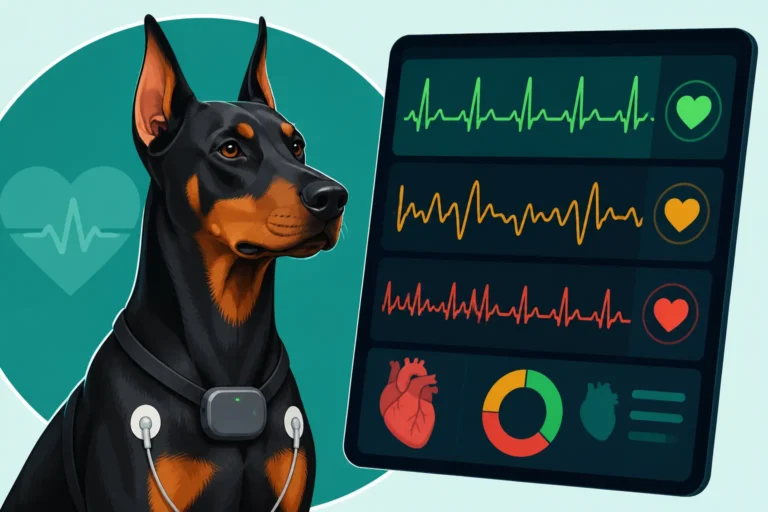
Imagine wearing a small, portable EKG for a full 24 hours while you go about your normal routine. That's essentially what a Holter monitor does for your Doberman. This clever little device is typically worn in a vest, wirelessly or with small leads attached to electrodes on your dog's chest, recording every single heartbeat, every minute of the day and night. It's designed to capture the entire spectrum of cardiac activity, from those calm moments curled up on the couch to the excited bursts of zoomies in the backyard.
This continuous recording is vital because heart arrhythmias, or abnormal beats, aren't always present during a quick check-up at the vet's office. They can be intermittent, brought on by stress, excitement, or even occur more frequently during sleep. A Holter monitor provides a comprehensive snapshot, allowing a veterinary cardiologist to see patterns and frequencies that would otherwise be missed. It’s an indispensable tool in screening for conditions like DCM, especially during Twenty-Four Hours of Holter on a Doberman.
Types of Abnormal Beats (Arrhythmias)
When we talk about "abnormal beats" in Dobermans, we're primarily focused on a specific type: Premature Ventricular Contractions (PVCs), also sometimes called Ventricular Premature Complexes (VPCs). These are extra, abnormal heartbeats that originate in the ventricles (the lower chambers of the heart) rather than the normal pacemaker cells in the atria. Instead of the smooth, coordinated "lub-dub" of a healthy heart, a PVC is like a little misfire, an extra beat that disrupts the rhythm.
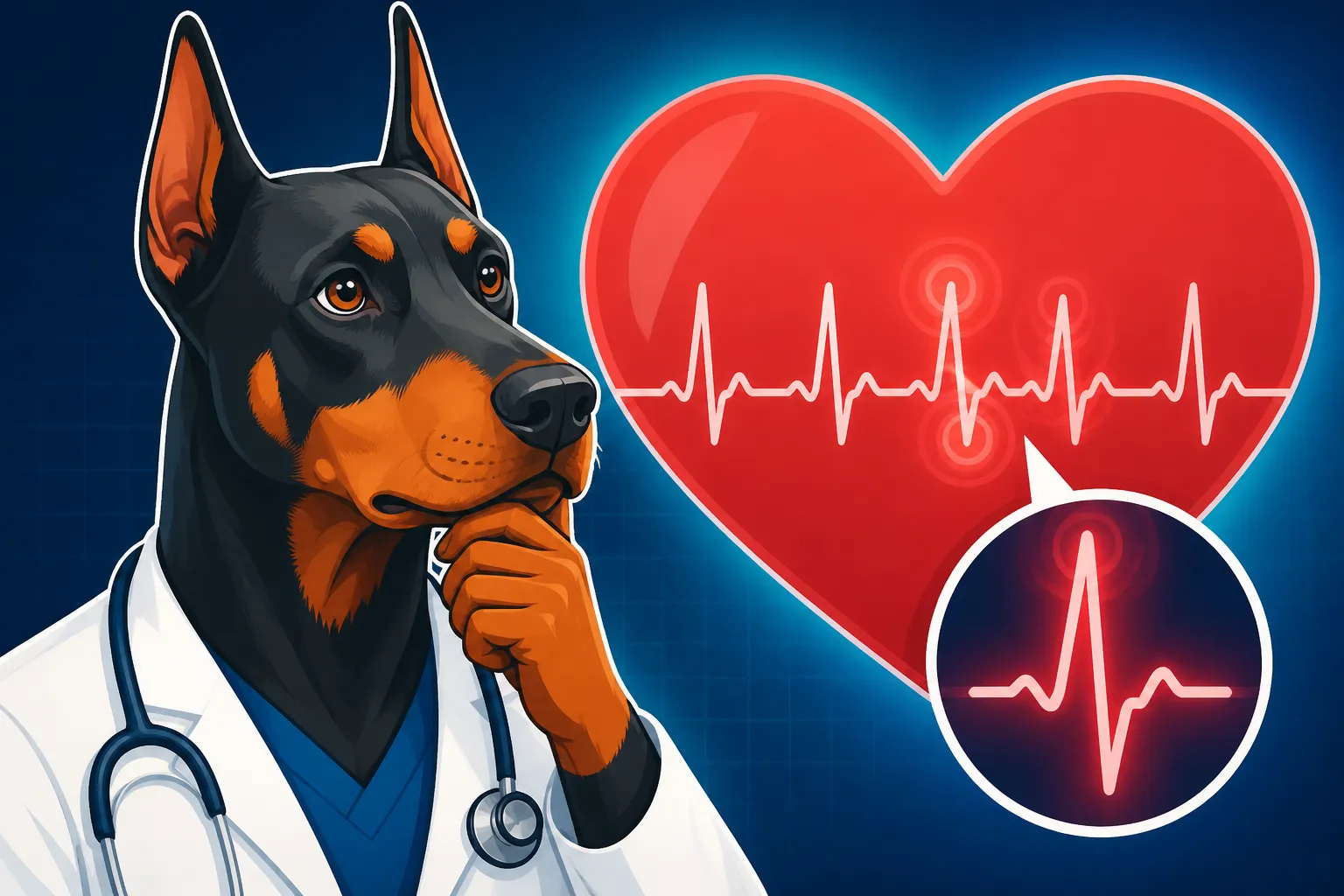
On an electrocardiogram (ECG) or Holter reading, these PVCs look distinctively different from normal beats. A normal heartbeat has a specific wave pattern (P, QRS, T waves), but a PVC will often have a wide, bizarre, and prematurely occurring QRS complex. While occasional PVCs can occur in any dog due to stress, excitement, or even gastrointestinal upset, in Dobermans, they are often the earliest warning sign of underlying heart disease. Other arrhythmias like atrial fibrillation can also occur, but ventricular arrhythmias are the hallmark sign we're looking for in Dobermans with DCM. These beats often appear during The Silent Years Before a Doberman's Heart Shows, long before other symptoms.
The Doberman's DCM Predisposition
It’s impossible to discuss abnormal heartbeats in Dobermans without highlighting their devastating predisposition to Dilated Cardiomyopathy (DCM). This is The Heart Disease That Reaches Most Dobermans, a condition where the heart muscle becomes thin and weak, losing its ability to pump blood effectively. Eventually, the heart chambers enlarge, and fluid can back up into the lungs, leading to congestive heart failure.
What makes PVCs so critical in Dobermans is their role as an early indicator. DCM often progresses through a "silent" or "occult" phase, where the dog appears completely healthy, with no outward symptoms like coughing, lethargy, or fainting. Even a standard veterinary exam might not detect anything amiss. However, internally, the heart muscle may already be starting to fail, and the electrical instability this causes often manifests as PVCs. Detecting these arrhythmias early through routine screening, such as Annual Echo and Holter Screening for a Doberman, is crucial for potentially delaying the progression of the disease and improving your Doberman's prognosis.
Quantifying Concern: When Numbers Matter
So, you've done the Holter monitor, you know what PVCs are, but now you have a number. Is 50 PVCs bad? What about 500? This is where the expertise of a veterinary cardiologist truly comes into play, as they interpret the raw data within the context of your Doberman's overall health and the breed's specific risks.
The "Normal" Range of PVCs
It's important to understand that no dog, not even a human, has a perfectly silent heart rhythm for 24 hours straight. Most dogs can have a very small number of isolated PVCs (perhaps under 10-20 in 24 hours) without it necessarily indicating significant heart disease. For Dobermans, however, the bar is often set a little differently due to their genetic vulnerability.
While there isn't a universally agreed-upon "safe" number, many cardiologists might consider a count of under 50-100 PVCs in a 24-hour period as a "normal" or "insignificant" finding for a Doberman, especially if they are isolated and uniform (monomorphic). However, even these low numbers warrant continued vigilance and perhaps more frequent screening, especially as your Doberman enters The Doberman Years When Everything Shows Up. This baseline is crucial when you are Reading a Doberman's Holter Result over time, as any upward trend can be telling.
The Threshold for Intervention
This is where things get serious. For Dobermans, once the number of PVCs starts to consistently climb, cardiologists begin to raise a red flag. While specific thresholds can vary slightly between specialists and depending on other clinical signs, a general guideline often followed is:
- 100-300 PVCs in 24 hours: This range is often considered a "gray area." It might not immediately trigger aggressive medication, but it will almost certainly lead to a recommendation for more frequent Holter monitoring (every 3-6 months) and a full echocardiogram to assess the heart's structure and function. The cardiologist will be looking for any subtle changes that might indicate the heart muscle is starting to remodel.
- Over 300-500 PVCs in 24 hours: When a Doberman is consistently showing more than 300-500 PVCs over a 24-hour period, this is typically a clear indicator of occult (hidden) DCM, even if their heart looks normal on an echocardiogram at that moment. At this point, most veterinary cardiologists will recommend starting medication. This is often when a diagnosis is made, and a treatment plan, potentially involving Medication for a Doberman in the Occult Phase, will be put into place.
It's crucial to remember that these are not just arbitrary numbers; they reflect an underlying electrical instability within the heart muscle, a characteristic sign of DCM in its early stages. Ignoring these numbers can lead to a faster progression of the disease and increase the risk of more severe complications, including Sudden Death in a Young Doberman.
Beyond the Raw Count: Complexity and Context
While the sheer number of PVCs is a primary concern, a cardiologist evaluates much more than just the total count. The nature and pattern of these abnormal beats are equally, if not more, important:
- Complexity: Are they single, isolated beats (monomorphic PVCs)? Or are they "complex" arrhythmias, such as:
- Couplets: Two PVCs in a row.
- Triplets: Three PVCs in a row.
- Ventricular Tachycardia (V-tach): Runs of four or more PVCs in a row. This is a very serious concern, indicating significant electrical instability and greatly increasing the risk of sudden cardiac arrest.
- Multifocal PVCs: PVCs that look different from each other, suggesting they are originating from multiple irritable spots in the ventricles. This often points to more widespread heart muscle disease.
- R-on-T Phenomenon: A PVC that falls very close to the preceding T-wave (the repolarization phase of the normal beat). This is particularly dangerous as it can trigger a life-threatening arrhythmia called ventricular fibrillation.
- Context: When are these beats occurring?
- During Rest/Sleep: A high number of PVCs during quiet periods or sleep can be more concerning than those occurring during periods of high activity or stress, as it suggests a more fundamental electrical problem.
- During Exercise/Stress: While some increase during activity is expected, an excessive number during exertion can also be significant.
- Clinical Signs: Is your Doberman showing any subtle signs like decreased exercise tolerance, occasional coughing, or even brief moments of weakness? While the Holter detects occult disease, these symptoms can push the urgency of intervention.
- Echocardiogram Findings: The Holter provides electrical information, but an echocardiogram provides structural information. What a Doberman Echo Actually Measures is the actual size and function of the heart muscle. If the Holter shows concerning PVCs and the echo shows even mild changes in heart size or function, the diagnosis of DCM is much clearer, and intervention is more immediate. The combined picture from both tests gives the cardiologist the most accurate assessment.
What Happens Next: Actionable Steps and Management
Discovering that your Doberman has a concerning number of abnormal heartbeats is unsettling, but it's not a death sentence. Early detection and proactive management, guided by a veterinary cardiologist, can significantly impact their quality of life and lifespan.
Further Diagnostics and Follow-Up
If your Doberman's Holter monitor reveals a concerning number or complexity of PVCs, the first and most critical step is usually a full echocardiogram. This ultrasound of the heart allows the cardiologist to visualize the heart's structure, measure the thickness of the muscle walls, assess the size of the chambers, and evaluate how efficiently the heart is pumping blood. This visual information, combined with the electrical data from the Holter, provides a complete picture of your Doberman's cardiac health.
Beyond the echo, the cardiologist may recommend:
- Repeat Holter Monitoring: Often, another 24-hour Holter will be prescribed in 3-6 months to see if the arrhythmia burden has changed. This helps track progression and assess the effectiveness of any medication.
- Blood Tests: Specific blood tests, such as NT-proBNP, measure biomarkers released by stressed heart muscle cells. An elevated NT-proBNP level can The Blood Test That Flags a Doberman Heart and indicate heart stress or failure, even if other signs are absent. Thyroid function tests may also be run, as hypothyroidism can sometimes mimic or worsen heart issues.
- Genetic Testing: If not already done, genetic tests for DCM1 and DCM2 can confirm if your Doberman carries the known genetic markers for the disease. While not diagnostic on their own (a clear test doesn't guarantee a clear heart, and a positive doesn't guarantee disease), they add to the overall picture.
These follow-up diagnostics are essential for tailoring the most effective treatment plan for your individual Doberman.
Medical Intervention and Prognosis
When the numbers of PVCs are high enough, or if accompanying changes are seen on the echocardiogram, medication will likely be recommended. The goal of this early intervention is two-fold: to manage the arrhythmias and to support the heart muscle.
- Antiarrhythmics: Medications like sotalol or mexiletine are often prescribed to help stabilize the heart's electrical activity and reduce the number of PVCs. Reducing the arrhythmia burden not only makes the Doberman feel better but also decreases the risk of dangerous ventricular tachycardia or sudden cardiac arrest.
- Pimobendan: This medication is often considered a cornerstone of DCM treatment. It helps the heart muscle contract more efficiently and also acts as a vasodilator, reducing the workload on the heart. Studies have shown that starting pimobendan in the occult phase of DCM can significantly How Much Longer Early Treatment Buys a Doberman, extending the period before congestive heart failure develops.
It's vital to understand that DCM is a progressive disease, and there is currently no cure. However, early and consistent medical management can buy your Doberman valuable time and maintain a good quality of life for months or even years. This is why regular screening and prompt action on concerning Holter results are so important.
Living with a Doberman with Arrhythmias
Getting a diagnosis of cardiac arrhythmias or occult DCM is tough, but it's a manageable condition with dedicated care. Here are some practical considerations for living with your Doberman:
- Adhere to Medication Schedules: Consistency is key. Your Doberman's medications must be given exactly as prescribed by your cardiologist, often on a strict schedule. Missing doses can compromise the effectiveness of the treatment.
- Regular Follow-Up: Plan for regular re-check appointments with the cardiologist, including repeat Holters and echoes, as advised. These appointments are crucial for monitoring the progression of the disease and adjusting medications as needed.
- Monitor for Symptoms: Keep a close eye on your Doberman for any subtle changes that could indicate worsening heart disease, such as increased lethargy, decreased appetite, coughing, or difficulty breathing. Any new symptoms warrant an immediate call to your vet or cardiologist.
- Exercise Management: While exercise is important for a Doberman's mental and physical health, your cardiologist might recommend adjusting their activity level. Strenuous, high-intensity exercise might need to be reduced or avoided, especially if they have significant arrhythmia burden or signs of heart enlargement.
- Dietary Considerations: Your cardiologist might suggest specific dietary changes, such as a low-sodium diet, to help manage fluid retention, especially if the disease progresses towards heart failure.
- Pet Insurance: The ongoing diagnostics, specialist visits, and lifelong medications for a Doberman with heart disease can be incredibly expensive. This is where a robust pet insurance policy, like one from Healthy Paws, can be a true lifesaver. Enrolling your Doberman before any signs of heart disease are detected is paramount, as most policies will not cover pre-existing conditions. Many Doberman owners find peace of mind knowing that significant portions of their ongoing cardiac care bills are covered, making it easier to afford the best possible treatment. You really need to consider Whether any Doberman owner should skip insurance given the health challenges this breed faces.
| PVC Count (24 hours) | Cardiologist Concern Level | General Recommendation |
|---|---|---|
| 0-50 | Low | Annual Holter/Echo screening |
| 50-100 | Mild | Annual Holter/Echo screening, monitor trends |
| 100-300 | Moderate | More frequent Holter/Echo (every 3-6 months), consider NT-proBNP |
| 300-500 | High | Full echocardiogram, likely medication (Pimobendan, antiarrhythmics) |
| >500 or Complex | Very High | Immediate cardiology consult, aggressive medication, close monitoring |
Disclaimer
The information provided in this article is for educational and informational purposes only and does not constitute veterinary medical advice. Always consult with a qualified veterinary professional, especially a board-certified veterinary cardiologist, for any health concerns or before making any decisions related to your Doberman's medical care.