Clear, Carrier and Affected Doberman Results
Bringing a Doberman into your life is an incredible journey filled with loyalty and boundless energy, but it also comes with a unique set of worries, especially when it comes to their health. Many prospective and current Doberman owners find themselves scratching their heads over genetic test results, unsure what terms like "Clear," "Carrier," or "Affected" truly mean for their beloved companion's future. This guide aims to demystify these crucial genetic classifications, helping you understand how they impact your Doberman's health, longevity, and your responsibilities as an owner or breeder.
Understanding Doberman Genetic Test Results
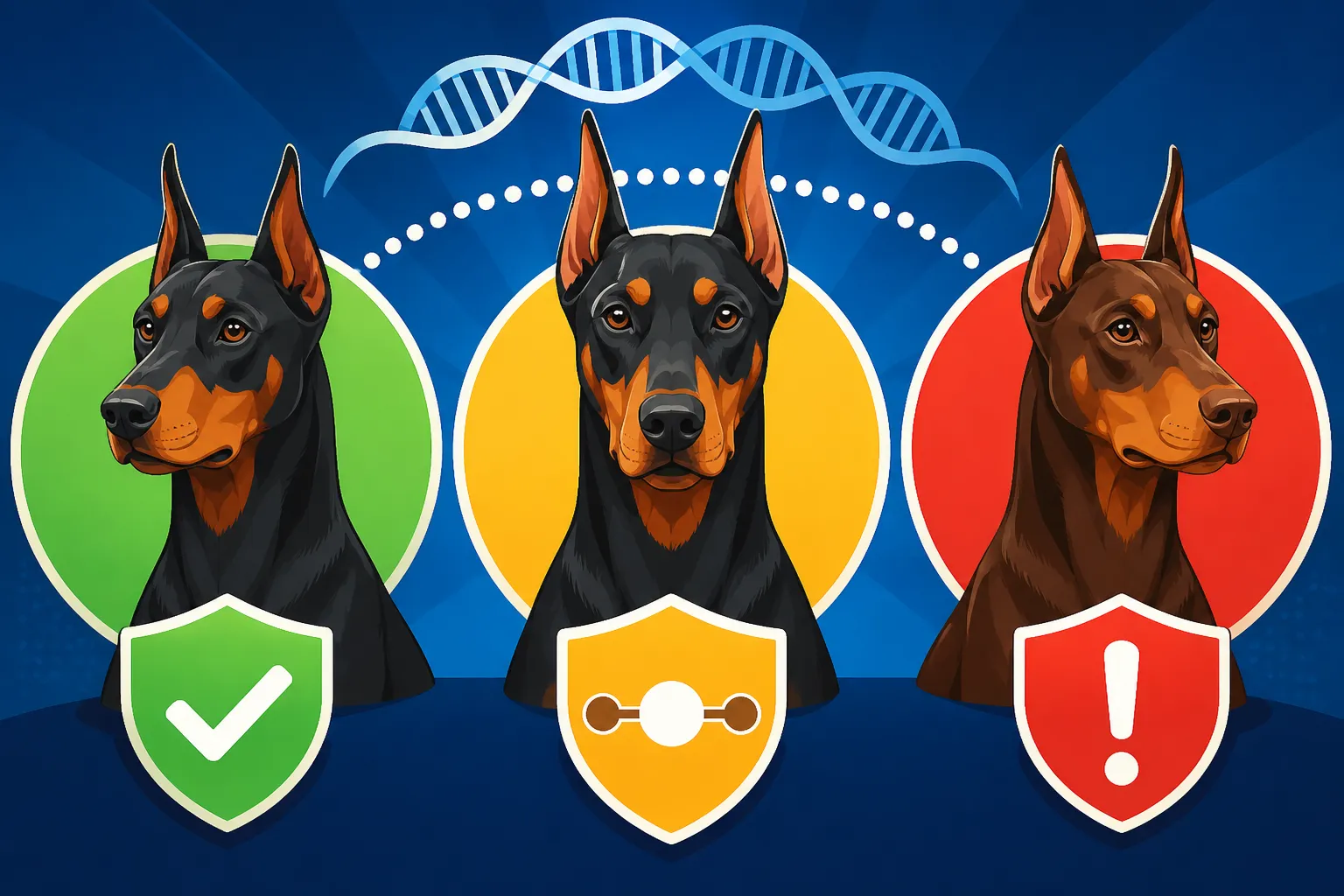
When you delve into the world of Doberman ownership, particularly if you're looking at a reputable breeder, you'll inevitably encounter genetic health testing. These tests provide invaluable insights into your dog's genetic makeup, particularly concerning inherited conditions prevalent in the breed. The results are typically presented as "Clear," "Carrier," or "Affected," which describe the presence or absence of specific gene mutations. It's really about understanding the blueprint your Doberman carries, and how that blueprint might affect their life, and the lives of any puppies they might have.
The Basics: Clear, Carrier, and Affected Explained
Let's break down what these terms fundamentally mean, using an analogy. Imagine a specific gene as a set of instructions. For many genetic diseases, there are two versions of these instructions: a healthy version and a version that carries a mutation or defect. Dogs, like humans, inherit two copies of each gene – one from each parent. The combination of these two copies determines whether a dog is "Clear," "Carrier," or "Affected."
A "Clear" Doberman is like having two perfect copies of the instructions. They've inherited a normal, healthy gene from both their mother and their father. This means they are highly unlikely to ever develop the genetic disease associated with that particular gene, and crucially, they cannot pass the mutated gene on to any offspring. It’s the ideal scenario for that specific genetic marker.
A "Carrier" Doberman is a bit different. They've inherited one normal, healthy copy of the gene and one copy that carries the mutation. Think of it as having one good instruction manual and one slightly flawed one. For most recessive genetic conditions, a carrier dog will not show any symptoms of the disease itself. They are typically healthy and live a normal life. However, the critical point for carriers is that they can pass that mutated gene on to their puppies. If a carrier dog is bred, about half of its offspring will also be carriers, and half will be clear.
Finally, an "Affected" Doberman has inherited two copies of the mutated gene, one from each parent. This means both instruction manuals are flawed. For recessive genetic conditions, an affected dog will almost certainly develop the disease. The severity can vary, but they carry the full genetic burden of the condition and will pass on a mutated gene copy to all of their offspring. Understanding these distinctions is the first step in making informed decisions for your Doberman's health and the future of the breed.
Why Genetic Testing Matters for Dobermans
The Doberman breed is magnificent, but like many purebred dogs, they are susceptible to certain inherited health conditions due to their closed gene pool. Without careful genetic testing and responsible breeding practices, these conditions can become more prevalent, leading to heartache for owners and suffering for the dogs. Genetic testing isn't just a formality; it's a vital tool for safeguarding the health and future of the breed.
One of the most significant conditions where genetic testing plays a crucial role for Dobermans is Von Willebrand Disease (vWD). This is a blood clotting disorder that can lead to excessive bleeding from even minor injuries or during surgery. Imagine facing an emergency situation with your beloved Doberman, only to discover their blood can't clot properly. It’s a terrifying thought, and knowing their vWD status beforehand can literally be life-saving. Beyond vWD, while not always fitting the simple "Clear/Carrier/Affected" model in the same way, Dobermans are also unfortunately prone to other serious conditions like Dilated Cardiomyopathy (DCM), Wobbler Syndrome, and certain cancers. Genetic testing for conditions like vWD allows breeders to make educated decisions, preventing the suffering of affected puppies and improving the overall health of the breed over generations. For pet owners, it provides essential information for proactive veterinary care and peace of mind, knowing what potential challenges might lie ahead.
Deep Dive into Von Willebrand Disease (vWD) Results
Von Willebrand Disease (vWD) Type I is a significant concern for Doberman owners and breeders alike. It's an inherited bleeding disorder caused by a deficiency in von Willebrand factor, a protein necessary for normal blood clotting. The genetic test for vWD Type I in Dobermans is one of the most straightforward and impactful genetic tests available, directly translating into the "Clear, Carrier, Affected" results we've been discussing. Understanding your Doberman's specific vWD status is paramount, as it can profoundly influence how they are cared for, especially during medical procedures or emergencies.
Clear (vWD Type I): What It Means for Your Doberman
If your Doberman receives a "Clear" result for Von Willebrand Disease Type I, it means they have inherited two normal copies of the gene responsible for producing the von Willebrand factor. This is wonderful news! It signifies that your Doberman is not at risk of developing vWD Type I, nor do they carry the gene mutation that causes it. They cannot pass this particular form of vWD to their offspring, regardless of who they are bred with.
For pet owners, a clear result offers immense peace of mind regarding this specific bleeding disorder. You won't have to worry about the heightened risk of uncontrolled bleeding during routine procedures like spaying or neutering, or if they suffer an accidental cut or injury. Your veterinarian can proceed with treatments and surgeries with confidence that vWD Type I won't complicate things. For breeders, a clear Doberman is an invaluable asset, as they can be confidently bred to any dog, including a carrier, without the risk of producing an affected puppy.
Carrier (vWD Type I): Living with a Doberman Carrier
A Doberman with a "Carrier" status for vWD Type I has inherited one normal gene copy and one mutated gene copy. For most carriers, this doesn't mean they will ever show symptoms of the disease. They typically produce enough von Willebrand factor from their single normal gene copy to clot blood effectively under normal circumstances. This is why they are often considered clinically normal and can live perfectly healthy, happy lives without any indication of the condition.
However, being a carrier is not without its implications, especially if you plan to breed. A carrier Doberman will pass on the mutated gene to approximately 50% of its offspring. This means that if a carrier is bred to another carrier, there's a 25% chance of producing an "Affected" puppy. For pet owners, while your carrier Doberman might not experience daily issues, it's still crucial to inform your veterinarian of their carrier status. In high-stress situations or during major surgeries, some carriers might exhibit slightly prolonged bleeding. Knowing their status allows your vet to be extra vigilant and take precautions, such as having desmopressin (DDAVP), a medication that can help increase vWF levels, on hand if necessary. It’s about preparedness and ensuring your dog receives the most informed care possible.
Affected (vWD Type I): Managing a Doberman with the Disease
An "Affected" Doberman has inherited two copies of the mutated gene, one from each parent, and will almost certainly experience the symptoms of Von Willebrand Disease Type I. This can range from mild, manageable bleeding episodes to severe, life-threatening hemorrhages. Owners of affected Dobermans often describe situations like prolonged bleeding after minor cuts, excessive bleeding during teething as puppies, chronic nosebleeds, or significant bruising from bumps that wouldn't bother a clear dog. Even routine procedures like nail trims can become a concern.
Managing an affected Doberman requires a proactive and vigilant approach. Your veterinarian needs to be fully aware of their vWD status for every procedure, no matter how minor. Before any surgery, including spaying, neutering, or even dental cleanings, special precautions are usually necessary. This might involve blood transfusions to provide clotting factors, or administering medications like DDAVP to temporarily increase their von Willebrand factor levels. Finding a vet experienced with this condition is a huge advantage. It's a journey that demands extra care and attention, but with proper management, many affected Dobermans can still lead fulfilling lives, albeit with a constant awareness of their bleeding risk. For those considering breeding, it is imperative that an affected Doberman is never used for reproduction, as all their offspring would receive a copy of the mutated gene.
Here's a quick summary table of vWD Type I genetic results:
| Result Status | Gene Copies Inherited | Develops vWD Symptoms? | Passes Gene to Offspring? | Breeding Considerations (vWD Type I) |
|---|---|---|---|---|
| Clear | Two normal copies | No | No | Ideal for breeding; no risk to offspring |
| Carrier | One normal, one mutated | Usually No | Yes (50% chance) | Breed only to a "Clear" partner to avoid "Affected" puppies |
| Affected | Two mutated copies | Yes | Yes (100% chance) | Should not be bred; high risk of health complications |
Practical Implications for Owners and Breeders
Understanding "Clear, Carrier, and Affected" results isn't just about labels; it's about making tangible, responsible decisions for your Doberman's well-being and the health of the breed as a whole. Whether you're a seasoned breeder or a loving pet owner, these genetic insights empower you to navigate your Doberman's life with greater confidence and preparedness. It really comes down to using the knowledge gained from these tests to provide the best possible care and ensure a healthier future.
Making Informed Breeding Decisions
For Doberman breeders, genetic testing is not merely recommended; it's an ethical imperative. The goal of responsible breeding is to produce healthy puppies, and a thorough understanding of genetic results is the cornerstone of this effort. When considering a breeding pair, a reputable breeder will carefully assess the vWD status of both prospective parents. For example, knowing The Von Willebrand DNA Test for Dobermans is crucial.
The golden rule for vWD Type I is to never breed two carriers together. Why? Because as discussed, this union carries a 25% risk of producing "Affected" puppies who will likely suffer from the disease. Instead, responsible breeders will opt to breed a "Carrier" Doberman only with a "Clear" Doberman. This pairing ensures that no affected puppies will be born, although approximately 50% of the litter will still be carriers. These carrier puppies can then be sold as pets, or if they possess other desirable traits, they can be carefully bred forward with clear partners in future generations, slowly working to reduce the prevalence of the mutated gene in the breed without sacrificing other valuable genetic diversity. This diligent approach helps to improve the breed's genetic health over time, minimizing the heartache of dealing with affected dogs.
What These Results Mean for Pet Owners
Even if your Doberman is a beloved companion and not destined for a breeding program, knowing their vWD status is incredibly important. This information becomes critical when your Doberman needs any kind of medical procedure, from routine vaccinations to complex surgeries. Imagine your Doberman needing urgent surgery, and you have no idea if they're prone to bleeding; it adds an immense layer of anxiety and potential risk. Knowing their status allows your veterinarian to plan appropriately.
For a "Carrier" Doberman, while they generally don't show symptoms, it's still prudent for your vet to be aware, especially before invasive procedures like Surgery on a Doberman With a Clotting Problem, or even routine dental work where minor gum bleeding is common. They might opt for specific pre-treatment or closely monitor clotting during the procedure. For an "Affected" Doberman, this knowledge is quite literally life-saving. Any injury, even a minor cut, can lead to significant blood loss. Unexplained Nosebleeds and Gum Bleeding in a Doberman could be the first sign. Your vet can advise you on managing daily life, what signs to watch for, and how to prepare for emergencies. Being proactive with this information allows for personalized, informed care, which can make all the difference in the long-term health and safety of your Doberman. Considering pet insurance like Healthy Paws, particularly for breeds prone to certain conditions, can also provide a safety net for unexpected medical needs that might arise.
When to Test and What to Expect
The beauty of genetic testing for conditions like vWD Type I is that it can be done at almost any age, and the results are definitive. Many reputable Doberman breeders will test their puppies before they go to their new homes, providing new owners with a clear certificate outlining their dog's status. If you're acquiring a Doberman puppy, always ask to see the vWD test results for both parents and the puppy itself.
If you adopt an adult Doberman or acquire a puppy whose vWD status is unknown, it's a simple process to have them tested. A small blood sample or a cheek swab is all that's required. Several reputable laboratories, such as VetGen, Canine HealthCheck, and Embark, offer Doberman vWD genetic testing. The samples are sent off, and typically within a few weeks, you'll receive a detailed report. This report will explicitly state whether your Doberman is "Clear," a "Carrier," or "Affected." This small investment in a genetic test can provide invaluable information for your Doberman's entire life, guiding health decisions and offering immense peace of mind. Knowing these results early allows you to engage with your vet proactively, discuss any necessary precautions, and budget for potential future care, possibly even factoring into your pet insurance plan with a provider like Healthy Paws.
Beyond vWD: Broader Health Screening for Dobermans
While understanding "Clear, Carrier, and Affected" for Von Willebrand Disease is critical, it's essential to remember that genetic testing is just one piece of the Doberman health puzzle. This breed faces several other serious health challenges that require different types of screening and ongoing vigilance. It's crucial not to fall into the trap of thinking a "clear" vWD result means your Doberman is impervious to all health issues. Comprehensive health care for a Doberman involves a multi-faceted approach, combining genetic insights with regular veterinary examinations and specialized screenings.
Differentiating Genetic Tests from Health Screenings
It's really important to distinguish between genetic tests, which are typically DNA-based and provide definitive "Clear, Carrier, or Affected" results for specific gene mutations, and broader health screenings, which are diagnostic tools used to evaluate an animal's current health status or risk for complex, multifactorial diseases.
For instance, the vWD test is a genetic test: it looks directly at the DNA for the vWD Type I mutation. Its result is largely binary and doesn't change over time. In contrast, conditions like Dilated Cardiomyopathy (DCM), which is sadly very prevalent in Dobermans, are often complex. While there are genetic markers identified, such as The Two Doberman DCM Gene Tests (DCM1 and DCM2), these are considered risk factors rather than definitive predictors. A Doberman might test positive for these genetic markers but never develop DCM, or conversely, test clear for them and still develop the disease, as explored in A Doberman That Tests Clear and Still Gets DCM. This makes regular health screenings crucial. These involve annual echocardiograms (an ultrasound of the heart) and 24-hour Holter monitoring (a portable ECG) to detect subtle changes in heart structure or rhythm long before symptoms appear.
Similarly, Wobbler Syndrome in Dobermans, a neurological condition affecting the neck, isn't typically identified by a simple "Clear/Carrier/Affected" genetic test. Instead, it requires physical examinations, potentially X-rays, and often advanced imaging like an MRI to diagnose spinal cord compression, especially if you notice A Doberman That Wobbles on Its Back Legs. These screenings provide snapshots of health that can change over time and are vital for early detection and management of diseases that don't have a simple genetic "on/off" switch.
The Nuance of DCM Genetic Testing
DCM is the heartbreaking reality for many Doberman owners, and it truly exemplifies the difference between simple genetic tests and complex health screening. While the identification of the DCM1 (PDK4) and DCM2 (Titin) gene variants has been a significant step forward, they don't function quite like the vWD test. A Doberman's result for these genes is not simply "Clear, Carrier, or Affected" in the same absolute sense for the disease itself. Instead, they are more accurately described as being "homozygous clear," "heterozygous positive," or "homozygous positive" for the risk alleles.
Even if a Doberman tests positive for one or both of these genetic variants, it doesn't guarantee they will develop DCM. Some Dobermans carry the genes but live their entire lives without heart issues, while others, as mentioned, can test completely clear for both known variants and still succumb to the disease. This is why cardiologists emphasize that DCM genetic tests are just one piece of the puzzle. They provide breeders with valuable information to reduce risk, but they do not replace diligent annual cardiac screenings. Regular echocardiograms and Holter monitors are the gold standard for monitoring a Doberman's heart health, regardless of their genetic test results for DCM. It's about combining all available tools – genetic insights, regular vet checks, and specialized screenings – to give your Doberman the best possible chance at a long, healthy life.
Disclaimer
The information provided in this article is for educational and informational purposes only and does not constitute veterinary advice. Always consult with a qualified veterinarian for any health concerns or before making any decisions about your Doberman's medical care or breeding plans.