Whether a Doberman Breeder Should Show Echo Results
Bringing a Doberman into your life is an incredible joy, but it also comes with very real anxieties, especially concerning their notoriously fragile hearts. One of the biggest frustrations prospective owners face is navigating the breeding world and trying to determine if a breeder is truly prioritizing health. This guide will walk you through precisely why a Doberman breeder absolutely must provide recent echocardiogram (echo) results for their breeding dogs and what those results mean for your future puppy.
The Alarming Reality of Doberman Heart Disease
Let's be brutally honest: Dobermans are prone to a devastating heart condition called Dilated Cardiomyopathy (DCM). It's not a rare occurrence; it's practically a defining characteristic of the breed, and it’s a terrifying prospect for any owner. The thought of your vibrant, loving companion suddenly collapsing or experiencing heart failure is enough to keep anyone up at night, and sadly, it's a reality many Doberman families face.
Why Cardiac Health is Paramount for Dobermans
Dilated Cardiomyopathy is a progressive disease where the heart muscle weakens and becomes enlarged, losing its ability to pump blood effectively. Imagine a balloon that gets stretched out; it can hold more air, but it can’t push that air out with the same force. That's essentially what happens to a Doberman's heart. This isn't just a minor ailment; it's a leading cause of death in the breed. The prevalence is shockingly high, with some studies suggesting that How Many Dobermans Develop DCM could be as high as 50% or more over their lifetime, depending on the lines.
The insidious nature of DCM makes it even more terrifying. For a long time, often for years, a Doberman with DCM may show no outward symptoms at all. This is often referred to as the "occult" or "hidden" phase. You'll see your dog running, playing, and acting completely normal, all while their heart is silently deteriorating. This prolonged asymptomatic period is why DCM often takes owners by surprise, and by the time symptoms like coughing, lethargy, or fainting appear, the disease is already quite advanced. Understanding The Silent Years Before a Doberman's Heart Shows can help you grasp just how crucial early detection and breeder transparency are.
The Limitations of a Vet Checkup for Heart Issues
Many first-time Doberman owners might assume a standard vet checkup, perhaps with a stethoscope listen, is sufficient to determine heart health. Unfortunately, this couldn't be further from the truth, especially when it comes to DCM. A general veterinarian, even a very good one, performing a routine physical exam simply cannot detect early-stage DCM. Listening to the heart might reveal a murmur or an arrhythmia in more advanced cases, but by then, significant damage has likely already occurred.
This is the frustrating reality for Doberman owners: your dog can appear perfectly healthy on the outside, bounding with energy and showing no signs of distress, while internally, their heart is struggling. As we've explored in topics like Why a Doberman Can Look Fine and Be Ill, the deceptive nature of this disease means that even a healthy-looking dog can be a ticking time bomb. Relying solely on a general vet's check-up for a breeding dog's cardiac health is akin to trying to diagnose a complex engine problem by just looking under the hood – you need specialized tools and expertise to see what's really going on inside.
What an Echocardiogram (Echo) Actually Reveals
Given the silent progression of Doberman DCM, specialized diagnostic tools are absolutely non-negotiable for monitoring heart health in breeding animals. Among these, the echocardiogram stands out as the single most important non-invasive test. It provides an in-depth, real-time look at the heart's structure and function, allowing for the detection of even subtle changes that a stethoscope could never pick up.
Decoding the Echo: More Than Just a Snapshot
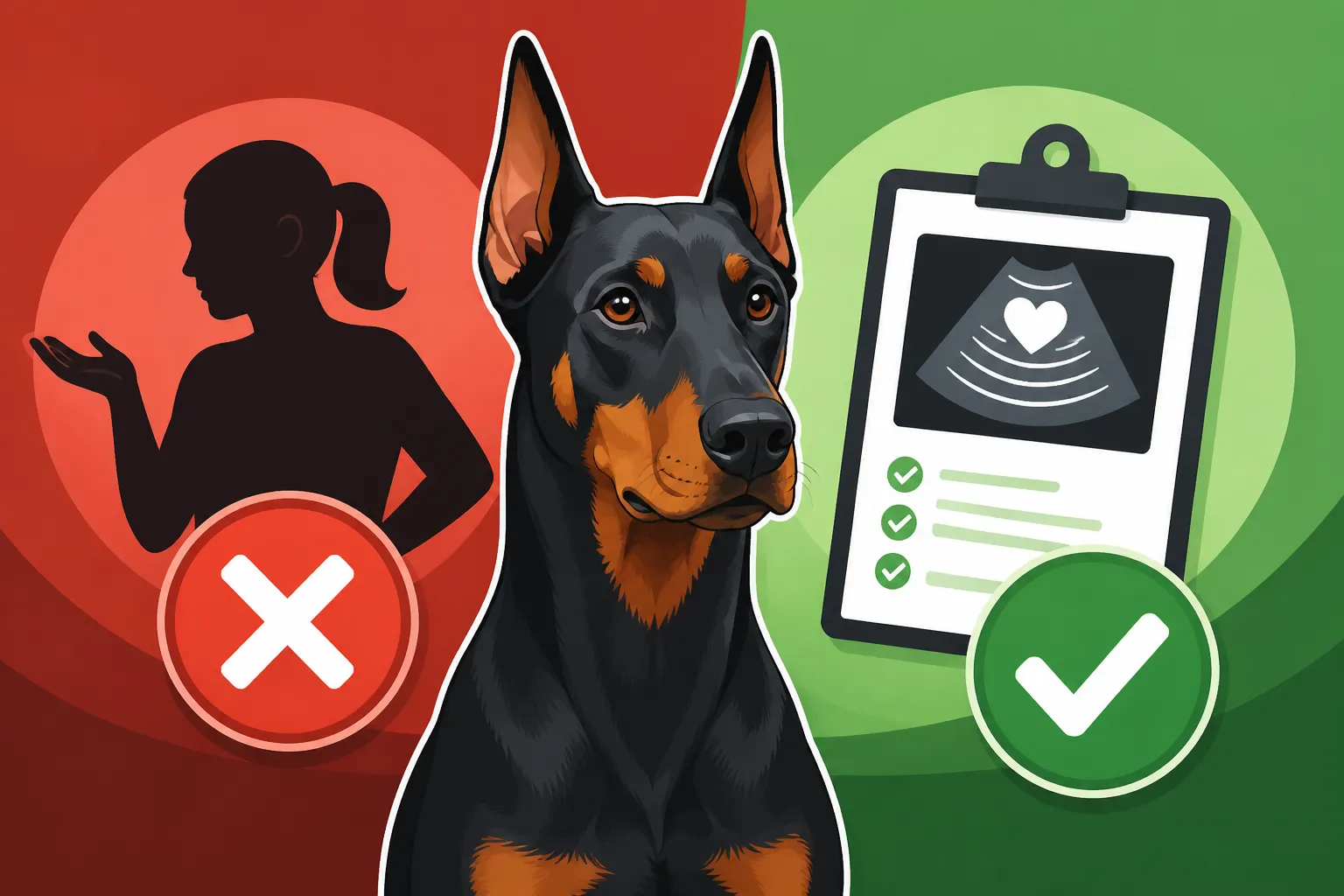
An echocardiogram is essentially a cardiac ultrasound. It uses sound waves to create a moving image of your dog's heart. This isn't just a simple picture; it's a dynamic assessment that allows a specialist to visualize the heart's chambers, valves, and major blood vessels in motion. What makes it the gold standard for Dobermans, specifically, is its ability to measure crucial parameters that indicate the early stages of DCM.
For instance, an echo will measure the size of the heart chambers (especially the left ventricle), the thickness of the heart muscle walls, and how efficiently the heart is pumping blood. A Doberman with early DCM might show slight enlargement of the left ventricle or a decrease in its pumping strength, even before clinical symptoms appear. These are subtle changes that only a trained eye with specialized equipment can accurately assess. The data collected provides concrete evidence of cardiac health or the earliest signs of disease. If you're curious, What a Doberman Echo Actually Measures delves deeper into these specific parameters, giving you a comprehensive understanding of the technical details involved.
The Significance of Regular, Board-Certified Screenings
It's not enough for a breeder to say their dog "had an echo." The devil is in the details, and when it comes to Doberman hearts, those details are critical. The echocardiogram must be performed by a board-certified veterinary cardiologist. These specialists have undergone extensive additional training beyond general veterinary school, focusing specifically on heart disease. They have the expertise, experience, and the right equipment to accurately interpret the subtle findings in a Doberman heart. A general vet, even with an ultrasound machine, may not have the specialized knowledge to catch the earliest indicators of DCM in a Doberman.
Furthermore, these screenings must be done annually. DCM is a progressive disease, and a clear echo at age two does not guarantee a clear heart at age three or four. The critical period for Dobermans to develop DCM often starts around The Age Doberman Heart Disease Usually Starts, which is typically between 4 and 6 years old, but it can certainly appear earlier or later. Therefore, consistent, yearly evaluations are essential for breeding animals. This dedication to Annual Echo and Holter Screening for a Doberman shows a breeder's commitment to improving the breed and making informed decisions about their breeding program. Breeders who perform these yearly screenings, often at significant cost, are demonstrating a deep commitment to the health of their lines and the future of your puppy.
Why a Breeder Must Show Recent Echo Results
When you're looking for a Doberman puppy, you're not just buying a dog; you're investing in a family member and hoping for a long, healthy life together. The breeder's responsibility goes far beyond raising cute puppies; it extends to ensuring those puppies come from the healthiest possible lineage. Demanding to see recent echo results isn't being overly cautious; it's being a responsible prospective owner.
Transparency and Due Diligence in Breeding
A truly reputable Doberman breeder understands the devastating impact of DCM and takes proactive steps to mitigate its spread. This includes rigorously health testing all their breeding stock, and critically, being completely transparent about those results with prospective puppy buyers. A breeder who hesitates, makes excuses, or refuses to show echo results for their breeding dogs (the dam and sire) is a massive red flag. There’s no acceptable reason for a breeder who cares about the health of their puppies to withhold this information.
Think of it this way: a breeder is creating life. With that comes an immense ethical responsibility to ensure that life has the best possible start. Part of that due diligence involves openly sharing critical health information. If a breeder is confident in the health of their lines, they should be proud to present these documents. It’s part of the comprehensive The Health Testing a Doberman Breeder Must Show that reputable breeders are expected to provide, alongside other breed-specific tests. It builds trust and demonstrates their commitment not just to selling puppies, but to the long-term health of the Doberman breed as a whole.
Understanding Parent Health and Genetic Predisposition
The health of the parents is the best predictor of the health of the puppies. While DCM is a complex disease with multiple genetic factors, breeding from dogs with clear, healthy hearts for as long as possible is crucial. By examining the echo results of both the dam and sire, you get insight into the genetic potential your puppy carries. If one or both parents have developed DCM, even in its occult phase, the likelihood of their offspring developing it increases significantly.
It's important to remember that genetic tests, like The Doberman DCM1 Gene Test Explained for Doberman Owners, while valuable, do not tell the whole story. A dog can test clear for known genetic markers and still develop DCM. Conversely, a dog can be a carrier of a genetic marker and never clinically show signs of the disease. Echoes evaluate the phenotype – the physical expression of the disease – while genetic tests look at the genotype. Both are important, but for DCM, the echo is the direct measure of heart health. Therefore, breeders should not only provide genetic test results but also demonstrate clear echo results to ensure they are making the most informed breeding choices.
Red Flags and Green Lights: What to Look For
Navigating the world of Doberman breeders can be challenging, especially for newcomers. Knowing what constitutes legitimate health documentation versus what might be an attempt to obscure issues is vital. Your vigilance can make a huge difference in finding a healthy puppy.
Recognizing Legitimate Echo Documentation
When a breeder presents echo results, you need to know what you're looking at. Legitimate documentation will typically come from a board-certified veterinary cardiologist and often includes reports submitted to a registry like the Orthopedic Foundation for Animals (OFA) or the European equivalent (like the German Zuchtwert). These reports will detail the date of the examination, the name and credentials of the cardiologist, and the specific measurements taken (e.g., left ventricular end-diastolic diameter, fractional shortening). Most importantly, the report should clearly state that the dog is "Normal" or "Clear" for DCM based on the echocardiogram findings at that time.
Here’s what to verify:
- Date of Exam: It should be current, ideally within the last 12 months, for breeding dogs. Remember, DCM can develop over time.
- Cardiologist's Credentials: Look for "DVM, DACVIM (Cardiology)" or similar. This indicates a Diplomate of the American College of Veterinary Internal Medicine specializing in cardiology. This isn't just a regular vet with an ultrasound machine.
- OFA Database: Many breeders will register their dogs' heart clearances with OFA. You can often search the OFA public database by the dog's registered name or number to verify the results. This provides an independent verification layer.
- Identification: Ensure the dog listed on the paperwork matches the parent dog you are inquiring about (e.g., registered name, microchip number).
Learning how to critically assess Reading a Doberman Breeder's Heart Paperwork is an invaluable skill for any prospective Doberman owner, allowing you to discern genuine health efforts from superficial claims.
When a Breeder Offers Excuses, Not Evidence
Be wary of breeders who offer any of the following excuses instead of concrete, verifiable echo results:
- "My vet said his heart sounds great." (As discussed, a stethoscope listen is not enough.)
- "We only do genetic testing; that's all that's needed." (Genetic tests are complementary, not a replacement for echoes for DCM.)
- "It's too expensive to do yearly echoes." (This indicates a lack of commitment to responsible breeding.)
- "The dog is too young to develop heart disease." (While symptoms usually appear later, occult DCM can be detected earlier, and annual screening is still standard for breeding animals.)
- "I don't believe in all that fancy testing." (This is a dangerous mindset in a breed so affected by a serious health condition.)
- "The cardiologist is too far away." (Reputable breeders make the effort to find qualified specialists, even if it means traveling.)
Any breeder exhibiting these tendencies is likely cutting corners on health and may not have the best interests of the puppies at heart. Your vigilance in demanding proper documentation can save you years of potential heartache and astronomical vet bills.
Reputable vs. Questionable Breeders: Health Testing Comparison
To help you distinguish, here's a table summarizing what to expect:
| Feature | Reputable Breeder | Questionable Breeder |
|---|---|---|
| Echocardiogram (Echo) | Provides recent (within 12 months) results from a board-certified veterinary cardiologist, often publicly verifiable via OFA. | May claim a "vet check" is sufficient, or offer outdated/unverified reports. |
| Holter Monitor | Provides recent (within 12 months) 24-hour Holter results, often publicly verifiable via OFA. | Unaware of Holter monitoring or dismisses its importance. |
| Genetic DCM Tests | Provides results for DCM1 (PDK4) and DCM2 (Titin variant), explaining their relevance but not relying solely on them. | May only do one genetic test, misrepresent its meaning, or skip it entirely. |
| Transparency | Openly shares all health certificates, answers questions thoroughly, and encourages you to speak with their vet. | Defensive, evasive, provides vague answers, or refuses to show documentation. |
| Breeding Age | Breeds dogs mature enough to have had initial health screenings (typically 2+ years for Dobermans). | May breed very young dogs without adequate screening. |
| Cost of Testing | Considers testing an essential part of breeding costs. | Views testing as an optional expense to be avoided. |
Beyond the Echo: Comprehensive Health Testing
While the echocardiogram is paramount for Doberman heart health, it's just one piece of a larger puzzle. A truly responsible breeder will engage in a suite of health tests to ensure their breeding animals are as healthy as possible across various potential breed-specific issues.
Complementary Cardiac Screening: The Holter Monitor
In addition to an annual echocardiogram, a 24-hour Holter monitor is another critical tool for evaluating cardiac health in Dobermans. Where an echo provides a snapshot of the heart's structure and function at a specific moment, a Holter monitor provides a continuous recording of the heart's electrical activity over a full day. This is vital because Dobermans with early DCM often experience intermittent arrhythmias (irregular heartbeats) that might not be present during the short duration of an echo exam.
The Holter monitor can detect these silent arrhythmias, which are a strong indicator of developing DCM. Many cardiologists recommend both an annual echo and a Holter for breeding Dobermans, as they provide complementary information. A breeder providing results from Twenty-Four Hours of Holter on a Doberman shows an even greater commitment to thoroughly screening their dogs for DCM. If you're considering a Doberman, understanding both these tools and demanding results for both shows your serious commitment to your future pet's health.
Genetic Tests and Their Place in a Breeding Program
Genetic tests play a valuable, though often misunderstood, role in a comprehensive Doberman breeding program. Currently, there are commercially available DNA tests for two specific genetic variants linked to DCM in Dobermans: the PDK4 mutation (often referred to as DCM1) and the Titin mutation (often referred to as DCM2). These tests can tell you if a dog carries one or both of these known genetic risk factors.
However, it's crucial to understand their limitations. Being positive for one or both of these genes doesn't automatically mean a dog will develop DCM, nor does being clear guarantee they won't. DCM is a polygenic disease, meaning multiple genes likely contribute, and environmental factors can also play a role. These tests are valuable for making informed breeding decisions (e.g., avoiding breeding two dogs positive for the same gene mutation) but they absolutely do not replace regular physical screenings like echoes and Holters. A responsible breeder will use genetic tests, such as those discussed in The Two Doberman DCM Gene Tests, as one piece of their overall health strategy, alongside, not instead of, cardiac imaging. They are tools for risk assessment, not definitive diagnoses of current health.
The journey to finding a healthy Doberman puppy is a serious undertaking, fraught with potential pitfalls if you're not diligent. A breeder who proudly and proactively presents recent, board-certified echocardiogram results for their breeding stock isn't just selling a dog; they're demonstrating a profound commitment to the health, longevity, and future of the Doberman breed. Don't settle for less. This level of transparency is non-negotiable for a breed so vulnerable to devastating heart disease. Investing in a puppy from thoroughly tested parents is the best way to safeguard your future and potentially avoid the heartbreak and significant financial burden that comes with managing Doberman health issues, even with pet insurance like Healthy Paws. Many owners find themselves relying on services like Chewy for regular prescription food orders or even specialized fresh food providers like Ollie when their Dobermans develop dietary needs related to health conditions. While these services are wonderful resources, prevention through responsible breeding practices is always the preferable path.
Disclaimer
Please remember that this article provides general information and guidance. It is not a substitute for professional veterinary advice. Always consult with a qualified veterinarian or board-certified veterinary cardiologist for any health concerns or before making any decisions about your Doberman's care.