Exposing a Doberman Puppy to Strangers
One of the biggest worries many Doberman owners carry is how their beautiful, imposing dog will be perceived by the public, especially when it comes to meeting strangers. There's a persistent myth that Dobermans are inherently aggressive, which simply isn't fair to the breed or to responsible owners. This guide is all about giving your Doberman puppy the best start possible, helping them grow into a confident, well-adjusted adult who views new people with calm acceptance, not suspicion or fear.
Why Early Socialization is a Game-Changer for Dobermans
Bringing a Doberman puppy into your home is an incredible experience, filled with boundless energy and that unique "Velcro" devotion this breed is famous for. But alongside the joy comes a significant responsibility, especially when it comes to socialization. These aren't golden retrievers who naturally want to be everyone's best friend. Dobermans have a history as guardians, and while their temperament has been refined over the years, that watchful, discerning nature still runs deep. This isn't a flaw; it's a part of their charm and what makes them such effective protectors. However, without careful guidance, this natural reserve can easily tip into fear or reactivity, which is exactly what we want to avoid.
The goal isn't to force your Doberman to love every single person they meet, but rather to teach them that new faces are generally a non-event, something to observe calmly and then ignore. We want a dog that is confident in their world, not one that feels the need to guard or fear every new encounter. Early and positive exposure is the single most powerful tool you have in shaping this outcome, setting the foundation for a lifetime of stable behavior.
Understanding the Doberman Temperament
Dobermans, by nature, tend to be reserved with strangers. It's a hallmark of the breed, a natural caution that stems from their guarding heritage. They aren't typically the type to rush up to every person for a head scratch; they're more likely to hang back, observe, and assess. This isn't aggression, but rather a thoughtful, discerning temperament. They form incredibly strong bonds with their family, and their world often revolves around their inner circle.
This innate reserve can sometimes be misinterpreted by both the public and inexperienced owners. A Doberman puppy who hesitates to approach a stranger might be seen as shy or even suspicious, when in reality, they're just being a Doberman. Our job is to nurture their confidence within this natural temperament, ensuring their caution doesn't morph into genuine fear or reactivity. We want them to be stable and self-assured, comfortable in their own skin, rather than constantly on edge. A well-bred Doberman, even with its natural reserve, should possess a solid nerve and not be prone to undue fear.
The Critical Socialization Window
There's a critical window in a puppy's life, typically between 3 and 16 weeks of age, where they are most open to new experiences and learning about the world. During this time, every positive interaction with new sights, sounds, textures, and, yes, people, builds a robust foundation for their future emotional resilience. Think of it like building a mental "library" of positive memories. The more varied and pleasant experiences they have during this period, the more adaptable and unflappable they'll become.
Missing this crucial window doesn't mean all hope is lost, but it does make the job significantly harder. Pups who lack sufficient positive socialization often develop anxieties, fears, or even aggression towards novel stimuli, including unfamiliar people. It's much easier to shape a confident puppy than to rehabilitate a fearful adult. This is why breeders play such a vital role, starting the process before the puppy even comes home, and why it's imperative for new owners to continue this work immediately. For more on this crucial period, consider reading The Sixteen Weeks That Set a Doberman Up.
Planning Your Puppy's "Meet the People" Adventures
Socializing your Doberman puppy isn't about throwing them into every chaotic situation you can find. It's about careful, thoughtful exposure that builds positive associations. We want to avoid overwhelming them, as a negative experience during this sensitive time can be far more damaging than no experience at all. The key is quality over quantity, focusing on calm, controlled interactions that end on a high note.
Think of it as a carefully curated curriculum for life. You're exposing them to different "lessons" about people in a safe, supportive way. This includes not just meeting people, but seeing people in different contexts, wearing different things, and moving in different ways. The variety helps your puppy generalize that "people are generally safe," rather than just "people who look exactly like my family are safe."
Controlled Environments First
When you first start introducing your Doberman puppy to strangers, the environment is just as important as the interaction itself. Begin in places where you have a high degree of control over the situation. This could be your own home, a friend's quiet backyard, or a calm, familiar pet-friendly store during off-peak hours. The idea is to minimize other distractions and potential stressors, allowing your puppy to focus solely on the new person.
Avoid busy dog parks, crowded city streets, or chaotic events in the early stages. These environments can be overwhelming and easily lead to negative associations. Instead, invite a trusted friend over who understands how to interact calmly with a puppy – no sudden movements, loud noises, or forced interactions. Gradually expand to slightly busier but still manageable locations, like a quiet corner of a park or a low-traffic retail store. For example, a local hardware store often welcomes leashed dogs and can be a good intermediate step, as people are usually focused on their shopping and less likely to overwhelm your pup.
Varying the Experience
Once your Doberman puppy is comfortable meeting a few familiar faces in controlled settings, it’s time to expand the variety of people they encounter. This isn't just about meeting more people, but meeting different kinds of people. Think about the spectrum of human appearance and behavior:
- Age: Babies (from a safe distance, of course!), toddlers, children, teenagers, adults, seniors. Each age group moves and sounds differently.
- Appearance: People with hats, glasses, beards, uniforms (delivery drivers, postal workers), people using mobility aids (canes, wheelchairs), people of different ethnicities and body types. These seemingly small differences can be huge in a puppy's developing world.
- Behavior: People who are loud, quiet, fast-moving, slow-moving, carrying things (umbrellas, bags, skateboards).
The goal is for your puppy to generalize that "people are people," regardless of these variations. A great way to manage this is to ask friends or family members to help. Have them put on a silly hat, wear sunglasses, or even pretend to limp. Always keep it positive and short. The BAXTER & Bella online puppy training program, for instance, often includes structured approaches to introduce your puppy to a wide variety of stimuli, ensuring a comprehensive foundation in a supportive way. The more exposure they get to these different facets of humanity in a positive context, the less likely they are to be spooked by something new down the line.
Practical Steps for Positive Stranger Interactions
So, how do we actually do this? It's all about creating positive associations, using reward-based methods, and empowering your puppy to make good choices. We want them to learn that meeting new people means good things happen, and that they always have a safe haven with you. This involves thoughtful preparation and attentive observation.
Remember, every interaction is a learning opportunity. If your puppy has a good experience, that's a brick in the wall of confidence. If they have a bad experience, that's a brick of fear or aversion, which we then have to work twice as hard to remove. Our aim is to stack those positive bricks high!
The "Treat Magnet" Approach
This is my absolute favorite technique for creating positive associations with new people. Equip yourself with high-value, pea-sized treats – think cooked chicken, cheese, or small pieces of hot dog. When you encounter a stranger you'd like your puppy to meet (or at least calmly observe), ask the person if they wouldn't mind helping with some puppy socialization. Most people are happy to!
Here's how it works:
- Preparation: Have treats ready in your hand or a treat pouch. Keep your Doberman puppy on a comfortable leash and harness, like one you might find on Amazon, that gives you gentle control without discomfort.
- Introduction (at a distance): As the stranger approaches (or you approach them), start dropping treats on the ground before your puppy even notices them or reacts. This creates a "look at the person, get a treat" association.
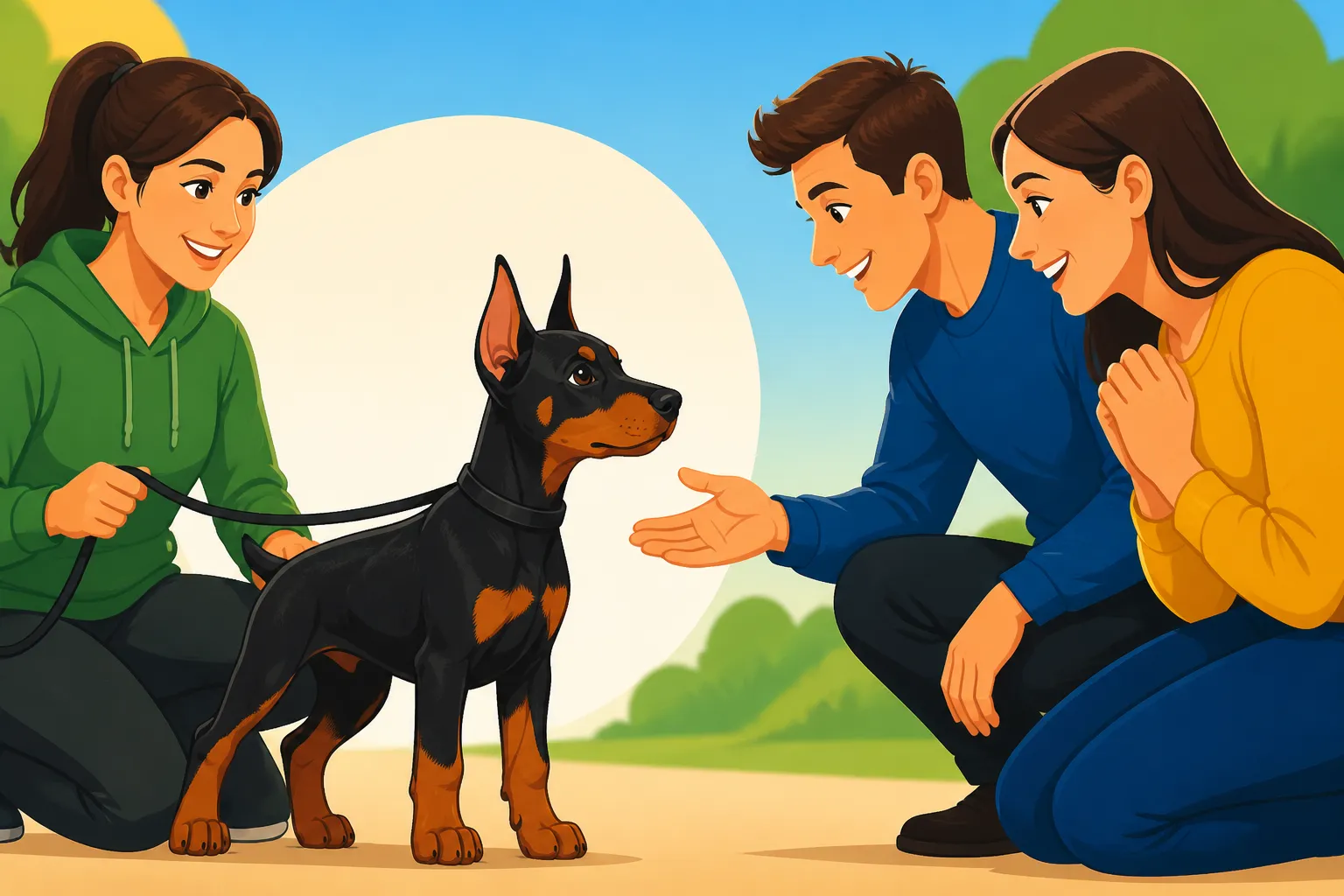
- Positive Association: If the stranger is willing, have them toss a treat towards your puppy, then turn their body slightly sideways (less confrontational) and avoid direct eye contact initially. Let the puppy approach them if they choose, not the other way around.
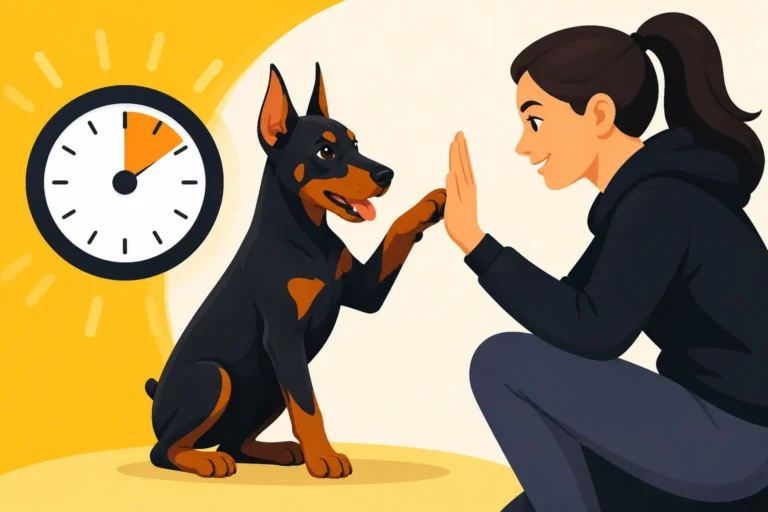
- Short & Sweet: Keep interactions brief. Two or three treats, a quick gentle pat (if the puppy is receptive and the person asks first), then you move on. The goal is to always end before the puppy gets overwhelmed or bored. This ensures the last memory is a good one. If your puppy chooses not to engage, that's okay. Respect their decision and continue to reward them for calmly observing the stranger, even from a distance.
| Step | Action | Puppy's Role | Outcome Goal |
|---|---|---|---|
| 1. Set Up | Prepare high-value treats, comfortable leash & harness. | Calm observation. | Positive association with anticipation. |
| 2. Initial Approach | Drop treats on ground as stranger nears (before pup reacts). | Eats treats, notices stranger. | Stranger = source of good things. |
| 3. Direct Interaction | Stranger tosses treat, turns sideways, avoids eye contact. | Approaches (if comfortable), takes treat. | Puppy feels safe, initiates interaction. |
| 4. Observe & Adjust | Watch puppy's body language (relaxed, tail wag, loose). | Shows comfort or hesitation. | Adjust interaction length or distance. |
| 5. End Positively | Keep it brief; finish before overwhelm. Move on with a final treat. | Positive last impression. | Reinforces good feelings about strangers. |
Setting Your Puppy Up for Success
Success in socialization means setting your Doberman puppy up to win. This isn't just about treats; it's about managing the environment and your own expectations. First, ensure your puppy isn't overly tired, hungry, or needing a potty break before you start. A cranky puppy isn't going to have a good experience.
Next, advocate for your puppy. Don't let well-meaning strangers mob your Doberman or lean over them, which can be intimidating. Politely ask people to crouch down, offer a hand for sniffing (palm up), and let the puppy initiate contact. If your puppy is hesitant, don't force it. There's no shame in saying, "He's still learning, maybe next time!" The best interactions are those where the puppy feels safe and in control, choosing to engage on their own terms. This builds intrinsic confidence, which is far more valuable than a forced greeting. A great resource for positive exposure without pressure is often found in Building a Doberman Puppy That Is Confident, Not Sharp.
Reading Your Doberman's Cues
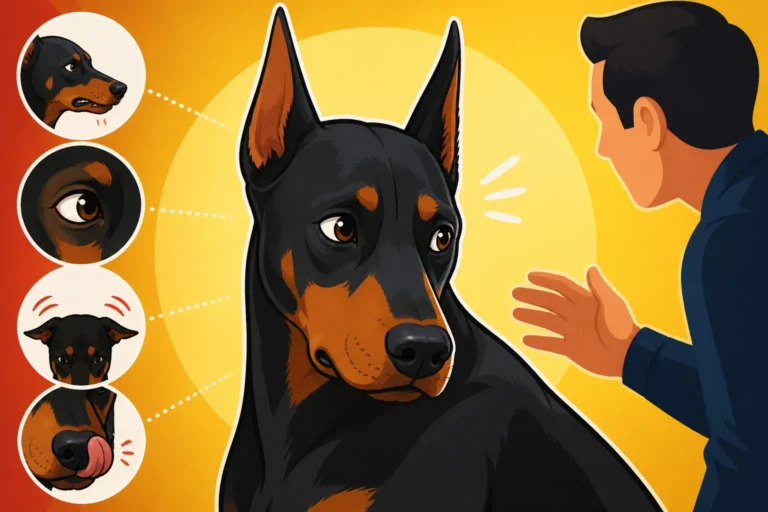
Your Doberman puppy communicates constantly through body language, and it's vital that you learn to read these signals. A relaxed puppy will have a soft gaze, a loose body, and perhaps a gently wagging tail. They might sniff the ground or yawn if a situation is mildly interesting but not threatening. These are all good signs.
However, be on the lookout for signs of discomfort or stress:
- Lip licking or yawning when not tired.
- Turning away or head turning.
- Freezing or becoming suddenly still.
- Tail tucked or held stiffly.
- Whale eye (where you see the whites of their eyes).
- Trembling or panting when not hot.
If you see these signals, it's a clear indication that your puppy is feeling overwhelmed or anxious. This is your cue to increase the distance, remove them from the situation, or simply end the interaction. Pushing a puppy beyond their comfort zone will erode trust and can create negative associations. Remember, your Doberman looks to you for safety and guidance. By respecting their signals, you teach them that you are their protector, strengthening your bond.
Overcoming Common Challenges and Misconceptions
Despite your best efforts, raising a Doberman puppy in a world that often misunderstands the breed comes with its unique set of challenges. People may react to your puppy based on outdated stereotypes or even their own fears. Learning to navigate these situations while still providing positive exposure is crucial. It’s also important to manage your own expectations; not every Doberman will be a social butterfly, and that's perfectly okay.
The key here is consistency and patience. Just like people, every Doberman puppy has its own personality, and some will naturally be more outgoing than others. Our role is to facilitate their confidence, whatever their natural inclination may be.
When Your Doberman Is Wary
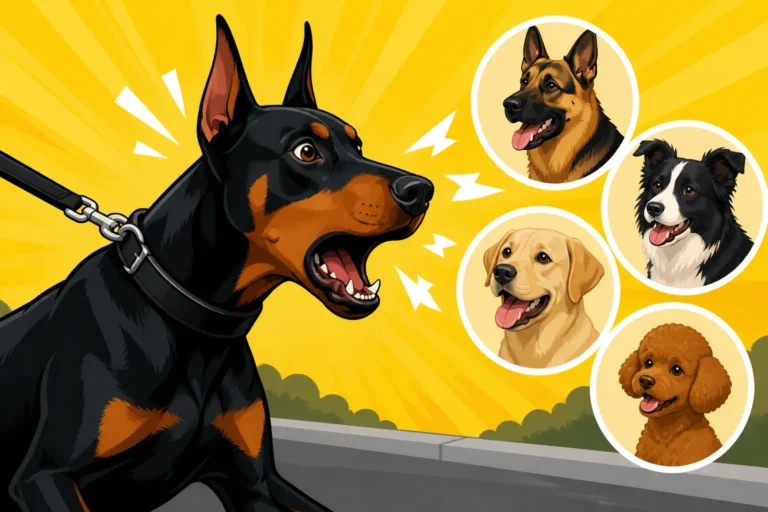
It's common for Dobermans to be naturally wary, and some puppies will be more so than others. If your Doberman puppy consistently hangs back, avoids eye contact with strangers, or tries to hide behind you, it's crucial not to force interactions. Forcing a fearful puppy to "face their fears" can often backfire, intensifying their anxiety and potentially leading to defensive behaviors. If you notice your Doberman puppy consistently hiding or showing signs of nervousness around new people, it's a sign to slow down. You might find some helpful guidance in A Doberman Puppy That Hides From New People.
Instead, focus on building their confidence at their own pace. This might mean starting socialization from a greater distance, simply rewarding them for observing strangers calmly without reacting. You can also enlist the help of a certified professional dog trainer who specializes in positive reinforcement and understands fearful body language. They can help you develop a tailored plan, perhaps using counter-conditioning and desensitization techniques to slowly change your puppy's emotional response to strangers. Remember, the goal is acceptance and neutrality, not necessarily exuberant greetings from every person.
Dealing with Public Perception
Let's be honest: owning a Doberman means you're going to encounter stereotypes. People might cross the street, pull their children away, or make negative comments – even when your Doberman puppy is behaving perfectly. This can be incredibly frustrating and disheartening, but it's important not to let it sour your own experience or inadvertently make your Doberman nervous. Your emotional state can directly influence theirs.
The best way to combat negative public perception is to be an exemplary Doberman owner. Keep your puppy well-behaved on a leash, ensure they are calm and under control, and be prepared to politely educate when appropriate. Sometimes, simply smiling and confidently walking by with your well-mannered pup is the best statement you can make. If someone is genuinely interested and friendly, you can engage, but never feel obligated to justify your dog's existence. Being a responsible Doberman owner means being an ambassador for the breed, and a calm, well-socialized Doberman is the best advocate of all. This also ties into how you handle your Doberman in public, which is covered in Handling a Doberman in Public Without Alarming People.
Keeping the Momentum Going as They Grow
Socialization isn't a one-and-done event that ends at 16 weeks. It's an ongoing process that needs to continue throughout your Doberman's adolescence and into adulthood. While the critical window lays the foundation, consistent, positive experiences reinforce that learning and help your Doberman maintain their confidence and good manners. Life changes, people change, and your Doberman needs to be continually reminded that the world is a generally safe and predictable place.
Adolescence, in particular, can bring new challenges. Just like human teenagers, Doberman adolescents can go through "fear periods" or push boundaries. Continued positive exposure is vital to navigate these phases successfully and ensure your Doberman remains a well-adjusted companion.
Continued Exposure into Adolescence
As your Doberman puppy transitions into adolescence (roughly from 6 months to 2 years, varying by individual), they may experience new developmental fear periods or simply test boundaries. What they were fine with last week might suddenly make them nervous this week. This is normal, but it means you can't stop the socialization process once they're out of puppyhood.
Continue to expose them to new people, places, and situations in a positive, controlled manner. Take them to new parks, walk in different neighborhoods, visit pet-friendly stores you haven't been to before, and invite diverse groups of people over for calm, supervised interactions. Always prioritize quality over quantity. If they start to show hesitation with something new, revert to the "treat magnet" approach from a distance. The consistency helps them integrate these experiences and prevents regressions in confidence. Remember, the goal is for your Doberman to view new experiences with neutral curiosity, rather than suspicion or fear.
Enlisting Help: Puppy Classes and Trusted Friends
You don't have to tackle socialization alone! Puppy classes are an excellent resource, not just for basic obedience, but for controlled socialization with other puppies and, importantly, with new people (the instructors and other owners). Look for classes that emphasize positive reinforcement and offer opportunities for safe, supervised interactions. For instance, reputable programs like those often recommended by vets or found through the BAXTER & Bella online platform can provide structured exposure.
Beyond formal classes, enlist the help of trusted friends and family. Ask them to wear different hats, carry umbrellas, or even approach from different directions. The more varied but positive experiences your Doberman has, the more robust their social skills will become. Always brief your helpers on how to interact calmly and positively. Remember, even a quick positive interaction is more valuable than a prolonged or negative one. Building a network of supportive individuals who understand your goals for your Doberman's socialization will make the process much smoother and more effective. If you're wondering about the benefits of formal training, you might find insight in Whether Puppy Class Is Enough for a Doberman.
Disclaimer
This article is for general informational purposes only and does not constitute professional advice. Laws, prices and regulations vary by location and change over time. Consult a qualified professional for guidance on your specific situation.