Whether a Doberman Works Better for Food or Tug
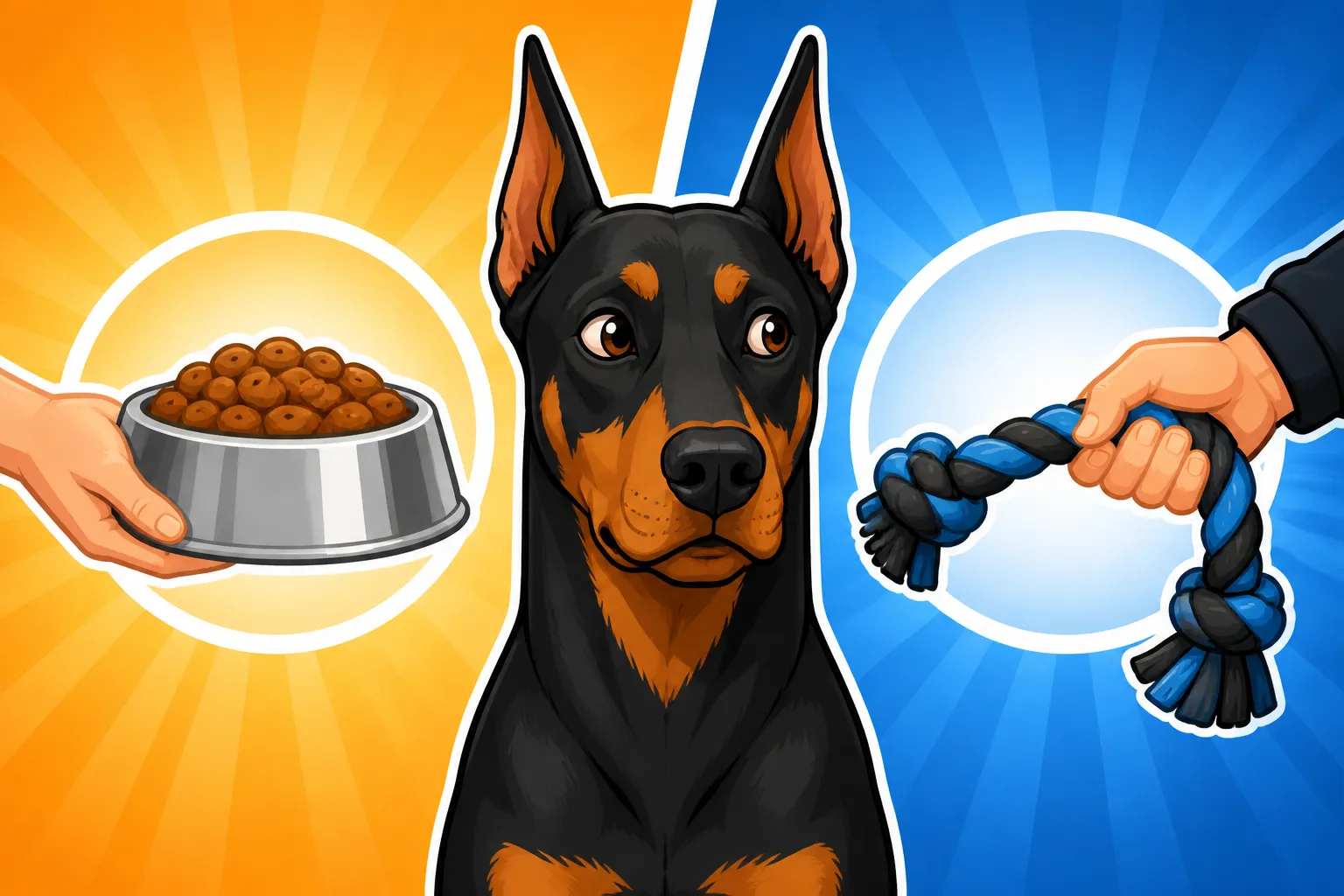
It's a question every Doberman owner eventually grapples with: when you're trying to teach your smart, driven companion something new, what truly gets their attention and makes them want to work with you? This guide delves deep into the age-old debate of food versus tug rewards, helping you understand your Doberman's unique motivations and how to leverage them for successful, joyful training.
Understanding Your Doberman's Core Motivations
Dobermans are renowned for their intelligence, athleticism, and intense bond with their human family. This combination means they aren't just looking for a handout; they're looking for engagement, purpose, and a connection with you. The effectiveness of any reward hinges on how well it taps into these inherent drives. It's not just about giving them something they like, but something that truly motivates them in the moment you need it most.
The Doberman's Drive for Partnership
Unlike some breeds that might be content to work for anyone offering a cookie, Dobermans often thrive on working with their person. This strong desire for partnership means that the reward itself isn't the only factor; the interaction around the reward is crucial. If a food treat is delivered with enthusiasm and praise, or a tug toy becomes an exciting game you share, it strengthens the bond and increases the value of the reward. Conversely, a high-value treat tossed without engagement might get eaten, but it won't build the same desire for collaboration. This is especially true when working on complex behaviors or in distracting environments. Why a Clever Doberman Is Harder to Train touches on how their intelligence requires more nuanced training approaches, and reward selection is a big part of that.
Assessing Your Doberman's Individual Preferences
Every Doberman, despite breed tendencies, is an individual. What one Doberman finds irresistible, another might only tolerate. It's your job, as their dedicated owner, to become a detective of their desires. Start by experimenting. Offer a variety of treats – soft, crunchy, smelly, bland – and different types of toys – squeaky, crinkly, rope, rubber. Pay close attention to their body language, how quickly they respond, and how persistent they are in seeking that reward. Do their eyes light up more for a piece of cheese or for the sight of their favorite tug? What gets them springing into action with the most enthusiasm? This initial assessment is vital, as it lays the groundwork for all your future training successes.
The Power of Food Rewards in Doberman Training
Food is often the go-to reward for a reason: it's universally appealing and easy to deliver quickly and precisely, which is critical for good timing in training. For a Doberman, high-value food rewards can be incredibly powerful, especially in the initial stages of learning or in highly distracting environments.
Using High-Value Treats for New Skills
When you're teaching your Doberman a brand-new skill, like a precise heel or a fast recall, high-value food rewards can accelerate learning. Think about it: a piece of boiled chicken or a smear of peanut butter is far more enticing than a dry biscuit when your Doberman is trying to figure out what you want. The higher the value of the treat, the more motivated they will be to try and repeat the desired behavior. These aren't your everyday kibble bits; they're the "jackpot" rewards that make your Doberman think, "Wow, this is worth every ounce of effort!" Remember, consistency in delivering these rewards right at the moment of success solidifies the association between the action and the positive outcome.
Food for Focus and Calmness
Food rewards excel in situations where you need your Doberman to be calm and focused. For instance, teaching a "place" command, where they settle on a mat, often benefits from continuous small food rewards for remaining still. Similarly, working through reactivity issues or building comfort in busy places can use food to create positive associations. A steady stream of small, tasty treats when a scary stimulus (like another dog at a distance) appears can help reframe your Doberman's emotional response. This helps them learn that calm observation, rather than reactivity, leads to good things. For general obedience, many online training platforms, such as BAXTER & Bella's programs, incorporate positive reinforcement with food to build a strong foundation of polite manners.
Considerations for Food Rewards
While food is fantastic, it's not without its drawbacks. Over-reliance on food can lead to a Doberman that only works when treats are visible, or one that becomes overweight if portions aren't managed. Also, in high-arousal situations, some Dobermans might be too stressed or distracted to take food. This is where a trainer's observation skills come into play – if your Doberman isn't eagerly taking the treat, its value might be too low for the current environment, or they might be too overwhelmed. Always remember to factor treat calories into their daily food intake. You can find a vast array of training treats, from soft and chewy to crunchy and low-calorie, on Amazon to keep things interesting and prevent your Doberman from getting bored.
The Allure of Tug and Play Rewards
For many Dobermans, especially those with strong prey drive and a love for interaction, tug and play can be the ultimate reward. These active rewards tap into their natural instincts and provide a fantastic outlet for their energy.
Building Drive and Excitement with Tug
Tug is incredible for building drive, enthusiasm, and a strong work ethic. When you want a Doberman to perform a behavior with speed and intensity – think agility, protection sports, or a fast retrieve – a vigorous game of tug immediately following the action can be incredibly motivating. It transforms training from a task into a thrilling game you play together. The key is to make you the gateway to that fantastic play. They perform the behavior, and you initiate the game. This reinforces that working with you leads to the most fun. For breeds like Dobermans, where keeping them mentally and physically stimulated is paramount, a good tug session is worth its weight in gold. Keeping a Doberman Mentally Tired is crucial, and tug can be a big part of that.
Tug for Focus and Stress Release
Beyond just excitement, tug can also be a focused, intense interaction that helps a Doberman channel their energy. A structured game of tug, with clear start and stop commands, teaches impulse control while still providing a high-value reward. It can also be a fantastic stress reliever. Imagine a Doberman that’s just completed a challenging mental task; a quick, intense tug session can help them decompress and release pent-up energy in a constructive way. This kind of physical engagement strengthens the bond and helps solidify your role as the source of all good things.
Considerations for Tug Rewards
Tug isn't always the right answer. Not all Dobermans are equally keen on tug, and some might get too aroused by it, making it difficult to transition back to a calm state for the next training repetition. Poorly managed tug can also inadvertently reinforce undesirable behaviors if the Doberman thinks the game starts when they initiate it or if they get mouthy. Always ensure you have clear rules: the toy appears when you want it, the game starts on your cue, and it ends when you say so. Teach a solid "out" or "drop it" command early on. Also, consider the environment; a boisterous game of tug might not be appropriate in a quiet public space or when trying to teach subtle body movements.
Here's a quick comparison of the two:
| Feature | Food Rewards | Tug/Play Rewards |
|---|---|---|
| Primary Benefit | Precision, focus, ease of delivery, calming | High drive, excitement, physical outlet, bond-building |
| Best For | New behaviors, proofing in distractions, calm work, duration behaviors | Speed, intensity, high arousal tasks, confidence building |
| Timing | Excellent for quick, precise marking | Can be sustained longer, builds excitement rapidly |
| Versatility | Highly versatile, easy to vary value | Requires dog's interest in play, may be too stimulating in some contexts |
| Downsides | Can lead to "bribing" if not phased out, weight gain if overused, less effective in high arousal for some dogs | Can be over-arousing, requires handler engagement, not all dogs are keen tuggers |
| Examples | Liver treats, cheese, hot dogs, commercial soft treats | Rope toys, squeaky toys, rubber retrieve toys, flirt poles |
Combining Rewards for Maximum Impact
The truth is, it's rarely an either/or situation. The most effective Doberman trainers use a combination of both food and tug, strategically deploying each to maximize their impact. This nuanced approach allows you to cater to your Doberman's fluctuating motivation, the complexity of the task, and the surrounding environment.
Creating a Reward Hierarchy
Think of your rewards on a sliding scale of value. At the very top might be that super-stinky, delicious piece of hot dog or an exhilarating game with their absolute favorite tug toy. Lower down might be a piece of kibble or a quick toss of a regular ball. By understanding this hierarchy for your Doberman, you can select the appropriate reward for the difficulty of the task and the level of distraction. For example, Marker Training a Doberman From Scratch often begins with high-value food to establish the marker's meaning, then progresses to varying rewards.
You wouldn't use a low-value reward for a Doberman performing a perfect recall in a busy park, would you? That's a high-stakes behavior that deserves a jackpot! Similarly, for a simple "sit" in your living room, a quick piece of kibble or a brief praise might be sufficient. Knowing when to escalate or de-escalate the reward ensures your Doberman remains engaged without becoming over-reliant or bored.
Phasing Out Rewards and Building Intrinsic Motivation
The goal of using rewards isn't to be dependent on them forever. It's about building strong associations and then gradually phasing them out, allowing the behavior itself, or your praise, to become the reward. This is where a balanced approach truly shines. You might start with food for accuracy in a new skill, then introduce tug for speed and enthusiasm, and finally transition to intermittent rewards, sometimes food, sometimes tug, sometimes just verbal praise and a scratch behind the ears.
This variable reinforcement, where your Doberman doesn't know when or what the reward will be, keeps them trying harder and longer. It builds intrinsic motivation – the desire to perform the behavior because it's enjoyable and engaging, not just for the immediate payoff. Think of it like a slot machine; if you knew you'd get a reward every time, it wouldn't be as exciting. The unpredictability makes it more compelling. Remember, your Doberman’s intelligence means they learn quickly, and they’ll pick up on patterns in your reward delivery. Varying it keeps them on their toes. The Doberman Years When Everything Shows Up emphasizes the ongoing nature of training and adaptability needed.
Tailoring Rewards to the Doberman's Temperament and Training Goals
Ultimately, the best reward for your Doberman is the one that they find most motivating in any given situation. This requires keen observation and a willingness to adapt your strategy.
Observing Your Doberman in Action
Spend time truly watching your Doberman. Do they become distracted easily by smells? Then perhaps high-value food will help them focus. Are they bursting with physical energy? A quick game of tug might be just what they need to release it and refocus. A Doberman puppy might be delighted by a tiny crumb of cheese, while an adolescent might need a full-on play session to get their attention. Five-Minute Sessions With a Young Doberman highlight the importance of short, engaging bursts for puppies, where various rewards can be explored.
Consider the environment, too. In a busy dog park, a Doberman might be too overstimulated for food but might engage enthusiastically in a brief game of tug with their person, as long as it's controlled and quickly ended. Conversely, for detailed obedience work indoors, food might offer the precision needed. Your Doberman will tell you what they value most by their effort and enthusiasm.
Adapting to Different Training Scenarios
Different skills call for different rewards. For instance, teaching a loose-leash walk might benefit from continuous small food rewards to reinforce being in the correct position. However, if your Doberman needs to learn a fast, enthusiastic recall over a long distance, a chase game or an exciting tug session at the end of the run might be far more effective. For Puzzle Work That Actually Tires a Doberman, food is almost always the answer, as the puzzle itself involves dispensing treats.
It's also important to remember that Dobermans are very sensitive to corrections. Why Yelling Shuts a Doberman Down explains how negative reinforcement can break their spirit, making positive, reward-based training even more critical. By providing clear, highly valued rewards, you make it easy for your Doberman to understand what you want, fostering a strong, trusting relationship built on positive reinforcement. Don't be afraid to mix it up, experiment, and constantly re-evaluate what your individual Doberman finds most rewarding at any given moment.
Disclaimer
This article is for general informational purposes only and does not constitute professional advice. Laws, prices and regulations vary by location and change over time. Consult a qualified professional for guidance on your specific situation.