Stopping a Doberman From Pulling You Over
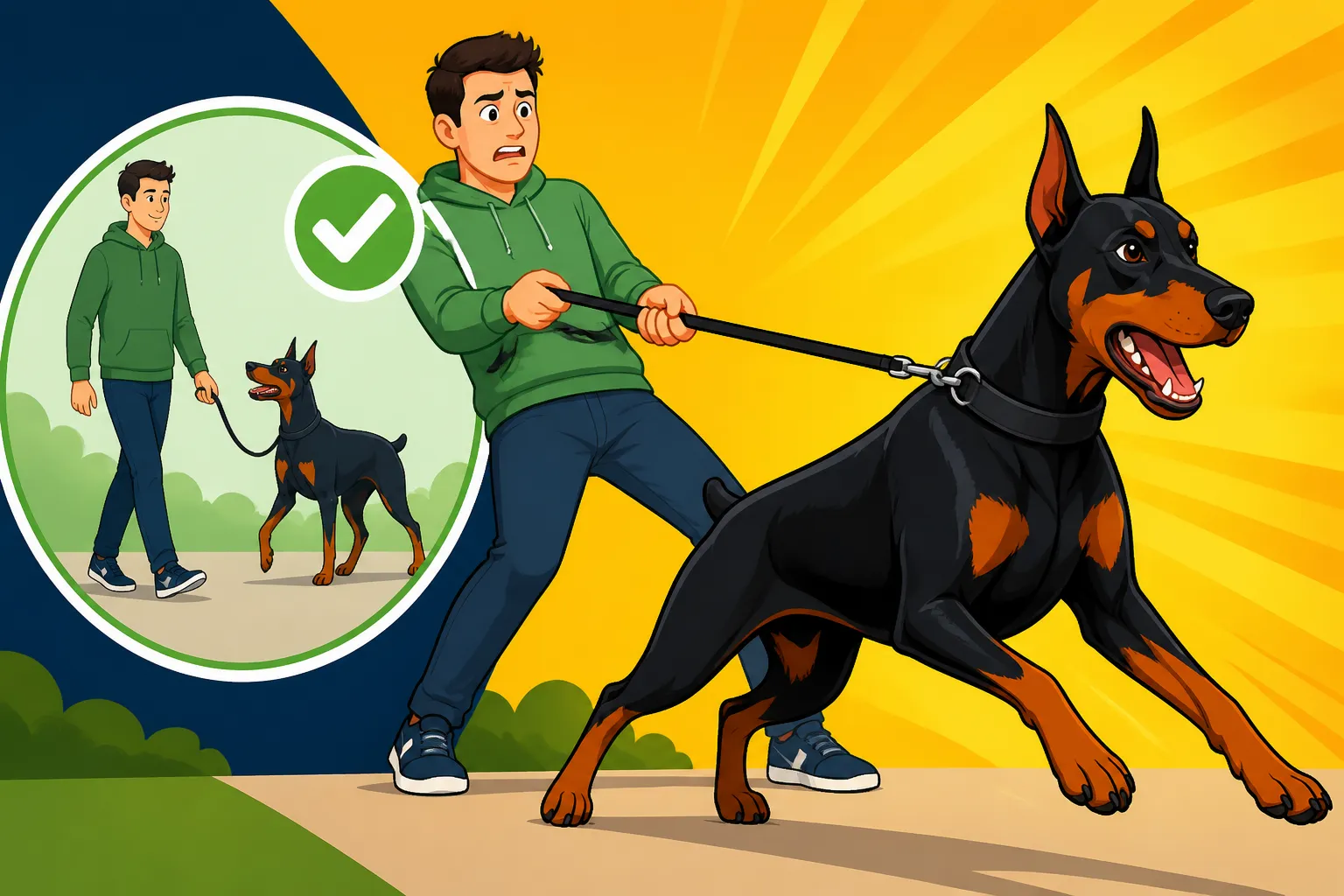
There are few things as frustrating, or frankly, as dangerous, as a strong Doberman pulling you down the street. It's not just annoying; it can lead to falls, injuries, and make walks a dreaded chore instead of an enjoyable bonding experience. This comprehensive guide is here to walk you through understanding why your Doberman pulls and, more importantly, equip you with the knowledge and techniques to achieve those coveted loose-leash walks, making outings a pleasure for both of you.
Understanding Why Dobermans Pull
Before we dive into solutions, it’s crucial to understand the root causes behind your Doberman's pulling habit. It’s rarely out of malice, but rather a combination of instinct, environment, and perhaps a lack of clear communication from us, their human companions.
The Doberman's Natural Drive and Strength
Let's be real: Dobermans are powerful, athletic dogs. They were originally bred for protection and patrol, which means they possess a natural drive to move forward with purpose and confidence. When they catch a scent, spot a squirrel, or simply feel the urge to explore, their physical strength kicks in. A Doberman weighing 80 pounds can easily overpower an adult human if they decide to put their shoulder into the leash, especially if that human isn't prepared. This isn't a fault; it's simply part of their magnificent design, and we need to account for it in our training.
Many owners underestimate this raw power until they've been yanked off balance once or twice. Their powerful hindquarters are designed for propulsion, and when combined with their natural excitement, that force translates directly to the end of your leash. Understanding this inherent drive helps us approach training with empathy and realistic expectations, knowing we're working with a strong, intelligent animal, not just a stubborn one.
Lack of Early Leash Training
Often, pulling habits start innocently in puppyhood. A tiny Doberman puppy tugs a little, and it's easily dismissed as cute or manageable. But those small tugs, when unaddressed, quickly escalate as the puppy grows into a powerful adolescent. If a Doberman learns that pulling gets them to where they want to go faster – whether it's that exciting tree, another dog, or just around the corner – they will continue to do it.
Positive reinforcement is key here, but consistency is king. If your Doberman has spent months, or even years, successfully pulling you, it has become a deeply ingrained behavior. It’s not that they can't learn; it's that they have learned the wrong thing. Re-training requires patience, clear boundaries, and making the "right" behavior (loose-leash walking) far more rewarding than the "wrong" one (pulling). It's never too late to teach new habits, but acknowledging the history of the behavior is the first step.
Excitement and Environmental Stimuli
For a Doberman, every walk is a sensory explosion. New smells, sights, and sounds bombard them, triggering their prey drive, curiosity, or desire to greet. Their excitement can be overwhelming, leading them to surge forward, often forgetting all their training in the moment. This is particularly true for young, energetic Dobermans who haven't yet learned to regulate their impulses.
Consider a walk through a busy park or down a street with squirrels darting about. Your Doberman's instinct might be to investigate immediately, and the leash becomes a tool to achieve that goal rather than a means of communication. We must teach them that staying connected to us, rather than pulling away, is what grants them access to these exciting stimuli. A Doberman That Lunges at Passing Dogs or other distractions highlights how external factors can quickly derail even good leash manners.
Essential Equipment for Leash Training
Having the right tools is half the battle when it comes to teaching a Doberman to walk politely on a leash. The goal is always to move towards a standard collar, but some interim tools can make the journey smoother and safer for both of you.
Choosing the Right Harness or Head Halter
For many Doberman owners, a front-clip harness or a head halter can be a game-changer. These tools work by redirecting your Doberman’s pulling power, making it physically harder for them to drag you forward without discomfort.
-
Front-Clip Harnesses: These harnesses have the leash attachment point on the dog's chest. When your Doberman pulls, the leash pulls them to the side, rather than straight forward, making it uncomfortable and ineffective for them to continue forging ahead. Brands like Blue-9 Balance Harness or Easy Walk are popular choices you can often find readily available on Amazon. When choosing one, ensure it fits snugly but comfortably, without restricting shoulder movement or rubbing in the armpits. Remember, this is a training tool, not a permanent solution, but it can provide immediate relief and better control during the learning phase. For more options, explore Harnesses That Hold a Strong Doberman.
-
Head Halters (Haltis/Gentle Leaders): A head halter, sometimes called a Gentle Leader or Halti, fits over your Doberman's snout and behind their ears, similar to a horse halter. The leash attaches under their chin. When your Doberman pulls, their head is gently turned to the side, disrupting their forward momentum. This gives you incredible control over their head, and where the head goes, the body follows. Many owners are initially hesitant about head halters because they look like muzzles, but they are not. They are simply a communication tool that allows you to guide your Doberman’s focus. Always introduce a head halter slowly and with positive reinforcement (lots of treats!), as some dogs find them strange at first. They are particularly effective for Dobermans who are very strong or highly reactive. You can read more about their use in Whether a Doberman's Long Nose Fits a Head Halter.
| Leash Training Tool | How It Works | Pros | Cons | Best For |
|---|---|---|---|---|
| Flat Collar | Attaches around the neck. | Simple, traditional. | Offers little control for pullers, can injure neck. | Dobermans with established loose-leash skills. |
| Martingale Collar | Tightens slightly under tension. | Prevents slipping out, gentle correction. | Still allows pulling, can be misused for harsh corrections. | Dobermans that might back out of a flat collar. |
| Front-Clip Harness | Leash attaches to the chest. | Redirects pulling, no pressure on neck. | Some dogs may rub, can tangle if not fitted well. | Strong pullers, dogs with neck sensitivities. |
| Head Halter | Fits over snout, leash attaches under chin. | Excellent head control, stops pulling effectively. | Many dogs initially dislike it, looks like a muzzle. | Very strong pullers, reactive Dobermans needing focus. |
Leash Selection for Control and Comfort
The leash itself plays a vital role. A standard 6-foot leash made of durable nylon or leather is generally best. Avoid retractable leashes entirely when working on loose-leash walking. Retractable leashes actually teach your Doberman that pulling is necessary to gain distance and that the tension on the leash is normal – exactly the opposite of what we want.
A fixed-length leash provides consistent feedback and allows you to practice proper handling. Look for one with a comfortable handle that won't dig into your hand when your Doberman inevitably tries a sudden lunge. For a strong Doberman, a robust clip is also essential to prevent accidental unhooking. Remember, this is about teaching your Doberman Leash Manners for an Eighty-Pound Doberman, and the equipment should support that goal.
Training Aids and Management Tools
Beyond the core leash and harness, a few other items can significantly aid your training:
- High-Value Treats: Your Doberman needs a powerful incentive to learn new behaviors. Small, soft, incredibly delicious treats (like bits of cheese, cooked chicken, or hot dogs) are far more effective than dry kibble. These treats become your primary tool for positive reinforcement.
- Treat Pouch: A hands-free treat pouch allows you to quickly reward desired behaviors without fumbling. Speed is critical in dog training; the reward needs to happen immediately after the good behavior for your Doberman to make the connection.
- Clicker: While optional, a clicker can be an excellent tool for precision training. It marks the exact moment your Doberman performs the correct action, followed by a treat. This clear communication helps them understand exactly what they are being rewarded for.
- Training Classes or Online Courses: Sometimes, we need a little human guidance too! Consider enrolling in a local obedience class or an online program. Many reputable programs, like those offered by BAXTER & Bella, provide structured lessons and support for tackling common issues like leash pulling. These resources can give you fresh perspectives and tailor advice for your specific Doberman. Finding a Trainer Who Has Worked With Dobermans is an excellent step if you need in-person help.
Practical Training Techniques to Stop Pulling
Now that you understand the "why" and have your equipment ready, let's get into the "how." Consistency, patience, and positive reinforcement are your best friends here.
Foundation: Reward-Based Loose Leash Walking
The core principle is simple: a loose leash equals good things (treats, praise, forward movement), while a tight leash means nothing happens or the walk stops.
- Start in a Low-Distraction Environment: Begin training in your quiet backyard or a very calm area. Clip your Doberman's leash to their chosen training tool (front-clip harness or head halter).
- Reward the Slack: Hold your leash loosely. The moment your Doberman takes a step forward and the leash remains slack, immediately mark the behavior with a verbal "Yes!" or a clicker, and give them a high-value treat right at your side. The goal is to reinforce them for being with you, not ahead of you.
- The Stop-and-Go Method: Take a few steps. If your Doberman pulls, immediately stop dead in your tracks. Don't say anything, don't yank the leash. Just stand still like a tree. Wait. The instant the leash slackens (even for a second, as they look back at you or adjust), immediately say "Yes!" or click, reward, and start walking again. Your Doberman quickly learns that pulling makes the walk stop, and a loose leash makes it continue. This can feel tedious at first, but it's incredibly effective.
- Practice Short Sessions: Keep initial training sessions short and positive, around 5-10 minutes. This prevents your Doberman from getting frustrated or bored. Multiple short sessions throughout the day are more effective than one long, exhausting one. Five-Minute Sessions With a Young Doberman can be particularly useful for keeping their attention.
Changing Directions and "Tree" Method
These techniques build on the stop-and-go method by adding more active feedback to your Doberman.
- Change Direction: If your Doberman starts to pull ahead, instead of just stopping, abruptly change direction. Turn 90 or 180 degrees and walk in the opposite way. Your Doberman will either be gently pulled off balance or quickly realize they need to pay attention to your movements. The moment they reorient themselves and the leash becomes slack, reward them heavily. This teaches them that you dictate the direction and pace, not them.
- "Be a Tree": This is the stop-and-go method applied with unwavering consistency. Every. Single. Time. your Doberman pulls, you freeze. You stand there, completely motionless, until the leash goes slack. This might take 30 seconds, a minute, or even longer in the beginning. The key is to be more patient than your Doberman. Once they release the tension, you can praise and resume walking. Over time, the duration they need to stand still will shorten dramatically.
- Rewarding Position: Actively reward your Doberman for walking nicely beside you. Don't just wait for them to pull; proactively reward them when they are in the correct "heel" position (or close to it) with a loose leash. Toss a treat to your side as you walk, encouraging them to stay close. This positive reinforcement for being in position reinforces the desired behavior. Rewards a Doberman Will Work For will make these sessions much more engaging.
Consistent Practice in Different Environments
Once your Doberman is doing well in low-distraction areas, it's time to gradually introduce more challenging environments.
- Gradual Exposure: Don't jump from your backyard to a bustling downtown street. Move to a quiet neighborhood street, then a slightly busier one, then perhaps a park during off-peak hours. Each new environment presents new stimuli, so be prepared for some regressions. When you introduce a new place, temporarily lower your expectations and reward even small instances of loose-leash walking.
- Short Outings: Keep initial outings in distracting environments very short. A 10-minute walk where your Doberman is successful at loose-leash walking is far more valuable than a 30-minute struggle that reinforces pulling. End on a positive note.
- Enlist Family Members: Ensure everyone who walks your Doberman is using the exact same techniques and equipment. Inconsistency will confuse your Doberman and undermine your training efforts. Hold a family meeting and practice together. What a Doberman learns your routine too well applies to both good and bad habits.
Advanced Strategies and Troubleshooting
Even with the best intentions, you might hit some roadblocks. Here are some advanced strategies and troubleshooting tips to keep your loose-leash training on track.
Addressing Specific Triggers and Reactivity
If your Doberman pulls excessively towards specific triggers (other dogs, people, squirrels, bikes), you’re likely dealing with some level of reactivity. This requires a more nuanced approach than just basic loose-leash training.
- Identify the Threshold: Pay close attention to when your Doberman reacts. Is it when another dog is 50 feet away, or 10 feet away? This is their "threshold." You need to work below that threshold, meaning at a distance where they notice the trigger but don't react negatively (pulling, barking, lunging).
- Counter-Conditioning and Desensitization: When you spot a trigger (e.g., another dog) at a distance where your Doberman is still calm, immediately start feeding them high-value treats, rapid-fire. Continue feeding until the trigger passes. The goal is to change their emotional response from "OMG, must pull!" to "Oh, another dog! Treats appear!" This is called counter-conditioning. Gradually, over many sessions, you can decrease the distance to the trigger while maintaining their calm response. This is a slow process but incredibly rewarding. Consider internalizing A Doberman That Lunges at Passing Dogs for related issues.
- "Look at That" Game: This is a great game for reactive dogs. When your Doberman looks at a trigger, say "Yes!" or click, and immediately feed them a treat. The goal is that when they see a trigger, they automatically look back at you for a treat, rather than pulling towards the distraction.
Professional Help and Online Resources
Sometimes, despite your best efforts, you might feel stuck. Don't hesitate to seek professional help.
- Certified Professional Dog Trainers (CPDT-KA): A certified trainer can assess your Doberman's specific behaviors, identify underlying issues, and provide tailored guidance. Look for trainers who use positive reinforcement and reward-based methods. They can help you refine your techniques and work through particularly challenging situations. You'll want to Find a Trainer Who Has Worked With Dobermans, as their strength and intelligence require specific handling.
- Online Training Platforms: Beyond local trainers, many excellent online platforms offer structured courses specifically for leash manners and reactivity. Services like BAXTER & Bella provide comprehensive online programs that walk you through step-by-step training, often with video demonstrations and community support. These can be a fantastic resource if in-person training isn't feasible or you prefer to learn at your own pace.
- Veterinary Behaviorists: For severe cases of pulling rooted in anxiety, fear, or extreme reactivity, a veterinary behaviorist (a veterinarian with specialized training in animal behavior) may be necessary. They can offer a comprehensive treatment plan that might include behavioral modification, environmental management, and, if appropriate, medication to help reduce anxiety and make training more effective.
Maintaining Good Habits Long-Term
Loose-leash walking isn't a one-and-done training. It requires ongoing reinforcement and vigilance.
- Consistency is Key: This cannot be stressed enough. Every walk, every time, you must reinforce the loose-leash rule. Allowing pulling even occasionally sends mixed signals and will undo your hard work. Remember that A Doberman That Tests Every Rule at Ten Months will challenge you, and consistency is how you win.
- Proofing: Continue practicing in a wide variety of locations, with increasing levels of distraction. This "proofs" the behavior, making it reliable in almost any situation. Don't assume that because your Doberman walks well in your quiet neighborhood, they'll automatically do the same in a bustling city park.
- Make Walks Enjoyable: While training is serious business, ensure your walks remain fun and engaging for your Doberman. Incorporate sniff breaks, allow them to explore interesting scents (on a loose leash, of course!), and play a short game of fetch if appropriate. A happy Doberman is a more cooperative Doberman.
- "Check-Ins" and Eye Contact: Regularly reward your Doberman for making eye contact with you during a walk. This teaches them to check in with you, making them more attentive and responsive to your cues. A quick "Good job!" and a treat when they look at you reinforces that you are the most interesting thing on the walk. This is one of those What Doberman Owners Wish They Had Started Earlier habits.
By understanding your Doberman's natural instincts, using the right tools, employing consistent training techniques, and seeking help when needed, you can transform your pulling Doberman into a polite walking companion. It's a journey, but one well worth taking for the safety and enjoyment of both you and your loyal Doberman.
Disclaimer
This article is for general informational purposes only and does not constitute professional advice. Laws, prices and regulations vary by location and change over time. Consult a qualified professional for guidance on your specific situation.