A Doberman That Guards the Yard Line
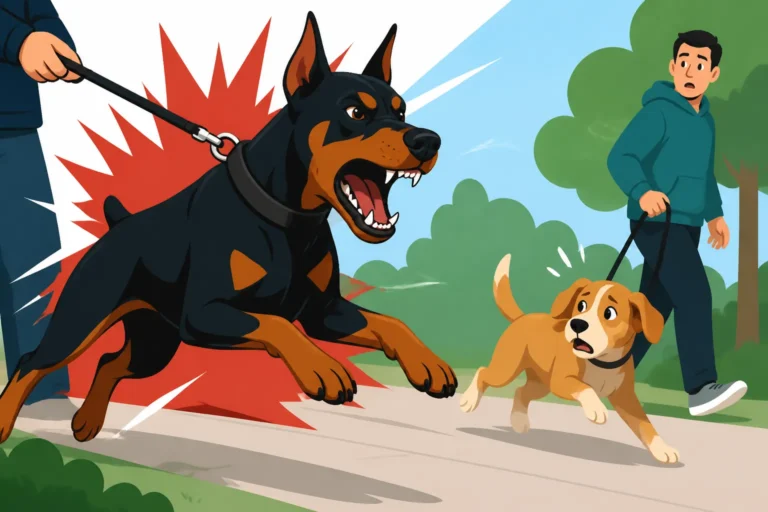
It's incredibly frustrating, and let's be honest, often a little embarrassing, when your otherwise wonderful Doberman decides the invisible boundary of your property line is a personal affront to their very existence. That intense, ear-splitting bark, the rigid stance, the lunging, sometimes even the air-snapping – it’s a lot, and it leaves you feeling helpless, worried about neighbor complaints, and questioning how to rein in such a powerful instinct. This guide is here to walk you through understanding why your Doberman guards the yard line and, more importantly, how to implement practical, empathetic strategies to manage and modify this behavior, bringing peace back to your property.
Understanding the Doberman's Instinct to Guard
Before we dive into solutions, let's acknowledge something fundamental: your Doberman isn't guarding the yard line to intentionally annoy you or be a "bad" dog. They are quite literally doing what they were bred to do. The Doberman Pinscher was originally developed by Karl Friedrich Louis Dobermann, a tax collector, to be a personal protector. This means they come hardwired with a strong sense of territory and an innate desire to protect their perceived flock, which, in your home, is you and your family.
The Doberman's Ancestral Role
Think about the origins of the breed. Dobermann needed a dog that could accompany him on his rounds, deterring potential threats and safeguarding his person and his money. He blended various breeds, likely including Rottweilers, German Shepherds, and others, to create a dog that was intelligent, fearless, and deeply loyal. This lineage means that a Doberman's guarding instinct isn't just a quirk; it's a foundational part of their temperament. They see threats where we might just see a pedestrian or a mail carrier. It's in their DNA to be vigilant, to observe, and to react when something crosses their perceived boundaries. This profound loyalty and protective nature is one of the most beloved traits of the breed, but it also comes with the responsibility of careful management.
Defining "Territory" for a Doberman
For us, a "yard line" is an arbitrary marker, perhaps a fence, a hedge, or just an invisible property boundary. For a Doberman, however, their territory is much more expansive and fluid. It often includes not just the physical confines of your yard, but also the visual and auditory space surrounding it. If they can see or hear it, they consider it part of their domain. A dog walking on the sidewalk across the street, a child riding a bike, a car pulling up a few houses down – all of these can be perceived as encroaching on their territory. This is why you might notice your Doberman patrolling the fence line, staring intently, or reacting to things far beyond your immediate property. Their commitment to their perceived role as guardian is unwavering, which is why managing this behavior requires understanding their perspective.
When Vigilance Becomes a Problem
There's a fine line between a Doberman being a vigilant protector and a Doberman whose guarding behavior has spiraled out of control. A dog that barks a few times to alert you to a stranger at the door is exhibiting appropriate guarding. A dog that continuously barks, lunges, and becomes agitated every time a leaf blows down the street, or a child giggles from a neighboring yard, is exhibiting problematic guarding. This can manifest as relentless barking, growling, fence fighting with other dogs, or even snapping at the air when someone walks too close to the property line. This isn't just stressful for you; it's also incredibly stressful for your Doberman, who feels constantly on edge, responsible for protecting against every perceived threat. It's a heavy burden for them to carry, and it often leads to a heightened state of anxiety and reactivity. You might notice they struggle to relax even indoors, always listening, always watching. This constant state of alert can lead to other behavioral issues and even impact their overall well-being. Living With a Doberman That Follows You Everywhere discusses their general clinginess, which can sometimes extend to their perceived guarding duties.
Common Triggers for Yard Line Guarding
Understanding what sets off your Doberman's yard line guarding is the first step toward managing it. It’s rarely just one thing; usually, it’s a combination of visual cues, sounds, and specific scenarios that activate their protective instincts. Pinpointing these triggers will allow you to implement more targeted and effective strategies.
Visual Stimuli and "Boundary Frustration"
This is perhaps the most common trigger. Your Doberman sees someone – a person, another dog, a squirrel – walking by on the sidewalk, or even just a vehicle. They are behind a barrier (a fence, a window), which means they can see the "threat" but cannot physically intercept it. This creates immense "boundary frustration." They feel compelled to protect, but are prevented from doing so, leading to an escalation of vocalizations and physical displays. Imagine seeing someone you perceive as a threat to your home, but being stuck behind a pane of glass with no way to intervene. That’s what your Doberman experiences. The more often this happens, and the more they practice the reactive behavior, the more ingrained it becomes. It can turn into a self-reinforcing cycle: bark at person, person leaves, Doberman thinks barking worked, so they bark more next time.
Auditory Cues and Overstimulation
It’s not always what they see. Sometimes, it’s what they hear. A distant siren, a neighbor's dog barking, children playing loudly, or even unfamiliar construction noises can trigger a Doberman's guarding response. Their keen hearing makes them highly sensitive to sounds that we might barely register. These auditory cues can put them on high alert, causing them to scan their environment, and if they then spot a visual trigger, the reaction can be even more intense. In an overstimulated environment, a Doberman can quickly become overwhelmed, leading to a constant state of vigilance and reactivity. This is particularly true if they have not been adequately Exposing a Doberman Puppy to Strangers and different sounds from a young age.
Delivery Drivers and "Intruders"
Ah, the nemesis of many a Doberman owner: the delivery driver, the mail carrier, the person reading the meter. To your Doberman, these individuals aren't just doing their job; they are intruders who dare to approach the sacred threshold of your property. They come, they leave a package, they quickly retreat – reinforcing to your Doberman that their aggressive display effectively "drove off" the perceived threat. This specific trigger is particularly challenging because it's a regular occurrence in many households. It's not just the sight of the person, but often the sound of the vehicle, the footsteps, the doorbell, and the act of approaching the door itself that sets them off. This can make receiving packages or mail a daily ordeal, adding significant stress to both you and your Doberman. Teaching a Doberman to Accept Visitors is a related skill that can help with this specific challenge.
Strategies for Managing and Modifying Yard Line Guarding
Managing and modifying yard line guarding in a Doberman requires a multi-faceted approach, combining environmental management with consistent training. There's no quick fix, but with patience and dedication, you can significantly reduce the intensity and frequency of these behaviors.
Environmental Management
The first step is often to manage the environment to reduce the opportunities for your Doberman to practice the unwanted behavior. If they can't see the triggers, they can't react to them.
- Physical Fences and Visual Barriers: If you have a chain-link fence, consider adding privacy screening, hedges, or solid fencing to block their view. Even a temporary solution like privacy fabric from Amazon can make a huge difference. The goal is to prevent them from seeing people or dogs walking by.
- Limiting Yard Access: If there's a particular side of the yard where the guarding is worst, restrict access to that area during peak trigger times. Use baby gates or secure runs to keep them away from the fence line when you can't actively supervise.
- Window Film/Blinds: If your Doberman guards from inside the house, apply frosted window film to lower panes or keep blinds/curtains closed during the day. An elevated dog bed away from windows can also help redirect their attention.
Training for Impulse Control and Desensitization
Environmental management is only one piece of the puzzle. You also need to train your Doberman to react differently to triggers. This involves teaching them impulse control and desensitization.
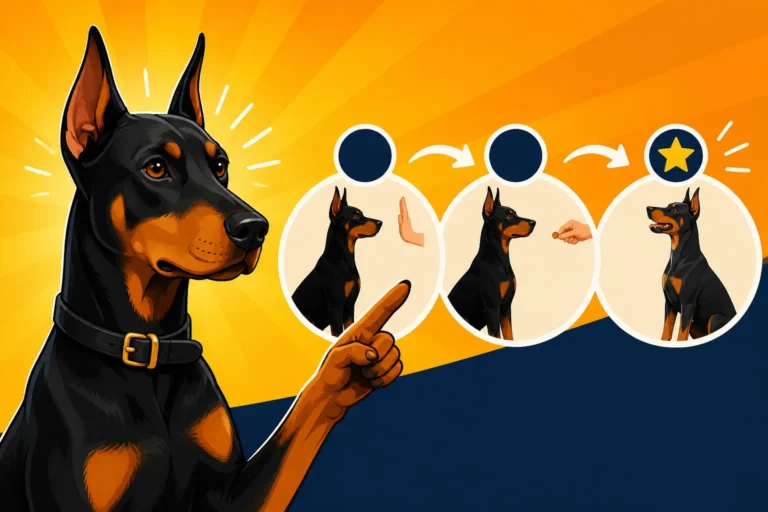
- Counter-Conditioning: This involves changing your Doberman's emotional response to the trigger. Instead of associating a passing dog with alarm, you want them to associate it with something positive. Start far away from the trigger, where your Doberman notices it but doesn't react. The moment they see a trigger (e.g., a person walking by), immediately reward them with a high-value treat before they start barking. The goal is: trigger appears = treats appear. Trigger disappears = treats disappear. This helps them form a new, positive association.
- "Look at That" Game: This is a specific counter-conditioning exercise. When your Doberman sees a trigger, mark the moment they look at it (but haven't reacted yet) with a verbal marker like "yes!" or a clicker, then immediately give a treat. Repeat this, gradually moving closer to the trigger or increasing its intensity. You want them to look at the trigger and then look back at you for a treat.
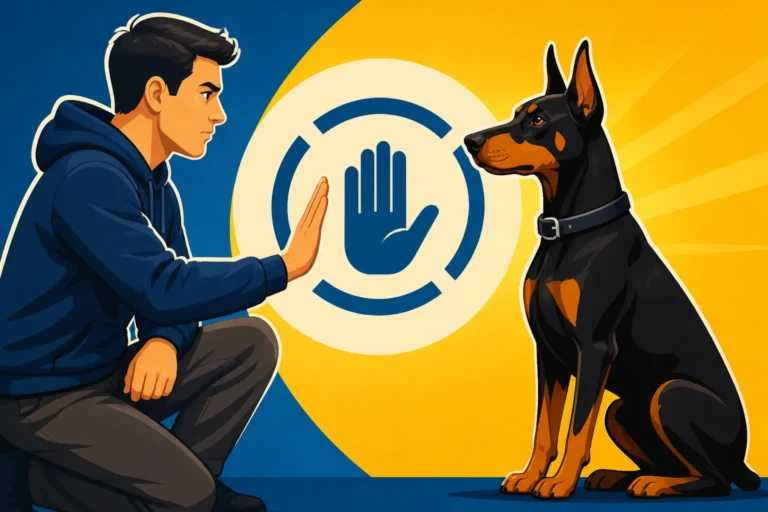
- Teaching a "Place" Command: A strong "place" command is invaluable. Teach your Doberman to go to a designated mat or bed and stay there, even with distractions. When a trigger appears, cue them to their "place." Reward them for staying calm. This gives them an alternative, calm behavior to perform instead of guarding. Online training programs, such as those offered by BAXTER & Bella, often have excellent modules on teaching reliable "place" commands and impulse control, which can be tailored for intelligent breeds like the Doberman.
- Structured Walks: Ensuring your Doberman gets adequate, structured exercise outside the yard can reduce their need to patrol it. Long walks where they practice good Leash Manners for an Eighty-Pound Doberman and focus on you, rather than constantly scanning, are crucial.
Building a Stronger "Off-Duty" Mode
Your Doberman needs to learn that it's okay to "turn off" their guarding instincts sometimes.
- Rewarding Calm Behavior: Actively seek out and reward moments of calm, relaxed behavior, especially when triggers are present but your Doberman is ignoring them. This reinforces that calm is a desirable state.
- Mental Enrichment: A tired Doberman is a less reactive Doberman. Engage their clever minds with puzzle toys, scent work, or short training sessions throughout the day. This can reduce boredom and the need to create their own "work" by guarding.
- Consistent Routine: A predictable routine can reduce anxiety. Knowing when to expect walks, meals, and playtime can help your Doberman feel more secure and less compelled to be constantly vigilant. Training a Doberman That Is Smarter Than You Expect often means they pick up on routines very quickly.
Professional Help
If your Doberman's guarding behavior is severe, causing significant stress, or if you feel you're not making progress, don't hesitate to seek professional help.
- Certified Professional Dog Trainer (CPDT-KA/KPA-CTP): A trainer specializing in positive reinforcement and behavioral modification can assess your specific situation, identify triggers, and create a tailored training plan. Look for someone with experience with working breeds.
- Veterinary Behaviorist (Dip ACVB): For extreme cases, especially if anxiety or aggression is deeply rooted, a veterinary behaviorist (a veterinarian with specialized training in animal behavior) can prescribe medication in conjunction with a behavior modification plan. This can help reduce anxiety to a level where training can be more effective. Finding a trainer who has worked with Dobermans specifically can be incredibly helpful.
Tools and Resources to Aid in Training
Having the right tools can make a significant difference in your success when working on yard line guarding with your Doberman. It’s not about quick fixes, but about aiding your consistent efforts.
Physical Barriers and Visual Blocks
Sometimes, the simplest solution is to manage what your Doberman can see.
| Barrier Type | Description | Pros | Cons |
|---|---|---|---|
| Privacy Fence | Solid wood, vinyl, or composite fence that completely blocks visibility. | Excellent visual block, durable. | Expensive, requires installation, might be permanent. |
| Privacy Screening | Fabric or mesh attached to an existing chain-link or open-slat fence. | Affordable, easy to install, temporary/removable. | Can be damaged by wind, less aesthetically pleasing. |
| Hedges/Shrubs | Dense plantings along the property line. | Natural, aesthetically pleasing, long-term. | Takes time to grow, requires maintenance. |
| Window Film | Frosted or decorative film applied to windows, blocking outdoor view. | Inexpensive, easy to apply, maintains light. | Doberman might still react to sounds. |
These visual blocks, especially if your Doberman is constantly patrolling a specific section of the yard, can offer immediate relief by removing the visual stimuli that trigger the guarding. You can find a variety of options for privacy screening or window film on Amazon, making it easy to experiment with different levels of visibility.
Training Aids and Equipment
Certain equipment can help you safely and effectively manage your Doberman during training sessions.
- Long Lines: A 15-30 foot long line allows you to give your Doberman some freedom in the yard while still maintaining control. This is invaluable when practicing recall or counter-conditioning at a distance from triggers. Always attach a long line to a well-fitting harness, not a collar, to prevent neck injury if they lunge.
- Front-Clip Harnesses: For walks where you need more control, especially if your Doberman pulls towards perceived threats, a front-clip harness can be a game-changer. These harnesses redirect your dog's forward momentum back towards you when they pull, making it harder for them to lunge with full force. Many excellent options are available from retailers like Amazon.
- High-Value Treats: To effectively counter-condition, you need treats that are more enticing than the thrill of guarding. Think small pieces of cooked chicken, cheese, or specialized training treats.
- Enrichment Toys: Durable puzzle toys, sniff mats, or chews can help redirect your Doberman's attention and provide mental stimulation, reducing boredom-driven guarding behaviors.
Online Training Programs and Resources
You don't always need an in-person trainer to start making progress. Many reputable online resources can provide structured guidance.
- Online Courses: Programs like those offered by BAXTER & Bella provide comprehensive, step-by-step video lessons that you can work through at your own pace. They often cover fundamental obedience, impulse control, and managing reactivity, which are all crucial for addressing yard line guarding. The advantage here is the consistency and the ability to review lessons whenever you need a refresher.
- Webinars and E-books: Many certified trainers offer webinars or e-books specifically on reactivity and guarding behaviors. These can provide a deeper understanding of the underlying psychology and offer targeted exercises.
Remember, the key to success is consistency and patience. Your Doberman's guarding instinct is deeply ingrained, but with thoughtful management and consistent positive reinforcement training, you can teach them to be a calm, confident guardian rather than an overly reactive one. It's a journey, but a rewarding one, that builds trust and strengthens your bond with your incredible Doberman.
Disclaimer
This article is for general informational purposes only and does not constitute professional advice. Laws, prices and regulations vary by location and change over time. Consult a qualified professional for guidance on your specific situation.