Whether a Nervous Doberman Becomes Aggressive
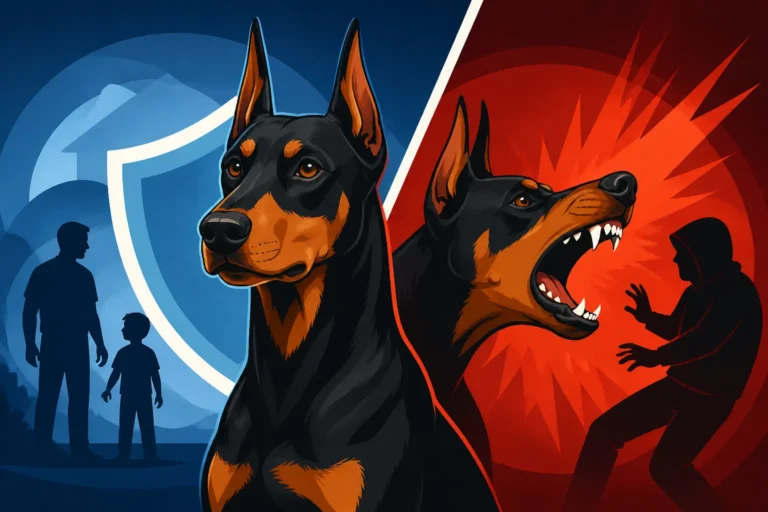
It's a scary thought for any Doberman owner: that the dog you love, who often sticks to you like Velcro, might one day become aggressive, especially if they've always seemed a bit on the nervous side. Many of us worry about our Dobermans, who, despite their formidable appearance, can sometimes be quite sensitive souls. This guide aims to explore the complex relationship between nervousness and aggression in Dobermans, helping you understand the signs, the risks, and most importantly, how to support your dog to be confident and calm.
Understanding Doberman Nerves
Dobermans often carry a reputation for being tough, imposing guard dogs, and while they absolutely can be incredible protectors, what many people don't realize is how sensitive and sometimes prone to anxiety they can be. This isn't a flaw; it's just part of their intricate personality, but it's something every Doberman owner needs to understand.
What Does "Nervous" Even Mean for a Doberman?
When we talk about a "nervous" Doberman, we're not necessarily talking about a dog cowering in a corner, though extreme cases can look like that. For a Doberman, nervousness often manifests more subtly. It might be a dog that seems hyper-vigilant, constantly scanning their surroundings, or one that avoids new people, places, or situations. You might notice them pulling away when someone tries to pet them, or becoming stiff and still in unfamiliar environments. It’s not about being "bad"; it's about feeling overwhelmed or unsure. They might display displacement behaviors like excessive licking, yawning, or sniffing the ground when they're stressed, or they might try to create distance by moving away. Sometimes, a nervous Doberman will A Doberman That Pushes Between People as a way to control their environment or seek reassurance. It's their way of saying, "I'm not comfortable with this," even if they're not growling or barking.
Common Triggers for Doberman Anxiety
Dobermans, like many intelligent and sensitive breeds, can develop anxiety in response to a variety of triggers. A major factor can be insufficient or poor-quality socialization during their critical puppyhood window, which typically runs up to about 16 weeks. If a Doberman puppy isn't exposed to a wide range of sights, sounds, people (of all ages, sizes, and ethnicities), and other dogs in a positive and controlled way, they can grow up to be fearful of the unknown. Think about a Doberman puppy that spends all its time in a quiet home with only its immediate family; when suddenly faced with a busy park or a loud street, it can be terrifying. The Sixteen Weeks That Set a Doberman Up is crucial for laying this foundation. Beyond early socialization, loud noises, sudden movements, changes in routine, separation from their primary caregiver, or even specific items like hats or umbrellas can become triggers. Some Dobermans develop anxiety around specific types of people, perhaps due to a negative past experience or simply a lack of positive exposure.
Is It Shyness or Something More?
There's a fine line between a Doberman being naturally reserved or shy and exhibiting concerning levels of nervousness. A shy Doberman might take a moment to warm up to strangers but will eventually accept gentle interaction. They might not be the life of the party, but they're not overtly fearful. However, when that shyness tips into fear, and the dog consistently tries to avoid situations, trembles, pants excessively, tucks its tail, or even vocalizes in distress (whining, barking), it's more than just shyness. This kind of fear is a red flag, as it can be a precursor to defensive aggression. It's important to recognize that fear is a powerful motivator, and for a Doberman, who is also a protective breed, that fear can manifest as a need to defend themselves if they feel cornered or threatened. Understanding the difference is vital for effective intervention.
The Link Between Fear and Aggression
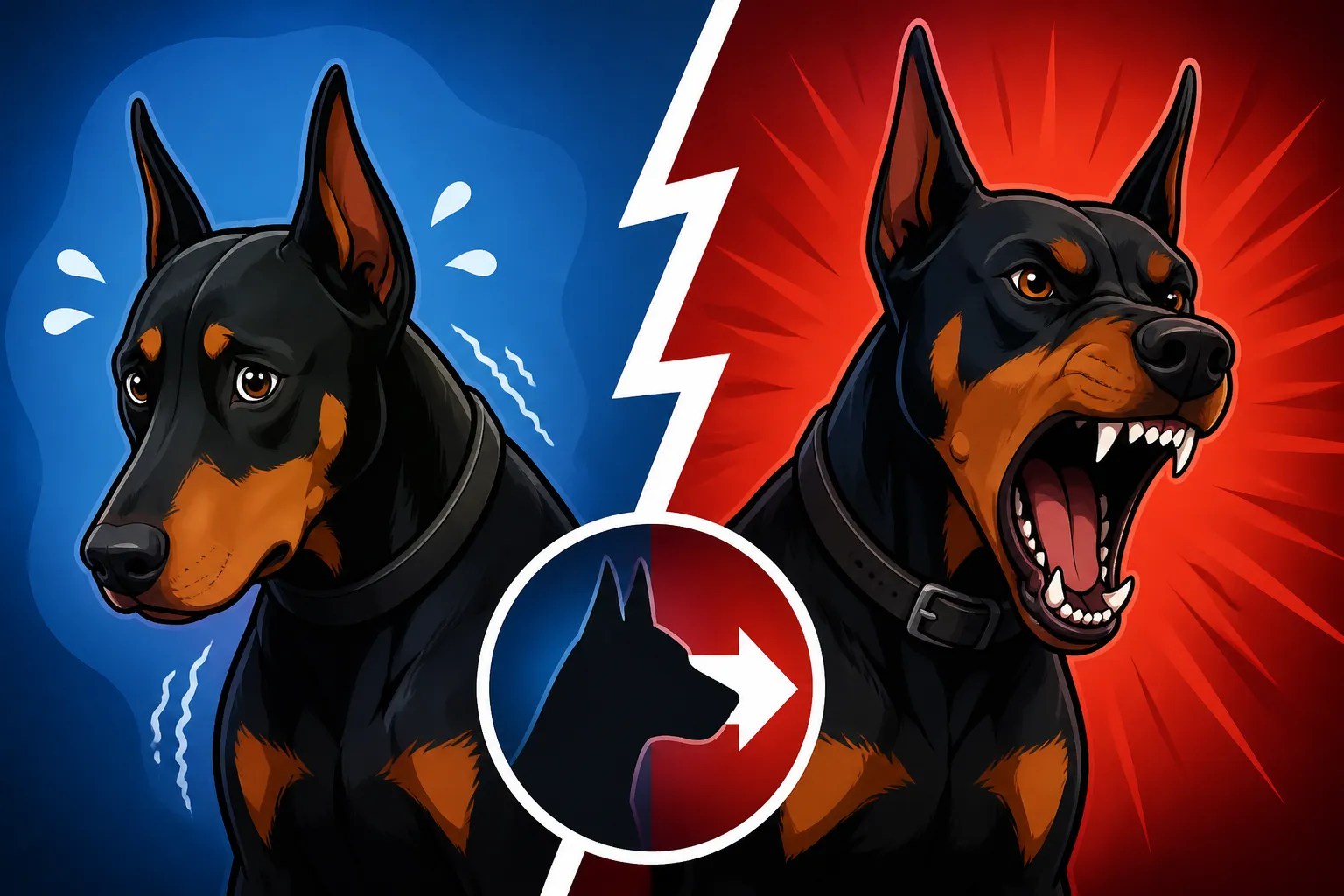
It's a common misconception that aggressive dogs are inherently "mean" or "dominant." In reality, a significant portion of aggression, especially in breeds like the Doberman, stems directly from fear. A nervous Doberman isn't trying to be "bad"; they are trying to cope with a situation that makes them deeply uncomfortable, and sometimes, the only way they know how to make that discomfort stop is to make the perceived threat go away.
Understanding the "Fight or Flight" Response
Dogs, like all animals, possess an innate "fight or flight" response when faced with a perceived threat. A nervous Doberman, when confronted with something that scares them, will first try the "flight" option. This could mean trying to back away, hide behind their owner, or simply avoid eye contact and move their body away. If they feel that flight is impossible – perhaps they're on a leash and can't escape, or they're cornered in a room – their instinct may shift to "fight." This isn't a conscious decision to be aggressive; it's a desperate attempt at self-preservation. Imagine how you might react if you felt truly trapped and threatened. A dog's response is similar. This defensive aggression often comes with clear warning signs, but if those signs are ignored or not understood, the dog may feel it has no other option but to escalate.
When Retreat Isn't an Option
This is where the situation becomes precarious. Many well-meaning owners inadvertently put their nervous Dobermans in situations where retreat isn't an option. Picture this: your Doberman is uneasy around children. You're at a family gathering, and a curious child, unaware of dog etiquette, approaches your Doberman quickly, reaching out for a pet. Your dog might first try to turn their head away, lick their lips, or even A Doberman That Stiffens Before It Growls. If the child persists, and your Doberman feels trapped – perhaps on a short leash, or with nowhere to go – they might feel compelled to snap or growl to create distance. From the dog's perspective, they've tried to communicate their discomfort, and when those signals were ignored, they had to escalate to protect themselves. This is why careful management of a nervous Doberman's environment is so incredibly important, especially when they are learning to cope with their fears.
The Role of Socialization (or Lack Thereof)
As mentioned, proper socialization is paramount. A Doberman that wasn't adequately socialized as a puppy might view many normal aspects of the world – strangers, other dogs, even certain objects – as threats. If a Doberman puppy is raised in isolation, or primarily exposed to only one type of environment, they miss crucial learning opportunities to build positive associations. Exposing a Doberman Puppy to Strangers and diverse environments in a structured, positive way helps them develop resilience. Without this, every new encounter can be an overwhelming, frightening experience. The goal of socialization isn't just exposure; it's positive exposure. If a nervous Doberman's early experiences were negative, or simply non-existent, they learn that the world outside their comfort zone is a scary place, and this can prime them for fear-based aggression. This is especially true for a powerful breed like the Doberman, where confidence is a key component of a stable temperament.
Recognizing the Warning Signs
Knowing your Doberman's body language is probably the single most important tool you have in preventing a nervous dog from resorting to aggression. Dogs communicate constantly, but their signals can be subtle and easily missed if you don't know what to look for.
Subtle Cues That Are Easy to Miss
Long before a Doberman growls or snaps, they'll give a cascade of quieter signals that indicate stress or discomfort. These are often called "calming signals" or "stress signals." You might see your Doberman yawn, lick their lips repeatedly, turn their head away, or show the "whale eye" (where the whites of their eyes are visible). They might suddenly become very interested in sniffing the ground, as if searching for something fascinating. Piloerection (the raising of fur along their back), a tucked tail, or ears that are pinned back are also strong indicators of stress. Sometimes, a Doberman will simply freeze, becoming very still and rigid, which is a significant warning sign that they are highly uncomfortable and considering their options. What a Doberman Yawn Actually Means isn't always about being sleepy; it can be a sign of tension. Learning to interpret these early signals allows you to intervene before your dog feels the need to escalate to more overt displays of aggression.
Escalation: From Avoidance to Confrontation
If the subtle cues are ignored, a nervous Doberman's behavior will escalate. The dog might start by trying to create more distance – pulling on the leash to get away, or attempting to hide. If this fails, the next step might be a low growl, a snarl, or a quick snap in the air. These are direct warnings, essentially saying, "Back off, now!" It's critical to understand that these aren't "bad" behaviors from the dog's perspective; they are desperate attempts to communicate and maintain personal space. If even these warnings are ignored, or if the dog feels cornered and unable to escape, they may resort to a bite. This progression is rarely sudden; there are usually many opportunities for intervention along the way if we are attentive to our Doberman's communications. Knowing A Doberman That Stiffens Before It Growls is a crucial piece of information for any owner.
The Dangers of Misinterpreting Body Language
One of the biggest pitfalls for Doberman owners is misinterpreting these signals. Because Dobermans are strong and have a powerful presence, people sometimes assume a stiff posture or a direct stare means confidence or dominance, when in fact, it can be a sign of intense anxiety or fear. Punishing a dog for growling, for example, can be incredibly dangerous. While a growl is unpleasant, it's a warning. If you suppress the growl, you remove the warning, meaning the dog might go straight to a bite next time, without any prior signal. Why Yelling Shuts a Doberman Down is that it increases their stress and fear, potentially making them more likely to resort to aggression if they feel threatened. Understanding that your dog's aggression almost always stems from a place of fear or perceived threat, rather than malice, is the first step in effective management and training.
Here's a quick look at common fear signals and how they might escalate:
| Fear Level | Body Language Cues | Potential Escalation (if unheeded) |
|---|---|---|
| Mild Anxiety | Lip licking, yawning (out of context), sniffing ground, head turning, averted gaze, slight tail tuck, slow blinking. | Increased anxiety, avoidance, freezing. |
| Moderate Fear | Low growl, stiff body, whale eye, ears flattened/pulled back, full tail tuck, trying to hide/flee, refusal to move, trembling, piloerection. | Snapping, lunging, air biting. |
| Severe Fear | Biting, frantic attempts to escape, frantic barking, full-blown aggression (if escape is impossible). | Full-force bite, repeated bites (if still threatened). |
Building Confidence and Preventing Aggression
The good news is that nervousness in Dobermans can often be managed and even greatly improved with consistent, positive, and understanding intervention. The goal isn't to punish the fear out of them, but to build their confidence and teach them more appropriate coping mechanisms.
Positive Reinforcement: Your Best Tool
For a nervous Doberman, positive reinforcement is absolutely critical. This means rewarding desired behaviors and positive associations, rather than punishing fear-based reactions. If your Doberman is scared of new people, instead of forcing them to "meet and greet," you'd create situations where they can observe new people from a safe distance, and every time they remain calm or offer a relaxed glance, they get a high-value treat or praise. Over time, this helps them associate strangers with good things. Rebuilding Trust With a Harshly Handled Doberman also relies heavily on positive reinforcement to repair damaged relationships and build new, secure foundations. You want to show your Doberman that you are a safe haven, not another source of fear or unpredictable punishment. Tools like clicker training or online courses, such as those offered by BAXTER & Bella, can be invaluable for teaching new skills and building confidence in a fear-free way, right from the comfort of your home.
Professional Help: When to Call in the Experts
While many mild cases of nervousness can be addressed by a dedicated owner, there are times when professional help is essential. If your Doberman's fear is intense, if aggression has already occurred, or if you feel overwhelmed and unsure how to proceed, don't hesitate to contact a certified professional dog trainer or a veterinary behaviorist. These experts can assess your dog's specific situation, identify triggers, and develop a tailored behavior modification plan. They can teach you techniques like desensitization and counter-conditioning, which are designed to gradually reduce your dog's fear responses. They can also rule out any underlying medical conditions that might be contributing to behavioral changes, as sometimes Whether Pain Explains a Doberman's Behavior Change more than pure anxiety. Seeking help early can prevent the problem from escalating and dramatically improve your Doberman's quality of life.
Management Strategies for Safe Interactions
Even with training, managing a nervous Doberman's environment is crucial for their safety and the safety of others. This means preventing situations where your dog feels overwhelmed and might resort to aggression. If your Doberman is reactive to other dogs, for example, choose quiet walking routes or times, and keep them on a secure leash, perhaps even using a long line purchased from a retailer like Amazon, to give them a bit more space while maintaining control. If they are fearful of guests, provide a quiet, safe space (like a crate or a separate room) for them to retreat to when visitors are over. Muzzle Training a Doberman Before It Is Needed can also be a responsible safety measure for highly nervous dogs, allowing them to participate in necessary vet visits or new experiences without the risk of a bite, while you continue with their confidence-building work. The goal is to set your Doberman up for success, minimizing opportunities for them to practice fearful or aggressive behaviors, and maximizing their chances to feel secure and happy.
Disclaimer
This article is for general informational purposes only and does not constitute professional advice. Laws, prices and regulations vary by location and change over time. Consult a qualified professional for guidance on your specific situation.