Whether Pain Explains a Doberman’s Behavior Change
It's incredibly frustrating and heartbreaking when your Doberman, who was once vibrant and full of life, suddenly starts acting differently. You might be seeing uncharacteristic snapping, withdrawal, or a general reluctance to engage, and it leaves you wondering what on earth has happened to your beloved companion. This comprehensive guide will explore the profound connection between physical pain and behavioral changes in Dobermans, helping you recognize the subtle signs and understand what steps to take to help your dog feel better.
The Link Between Physical Discomfort and Emotional Outbursts in Dobermans
When your Doberman's personality takes a sudden turn, it’s natural to first think about training issues or external stressors. Perhaps they've become nippy when touched, started guarding their space more intensely, or even seem to shy away from your affection. It's easy to assume they're "being naughty" or "just getting old," but often, a significant shift in behavior, especially if it appears out of the blue, can be a cry for help – a signal that they're experiencing pain or chronic discomfort. Understanding this fundamental link is crucial for any Doberman owner.
Why Pain Can Turn a Sweet Doberman "Sour"
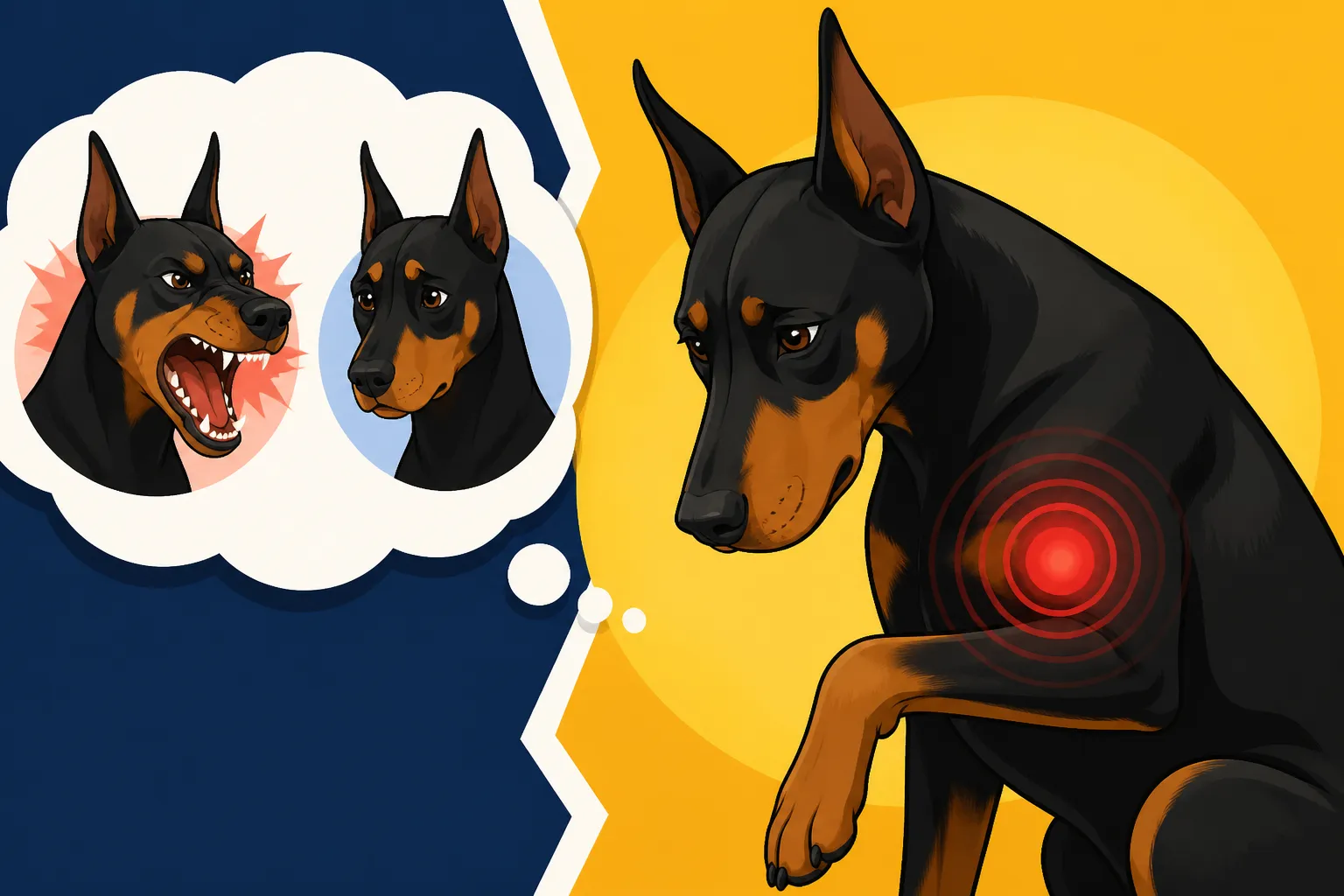
Imagine yourself with a nagging headache or a persistent backache; even the kindest person can become irritable, withdrawn, or quick to lash out when they’re hurting. Dogs are no different, and Dobermans, with their sensitive nature and strong guarding instincts, can sometimes magnify these responses. A normally sweet Doberman might suddenly growl when you reach for them, not because they're being aggressive, but because that touch inadvertently presses on a sore spot. They might snap at another dog that gets too close, not out of malice, but because they anticipate a painful bump or jostle. It’s their way of saying, "Leave me alone, I hurt," often without the ability to articulate it in a way we immediately understand.
This isn't about your Doberman being "bad"; it's about survival and self-preservation. If an action causes pain, they'll learn to avoid that action or the circumstances surrounding it. If human interaction, or the presence of other dogs, has become associated with increased discomfort, they will adapt their behavior to minimize that perceived threat. This can manifest as anything from avoidance to overt aggression, creating a confusing and distressing situation for their family. The key is to look beyond the surface behavior and consider what might be driving it.
The Instinct to Hide Pain and What It Means for Owners
One of the most challenging aspects of recognizing pain in our Dobermans is their incredible stoicism. In the wild, showing weakness or pain makes an animal vulnerable to predators. While our Dobermans live a far cry from the wild, this deeply ingrained instinct to hide discomfort persists. They might not limp dramatically or cry out; instead, their pain signals can be incredibly subtle, often missed until the condition has progressed significantly.
This means you, as their owner, become their most important advocate. You need to be a detective, noticing minute changes that others might overlook. A Doberman might continue to try and keep up on walks, masking their discomfort, only for you to notice they are Stiffness in a Doberman That Used to Sprint when they get home. They might hesitate briefly before jumping onto the couch, or seem a little less enthusiastic about a game of fetch. These aren't just quirks; they could be vital clues. Their natural desire to please and their high pain tolerance can make it even harder to pinpoint when something is truly wrong. This stoicism, while admirable, places a greater burden on us to observe, learn, and act on even the faintest whispers of distress from our dogs.
Subtle Cues: Recognizing the Hidden Language of a Hurting Doberman
Because Dobermans are so good at hiding pain, you need to become adept at spotting the nuanced indicators. It's rarely a dramatic limp or a loud yelp; it's often a collection of small shifts that, when put together, paint a clear picture. Think of it as reading between the lines of their daily life.
Beyond a Limp: Visual and Postural Indicators
While a clear limp is an obvious sign of musculoskeletal pain, many other visual cues are far less pronounced. Look at your Doberman's posture. Are they holding their head lower than usual, perhaps appearing to be A Doberman That Walks With Its Head Down? Do they stand with their back slightly hunched, or shift their weight unevenly? Sometimes, a Doberman might consistently sit or lie down in an unusual position, trying to alleviate pressure on a painful area. They might avoid stretching or getting up from a lying position very slowly, almost reluctantly. You might notice them grooming excessively at a particular spot on their body, or even guarding that area if you try to touch it.
Their eyes can also tell a story. Are their eyes squinted, or do they appear "hard" or worried? Sometimes, pain can cause pupils to dilate or constrict unusually. Even their coat condition might change – chronic stress or pain can lead to a duller coat or increased shedding. Take note of subtle gait changes; perhaps their stride is shorter, or they're dragging their feet slightly, which could lead to Scuffed Nails on a Wobbler Doberman. It’s about careful observation, not just once, but over several days or weeks, looking for patterns that deviate from their normal presentation.
Changes in Routine and Interaction Patterns
A Doberman in pain might gradually withdraw from activities they once loved. If your dog, who used to be a social butterfly, suddenly avoids other dogs at the park or seems less interested in playtime, it could be a sign of discomfort rather than a sudden shift in temperament. Perhaps they're spending more time sleeping, or seeking out solitude in another room. Conversely, some dogs become clingier, seeking constant reassurance and physical contact, or even exhibiting a new form of A Doberman That Leans on You Constantly, not just for affection, but as a silent plea for comfort.
Consider their appetite and thirst. A decrease or increase in either could be pain-related. Are they hesitant to go up or down stairs? Do they struggle to get into the car? These physical limitations often trigger behavioral responses. Even changes in house-training habits, like having accidents indoors, can sometimes stem from pain that makes it difficult or uncomfortable for them to hold their bladder or reach their usual potty spot in time. Pay close attention to these disruptions in their normal routine and energy levels. While some of these changes might point to more serious issues like The Heart Disease That Reaches Most Dobermans, they all warrant investigation.
Vocalizations and Subtle Body Language Shifts
Dobermans, like many dogs, have a wide range of vocalizations. A sudden increase in whining, groaning, or sighing, especially when moving or settling down, can indicate pain. They might also start growling in situations where they never did before, particularly if approached while resting or if someone tries to touch a sensitive area. A low, guttural growl when another dog bounds towards them might not be aggression, but a warning born of anticipated pain.
Beyond sounds, look for subtle shifts in their body language. Lip licking, yawning (when not tired), repetitive panting without exertion, or rapid eye blinking can all be signs of stress and discomfort. A Doberman might become stiff or tense through their body, or their tail might be held lower than usual, even when they're otherwise "happy." Sometimes, they might avoid eye contact, or seem generally more anxious or easily startled. A normally bombproof Doberman might suddenly become very sensitive to loud noises or sudden movements, purely because their pain has lowered their coping threshold. These are often precursors to more overt behavioral issues, so catching them early is paramount.
Navigating Behavioral Changes: What to Do When Pain is Suspected
Once you start noticing these subtle (or not-so-subtle) changes in your Doberman's behavior, and you suspect pain might be at the root, the next steps are critical. It’s not just about managing the behavior; it’s about addressing the underlying cause with care and professional guidance.
The Importance of a Thorough Veterinary Examination
The very first and most important step is to schedule a comprehensive veterinary examination. This isn't just a quick check-up; you need to communicate all your observations to your vet. Be specific about the behavioral changes, when they started, and any potential triggers you've noticed. Your vet might recommend a thorough physical exam, blood tests, and potentially imaging such as X-rays or even an MRI, especially if conditions like Wobbler Syndrome in the Doberman or Doberman Hip Dysplasia are suspected. Don't be afraid to ask for a referral to a specialist, such as an orthopedic vet or a veterinary neurologist, if your general practitioner can't pinpoint the issue.
It’s tempting to try and self-diagnose or administer over-the-counter pain relief, but this can be dangerous. Many human medications are toxic to dogs, and even dog-specific medications need to be prescribed by a vet who can determine the correct dosage and monitor for side effects. A professional diagnosis is crucial to ensure your Doberman gets the right treatment for their specific condition, whether it's medication, physical therapy, or even surgery. Remember, a veterinary professional is your best partner in understanding your Doberman's health.
Managing the Environment for a Pain-Affected Doberman
While you're working with your vet to diagnose and treat the pain, it's essential to modify your Doberman's environment to minimize discomfort and prevent further behavioral issues. Think about how you can make their daily life easier. For instance, if jumping or climbing is painful, consider using ramps to help them get into the car or onto the couch. Investing in a high-quality orthopedic bed can provide crucial support for aching joints; you can find many well-rated options on Amazon.
Limit activities that seem to exacerbate their pain. If long walks cause discomfort, switch to shorter, more frequent outings or gentle leash walks on soft surfaces. Reduce strenuous play sessions with other dogs if their reactivity seems linked to pain. Ensure they have a quiet, safe space where they can retreat when they feel overwhelmed or just need to rest without being disturbed. This might mean setting up a cozy crate or a designated bed in a low-traffic area of your home, allowing them a sense of control over their environment.
Training Adjustments and Reinforcing Positive Interactions
When a Doberman is in pain, traditional obedience training methods that rely on physical manipulation or even perceived pressure can be counterproductive and even dangerous, potentially leading to fear-based aggression. Instead, focus on positive reinforcement methods that build trust and reward desired behaviors without causing discomfort. If your Doberman has developed fear or aggression due to pain, a professional dog trainer specializing in positive reinforcement and behavior modification, ideally with experience with sensitive breeds like Dobermans, can be invaluable. Resources like BAXTER & Bella offer online puppy schools and training resources that emphasize positive, force-free methods, which can be a gentle way to re-establish good habits or teach new ones without exacerbating their discomfort.
Be extra patient and understanding. Your Doberman isn't acting out to spite you; they're trying to communicate their distress. Avoid punishment, which will only increase their fear and anxiety, making the underlying pain even harder to manage. Instead, reward calmness and cooperation, even if it's just for a few seconds. If a particular touch causes a reactive response, try to identify it and avoid it, or approach it differently with very gentle, positive associations. The goal is to rebuild their confidence and comfort, helping them understand that they are safe and that you are there to help alleviate their suffering. Rebuilding trust can take time, especially if the pain has been ongoing and led to significant Rebuilding Trust With a Harshly Handled Doberman.
Common Doberman Health Issues That Can Lead to Pain-Related Behavior
Dobermans, unfortunately, are predisposed to several health conditions that can cause chronic pain and, subsequently, behavioral changes. Being aware of these common ailments can help you and your vet narrow down possibilities.
Joint and Spinal Conditions
These are incredibly prevalent in Dobermans and can be a significant source of pain. Wobbler Syndrome in the Doberman, a condition affecting the cervical spine, is notorious for causing neck pain, weakness, and neurological deficits that manifest as an unsteady gait or general reluctance to move. This discomfort can easily lead to a dog becoming defensive or withdrawn. Similarly, Doberman Hip Dysplasia, while less common than in some other large breeds, can still cause significant hip pain and arthritis, making movement difficult and painful. An affected Doberman might avoid jumping, struggle to get up, or even show aggression when approached from behind.
Other joint issues, like osteochondritis dissecans (OCD) or various forms of arthritis that can develop with age or injury, can also contribute to chronic pain. Even something as seemingly minor as patellar luxation can cause intermittent discomfort. The key here is proactive screening, especially if you have an athletic Doberman, and prompt veterinary attention if you notice any signs of lameness, stiffness, or changes in how they move or position themselves.
Internal Ailments and Chronic Discomfort
Pain isn't always obvious; sometimes it stems from internal organs or chronic systemic issues. Conditions like pancreatitis, inflammatory bowel disease, or even chronic urinary tract infections can cause persistent abdominal pain or general malaise, leading to a dog feeling unwell and therefore acting differently. Sometimes a Doberman may become withdrawn or even aggressive because they simply don't feel well.
Even seemingly unrelated conditions like chronic low-grade allergies that cause skin irritation can contribute to discomfort and affect a Doberman's mood and behavior. Think about how itchy skin can make us irritable; it's no different for our dogs. Regular veterinary check-ups are essential to catch these internal issues early, before they progress to a point where they significantly impact your Doberman's quality of life and lead to noticeable behavioral shifts. For specific Doberman predispositions, checking for issues like Copper Liver Disease in Doberman Females could also be relevant as chronic liver issues can certainly make a dog feel unwell.
Neurological Issues Mimicking Behavioral Problems
Sometimes, behavioral changes aren't directly from physical pain, but from neurological conditions that affect sensation, coordination, or even cognitive function. As mentioned with Wobbler Syndrome, nerve compression can cause tingling, numbness, or weakness, which is a form of discomfort that can make a dog reactive or anxious. Other neurological conditions, such as seizures (even mild, focal seizures that might manifest as unusual behaviors rather than full-body convulsions), or cognitive dysfunction in older Dobermans, can drastically alter a dog's personality and demeanor.
A Doberman experiencing a neurological event might become disoriented, anxious, or even aggressive. They might seem to forget their training or become easily agitated. It's crucial for your vet to rule out these possibilities, as their treatment approaches are entirely different from addressing musculoskeletal pain or internal organ issues. A clear diagnosis is the path forward, ensuring you're not just treating the symptoms, but addressing the true root cause of your Doberman's concerning behavior.
It's truly a difficult situation to navigate when your Doberman's behavior changes, especially when you suspect pain. But by becoming a keen observer, seeking prompt veterinary care, and adjusting their environment and training approach with empathy, you can make a world of difference for your beloved companion.
Disclaimer
This article is for general informational purposes only and does not constitute professional advice. Laws, prices and regulations vary by location and change over time. Consult a qualified professional for guidance on your specific situation.