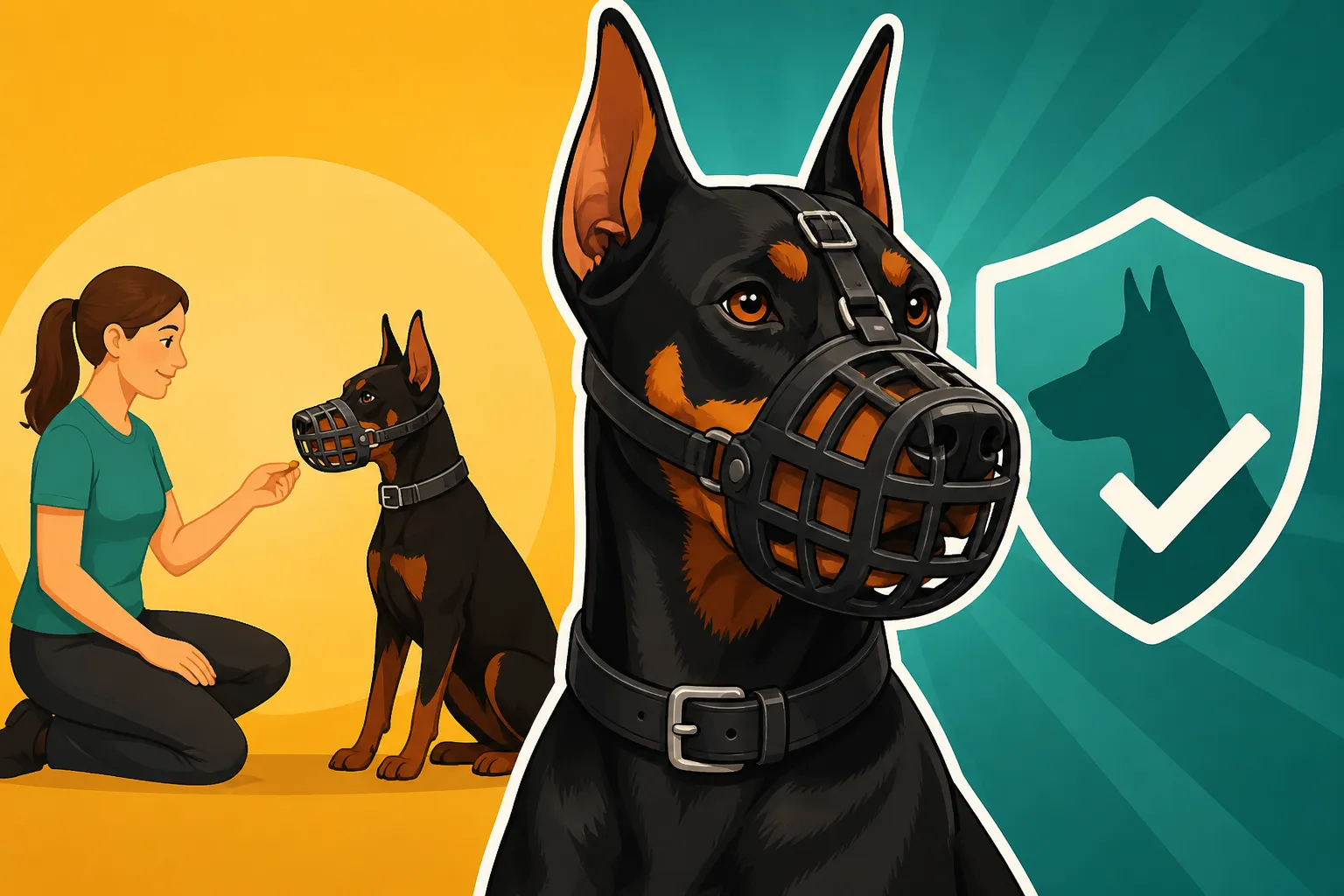
Muzzle Training a Doberman Before It Is Needed
Let's be honest, the thought of muzzle training your magnificent Doberman probably doesn't fill you with joy. Many of us associate muzzles with aggressive dogs or difficult situations, and it can feel like admitting defeat or a failure in training. But what if I told you that muzzle training your Doberman before it's ever truly needed is one of the most proactive, responsible, and loving things you can do for your dog? This guide will walk you through why and how to introduce the muzzle in a positive way, turning it into a comfortable tool rather than a scary last resort.
Why Muzzle Training is a Gift, Not a Punishment
It's completely understandable to feel a pang of worry when you think about putting a muzzle on your Doberman. They are majestic, powerful dogs, and their reputation, unfortunately, sometimes precedes them. But viewing muzzle training through the lens of preparedness, rather than punishment, changes everything. It's about setting your Doberman up for success and safety in a world that isn't always fair or predictable.
Anticipating Unexpected Situations
Life with a Doberman is rarely boring, and sometimes, unexpected things happen that require us to be ready for anything. Imagine a scenario where your Doberman suddenly spooks during a walk and scrapes their paw badly, or perhaps they have a sudden, intense gastrointestinal upset that requires an emergency vet visit. When a dog is in pain, fear, or distress, even the most gentle Doberman can lash out defensively. Their instincts take over, and a snap or bite, no matter how out of character, is a real possibility.
In these moments, if your Doberman is already comfortable with a muzzle, you can slip it on quickly, allowing the vet or emergency responder to examine and treat them safely, without further stress or risk of injury to anyone. This isn't just about preventing bites; it’s about providing calm, effective care when your dog needs it most. It removes a layer of anxiety from an already difficult situation. Think about routine procedures too – a nail trim that gets a little too close to the quick, or a new groomer they don't quite trust yet. Having a muzzle that your dog accepts as a normal part of life means these moments don't have to escalate into something traumatic. It’s an invaluable tool for ensuring your Doberman remains a positive and safe presence, even when they're not feeling their best. It's truly about enabling better care when they are vulnerable, and getting your Doberman used to vet handling is a huge part of that.
Responsible Ownership and Public Perception
Let's face it, Dobermans, despite their loyal and often goofy personalities, can carry a certain stereotype. Their striking appearance, coupled with their protective instincts, can sometimes make people nervous. As responsible Doberman owners, it's our job to ensure our dogs are always seen as well-mannered and under control. A dog that is calmly wearing a muzzle in appropriate situations, like at a busy public park during a social event or while working with a new trainer, can actually improve public perception rather than confirm negative biases.
It signals to others that you are a highly responsible owner, proactive about safety, and have put careful thought into your dog's well-being and interaction with the world. It shows you're not denying their strength or potential, but rather managing it intelligently. For Dobermans that might have a tendency to react to every dog it sees, or perhaps get overly excited in new environments, a muzzle can be a temporary safeguard while you continue training. It offers peace of mind for you, for others, and surprisingly, often for your Doberman too, as they learn they don't have to be on high alert. Plus, it can help counteract some of the misunderstandings that might arise from how their What Cropped Ears Hide About a Doberman's Mood might be perceived by strangers. This allows you to focus on Handling a Doberman in Public Without Alarming People with confidence, knowing you have a safety net in place.
Choosing the Right Muzzle for Your Doberman
Just like finding the perfect harness or bed, selecting the right muzzle is crucial for your Doberman's comfort and safety. Not all muzzles are created equal, and choosing the wrong type or size can actually cause more stress and harm than good.
Basket Muzzles vs. Soft Muzzles
When it comes to muzzles, you'll primarily encounter two main types: basket muzzles and soft (fabric) muzzles. For proactive training and safety, the clear winner for a Doberman is almost always a basket muzzle.
- Basket Muzzles: These muzzles are typically made of plastic, wire, or sometimes soft rubber (like the popular Baskerville brand). Their design allows your Doberman to pant, drink water, and even take treats through the openings. This is critical for any muzzle that might be worn for more than a few minutes, or in any situation where your dog might get warm or thirsty. The ability to pant is essential for dogs to regulate their body temperature, and restricting this can quickly lead to overheating, especially for an active Doberman. They also prevent bites effectively while still allowing your dog to have a relatively normal range of motion with their mouth for other activities. You can find a good range of options, including those made from durable plastic or metal, on platforms like Amazon.
- Soft Muzzles: These are typically made of nylon or mesh fabric and wrap tightly around your dog's snout. While they might seem less intimidating, soft muzzles are primarily designed for very short-term restraint, such as during a quick veterinary injection or grooming procedure. They prevent your dog from opening their mouth wide enough to pant or drink, which can be dangerous if worn for more than a few minutes. They should never be used for exercise, long walks, or in any situation where overheating is a risk. For proactive training, where the goal is comfort and acceptance over time, soft muzzles are simply not appropriate.
Always prioritize a basket muzzle that allows your Doberman full ability to pant, drink, and receive treats. This makes the conditioning process much more successful and ensures their physical well-being.
Proper Fit is Non-Negotiable
A muzzle, regardless of type, is only safe and effective if it fits correctly. An ill-fitting muzzle can cause chafing, restrict breathing, or even be removed by a determined Doberman.
Here’s what to look for in a proper fit:
- Length: The muzzle should extend from just below your Doberman's eyes to about half an inch beyond the tip of their nose. It shouldn't push into their eyes or restrict their vision, nor should it be so short that their nose is touching the end.
- Circumference: There should be enough room inside the basket for your Doberman to open their mouth fully to pant. A good rule of thumb is to be able to comfortably slide two fingers horizontally under the widest part of the muzzle when it’s on their snout, without it being so loose that it can twist around easily.
- Straps: The straps should be secure but not overly tight. They typically go behind the ears and around the back of the head. Ensure they don't rub or pinch, especially around the sensitive ear area.
To measure your Doberman accurately, use a soft measuring tape. For length, measure from just below their eyes to the tip of their nose. For circumference, measure around the widest part of their snout, usually just under their eyes. Many manufacturers provide detailed sizing charts. When in doubt, it’s often better to go slightly larger, as long as the basket is still secure, to ensure ample panting room. Remember, a muzzle should never be forced onto your Doberman. The goal is to make it a positive experience, and that starts with comfort.
The Gentle Art of Muzzle Conditioning (Step-by-Step)
Muzzle training is a gradual process that relies heavily on positive reinforcement. You want your Doberman to associate the muzzle with good things, making it a non-event rather than something scary or restrictive. Patience is your most valuable tool here. Think of this as teaching a new trick, not a punishment. If you're looking for guidance on positive training, many principles taught by programs like BAXTER & Bella can be adapted for muzzle conditioning.
Making the Muzzle a Positive Experience
Start small, incredibly small. The first step isn't even putting the muzzle on your Doberman.
- Introduce the Muzzle Visually: Simply place the muzzle on the floor and let your Doberman investigate it. Reward any curiosity with a high-value treat (think cheese, boiled chicken, or liver paste). Don't force interaction; let them approach on their own terms.
- Treats Inside the Muzzle: Hold the muzzle, and offer a treat through the front opening. Your Doberman will put their nose inside to get the treat. Do this several times in short sessions. The moment their nose goes in, they get a treat. Remove the muzzle, remove the treats. This creates the association: muzzle appears = yummy things happen.
- Brief Wearing: Once they are happily pushing their nose into the muzzle for treats, try to fasten it for just a second or two while they are eating a treat held inside. Unfasten immediately. The duration is key here – literally a second or two at first.
- Gradually Increase Duration: Over several sessions and days, slowly increase the time the muzzle is fastened. Always follow with a high-value treat. They should ideally be eating or doing something enjoyable while it's on. For instance, put it on, give them a Kong smeared with peanut butter, and take it off after a few minutes, or just before the Kong is empty. This helps reinforce the idea that the muzzle means good things, not restriction. Remember, Rewards a Doberman Will Work For are crucial here.
It’s about building a positive emotional response. If your Doberman seems stressed or tries to paw it off, you've gone too fast. Go back a step and simplify the exercise. Avoid any pressure or force; this will only create a negative association and make future training much harder. This foundational work is similar to building confidence during The Sixteen Weeks That Set a Doberman Up. You want every interaction to be as positive and low-stress as possible, as Why Yelling Shuts a Doberman Down applies to all forms of training with a sensitive Doberman.
Gradual Increase in Duration and Distraction
Once your Doberman is comfortable wearing the muzzle for a few minutes while focused on a treat, it's time to generalize the experience and increase the duration and level of distraction.
- Muzzle During Meals: A great way to increase duration is to have your Doberman wear the muzzle during their regular mealtime. Fasten the muzzle, put their food bowl down, and remove the muzzle after they finish eating. This makes the muzzle a routine part of a very positive daily event.
- Muzzle During Short Activities: Incorporate the muzzle into short, enjoyable activities. Put it on for a few minutes while you brush them, play a gentle game of fetch in the living room, or practice some basic obedience cues. The key is that they are doing something they already enjoy, subtly associating the muzzle with normal, pleasant activities.
- Introduce Distractions: Once comfortable with short durations during familiar activities, start introducing mild distractions. Put the muzzle on for a few minutes before a short, quiet walk around the block, or when a calm, familiar visitor arrives. Gradually build up to more stimulating environments. Always ensure the experience is positive and ends on a good note.
- "Muzzle On" Cue: You can even introduce a verbal cue like "Muzzle On!" just before you present the muzzle and treats. Over time, your Doberman will understand what's coming and ideally offer their nose willingly.
The goal is for the muzzle to become a neutral, accepted piece of equipment, no different from their collar or harness.
Troubleshooting Common Challenges
Even with the best intentions, you might encounter some bumps in the road. It's okay! This is normal for any training.
- Paw-Swatting/Rubbing: If your Doberman is constantly trying to paw the muzzle off or rub their face on the carpet, it often means one of two things: either the fit is uncomfortable (re-check sizing!) or you've progressed too quickly and they are protesting. Go back to shorter durations, higher value treats, and ensure the muzzle is a perfect, comfortable fit.
- Freezing/Stiffening: Some Dobermans might simply freeze up when the muzzle is on. This indicates stress or discomfort. Again, go back to the super short durations, focus on making it fun with treats, and ensure the fit is impeccable. Don't leave it on if they are completely shut down; that's counterproductive.
- Refusal to Engage: If your Doberman actively avoids the muzzle, it means the association isn't positive enough yet. Don't chase them or force it. Simply place the muzzle on the floor, put a line of high-value treats leading up to and inside it, and walk away. Let them discover the reward at their own pace.
Patience, consistency, and a generous supply of their favorite treats are your secret weapons. Every step should be a choice for your Doberman, not a command. If you notice your Doberman starting to exhibit signs of discomfort, like A Doberman That Stiffens Before It Growls or a Whether a Doberman Whale Eye Means Trouble, take a step back and make the training easier and more rewarding.
Integrating the Muzzle Into Your Doberman's Life
Once your Doberman is thoroughly conditioned and views their muzzle as a normal piece of equipment, it's about maintaining that positive association and knowing when and how to use it responsibly.
Regular Practice and Maintenance
Just like any skill, muzzle acceptance can fade if not regularly reinforced. Even if your Doberman never actually needs to wear it for an emergency, regular, short practice sessions are crucial.
- Short, Routine Sessions: Aim for a quick "muzzle on, treat, muzzle off" session a few times a week. This keeps the association strong and prevents regression. You could even do it once a week during a quick check-over of their teeth or ears.
- Keep it Accessible: Store the muzzle in an easily accessible place, like near their leash or in your car, so it's always ready if an unforeseen situation arises. You don't want to be fumbling around looking for it in a moment of crisis.
- Cleanliness: Regularly clean the muzzle, especially if it’s a basket style, to prevent odor buildup or skin irritation. A quick wash with mild soap and water is usually sufficient.
By making it a part of your routine, you ensure that the muzzle remains a comfortable, accepted tool for your Doberman, ready for anything.
When and How to Use It Proactively
Having a muzzle-trained Doberman gives you an incredible sense of security and opens up possibilities for managing various situations.
- Vet Visits and Grooming: If your Doberman tends to be anxious or reactive during vet examinations, injections, or grooming procedures, a muzzle can make these experiences safer and less stressful for everyone involved. It allows the professionals to do their job without fear of injury, which can lead to better, more thorough care for your Doberman.
- Introducing New Environments/Dogs: If you're going to a new dog park, a busy event, or introducing your Doberman to an unfamiliar dog, a muzzle can provide a vital safety net. It allows for observation and controlled interactions without the risk of an actual bite, giving you time to assess the situation. This is especially useful for Dobermans who are still learning to A Doberman That Reacts to Every Dog It Sees.
- Handling Procedures: For anything that requires potentially uncomfortable handling—like cleaning a wound, removing a stubborn burr, or even just a difficult nail trim—the muzzle can allow you to proceed calmly and efficiently.
- Temporary Behavioral Management: In rare cases, if your Doberman develops a sudden, out-of-character behavioral issue (like resource guarding a new item) that requires careful management while you seek professional help, a muzzle can be a temporary safety measure. Remember, this is about safety while addressing the root cause, not a long-term fix for aggression.
The muzzle is a tool to be used thoughtfully, not a crutch for poor training or a permanent solution for behavioral problems. It's there to help you navigate life's uncertainties with your Doberman, ensuring their safety and your peace of mind.
| Muzzle Type | Pros | Cons | Best Use Case |
|---|---|---|---|
| Basket Muzzle | Allows panting, drinking, and treat-feeding; breathable and safe. | Can be bulkier; may draw public attention. | Long-duration wear, active use, proactive training. |
| Soft Muzzle | Less conspicuous; compact for storage. | Restricts panting and drinking; risk of overheating. | Very short-term restraint (e.g., quick vet shot). |
Ultimately, muzzle training is an investment in your Doberman's future, allowing them to lead a fuller, safer life, even when unpredictable circumstances arise. It's a testament to responsible ownership and a true act of love for your loyal companion.
Disclaimer
This article is for general informational purposes only and does not constitute professional advice. Laws, prices and regulations vary by location and change over time. Consult a qualified professional for guidance on your specific situation.