Whether Dobermans Are Accepted as Service Dogs
It’s a question I hear so often, usually tinged with a bit of hopeful curiosity mixed with genuine doubt: "Can my Doberman really be a service dog?" Given their formidable reputation and often misunderstood nature, it's completely natural to wonder if these powerful, intelligent dogs can truly fit into a role that demands such specific temperament and public acceptance. This guide is here to break down the reality of Dobermans as service animals, clarifying the regulations, highlighting their unique strengths, and addressing the hurdles you might face.
Understanding What Defines a Service Dog
Before we even talk about Dobermans, it's crucial to understand what a "service dog" legally is and what it isn't. There's so much misinformation out there, and it can be incredibly frustrating to navigate, especially when you're relying on these animals for critical support. Many people assume any emotional support animal or therapy dog qualifies, but that's simply not the case under federal law.
The Legal Framework: ADA and Public Access
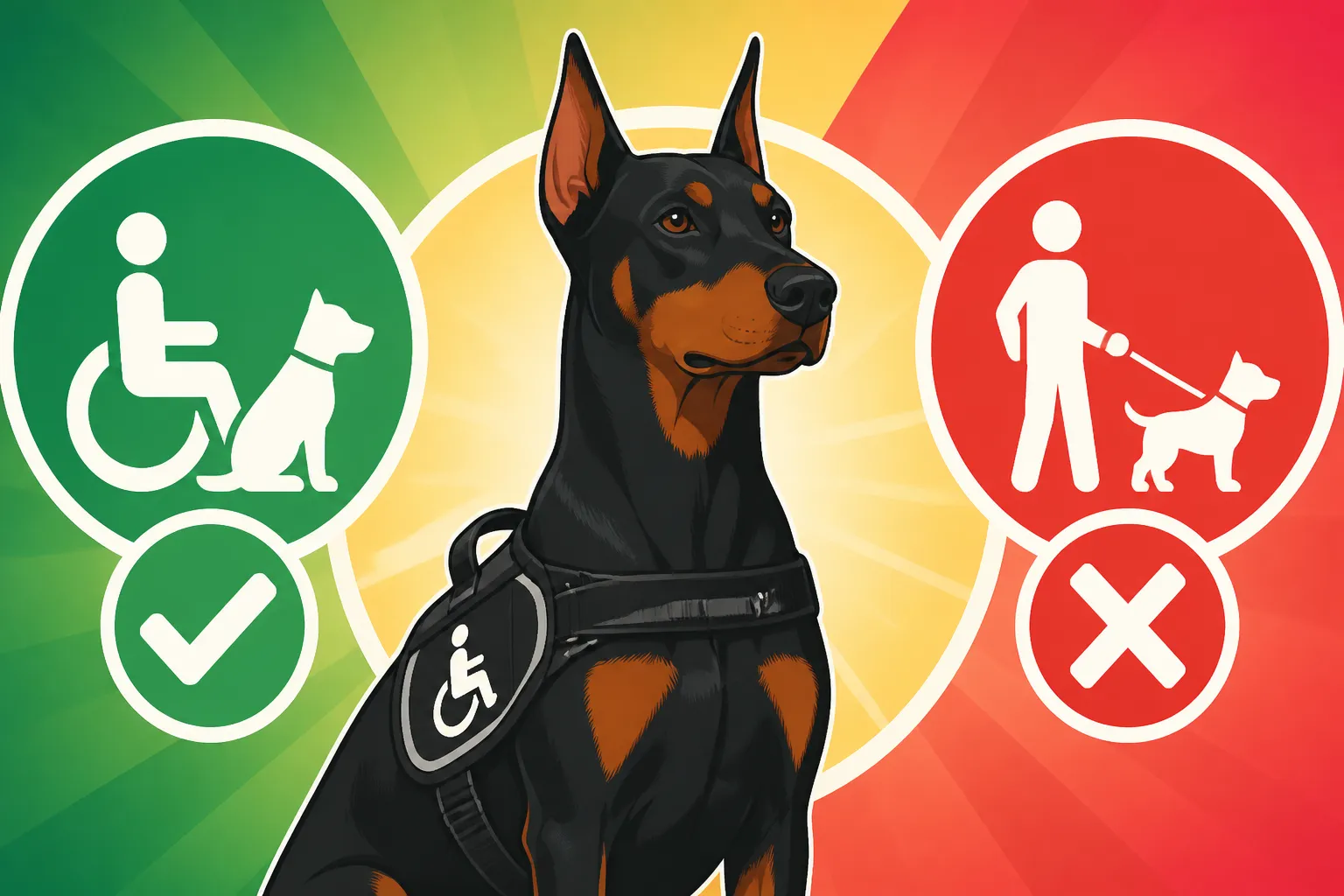
In the United States, the Americans with Disabilities Act (ADA) provides the legal backbone for service animals. What the ADA actually states is quite specific: a service animal is defined as a dog that is individually trained to do work or perform tasks for a person with a disability. This "work" or "tasks" must be directly related to the person's disability. It's not about how comforting a dog is, but about the specific, trained actions it performs. For instance, a Doberman might be trained to alert its handler to an impending seizure, retrieve medication, or guide someone with a visual impairment.
The ADA ensures that these service animals are allowed to accompany their handlers in all public places where the public is allowed to go, regardless of "no pets" policies. This includes restaurants, shops, hotels, hospitals, and transportation. This legal protection is paramount, but it hinges entirely on that core definition of task-trained work. Without it, your dog, no matter how beloved, doesn't meet the criteria for public access as a service animal. It's a tough pill to swallow for many, but understanding this distinction is the first step.
Breed Restrictions and Individual Suitability
One of the biggest anxieties Doberman owners face is the perception that their breed is automatically excluded. You see those "breed restriction" lists for apartments or insurance, and it feels like the world is stacked against your dog. Here’s the good news: under the ADA, breed restrictions do not apply to service dogs. A Doberman, a Pitbull, a Chihuahua – any breed can technically be a service dog, provided they meet the individual training requirements. The focus is always on the individual dog's temperament and training, not its breed.
However, while legal, practical challenges remain. Even though the law says a Doberman can be a service dog, the public's perception, often fueled by sensational media, can make life difficult. You might encounter pushback, questions, or even outright refusal of access from individuals who aren't familiar with ADA guidelines. This doesn't mean your Doberman can't be a service dog, but it does mean you, as their handler, need to be prepared to calmly educate and advocate, often under stress. It also means that a service Doberman needs to be impeccably behaved and rock-solid in its temperament to overcome preconceived notions.
Dobermans as Service Dog Candidates: Strengths and Challenges
When considering a Doberman for service work, it’s about looking beyond stereotypes and evaluating their inherent traits. These are dogs with incredible potential, but also specific needs that must be met for them to thrive in such a demanding role.
Inherent Traits That Lend Themselves to Service Work
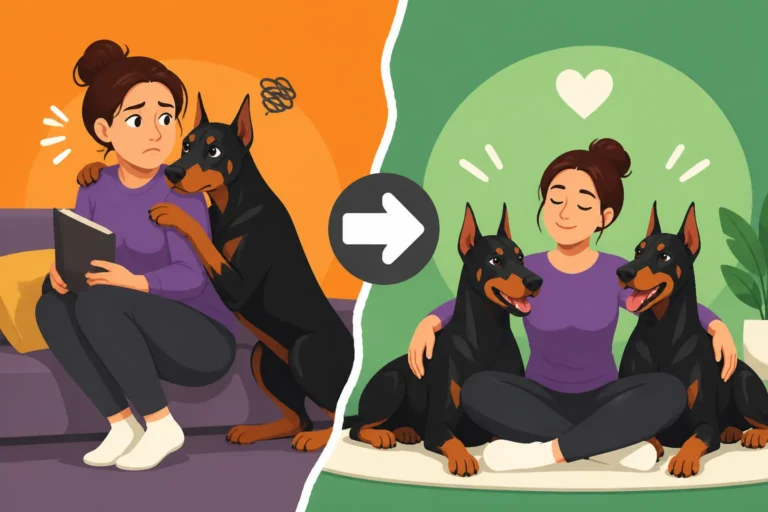
Dobermans are renowned for their intelligence. They are often ranked among the most intelligent dog breeds, capable of understanding and retaining complex commands quickly. This is a massive advantage in service dog training, which requires learning a wide array of specific tasks. Their eagerness to please and strong bond with their handler, often leading to the "Velcro Doberman" nickname, means they are incredibly attentive and focused on their person. This intense loyalty is a huge asset for a service dog, as they need to remain attuned to their handler's needs even in distracting environments. Living With a Doberman That Follows You Everywhere perfectly describes this intense bond.
Furthermore, Dobermans possess a natural alertness and keen senses. This can be invaluable for tasks like alerting to sounds for deaf handlers, sensing changes in a handler's medical state (like blood sugar drops or seizure onset), or providing a buffer in crowded spaces for those with anxiety or balance issues. Their athleticism and moderate size also make them capable of mobility assistance for some individuals, though their sleek build means they aren't typically suited for heavy bracing like some larger, more heavily boned breeds.
Temperamental Considerations and Training Needs
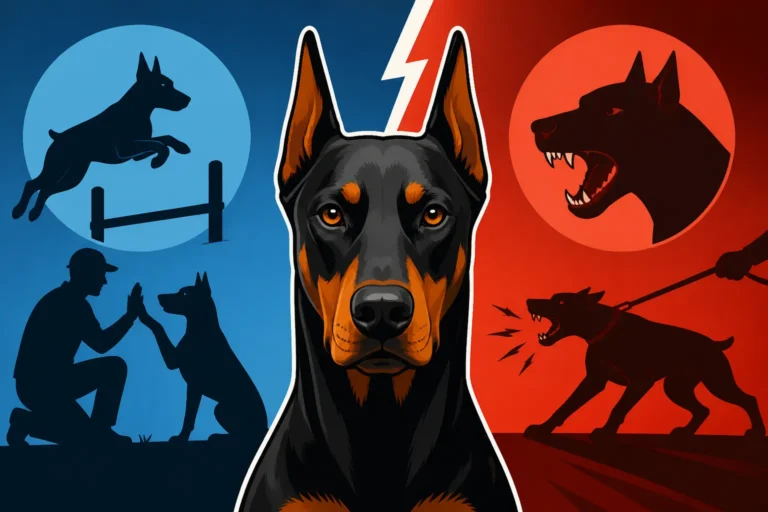
Despite their intelligence and loyalty, Dobermans are not for everyone, and not every Doberman is suited for service work. Their protective instincts, while manageable with proper socialization and training, can sometimes be a challenge. A service dog needs to be approachable and neutral in public, not exhibiting guarding behaviors toward strangers, even if well-intended. Doberman Guarding Instinct and Where It Tips Over is an excellent resource for understanding this nuanced trait.
Early and extensive socialization is absolutely critical for a Doberman destined for service work. They need to be exposed to every conceivable environment, sound, person, and situation from a young age to ensure they develop into a confident, unflappable adult. A shy or nervous Doberman will struggle immensely with the constant demands of public access. Puppy classes, positive reinforcement training, and gradual exposure to new experiences are non-negotiable. If you're looking for structured guidance, platforms like BAXTER & Bella offer comprehensive online training programs that can be a great starting point for building a solid foundation, especially if you're working on socialization from puppyhood.
Here’s a quick overview of Doberman traits relevant to service work:
| Trait | Benefit for Service Work | Potential Challenge for Service Work |
|---|---|---|
| Intelligence | Quick to learn complex tasks, problem-solving | Can become bored or mischievous if not mentally stimulated |
| Loyalty/Bond | Highly attentive to handler, strong desire to please | Can develop separation distress if not managed carefully |
| Alertness/Senses | Excellent for medical alerts, sound alerts | May be overly vigilant if not properly socialized |
| Athleticism | Capable of light mobility tasks, stamina for long days | Can be prone to certain health issues that impact longevity |
| Protective Instinct | Can provide a sense of security | Must be managed to prevent reactivity in public |
| Confidence | Resilient to distractions, stable demeanor | Requires extensive socialization to build and maintain |
It's also important to consider the breed's health. While Dobermans are generally robust, they are prone to certain health conditions, particularly Dilated Cardiomyopathy (DCM). The Heart Disease That Reaches Most Dobermans is a sobering read, and unfortunately, a dog developing a severe health condition can prematurely end its service career. Ethical breeders strive to minimize these risks through health testing, and regular veterinary check-ups are essential throughout a service Doberman's life.
The Path to Becoming a Service Dog: Training and Certification
Getting a Doberman to the point of being a fully functional service dog is a long, dedicated journey that requires significant investment of time, effort, and sometimes money. It's not a casual undertaking, and it certainly doesn't happen overnight.
Self-Training vs. Professional Programs
The good news is that under ADA regulations, there is no federal requirement for professional certification or specific training programs for service dogs. You absolutely can train your Doberman yourself. Many dedicated owners do, especially if they have prior dog training experience or are committed to learning. Resources from places like BAXTER & Bella can offer guidance through various training stages, from basic obedience to more advanced task training. However, self-training requires immense discipline, consistency, and a deep understanding of learning theory and canine behavior. It's not just about teaching "sit" and "stay"; it's about proofing those behaviors in every environment imaginable and teaching complex chains of tasks.
For those who prefer expert guidance, or whose disability makes self-training difficult, professional service dog organizations or private trainers specializing in service animals are available. These programs typically involve a significant financial investment, but they provide structured curricula, experienced trainers, and often match you with a dog that has already undergone foundational training. This can dramatically streamline the process and increase the likelihood of success. Whichever route you choose, the training must be thorough and rigorous, focusing on public manners, advanced obedience, and the specific tasks required to mitigate your disability. Training a Doberman That Is Smarter Than You Expect is a great resource to understand the intelligence you're working with.
Essential Skills and Public Access Manners
Beyond the specific tasks tailored to your disability, every service dog needs an impeccable foundation of obedience and public access manners. This is where a Doberman can truly shine, but only with consistent work. They must be able to:
- Walk politely on a leash: No pulling, no lunging, no sniffing everything. They need to be focused on their handler.
- Remain calm and quiet: No barking, whining, or disruptive behaviors in public settings, even when bored or waiting.
- Ignore distractions: Other dogs, people, food on the ground, loud noises – a service dog must be completely unfazed.
- Down/Stay for extended periods: Whether under a restaurant table or waiting at a doctor's office, they need to be able to settle for hours.
- Be unobtrusive: They shouldn't solicit attention, wander away, or interfere with others.
Achieving this level of reliability takes thousands of repetitions and countless hours of practice in diverse environments. Imagine trying to get your Doberman to ignore a dropped piece of chicken in a busy food court – that's the level of control we're talking about. Specialized vests and harnesses, often available on platforms like Amazon, are not just for aesthetics; they clearly identify your Doberman as a working animal, which can help manage public interactions, though they don't confer legal rights without the underlying training.
Navigating Public Access and Perceptions
Even with a perfectly trained Doberman service dog, the journey isn't always smooth sailing. Public perception and the need for constant advocacy can be incredibly draining, but it's part of the reality of having a working Doberman.
Handling Misconceptions and Discrimination
One of the most disheartening aspects is encountering individuals who misunderstand service dog laws or hold negative stereotypes about Dobermans. You might hear comments like, "That's a vicious breed, it can't be a service dog!" or "It's too big to be in here." While the ADA clearly states that service animals cannot be excluded based on breed, you'll still face these challenges. It's a frustrating reality, and it's essential to have a strategy for handling it.
Knowing your rights, being able to articulate them calmly, and carrying ADA information (like laminated cards or printed summaries of the law) can be helpful. Remember, staff in businesses are only legally allowed to ask two questions: 1) Is the dog a service animal required because of a disability? and 2) What work or task has the dog been trained to perform? They cannot ask about your disability, demand identification for your dog, or ask the dog to demonstrate its tasks. Training yourself to Handling a Doberman in Public Without Alarming People is just as important as training your dog.
The Importance of Impeccable Behavior
Because Dobermans already carry a certain stigma, your service Doberman's behavior needs to be absolutely flawless. Any misstep – a bark, a lunge, an inappropriate sniff – will be magnified and confirm people's preconceived notions, potentially making access harder for you and for other Doberman service dog teams. This isn't fair, but it's the reality.
Therefore, your Doberman must not only perform its tasks perfectly but also be an exemplary canine citizen. This means a lifelong commitment to training, reinforcement, and maintaining their public access skills. It's not a one-and-done process. Regular refreshers, exposure to new situations, and maintaining peak physical and mental health are all part of ensuring your Doberman remains a credit to its breed and a vital aid to you. For instance, knowing how to Correcting a Doberman Without Breaking It is crucial for maintaining trust and cooperation throughout its working life. Ultimately, with the right temperament, rigorous training, and a dedicated handler, a Doberman can indeed be a highly effective and accepted service dog, shattering myths one successful public outing at a time.
Disclaimer
This article is for general informational purposes only and does not constitute professional advice. Laws, prices and regulations vary by location and change over time. Consult a qualified professional for guidance on your specific situation.