Teaching a Doberman Puppy to Soften Its Mouth
It’s a tale as old as time for Doberman owners: you bring home that adorable, sleek little puppy, all eager enthusiasm and clumsy paws, only to find their primary mode of interaction quickly becomes mouthing. Those needle-sharp puppy teeth might be small, but they can pack a surprising punch, leaving your hands and ankles looking like you’ve tangled with a tiny, furry piranha. This guide is here to walk you through exactly how to teach your Doberman puppy to soften its mouth, turning those playful nips into gentle nudges.
Understanding Doberman Puppy Mouthing
Before we dive into the "how-to," it's really important to understand why your Doberman puppy is being so mouthy. It's not usually out of malice or aggression; it's a completely natural part of being a puppy, especially for a breed like the Doberman. They are, after all, bred to be working dogs, and using their mouths to interact with their world is deeply ingrained.
Why Dobermans Mouth and Chew
From the moment they're born, puppies use their mouths to explore everything. It's how they learn about textures, tastes, and their environment. With their littermates, they mouth and play-bite, learning the boundaries of bite pressure. A yelp from a sibling teaches them that a bite was too hard, fostering what we call "bite inhibition." Dobermans, being intelligent and physically capable, often use their mouths more actively in play than some other breeds. They love to grab, tug, and carry, and sometimes, our hands become the most convenient (and unfortunately, most interesting) object for this activity. Add to this the delightful agony of teething, and you have a recipe for a very mouthy, chew-happy pup. They need to relieve that discomfort, and anything within reach, including your fingers, might seem like a good idea. For a deeper dive into this stage, consider reading Doberman Puppy Biting and Adolescent Mouthing.
Distinguishing Mouthing from Aggression
It’s crucial to know the difference between normal puppy mouthing and actual aggressive biting. Most puppy mouthing is accompanied by loose body language: a wiggly tail, a soft gaze, play bows, and a general air of enthusiasm. The bites might be sharp, but they lack the stiffness, growling, and intent to harm that characterize aggression. An aggressive bite is typically harder, often accompanied by rigid body posture, a hard stare, growling, snarling, or a snapped head. If your puppy is showing signs of genuine aggression, such as guarding resources with stiff body language and snarls, or biting without releasing in fear or anger, that’s a different, more serious issue requiring immediate professional intervention from a certified behaviorist. But for the vast majority of Doberman puppies, the mouthing you're experiencing is simply part of their playful, exploratory nature.
The Critical Period for Bite Inhibition
There's a window of opportunity, often considered to be up to around 16 weeks of age, where puppies are most receptive to learning bite inhibition. During this time, their developing brains are wired to absorb social cues and consequences. This is when they learn from their littermates (if they stayed with them long enough) that biting too hard results in the game stopping. When you bring your Doberman puppy home, you become their new "littermate," and it's your job to continue this vital lesson. The earlier you start, the easier it will be, as this foundational learning sets the stage for how they’ll use their mouth throughout their adult life. Think of it like a language; it's much easier to learn the rules of communication when you're young. Ensuring your puppy gets broad, positive exposure during this time is so important, as discussed in The Sixteen Weeks That Set a Doberman Up.
The Core Principles of Teaching Bite Inhibition
Teaching your Doberman puppy to be gentle with their mouth is less about punishment and more about clear communication and redirection. We want to teach them that human skin is fragile and that a soft mouth keeps the fun going, while a hard mouth stops it immediately.
The "Yelp and Withdraw" Method
This classic technique mimics how a puppy's littermates or mother would react to an overly enthusiastic bite. When your Doberman puppy's teeth make contact with your skin, even if it's not terribly hard, let out a sharp, high-pitched "yelp" or "ouch!" Immediately withdraw your hand (or whatever body part was bitten) and cross your arms, turning your back to the puppy. The goal is to make a sudden, startling sound and instantly remove all attention and play.
Give it a few seconds – say, 5 to 10 seconds – for the puppy to process that their bite caused the fun to stop. Then, you can re-engage with a toy, but not your hands. If the mouthing starts again, repeat the sequence. The key here is consistency. Every family member needs to react the same way, every time. If one person allows hard bites and another yelps, the message becomes muddled, and your clever Doberman will quickly learn who allows what. It's not about hurting the puppy's feelings, but about teaching a universal language that "that hurt!"
| What Your Puppy Does | Your Immediate Response (Human) | Puppy's Learning Outcome |
|---|---|---|
| Play bites, too hard | Loud "Ouch!" or "Yelp!" | "My bite was too hard." |
| Bites again, still hard | Remove hands, turn away, ignore | "Play stops when I bite hard." |
| Licks or mouths gently | Praise, gentle petting, resume play with toy | "Gentle mouth keeps play going." |
| Nips, but not hard | "Easy," offer a toy | "This toy is for mouthing, not hands." |
Redirection and Appropriate Chews
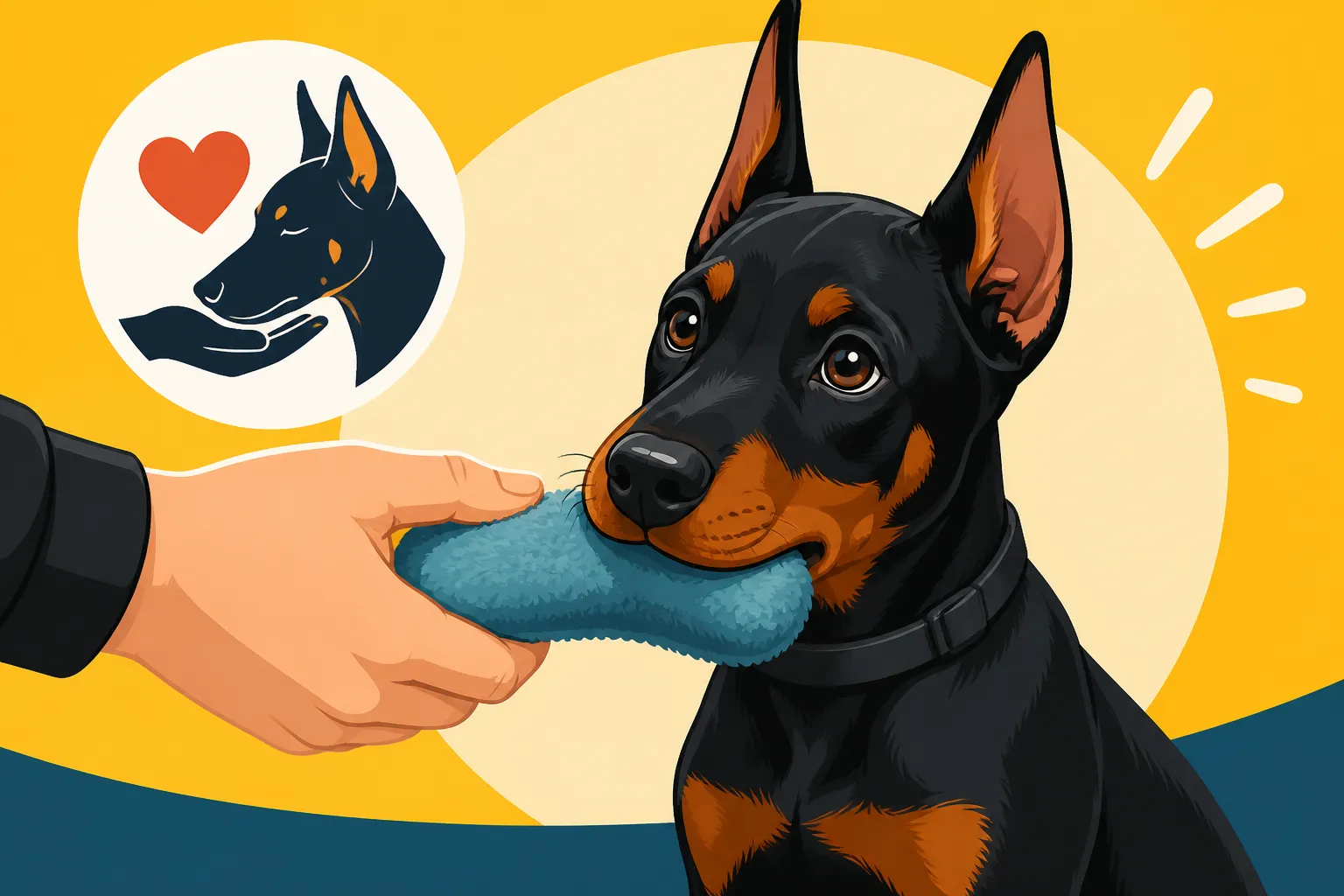
The moment your Doberman puppy attempts to mouth your hand, immediately redirect that energy to an appropriate chew toy. Keep a variety of enticing toys readily available in every room where you interact with your puppy. As soon as you feel those teeth, say "No bite!" (or a similar firm, clear phrase), and offer a toy. When they take the toy, praise them lavishly: "Good bite!" or "Good chew!" This teaches them what they should bite instead of what they shouldn't.
Look for toys that are durable and satisfying for a Doberman’s strong jaws. Think about rubber chew toys, rope toys for tug (but ensure you initiate and end tug, and they release on command), or puzzle toys filled with treats. Items like a Kong or other durable chew brands, readily available on platforms like Amazon, are fantastic because they keep your Doberman engaged and their jaws busy in a positive way. Offering a variety of textures can also help, as some puppies prefer softer chews while others crave something more robust to gnaw on. Providing good alternatives can also help manage the discomfort of teething, as covered in What a Teething Doberman Can Safely Chew.
Consistency is Key
I really can't stress this enough. Consistency is the foundation of all successful Doberman training. If you're strict about bite inhibition but your partner lets the puppy mouth their hands, or your kids accidentally encourage it, your Doberman will be confused. They won't understand why sometimes it's okay and sometimes it's not. All members of the household, from the youngest to the oldest, need to be on the same page and implement the "yelp and withdraw" and "redirection" methods consistently. It might feel like you're endlessly yelping and withdrawing, but trust me, the repetition is what solidifies the learning for your smart Doberman. If you find your Doberman isn't responding, sometimes revisiting your training methods as a family and ensuring everyone is doing the exact same thing is the first step.
Advanced Techniques and Troubleshooting for Persistent Mouthiness
Sometimes, despite our best efforts, a Doberman puppy can be particularly persistent with their mouthing. This isn't a sign of failure, but rather an indication that you might need to layer in some additional strategies.
Time-Outs for Over-Stimulation
If your Doberman puppy is getting overly excited or simply isn't responding to the "yelp and withdraw" method, it's time for a time-out. This isn't a punishment in the traditional sense, but rather a way to remove them from an overstimulating situation and give them a chance to calm down. When your puppy bites too hard, yelp, withdraw your attention, and if they persist, calmly lead or carry them to a designated "time-out" spot. This could be their crate, a laundry room, or a playpen – anywhere that is safe, boring, and separate from the action.
The time-out should be short, usually no more than a minute or two, or until the puppy calms down. The moment they are quiet, let them out. The idea is for them to associate the hard bite with the immediate, temporary removal of all fun and attention. It’s important not to make eye contact or talk to them during the time-out. Just a calm, swift removal. This teaches them that biting hard results in isolation from the "pack." For a Doberman, who often thrives on interaction and connection, this can be a powerful lesson.
Managing Play Biting with Other Dogs
Puppies learn a tremendous amount about bite inhibition from interacting with other well-socialized, appropriate adult dogs. These dogs will often correct a pushy puppy with a growl or a snap (without making contact) if the puppy bites too hard. This is natural and healthy communication. However, you need to supervise these interactions closely. If play becomes too rough, or if your Doberman puppy is constantly mugging and biting the other dog's ears or legs, it's time to intervene.
Separate the dogs for a short break. You can use a leash to calmly remove your Doberman, or simply call them away and offer an alternative activity. The goal is to teach your Doberman that play requires respect for the other dog's boundaries. If you notice your puppy is learning poor habits from another dog, or if the other dog isn't providing clear, appropriate feedback, you might need to limit those specific play sessions. It's about setting up your Doberman for success, not letting them learn bad habits.
Seeking Professional Help
While most Doberman puppies can learn bite inhibition with consistent home training, some might need a little extra guidance. If your puppy is past the critical learning period (say, over 5-6 months old) and is still mouthing excessively, or if their bites are escalating in pressure or intent, it might be time to consult a professional dog trainer or behaviorist. They can assess your specific situation, observe your puppy's body language, and provide tailored strategies.
A good trainer who has experience with Dobermans can be invaluable. They understand the breed's intelligence and specific needs. You might find resources like BAXTER & Bella, an online puppy school, helpful for structured guidance, or you could seek out local trainers. Remember, there's no shame in asking for help. A professional can often spot nuances you might miss and help you bridge any communication gaps with your Doberman. Finding the right professional is key, as discussed in Finding a Trainer Who Has Worked With Dobermans.
Preventing Future Mouthing Issues
Teaching bite inhibition isn't a "one and done" deal. It's an ongoing process that evolves as your Doberman puppy grows into a confident, well-mannered adult. Laying a strong foundation now will pay dividends for years to come.
Continued Socialization
A well-socialized Doberman is a confident Doberman. Exposing your puppy to a wide variety of sights, sounds, people, and appropriate experiences will build their confidence and reduce anxiety, which can sometimes manifest as excessive mouthing or nipping. Continue to introduce them to calm, respectful adults and children (under strict supervision, of course, and always advocating for your puppy's comfort). Enroll in puppy classes where they can interact with other puppies and learn to navigate social situations. The more positive experiences your Doberman has, the less likely they are to resort to their mouth when feeling unsure or over-stimulated.
Mental and Physical Exercise
A tired Doberman is a good Doberman – and often, a less mouthy Doberman! This breed is incredibly intelligent and energetic, and they need appropriate outlets for both their minds and bodies. Without enough mental and physical stimulation, they can become bored, destructive, and yes, very mouthy as they seek to entertain themselves.
- Physical Exercise: Daily walks, runs (once their joints are developed enough), and play sessions in a secure yard are essential. A brisk 30-minute walk twice a day might sound like a lot, but for a Doberman, it’s often just a warm-up!
- Mental Exercise: This is often overlooked but just as important. Engage your Doberman with puzzle toys, scent work, obedience training sessions, or trick training. Even five-minute training sessions several times a day can make a huge difference in tiring out their brain. You'd be surprised how much mental effort can wear them out, as explained in Keeping a Doberman Mentally Tired and Puzzle Work That Actually Tires a Doberman. Short, engaging sessions are often more effective than long, drawn-out ones, especially for a young pup; see Five-Minute Sessions With a Young Doberman.
Avoiding Encouraging Mouthing
Sometimes, without realizing it, we can accidentally reinforce the very behavior we're trying to stop. Be mindful of these common mistakes:
- Wrestling with your hands: While it might seem fun, wrestling or playing tug with your bare hands directly encourages your Doberman puppy to use their mouth on your skin. Always use a toy as a buffer.
- Yelling or pulling away dramatically: For some Dobermans, especially those who see interactions as a game, a loud yell or a frantic withdrawal of your hand can be perceived as an invitation to chase or play harder. This is why the calm, silent withdrawal is often more effective, combined with a sharp, startling sound. Loud verbal corrections, particularly yelling, can also be counterproductive and shut down a sensitive Doberman, as discussed in Why Yelling Shuts a Doberman Down.
- Using your feet or clothes as toys: Avoid wiggling your toes under a blanket or letting your puppy tug on your clothing. These actions teach them that these items (and body parts!) are fair game for their teeth.
By being mindful of how you interact with your Doberman puppy, you can ensure you're consistently reinforcing the right behaviors and discouraging the unwanted ones. It's a journey, but with patience and consistency, your Doberman will learn to interact with the world with a soft, gentle mouth.
Disclaimer
This article is for general informational purposes only and does not constitute professional advice. Laws, prices and regulations vary by location and change over time. Consult a qualified professional for guidance on your specific situation.