A Doberman Adolescent That Mouths Again
That intense period when your Doberman puppy was all teeth and needles, constantly nipping at your hands and clothes, often feels like a distant memory once they start to mature. So, it can be incredibly disheartening and frankly, quite painful, when your adolescent Doberman, who you thought had moved past that stage, suddenly starts mouthing again. You worked so hard on bite inhibition, and now it feels like you're back to square one. This comprehensive guide will explore the often-frustrating reality of why Doberman adolescents regress into mouthing behaviors, providing you with empathetic insights and actionable steps to help your smart, strong companion learn appropriate interactions once more.
The Rollercoaster of Doberman Adolescence and Why Mouthing Reappears
Adolescence in Dobermans, much like in humans, is a tumultuous time marked by significant physical and behavioral changes. Just when you think you've established a solid foundation of training, it can feel like your well-behaved puppy has transformed into a rebellious teenager, testing every boundary you've set. This period, often spanning from about six months to two years of age, is a critical phase where a Doberman's personality solidifies, but it's also ripe for what we often perceive as "regression."
Hormonal Shifts and Brain Development
One of the biggest culprits behind the re-emergence of mouthing is the surge of hormones flooding your Doberman's system. Think about human teenagers – mood swings, impulsivity, and a tendency to forget previously learned rules can be attributed to evolving brain chemistry. The same goes for your Doberman. Their brains are still developing, particularly the parts responsible for impulse control and decision-making. What was once a clear "no" during puppyhood might suddenly become a "maybe" in their adolescent mind, leading them to try behaviors they once abandoned. This isn't necessarily defiance, but rather a temporary glitch in their executive function as they navigate new internal landscapes. It's easy to feel frustrated when you see A Ten-Month Doberman That Forgets Its Training, but understanding the underlying physiological changes can help you approach it with more patience.
Testing Boundaries and Seeking Attention
Another reason mouthing resurfaces is boundary testing. Your Doberman is growing, gaining confidence, and frankly, discovering their own strength. What might have been a gentle mouth-nudge as a puppy can now feel like a much harder nip, even if the intention hasn't changed. They're trying to figure out where they stand in the household, and sometimes, any attention—even negative attention—is better than no attention at all. If mouthing got a reaction from you in the past, even if it was just a sharp "ouch" or pulling your hand away, they might try it again to see if it still works. This is particularly true if they're feeling a bit ignored or under-stimulated. They're clever, these Dobermans, and they learn quickly what gets a response. If you've been consistent about Teaching a Doberman Puppy to Soften Its Mouth, it's vital to revisit those lessons with renewed vigor.
Increased Energy and Lower Frustration Tolerance
Adolescent Dobermans are bundles of energy. They need significant physical exercise and mental stimulation to keep them happy and prevent them from inventing their own, often undesirable, forms of entertainment. If their energy isn't being channeled productively, that pent-up drive can manifest as increased mouthing. Furthermore, their frustration tolerance can be surprisingly low during this period. A slight change in routine, a delayed meal, or even just not getting their way immediately can lead to an outburst of nipping or mouthiness. This isn't malicious; it's often a sign that they're overwhelmed or haven't learned more appropriate ways to cope with their emotions. Providing ample Puzzle Work That Actually Tires a Doberman can be incredibly beneficial here.
Decoding Your Doberman's Adolescent Mouthing: Is It Play or Something More?
It’s crucial to understand the why behind your Doberman's renewed mouthing. Is it just an over-excited play behavior, or is there a deeper underlying cause? Distinguishing between different types of mouthing will guide your response and ensure you address the root issue.
Play Biting Versus Nipping Due to Over-Stimulation
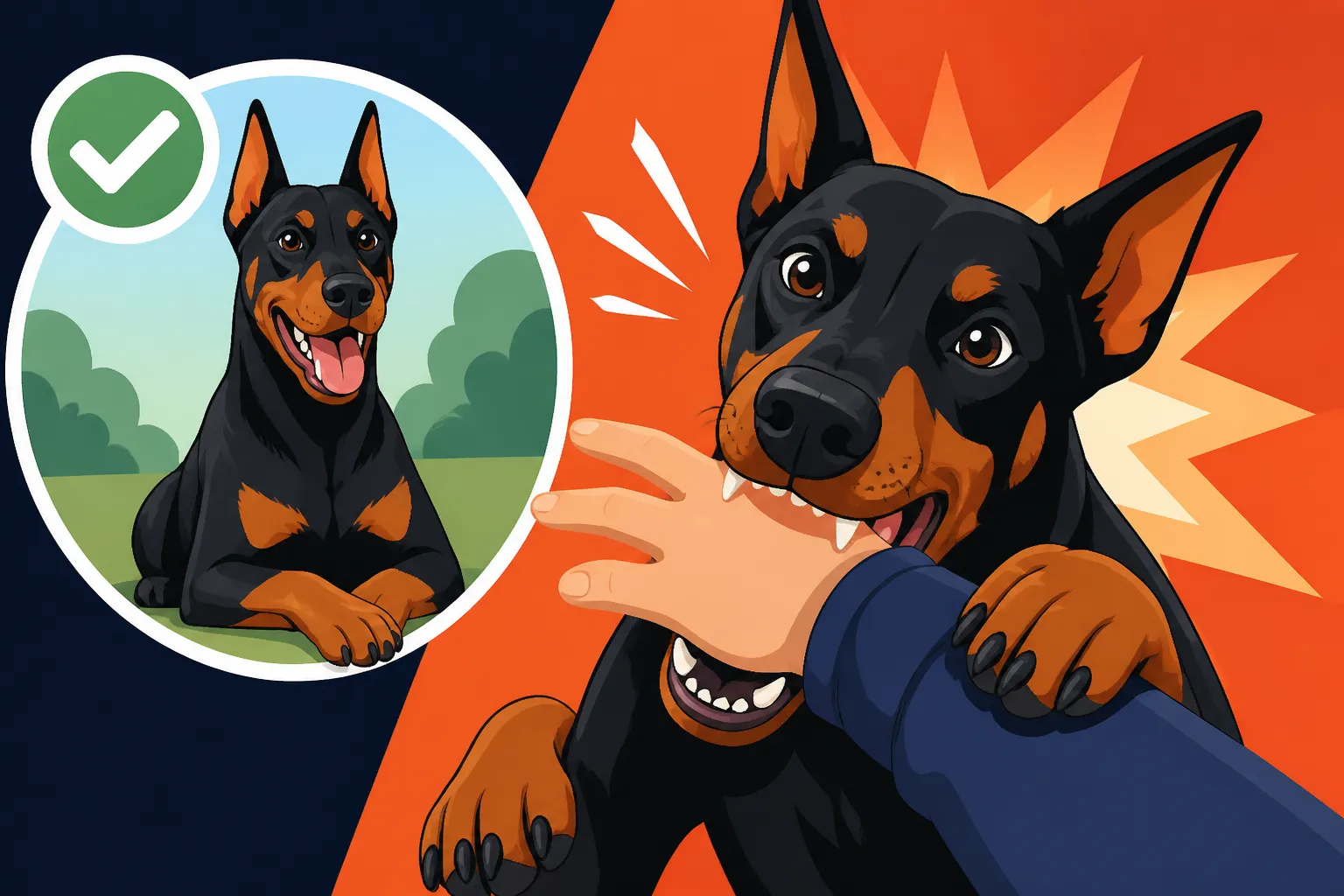
Play biting, even from an adolescent Doberman, usually has a softer, inhibited quality. It might involve gentle grabs at clothing or hands, often accompanied by playful body language like a wagging tail, play bows, or a relaxed, open mouth. They’re inviting interaction, mimicking the rough-and-tumble play they would have with littermates. This is a natural behavior, but it still needs to be managed to ensure they understand human skin is off-limits for even soft mouthing.
On the other hand, mouthing that stems from over-stimulation or over-arousal can feel much harder and more frantic. Imagine your Doberman at the end of a long, exciting walk, or when a new visitor arrives. Their excitement levels spike, and their ability to self-regulate drops. The mouthing here isn't necessarily aggressive, but it's less controlled, often accompanied by frantic jumps, vocalizations, and difficulty responding to cues. This is where you might feel the sharpest nips because they simply can't calm themselves down. They're not trying to hurt you, but they've lost their filters.
Attention-Seeking and Frustration Mouthing
Dobermans are "Velcro dogs" by nature; they thrive on interaction and attention. If they learn that mouthing, even negatively, gets your eyes on them or your hands moving (to push them away, for instance), they will repeat it. This attention-seeking mouthing often happens when you're busy with something else—on the phone, cooking dinner, or talking to someone. A nudge with their nose might escalate to a mouth on your arm if the nudge doesn't work. The goal is simply to redirect your focus back to them.
Frustration mouthing, as mentioned earlier, can occur when your Doberman is feeling thwarted or unable to get what they want. This might be when you're preparing their food, but they have to wait, or if a training session isn't going well and they're becoming agitated. This type of mouthing can be a sign of emotional overwhelm. Recognizing these triggers is key to addressing them. Is your Doberman mouthing because they're impatient, or because they're genuinely stressed? Their body language beyond just the mouth will tell you a lot – are they stiff, vocalizing, or avoiding eye contact?
Recognizing Genuine Discomfort or Fear
While less common, it's also important to consider if the mouthing stems from discomfort or fear. If the mouthing is accompanied by stiff body language, a low growl, lip curling, or a tucked tail, it could indicate that your Doberman is feeling threatened or in pain. Perhaps you've accidentally touched a sensitive area, or they're reacting to an unexpected approach. In such cases, the mouthing is a warning sign. Any sudden change in behavior, especially an increase in hard biting or snapping, warrants a vet check to rule out underlying pain or medical issues. Whether Pain Explains a Doberman's Behavior Change is always a critical question to ask.
Here's a quick reference for common mouthing types and their potential triggers:
| Mouthing Type | Common Triggers | Body Language Cues | Suggested Initial Response |
|---|---|---|---|
| Play Biting | Invitations to play, excitement, rough-housing | Relaxed, loose body, wagging tail, play bows | Redirect to appropriate toy, disengage if too hard |
| Over-Stimulation | High excitement (visitors, walks), overtired | Frantic, jumpy, high energy, vocal, less control | Calm environment, engage in a low-arousal activity, redirect |
| Attention-Seeking | Owner busy, feeling ignored, wanting interaction | Nudges, pawing, persistent, escalating intensity | Ignore unwanted behavior, reward calm alternative |
| Frustration | Delayed gratification, unmet needs, confusion | Stiffening, vocalizing, avoidance, repeated attempts | Identify & resolve frustration, redirect, reward calm waiting |
| Discomfort/Fear | Sudden touch, pain, startling, perceived threat | Stiff, low growl, lip curl, tucked tail, darting eyes | Cease interaction, assess environment, consult vet/trainer |
Practical Strategies for Managing Adolescent Mouthing
Managing adolescent mouthing requires consistency, patience, and a multi-faceted approach. You'll need to re-establish boundaries, teach alternative behaviors, and ensure your Doberman's needs are being met.
Redirection and Substitution: The Cornerstones of Training
The golden rule of dealing with mouthing is to redirect the behavior to an appropriate outlet. Whenever your Doberman puts their mouth on you, immediately offer them a suitable chew toy, a bully stick, or a firm rubber toy like a Kong. The trick is to be quicker than they are. As soon as you feel teeth, gently remove your hand and present the toy. When they take the toy, praise them calmly and enthusiastically. The goal is to teach them: "Hands are not for chewing; this toy is." Look for durable chew toys on Amazon that can stand up to a Doberman's strong jaws.
Enforcing a "No Bite" Rule with Disengagement
Sometimes, redirection isn't enough, especially if the mouthing is particularly persistent or hard. In these instances, the most effective tool you have is to remove your attention entirely. If your Doberman mouths you, make a sharp, loud "ouch!" sound (not angry, just startled) and immediately withdraw. This might mean standing up and turning your back, or even calmly leaving the room for a few seconds. The moment your Doberman calms down, re-enter and resume interaction. This technique, often called "reverse time-out," teaches them that mouthing ends all fun. Consistency is absolutely key here. Every single time, the interaction stops. This reinforces what you taught them when they were a puppy with Doberman Puppy Biting and Adolescent Mouthing.
Reinforcing Calm Behavior and Bite Inhibition
It's not just about stopping the unwanted behavior; it's equally about rewarding the right behavior. Actively seek out moments when your Doberman is calm and not mouthing, and reward them with praise, a gentle scratch, or a high-value treat. If they approach you calmly without mouthing, acknowledge it. This positive reinforcement strengthens the desired behavior. Continue practicing bite inhibition exercises you might have done in puppyhood. If they mouth too hard during play, let out a yelp and disengage. Gradually, you can reduce the intensity of the "yelp" as their inhibition improves, just to remind them of the boundary. Remember, Why a Doberman Learns a Cue in Three Repetitions means they're quick learners, but consistency is still vital.
Structured Training and Mental Stimulation
An undersocialized or under-stimulated Doberman is more likely to engage in unwanted behaviors like excessive mouthing. Continue with obedience training, teaching new tricks, or even exploring dog sports. Dobermans thrive on having a job to do. Mental exercise can be just as tiring as physical exercise, and a mentally satisfied Doberman is less likely to resort to mouthing out of boredom or frustration. Consider online training programs like those offered by BAXTER & Bella which provide structured lessons that can help you and your Doberman work through adolescent challenges. These programs often emphasize positive reinforcement and build strong communication. Marker Training a Doberman From Scratch is an excellent technique to explore for precise communication and rewarding calm behavior.
When to Seek Professional Help and What to Look For
While adolescent mouthing is a common phase, there are times when it escalates beyond what you can comfortably manage on your own. Knowing when to call in a professional can make all the difference for your Doberman and your peace of mind.
Signs That Professional Intervention Is Needed
It's time to seek professional help if:
- The mouthing is consistently hard or drawing blood. This indicates a severe lack of bite inhibition that could pose a safety risk.
- The mouthing is accompanied by aggressive behaviors. Growling, snapping, or true attempts to bite (not just mouth) are red flags.
- The behavior is escalating in frequency or intensity. If your strategies aren't working, or the mouthing is getting worse, a professional can offer new perspectives.
- You feel fearful or unsafe around your Doberman. Your safety and comfort are paramount.
- The mouthing is causing significant stress or damage. If it's destroying clothes, furniture, or making interaction unpleasant, it's time for help.
- The mouthing seems linked to fear or anxiety. If your Doberman is fearful of specific situations or people and responds with mouthing, a behavioral specialist is crucial.
Types of Professionals and What They Offer
When looking for professional help, it’s important to choose the right kind of expert.
- Certified Professional Dog Trainer (CPDT-KA or KPA CTP): These trainers focus on positive reinforcement and force-free methods. They can help you implement effective training plans, improve communication with your Doberman, and teach alternative behaviors. Many trainers can assist with specific issues like mouthing during private sessions or group classes. It's vital to Finding a Trainer Who Has Worked With Dobermans specifically, as their unique temperament benefits from experienced handling.
- Certified Dog Behavior Consultant (CDBC): For more complex behavioral issues, especially if fear, anxiety, or aggression are involved, a behavior consultant is ideal. They have a deeper understanding of animal behavior and can help diagnose underlying issues and create comprehensive modification plans.
- Veterinary Behaviorist (Dip ACVB): This is a veterinarian with specialized training in animal behavior. They are qualified to diagnose and treat behavioral disorders, including prescribing medication if necessary, especially if there's a medical component to the behavior or severe anxiety.
Don't hesitate to reach out for help. A good professional will not judge you or your Doberman but will provide practical, empathetic support to get you both back on track. They can observe your Doberman's behavior in context and identify subtle triggers you might be missing, helping you understand how to best Correcting a Doberman Without Breaking It. Remember, your Doberman is trying to communicate something through their behavior, and sometimes, an expert eye is needed to translate.
Disclaimer
This article is for general informational purposes only and does not constitute professional advice. Laws, prices and regulations vary by location and change over time. Consult a qualified professional for guidance on your specific situation.