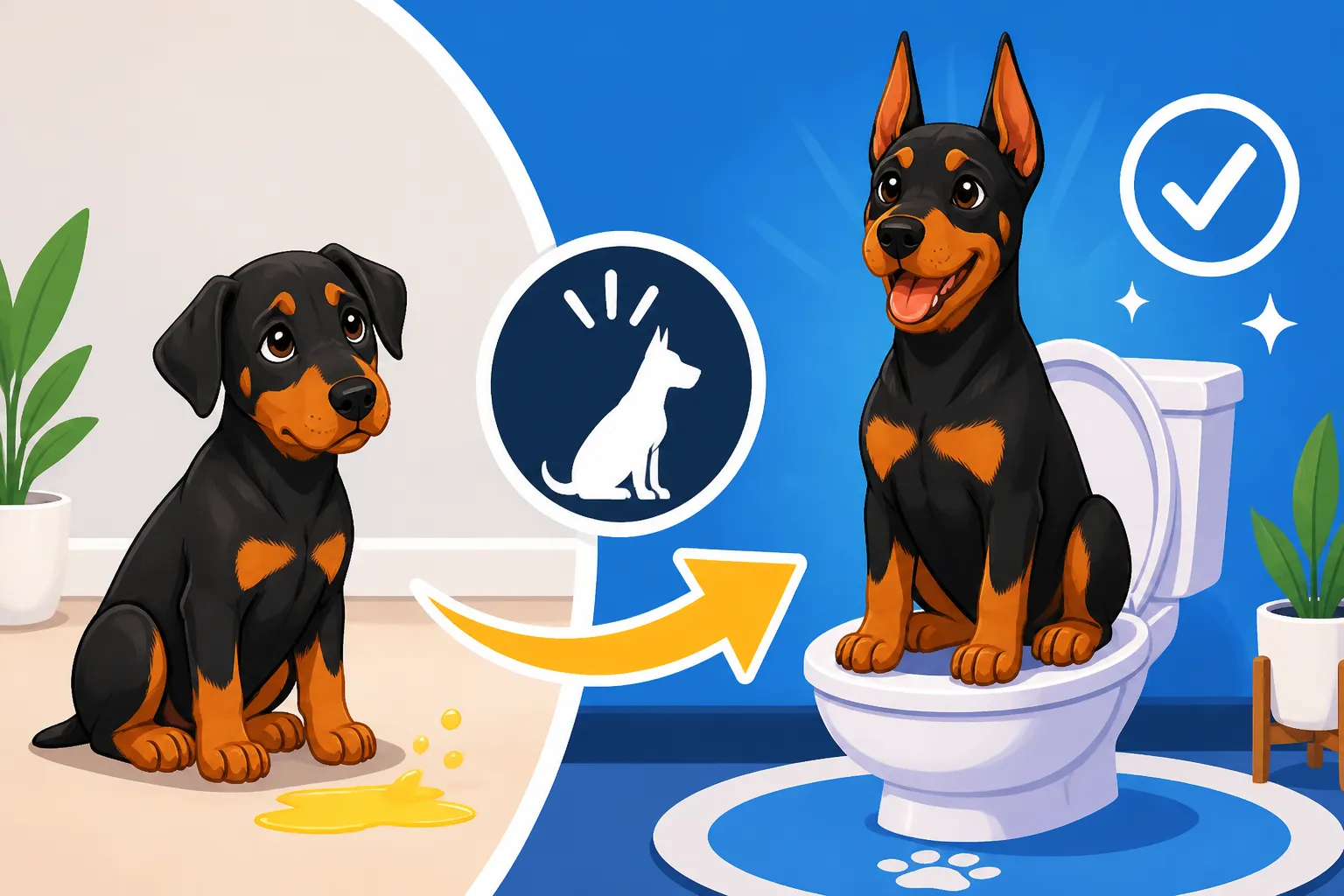
Toilet Training a Doberman Puppy in Two Weeks
Many Doberman puppy owners find themselves on a whirlwind journey of excitement and, let's be honest, a little bit of anxiety, especially when it comes to house training. You're eager for your smart, energetic pup to understand the rules of the house, but the thought of constant accidents can feel overwhelming and messy. This comprehensive guide is here to walk you through a realistic, empathetic approach to toilet training your Doberman puppy, with the aim of achieving solid progress within just two weeks.
Setting the Stage: Understanding Doberman Puppies and Potty Training
Before we dive into the nitty-gritty of schedules and techniques, it's really helpful to understand the unique qualities of Doberman puppies when it comes to potty training. Knowing their natural inclinations and potential challenges can make the process much smoother and less frustrating for everyone involved.
Why Dobermans Excel and Sometimes Challenge Potty Training
Dobermans are truly remarkable dogs, known for their incredible intelligence and eager-to-please nature. These traits are massive advantages when it comes to house training. Your Doberman puppy will likely pick up on routines and cues remarkably quickly, often surprising you with how fast they connect the dots between going outside and your happy praise. They thrive on consistency and clear expectations, which means if you're dedicated to a structured approach, your Doberman will likely grasp what you want much faster than some other breeds might. Plus, Dobermans generally have a natural inclination towards cleanliness, often preferring not to soil their immediate sleeping area, a trait we'll lean heavily on with crate training.
However, their intelligence can sometimes be a double-edged sword. A Doberman puppy that isn't given clear, consistent guidance or has too much freedom too soon might cleverly decide that their chosen potty spot indoors – perhaps a less-used corner or a spare room – is perfectly acceptable. Once a "wrong" habit forms, these intelligent dogs can be quite persistent in sticking to it, making it harder to correct. Their high energy levels also mean they need a lot of physical activity, and sometimes a quick dash outside isn't quite enough to ensure they've fully relieved themselves. You might bring them back in too soon, thinking they're done, only to find an accident moments later.
Another common scenario involves their strong curiosity and prey drive. When you take your Doberman puppy outside, they might be far more interested in sniffing every intriguing leaf, chasing a floating dandelion seed, or intently observing a distant bird than focusing on the task at hand. You could spend ten minutes patiently waiting, bring them back inside, and boom – a puddle on your favorite rug because they were too distracted earlier to truly finish their business. This is where your patience and unwavering observation skills truly come into play. You need to be more engaging than the distractions, or at least be prepared to wait out their exploration phase before they settle down to do what they went out for.
Essential Supplies You'll Need
Having all the right tools ready before your Doberman puppy even steps paw through your door can genuinely make all the difference in a smooth, efficient potty training journey. A good quality crate is not just recommended, it's absolutely non-negotiable for successful house training. It needs to be appropriately sized, meaning large enough for your puppy to comfortably stand up, turn around, and lie down, but crucially, not so large that they can carve out a separate "bathroom corner" inside. Many crates, readily available on platforms like Amazon, come with adjustable dividers, which are fantastic because they allow you to perfectly size the crate as your Doberman grows from a tiny pup to a lanky adolescent.
Beyond the crate itself, you'll want to ensure a comfortable environment within it. A soft, washable bed or blanket is ideal for inside the crate. Remember, Dobermans have a very short, single coat and no dense undercoat, so they tend to feel the cold more keenly and appreciate warmth and softness. High-value training treats are also absolutely crucial for positive reinforcement. These aren't just any old kibble pieces; think small, soft, super-tasty treats that your puppy goes absolutely wild for – something truly special they only receive for successful potty trips outside. A sturdy leash and a comfortable collar or harness are also essential, as you'll be guiding them to their designated potty area every single time they go out.
And please, do not underestimate the power of a proper enzyme cleaner! Accidents are a part of puppyhood, and using a specialized enzyme cleaner (not just your regular household spray) is vital to completely eliminate the odors that might entice your puppy to repeatedly relieve themselves in the same spot again. While these odors are imperceptible to our human noses, they are like giant, flashing neon signs for a dog. Having plenty of paper towels and cleaning cloths on hand is also a given. Some owners might consider puppy pads for designated indoor potty zones during the very early days, especially if they live in an apartment or during inclement weather, but for swift and clear outdoor training, using them sparingly or avoiding them altogether can prevent confusion about where it's truly acceptable to go.
The Two-Week Toilet Training Blueprint: A Step-by-Step Guide
This is where the rubber meets the road! The success of toilet training your Doberman puppy within two weeks hinges entirely on your commitment to a consistent, proactive, and positive blueprint. It requires dedication, but the results are incredibly rewarding.
Crate Training: Your Best Friend for Potty Success
Crate training is, without a doubt, your absolute best friend when it comes to Toilet Training a Doberman Puppy in Two Weeks. As we discussed, Dobermans are generally very clean animals who instinctually try to avoid soiling their sleeping space. This powerful natural instinct is precisely what we harness when we use a crate. When your puppy is comfortably settled in their crate, they are far more likely to hold their bladder and bowels, giving you the control over when and where they have the opportunity to relieve themselves. Think of the crate not as a punishment cell, but rather as your Doberman's personal, safe, and secure den – a place where they can relax, feel protected, and chill out without supervision.
The key to successful crate training for potty purposes is selecting the correct size. If the crate is too large, your clever Doberman puppy might very well decide that one end is for sleeping and the other end is an acceptable, out-of-the-way bathroom corner, effectively defeating the entire purpose of using the crate to encourage holding it. If necessary, use an adjustable divider to ensure the space is just large enough for them to stand up, turn around, and lie down comfortably. It's vital to introduce the crate to your puppy in a positive manner: toss in treats, special toys, and praise them whenever they enter. Feed their meals inside the crate, give them a specially stuffed Kong or a favorite chew toy only when they go in, and consistently make it an inviting, comfortable space. Never, ever use the crate as a place for punishment, as this will quickly create negative associations. Gradually increase the amount of time they spend in it, ensuring each experience is positive.
A good rule of thumb for how long a puppy can typically hold their bladder is roughly their age in months plus one hour, up to about 8-10 hours overnight for an older, more developed puppy. So, a 3-month-old Doberman puppy can generally hold it for about 3-4 hours during the day. This simple calculation should dictate your strict potty schedule. The absolute, non-negotiable rule is this: the very first thing your puppy does upon exiting their crate, whether it's after a short nap or a long night, is go outside. No play, no excited greetings, no food – straight to the designated potty spot. This immediate action creates a powerful and clear association in their mind: leaving the crate always means potty time. For more in-depth guidance on choosing the right enclosure, you can refer to Choosing a Crate for a Doberman.
Scheduled Potty Breaks: Consistency is Key
This is the absolute core of achieving those impressive "two-week" results. A strict, predictable, and incredibly consistent schedule for potty breaks is the unwavering cornerstone of rapid and effective house training. Your Doberman puppy needs to go outside frequently – think every 1-2 hours during the day, every single time they wake up from a nap, immediately after any period of play, within 15-20 minutes after eating or drinking, and certainly before going into their crate for any extended period (whether it's overnight or when you need to leave the house). The crucial point here is: don't wait for your puppy to ask to go out; you are dictating the schedule and providing ample opportunities for success.
It's also essential to establish a very specific, designated potty spot in your yard. Take your puppy to this exact spot every single time they go out for a bathroom break. As they begin to relieve themselves, use a consistent, clear cue word like "potty" or "go pee." This verbal association helps them understand precisely what the purpose of being in that spot is. Always stay out there with them, keeping them on a leash, to minimize distractions and prevent them from wandering off to explore before they've completed their business. Resist the urge to engage in play until after they have fully emptied their bladder and bowels. Once they've finished, praise them enthusiastically with phrases like "Good potty!" and immediately offer that special, high-value treat. Then, and only then, can you offer a few minutes of supervised playtime in the yard before heading back inside.
Here’s a sample schedule you can adapt for a young Doberman puppy, keeping in mind that you'll need to tailor it to your individual pup's needs and your daily routine:
| Time | Activity |
|---|---|
| 6:00 AM | Wake up, immediately outside to potty. |
| 6:15 AM | Breakfast, then 15-20 minutes later, immediately outside to potty. |
| 6:30 – 8:00 AM | Supervised play/training (like Five-Minute Sessions With a Young Doberman), water available. |
| 8:00 AM | Outside to potty, then crate time (for a couple of hours). |
| 10:00 AM | Outside to potty, supervised play or quiet time. |
| 12:00 PM | Lunch, then 15-20 minutes later, immediately outside to potty. |
| 12:30 – 2:00 PM | Supervised play/training, water available. |
| 2:00 PM | Outside to potty, then crate time. |
| 4:00 PM | Outside to potty, supervised play. |
| 6:00 PM | Dinner, then 15-20 minutes later, immediately outside to potty. |
| 6:30 – 8:00 PM | Supervised play/training, last water intake for the evening. |
| 8:00 PM | Outside to potty, quiet time in the house. |
| 10:00 PM | Final potty break before bed. |
Remember, Dobermans are deeply intelligent creatures of habit, and adhering to this rigorous, predictable routine will quickly help them internalize those desired bathroom habits.
Rewarding Success: Making It a Positive Experience
Positive reinforcement is not just a good idea; it's absolutely paramount for a Doberman puppy. They respond beautifully and enthusiastically to praise and rewards, and making potty time a highly positive, almost celebratory, experience will embed the desired behavior much faster and more reliably than any form of punishment for accidents ever could. When your Doberman puppy successfully eliminates outside in their designated spot, make a really big deal out of it! Use a happy, excited, and high-pitched tone of voice, offer lavish verbal praise, and immediately follow up with that special, incredibly high-value treat you've reserved just for this purpose.
The timing of this reward is critically important. It needs to happen within mere seconds of them finishing their business, ideally while they are still in the squatting position or just standing up from it. If you delay the treat until you're back inside the house, or even a minute later, your smart Doberman puppy won't be able to connect the tasty reward with the specific act of going potty outside. This instant gratification tells their intelligent Doberman brain, loud and clear, "Ah, this exact action of peeing or pooping outside is what gets me that super yummy thing and generates all those wonderful, happy human sounds!"
Consider keeping a small pouch of these special treats clipped to your belt or pocket so they are always immediately accessible when you take your puppy out. Many excellent quality training treats can be found on Amazon that are perfectly sized for quick rewards. Some Doberman owners even reserve a favorite squeaky toy for immediate post-potty play if their particular Doberman is more toy-motivated than food-motivated. The overarching goal is to make going potty outside the single most rewarding and celebrated event in their young puppy life. This strong, positive association ensures they will actively want to go outside to do their business, not merely do it to avoid your potential displeasure or reprimand, fostering a much healthier and more trusting relationship between you and your growing Doberman.
Troubleshooting Common Potty Training Hurdles
Even with the most meticulous planning, toilet training a Doberman puppy isn't always a straight line to success. There will almost certainly be bumps in the road – accidents, regressions, and moments of sheer frustration. Understanding these common hurdles and knowing how to navigate them gracefully is just as important as setting up your initial routine.
When Accidents Happen: Handling Setbacks Gracefully
Let's get real for a moment: accidents will happen. Especially within the initial two-week intensive training period, discovering a puddle or a pile indoors is almost guaranteed. The single most important thing here is how you, the owner, react to these inevitable setbacks. If you happen to catch your Doberman puppy in the very act of having an accident indoors, interrupt them immediately with a sharp, but not frightening or angry, verbal cue like a clap or a firm "No!" Then, without delay, scoop them up (if they're small enough) or quickly and calmly lead them directly outside to their designated potty spot to encourage them to finish their business there. If they successfully finish outside, praise and reward them lavishly as described earlier. This teaches them, in the moment, that inside is absolutely not the place, but outside definitely is.
Crucially, if you discover an accident after the fact – perhaps you walk into the kitchen an hour later and find a wet spot on the tile – do not under any circumstances punish your puppy. They genuinely cannot connect your anger, scolding, or correction to something they did minutes or even hours ago. All they will learn from this type of delayed punishment is that you are sometimes unpredictable and scary when there's a mess on the floor, which can tragically lead to them actively hiding accidents from you in the future, making the entire training process much, much harder. Simply clean it up thoroughly, making sure to use a proper enzyme cleaner to completely neutralize the odor, and mentally make a note about what might have gone wrong in your schedule or supervision. Did you wait too long for a potty break? Was your supervision too lax during that period?
Every single accident, no matter how frustrating, should be viewed as a valuable learning opportunity for you, the owner, to adjust and fine-tune your management strategy and schedule. It almost always indicates that you either gave your Doberman puppy too much unsupervised freedom, waited too long between scheduled breaks, or weren't supervising them closely enough during their free time. Remember, a Doberman puppy's bladder control is still very much developing, and they are essentially like human toddlers – they need constant guidance, frequent reminders, and consistent opportunities to go in the correct place. Don't allow yourself to get discouraged by these temporary setbacks; stay consistent, remain patient, and maintain a positive attitude. Sometimes the issue isn't even about their understanding, but rather a slight lapse in the structured routine we're providing. Programs like BAXTER & Bella can offer structured approaches that help owners establish clear communication and routines from day one.
Understanding "False Clears" and Regression
One particularly frustrating scenario that often trips up new Doberman owners is what I affectionately call a "false clear." This is that moment when your Doberman puppy goes outside, sniffs around a bit, perhaps pees a tiny dribble or even just pretends to go, and then you bring them back in, thinking they're empty, only for them to have a full-blown accident on your living room carpet just minutes later. This commonly happens because they were simply too distracted by the myriad of exciting outdoor stimuli – smells, sounds, movement – to truly focus on emptying their bladder and bowels. It's a prime reason why owners sometimes feel like they're making no real progress.
To effectively combat these frustrating false clears, you need to cultivate an even greater degree of patience and unwavering vigilance during your dedicated potty breaks. Make a conscious effort to stay outside with them longer than you initially think is necessary, perhaps 5-10 minutes if they don't immediately do their business. Gently encourage them with your consistent cue word ("potty, potty"), walk a small, stimulating circle to encourage movement, and most importantly, strictly avoid engaging in any play until after they have fully and completely eliminated. If they do a small pee, wait a couple more minutes, quietly encouraging them, to see if there's a "number two" or more urine coming. Only bring them back inside when you are absolutely confident that they are truly empty.
Regression can also occur, even after a period of seemingly perfect house training. This might be triggered by a sudden change in routine, an increase in stress levels (perhaps a new pet, a move, or a loud party), an unfamiliar environment, or simply by them hitting an adolescent phase where they naturally start testing boundaries and seeing what they can get away with. If your Doberman puppy or young adult Doberman suddenly starts having accidents again after a period of reliability, the most important thing is not to panic. Simply revert back to your strict, intensive puppy schedule: dramatically increased frequency of potty breaks, more judicious use of crate time, and much tighter, more active supervision, just like you did during those initial two weeks. Often, a quick but thorough refresher course is all they need to get back on track and remember the rules. Additionally, ensure they are not going for too long between opportunities to relieve themselves, especially if you're trying to figure out How Long a Doberman Copes Alone.
Making It Stick: Beyond the Initial Two Weeks
Congratulations! After two weeks of diligent effort, your Doberman puppy should be showing fantastic progress in their toilet training. While the most intensive phase might be over, house training is truly a journey, not a destination. It’s about building and maintaining good habits for their entire life.
Transitioning to Less Frequent Breaks
Once your intensive two-week training period has yielded significant improvement, and your Doberman puppy is consistently going outside with minimal to no accidents, you can begin the gradual process of extending the time between potty breaks. This doesn't mean abandoning the schedule entirely, but rather slowly stretching it. For example, if you were diligently taking them out every two hours, you might cautiously try extending it to 2.5 or even 3 hours, all while maintaining extremely close supervision indoors. Every Doberman is different, so this transition needs to be individual and carefully observed.
During this phase, it becomes increasingly important to pay close attention to your Doberman's subtle cues. A puppy needing to go out might start pacing restlessly, sniffing the floor more intently than usual, whining softly, or perhaps standing expectantly by the door. These are their developing ways of telling you they need to relieve themselves. As they mature and gain better bladder and bowel control, you can start to rely more heavily on these signals. However, always err on the side of caution. It's always better to take them out slightly more often than you think is strictly necessary than to risk an accident and a step backward in their training. Gradually, over many more weeks and months, their physical ability to hold it will increase significantly, especially for longer stretches overnight.
It's also worth remembering that factors like sudden growth spurts, increased water intake (particularly after vigorous play or during hot weather), or even a change in diet (like transitioning off of specific Puppy Food Costs Through a Doberman's Growth) can temporarily impact how long they can comfortably hold it. Always remain flexible and attentive to your individual Doberman's needs. The overarching goal of this transition is to build confidence in both of you – confidence for your Doberman that you will consistently respond to their needs, and confidence for you that they genuinely understand and will adhere to the household rules. This stage truly underscores that The Sixteen Weeks That Set a Doberman Up are crucial for all foundational learning.
Maintaining Good Habits for Life
Toilet training isn't just a frantic two-week sprint to eliminate accidents; it's the fundamental groundwork for a lifetime of excellent habits and a clean, stress-free household. Even with a fully house-trained adult Doberman, maintaining a level of consistency and proactive management remains incredibly important. Continue to provide a relatively consistent feeding schedule, as this plays a significant role in regulating their digestive system and, consequently, their bathroom needs. Always ensure they have ample opportunities for potty breaks, especially after any long periods of confinement (such as when you're out running errands) or following periods of intense physical activity or excitement.
Travel and new environments can sometimes disrupt even the most firmly established routines for any dog, and Dobermans are no exception. When you take your Doberman to a new place, whether it’s a weekend stay at a friend’s house, a hotel, or a vacation rental, it’s wise to treat them almost like a puppy again for the first several hours or even the first day. This means taking them out frequently, especially immediately upon arrival, and supervising them very closely indoors until they have fully settled in and demonstrated that they understand the new rules of this particular house. This proactive, preventative approach is far more effective than dealing with accidents after they happen and helps reinforce their excellent training.
Finally, never take good house training for granted. An occasional, seemingly out-of-character accident from an otherwise perfectly house-trained adult Doberman should never be ignored. Such an incident could be an early warning sign of an underlying health issue, such as a urinary tract infection, bladder stones, or even stress or anxiety. If your reliably clean Doberman suddenly starts having accidents, a prompt visit to your veterinarian is always the most prudent course of action to rule out any medical causes. By nurturing and respecting these good habits throughout their life, you’ll ensure your Doberman remains a well-adjusted, confident, and clean member of your family for many years to come. And while you're thinking of habits, consider what other training you might want to delve into, as discussed in What Doberman Owners Wish They Had Started Earlier.
Disclaimer
This article is for general informational purposes only and does not constitute professional advice. Laws, prices and regulations vary by location and change over time. Consult a qualified professional for guidance on your specific situation.