A Doberman That Knocks a Toddler Over
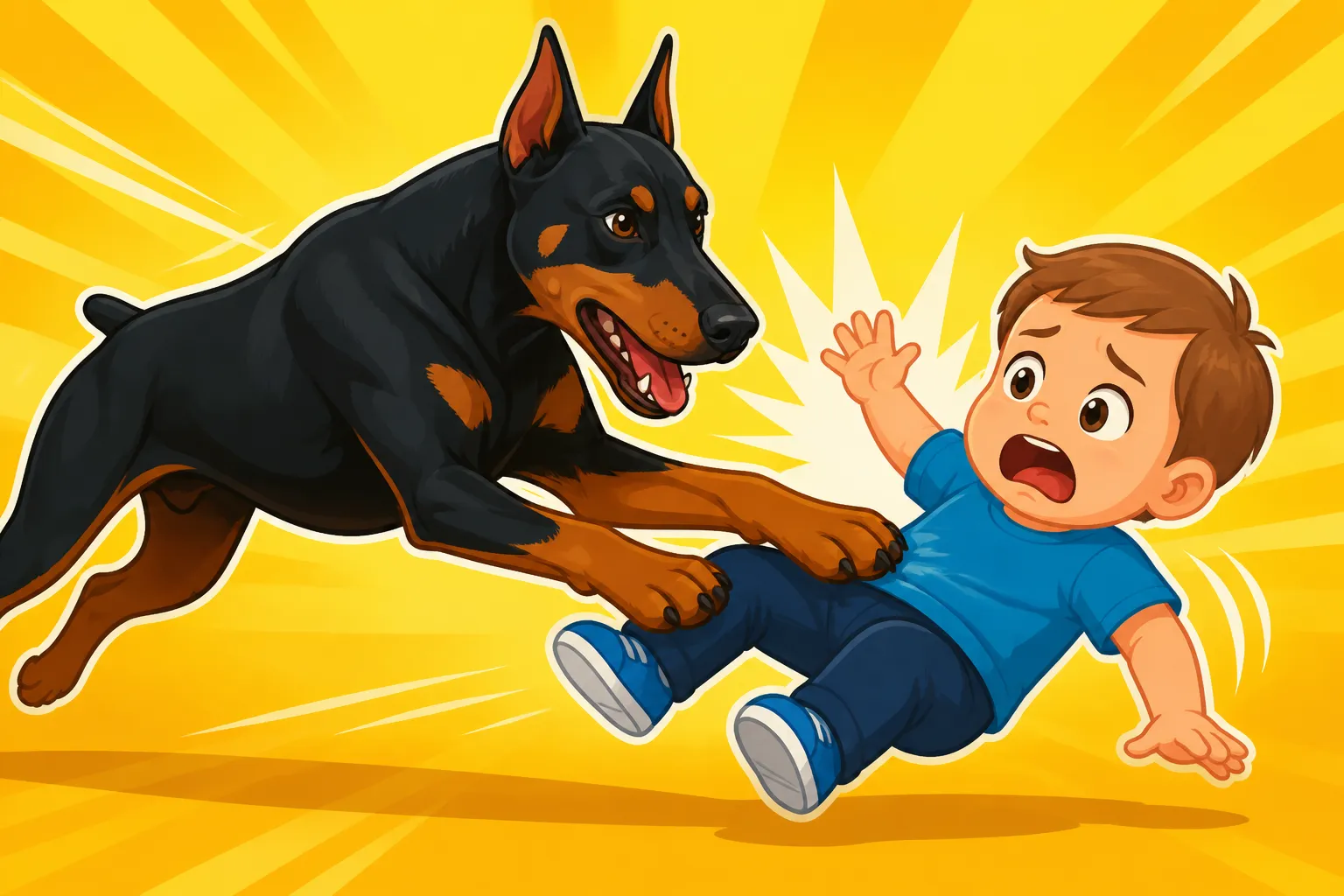
It’s a scenario that plays out in the minds of many Doberman owners, especially those with young children: the moment your powerful, exuberant Doberman, full of love and boundless energy, accidentally barrels into a small child, sending them tumbling. The instant fear, the worry, the immediate concern for your child’s safety, and then the pang of guilt or frustration with your otherwise wonderful dog – it’s a valid and deeply unsettling experience. This guide will walk you through understanding why these incidents happen, how to proactively prevent them, and how to foster a safe and harmonious environment for both your Doberman and the little ones in your life.
Understanding the Doberman's Exuberance and Size
Let's face it: Dobermans are big, strong dogs. They are built for speed and power, and even the most well-intentioned nudge or enthusiastic greeting can be overwhelming for a small human. When you combine their natural athleticism with their famous "velcro" personality – the way they love to be right by your side, often leaning or pushing into you for attention – you have a recipe for accidental bumps and tumbles, especially with a wobbly toddler in the mix.
The "Velcro" Nature and Physicality of Dobermans
If you've ever owned a Doberman, you know exactly what I mean by "velcro dog." They thrive on companionship and want to be involved in whatever you're doing, often by literally attaching themselves to you. This isn't just about being in the same room; it's about being on you, next to you, or under your feet. This loving clinginess, while endearing to adults, can be a hazard for toddlers who haven't quite mastered their balance. A Doberman might simply walk past a child, eager to get to you, and accidentally clip them with a powerful hip. Or, in a moment of excitement, a quick turn of the head or a wagging tail can send a little one off their feet. It’s rarely aggression; it's usually just an unfortunate consequence of their sheer physical presence and lack of awareness of how fragile toddlers can be.
Their large size, coupled with their lean, muscular build, means they carry a lot of momentum. An eighty-pound Doberman moving at even a moderate pace can easily knock over someone much smaller. It's not malicious, it's just physics. They are so focused on their people and their environment that they might not even register the small human obstacle until it's too late. It’s important to acknowledge that this isn't a flaw in their temperament but a characteristic of the breed that requires careful management. Living With a Doberman That Follows You Everywhere can be wonderful, but it also requires awareness when small children are present.
High Energy Levels and Playfulness
Dobermans are also known for their boundless energy, especially when they are young. They are a working breed, after all, and they need an outlet for their physical and mental drive. This energy often manifests as playful exuberance – zoomies, sudden bursts of running, or excited jumping. Imagine your Doberman suddenly getting a case of the zoomies in the living room while your toddler is toddling around. It’s a recipe for disaster. Even a happy, excited hop can be enough to send a child sprawling.
Their play style can also be quite physical. They enjoy rough-and-tumble games with other dogs and often bring that same enthusiasm to interactions with humans. They might paw, nudge, or even "mouth" playfully, which can be perceived very differently by a robust adult than by a delicate toddler. It's crucial to understand that a Doberman's high energy isn't a switch you can simply turn off; it's a fundamental part of who they are, and managing it is key to ensuring everyone's safety. Without proper exercise and mental stimulation, this energy can become pent-up and lead to even more impulsive, clumsy behavior indoors.
Preventing Accidental Collisions: Proactive Management and Training
Preventing these accidental collisions requires a multi-pronged approach that focuses on both managing your Doberman's environment and training them to be mindful around small children. It's about setting everyone up for success.
Creating Safe Spaces and Physical Barriers
One of the most immediate and effective strategies is to create physical separation when direct supervision isn't possible, or when the Doberman's energy is particularly high. Baby gates are your best friend here. These aren't just for babies; they're for keeping your Doberman contained in one area while your toddler plays in another, or vice versa. This allows both to exist safely in the same home without the constant risk of an accidental collision. You can find durable, pressure-mounted gates that work well for Dobermans, some even with walk-through doors for convenience. Many pet supply retailers, including a place like Chewy, offer a wide variety of gates suitable for large, determined breeds.
Consider designating specific "safe zones" for your Doberman as well. This could be a large, comfortable crate or a designated room where they can relax away from the commotion. Teaching your Doberman a "place" command, where they go to their bed or mat and stay there until released, is invaluable. This gives you a tool to manage their presence calmly when your toddler is moving around, especially during times of heightened activity like meal prep or playtime. Ensure their "place" is comfortable and inviting, perhaps with a soft bed and a long-lasting chew toy to keep them happily occupied. Crate Sizing for a Doberman at Full Height is critical for making sure this space is truly a sanctuary.
Training for Impulse Control and Spatial Awareness
This is where dedicated training truly shines. Your Doberman needs to learn impulse control and how to be aware of their body in relation to smaller, more vulnerable beings.
- "Off" Command: This is essential for preventing jumping, whether on you or, more importantly, a child. Practice it consistently, rewarding all four paws on the floor.
- "Go to Place" or "Settle": As mentioned, teaching your Doberman to go to a designated mat or bed and stay there is a game-changer. Start with short durations and gradually increase the time, always rewarding calm behavior.
- "Gentle" or "Slow": While this might sound ambitious, you can teach a Doberman to approach and interact more gently. When they are calm, reward them for slow, controlled movements near children (with the child safely supervised, of course).
- Leash Manners Indoors: Even inside, a leash can be a helpful management tool. If your Doberman is prone to sudden bursts of energy or following too closely, a short house line can help you gently guide them away or keep them from barreling past a child. This isn't about punishment, but about gentle redirection and management.
- Rear-End Awareness: Believe it or not, you can train a dog to be more aware of their hindquarters. Exercises like backing up, or having them navigate tight spaces, can increase their body awareness, making them less likely to accidentally swing their rear into a child.
Consistency is key. Every time your Doberman is calm and respectful of space around a child, reward them. Use high-value treats and praise to reinforce these desired behaviors. Remember, Training a Doberman That Is Smarter Than You Expect means they pick up cues quickly, but it also means they need clear, consistent guidance.
Controlled Interactions and Supervision
Never, ever leave a Doberman unsupervised with a toddler. This isn't a knock on the Doberman; it's a rule for any large dog breed and small child. Even the most well-behaved dog can react unpredictably if startled or in pain, and a toddler's movements can be unpredictable and clumsy.
When interactions do happen, they should be brief, supervised, and structured.
Teach your child to:
- Be a tree: Stand still and quiet if a dog approaches them too quickly. This prevents the child from falling or making sudden movements that could excite the dog further.
- Ask permission: Always ask an adult if they can pet the dog.
- Pet gently: Show them how to stroke the dog's side or chest, avoiding the face or tail.
- Respect boundaries: Teach them that if the dog walks away, they should let them.
For your Doberman, reward them for calm greetings. If they approach a child too boisterously, immediately redirect them. This might involve a verbal cue, or gently guiding them away. The goal is for both child and dog to learn positive, respectful interactions. If you’re considering Whether a Doberman Is Safe Around Children, proactive management and constant supervision are the foundations of that safety.
Teaching Both Doberman and Child How to Interact Safely
Creating a harmonious household with Dobermans and toddlers means actively teaching both parties how to navigate their shared space. It's a two-way street that requires patience, consistency, and a deep understanding of developmental stages for both species.
Educating Your Child on Dog Etiquette
Children, especially toddlers, don't inherently understand dog body language or boundaries. It's our job as parents and guardians to teach them. Start early and reinforce often.
| Child's Action | Doberman's Potential Reaction (Accidental) | Recommended Child Education & Parent Action |
|---|---|---|
| Running/Screaming | Excitement, Chasing, Bumping | Teach "gentle voices, walking feet." Create separate play zones for high energy. |
| Approaching too fast | Startle, Overwhelm, Accidental knock-over | Teach "ask first, approach slowly." Supervise all interactions closely. |
| Grabbing/Pulling | Retreat, Nudge away, Accidental scratch | Teach "pet gently on back/side." Redirect hands to safe petting areas. |
| Falling near dog | Investigate, Lick, Bump in curiosity | Dog should be on "place" or separated. Teach "stay still like a tree." |
| Eating near dog | Sniffing, Accidental bump for food | Teach "eat in designated area, dog away." Manage dog's proximity to food. |
It’s crucial to teach children to respect the dog's space, especially when the Doberman is sleeping, eating, or chewing on a toy. These are times when even the most tolerant dog can be startled or become protective. Never allow a child to climb on a dog, pull ears or tails, or take food or toys away. Model the behavior you want to see: speak calmly, move slowly around the dog, and demonstrate gentle petting. Use books and videos about dog safety to reinforce these lessons in an age-appropriate way.
Training Your Doberman for Calmness Around Children
Beyond basic obedience, specific training for calmness around children is paramount. This isn't just about preventing accidents; it's about building a Doberman who is comfortable and relaxed in the presence of little ones.
- Desensitization to "Toddler Noises": Toddlers are loud and unpredictable. Expose your Doberman to typical toddler noises (squeals, cries, sudden thuds) at a low level, gradually increasing the volume, while rewarding calm behavior. This can be done by playing recordings or having a supervised toddler in another room.
- Rewarding Stillness: Actively reward your Doberman for being still and calm when a child is nearby. Use positive reinforcement when they choose to lie down, keep all four paws on the floor, or simply ignore the child's movements. This is a huge part of Building a Doberman Puppy That Is Confident, Not Sharp around potential stressors.
- "Leave It" Command: This command is invaluable for teaching your Doberman to ignore objects or people, including children, on cue. If your Doberman gets too fixated or moves too quickly towards a child, "leave it" can halt them in their tracks.
- Impulse Control Games: Games like "wait" before eating or going through a door, or "stay" during short interruptions, build general impulse control. This translates directly to their ability to control their excitement around children.
Remember that a well-exercised Doberman is generally a calmer Doberman. Ensure they get ample physical activity and mental stimulation daily. A tired Doberman is much less likely to have excess energy to accidentally expend on a toddler. Daily walks, structured playtime, and puzzle toys from stores like Chewy can help tire them out in a healthy way.
Managing Unforeseen Situations and When to Seek Help
Despite your best efforts, accidents can still happen. A Doberman is a living, breathing animal, and a toddler is, well, a toddler – unpredictable by nature. Knowing how to react calmly and when to seek professional help is vital.
What to Do If an Accident Occurs
If your Doberman accidentally knocks over a toddler, your first priority is the child's safety.
- Assess the Child: Immediately check for injuries. Even a seemingly minor fall can result in bumps, bruises, or more serious issues. Comfort the child, but thoroughly check for head bumps, scrapes, or signs of pain.
- Separate the Dog: Calmly, but immediately, separate your Doberman from the child. Put the dog in their crate or a separate room. This is not about punishment but about creating a safe space for everyone to de-escalate. Avoid yelling at the dog, as this can increase their stress and fear.
- Evaluate the Incident: Once the child is safe and calm, try to understand what happened. Was the Doberman startled? Was the child in the dog's personal space? Was the dog over-excited? Understanding the trigger can help you adjust your management and training strategies.
- Re-evaluate Your Plan: This incident is a clear signal that your current prevention methods need strengthening. Revisit your use of gates, your training schedule, and your supervision practices. Perhaps your Doberman needs more structured exercise, or perhaps the child needs more direct teaching on how to interact.
Remember, an accidental knock-over is almost always just that – an accident. It's usually not a sign of aggression, but rather a lapse in management, training, or supervision. It's a reminder that Dobermans are powerful animals and require constant vigilance around small children.
When to Consult a Professional Trainer or Behaviorist
If accidental collisions are happening frequently, or if you notice any signs of fear, resource guarding, or actual aggression from your Doberman towards children, it is absolutely time to call in the professionals. Do not try to handle these more serious issues on your own.
- Persistent Clumsiness/Over-Exuberance: If, despite consistent training and management, your Doberman continues to be overly clumsy or unable to control their excitement around children, a professional trainer can offer tailored exercises and strategies. They can observe your specific dynamic and identify triggers or gaps in your approach.
- Fear or Anxiety: If your Doberman shows signs of fear (hiding, trembling, panting, lip-licking, whale eye) when children are around, this is a serious concern. A fearful dog can sometimes bite out of self-preservation.
- Resource Guarding: If your Doberman guards toys, food, or even specific people (like you) from your child, a certified professional dog behaviorist is necessary. This behavior is dangerous and needs expert intervention.
- Growling, Snapping, or Biting: Any instance of growling, snapping, or biting towards a child, no matter how minor, warrants immediate consultation with a qualified professional behaviorist or veterinary behaviorist. This is beyond accidental clumsiness and indicates a serious behavioral issue that needs to be addressed for the safety of everyone in the home.
A reputable professional will use positive, force-free training methods and will work with your entire family to create a safe plan. They understand Doberman temperament and how to safely integrate them into a family with children. Sometimes, a veterinary check-up is also needed to rule out any underlying pain or medical conditions that might be contributing to behavioral changes. Whether Pain Explains a Doberman's Behavior Change is a vital consideration in these scenarios. Investing in professional guidance early can make all the difference in ensuring a happy and safe home for your Doberman and your children.
Disclaimer
This article is for general informational purposes only and does not constitute professional advice. Laws, prices and regulations vary by location and change over time. Consult a qualified professional for guidance on your specific situation.