Whether a Muzzled Doberman Frightens the Public
Muzzled Dobermans often provoke public fear and negative assumptions regarding aggression, despite owners using them responsibly for safety and prevention.
Work with the temperament you have.
House-training and crate work, recall, leash manners, separation anxiety, and the behaviors this breed is wired for.

Muzzled Dobermans often provoke public fear and negative assumptions regarding aggression, despite owners using them responsibly for safety and prevention.
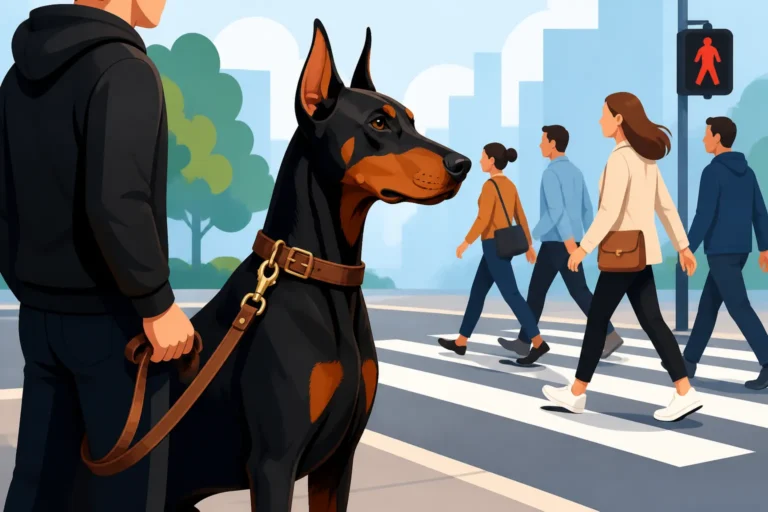
Walking a Doberman in public areas involves training approaches and strategies to manage guardian instincts near crossing people.

Teaching a Doberman to heel beside a wheelchair helps prevent pulls and ensures safe, confident mobility outings together.

Doberman head halters require specific fitting considerations because breed muzzle shapes cause standard equipment sizing issues.
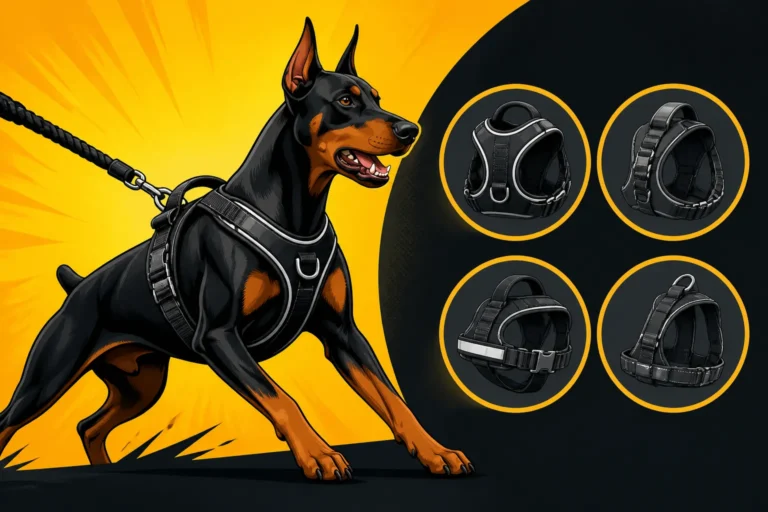
Doberman harnesses designed for an eighty pound dog manage leash pulling, prevent painful chafing, and stop escapes during walks.

Doberman pulling behaviors, natural strength, and excitement triggers explained, alongside training techniques for loose-leash walks.

House-trained Dobermans having indoor accidents learn why routine changes and anxiety trigger unexpected potty training regression.

Toilet training a Doberman puppy involves crate sizing, consistent outdoor routines, and managing distractions for fast two-week progress.

Doberman alone time training explains how to help clingy dogs cope with separation distress using baby steps and patience.

Medication for a Doberman experiencing separation distress helps manage panic behaviors like destructive chewing, pacing, and excessive vocalization.