States That Regulate Who May Crop a Doberman
It's incredibly frustrating when you're navigating the world of Doberman ownership, especially when considering traditional practices like ear cropping, only to find a confusing patchwork of state-specific regulations. Many prospective and current Doberman owners feel overwhelmed trying to understand what's allowed and where. This comprehensive guide will break down the varying state regulations concerning Doberman ear cropping, explain why these differences exist, and help you understand the implications for responsible ownership and breeding.
The Shifting Sands of Ear Cropping Legislation Across the States
For generations, ear cropping has been a hallmark of the Doberman Pinscher's distinctive look, a practice deeply ingrained in the breed's history and standard. However, in recent years, there's been a significant shift in public perception and, consequently, legal oversight regarding cosmetic surgeries on animals. What was once a routine procedure performed by many veterinarians is now facing increasing scrutiny, leading to a complex and often contradictory legal landscape across the United States. Owners and breeders alike find themselves having to research not just local ordinances, but entire state statutes, which can feel like deciphering ancient texts. This isn't just about aesthetics; it touches on animal welfare, veterinary ethics, and even the very definition of responsible pet ownership.
The core of the issue often stems from differing views on whether these procedures are medically necessary or purely cosmetic. While some argue that cropping can reduce ear infections or improve hearing, these claims are largely unsupported by scientific evidence, leading many animal welfare advocates to categorize it as an unnecessary surgical alteration. This debate is what drives the varying legal responses, making it crucial for anyone considering a Doberman with cropped ears to be fully aware of the legal nuances in their specific region. It's not a one-size-fits-all answer, and getting it wrong can have serious consequences.
Why Regulations Vary So Widely
The reason you see such a disparity in ear cropping laws from one state to the next largely comes down to each state's legislative priorities, the influence of animal welfare groups, and the varying stances of veterinary medical associations within those states. Unlike federal laws, which apply nationwide, animal welfare laws are predominantly state- or even county-level responsibilities. This means that what's perfectly legal and accepted in, say, Texas, might be highly restricted or even outright banned in Maryland.
Historically, animal welfare legislation has grown in piecemeal fashion, often in response to specific incidents or concerted lobbying efforts. Some states have a longer history of progressive animal welfare laws, while others prioritize owner autonomy or tradition. Additionally, the definition of "animal cruelty" can differ significantly. In some places, unnecessary cosmetic surgery falls under this umbrella, while in others, it's considered a routine veterinary procedure. This divergence means that as a Doberman owner, you can't assume what's true in one state holds true in another. This patchwork can be incredibly frustrating for those who travel with their dogs or are considering moving across state lines.
Understanding the Role of Veterinary Ethics
Beyond the letter of the law, veterinary ethical guidelines play a huge part in whether ear cropping is performed. The American Veterinary Medical Association (AVMA) officially opposes ear cropping and tail docking when done solely for cosmetic reasons, encouraging the elimination of these practices. While the AVMA's stance isn't a legal ban, it strongly influences individual veterinarians and state veterinary medical boards. Many vets, adhering to these ethical guidelines, simply refuse to perform the procedure, even if it's technically legal in their state.
This ethical stance creates another layer of complexity for Doberman owners. Even in states where cropping is permitted, finding a veterinarian willing and skilled to perform the procedure can be a significant challenge. Many veterinary schools no longer teach the procedure, and newer generations of vets are often trained with a stronger emphasis on avoiding elective cosmetic surgeries. This means that even if you live in an unrestricted state, you might need to travel a considerable distance to find a veterinary professional who still offers this service. It’s an important consideration when evaluating Vets Who Will and Will Not Crop a Doberman.
States With Specific Regulations on Doberman Ear Cropping
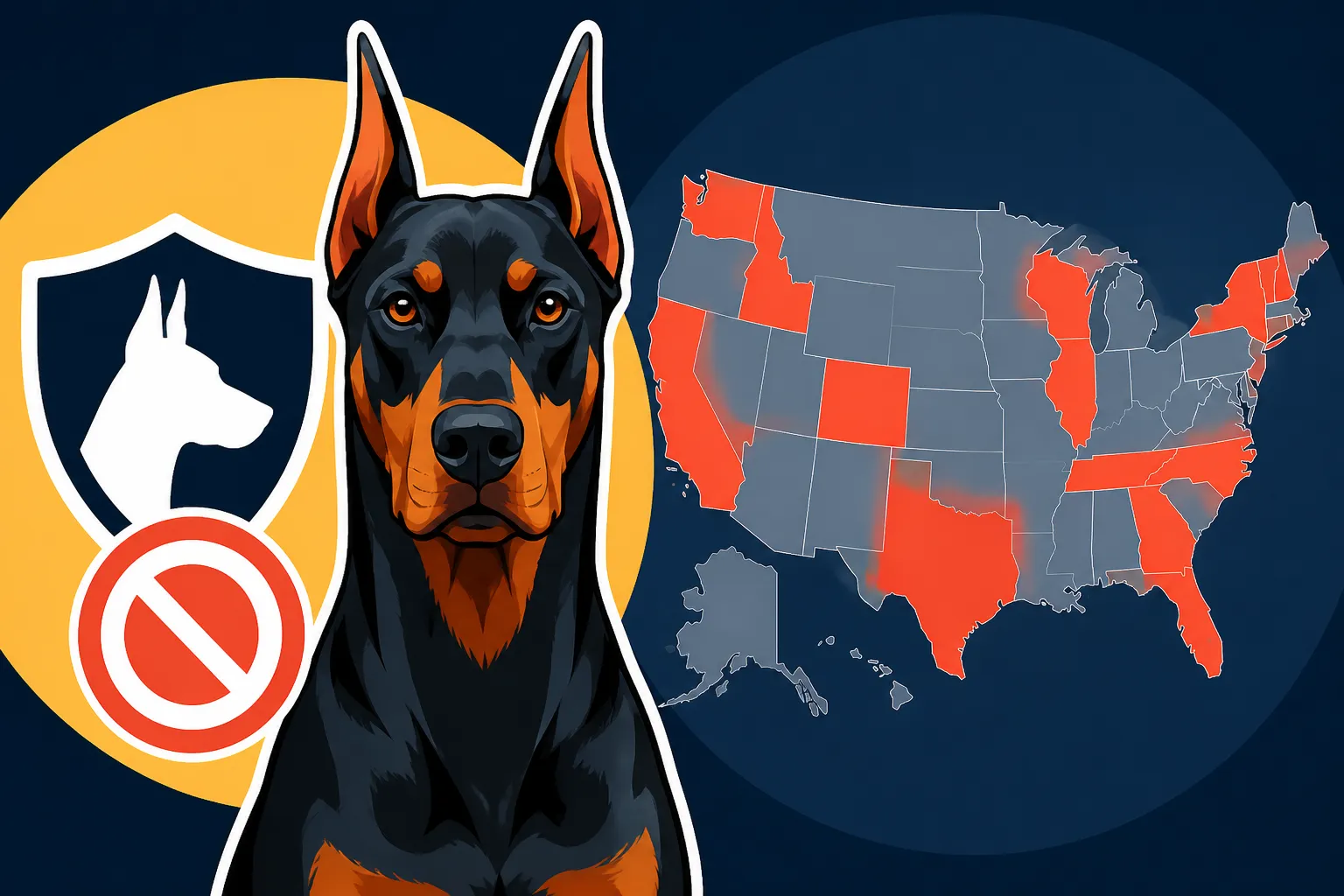
When it comes to the legality of Doberman ear cropping, you'll find a spectrum of approaches across the United States. No two states are exactly alike, but generally, they fall into categories ranging from outright bans to strict limitations, and then to areas where the practice remains largely unregulated from a legal standpoint, though often facing ethical objections from the veterinary community. It's vital to remember that these laws can change, so always check the most current regulations for your specific location. Trying to navigate this landscape without current information is like trying to find your way through a maze blindfolded.
Let's look at some examples of how states approach this issue.
States with Outright Bans or Significant Restrictions
Several states have taken a clear stance against cosmetic surgeries like ear cropping, either by outright banning the procedure or by placing such significant restrictions on it that it's practically prohibited for purely aesthetic reasons. These states often classify such procedures as animal cruelty unless there's a documented medical necessity.
For instance, states like Maryland have some of the most stringent laws. In Maryland, ear cropping is generally prohibited unless performed by a licensed veterinarian for therapeutic purposes and in a medically sound manner. The cosmetic aspect is specifically excluded. This means that if your Doberman doesn't have a legitimate medical reason for the procedure, a vet in Maryland cannot legally crop their ears for aesthetic purposes. The spirit of these laws is to protect animals from non-essential surgeries. Similarly, states like Pennsylvania also have strict regulations, often requiring that any cosmetic surgery be performed by a licensed veterinarian under anesthesia, again with a strong emphasis on medical necessity. It’s not about judging your choice as an owner, but about ensuring the welfare of the animal above all else. This can be a tough pill to swallow for those who prefer the traditional Doberman look, but it reflects a broader societal shift in how we view pet care.
States Requiring a Veterinarian-Client-Patient Relationship (VCPR)
Many states don't outright ban ear cropping but enforce regulations that ensure it's performed responsibly within a legitimate veterinary context. A common requirement is the establishment of a Veterinarian-Client-Patient Relationship (VCPR). This means a veterinarian must have physically examined your Doberman, taken a medical history, and established a professional judgment to provide care. This isn't just about signing a form; it's about a bond of trust and responsibility.
States like California have strong VCPR requirements. While ear cropping isn't outright banned, it must be performed by a licensed veterinarian as part of a legitimate VCPR. This aims to prevent back-alley procedures or cropping by non-veterinarians, ensuring a certain standard of care. Similarly, in New York, while cropping isn't universally prohibited, vets often adhere to ethical guidelines that make them hesitant to perform purely cosmetic procedures. The VCPR helps ensure that the Doberman's health is assessed by a professional before any surgical intervention. This is why it’s always best to have a long-standing relationship with a trusted vet for your Doberman's care, from routine check-ups to advice on nutrition – and, of course, for navigating these nuanced procedures. Even for basic supplies like food or toys, using a reputable online store like Chewy, with their veterinary-backed advice sections, can help owners stay informed about best practices, even if they aren't directly addressing surgical procedures.
States with Less Specific Legislation
Then there are states where the specific legislative language regarding ear cropping is less direct or simply nonexistent, leaving the practice largely up to veterinary discretion and professional ethics. In these areas, while there might not be a specific law banning cosmetic ear cropping, the AVMA's stance and individual veterinary practice policies often lead to a de facto restriction.
For example, in many Midwestern and Southern states, you might find less specific statewide legislation. However, this doesn't mean it's a free-for-all. Instead, the decision often falls to individual veterinary clinics and their interpretation of ethical guidelines. Many vets, even in these states, choose not to perform the procedure due to the AVMA's recommendations and their own ethical beliefs. So, while legally permissible, it might still be incredibly difficult to find a vet willing to do it. This means that a Doberman breeder or owner might still have to travel to find a vet willing to perform the procedure, or simply choose to keep their Doberman uncropped, which is a perfectly valid and beautiful choice. For many, the choice is made for them by the scarcity of willing practitioners.
Here’s a simplified look at the general approaches:
| State Approach | Description | Example States (General) | Impact on Owners |
|---|---|---|---|
| Outright Ban/Severe Restriction | Cosmetic cropping explicitly prohibited unless medically necessary, often classified as cruelty. | Maryland, Pennsylvania | Very difficult or impossible to get ears cropped legally within the state; must consider uncropped Doberman. |
| VCPR Requirement | Procedure must be performed by a licensed vet within an established Veterinarian-Client-Patient Relationship. | California, New York (often coupled with ethical vet resistance) | Can be done legally, but finding a vet willing to perform for cosmetic reasons may be challenging. |
| Less Specific/Unregulated | No specific law banning cosmetic cropping; practice largely left to vet discretion and ethics. | Many Midwestern & Southern states | Legally permissible, but finding a willing and skilled vet is still a major hurdle due to ethical guidelines. |
Disclaimer: This table provides general examples; specific laws are complex and subject to change. Always consult local regulations and a qualified veterinarian.
The Ethical Debate and Professional Stance
The conversation around ear cropping isn't merely legal; it's deeply ethical and often quite passionate. At the heart of it lies the question of animal welfare versus breed tradition and owner preference. Understanding this debate is crucial for any Doberman owner, regardless of their personal stance, as it shapes veterinary practice, public opinion, and future legislation. You might feel torn between preserving the classic Doberman silhouette and adhering to evolving animal welfare standards, and that's a perfectly natural place to be.
The prevailing view among major veterinary organizations, including the American Veterinary Medical Association (AVMA) and the Canadian Veterinary Medical Association (CVMA), is that ear cropping (and tail docking) for purely cosmetic reasons is unnecessary and causes pain and distress to the animal without clear medical benefit. The AVMA has a clear position, stating that "The AVMA opposes ear cropping and tail docking of dogs when done solely for cosmetic purposes" and encourages the elimination of these practices. This strong stance from professional bodies means that even in states where cropping is not explicitly illegal, many veterinarians choose not to perform the procedure as a matter of professional ethics.
The AVMA's Position and Its Influence
The AVMA's position is significant because it represents the collective wisdom and ethical framework of the veterinary profession in the United States. While not legally binding, it acts as a powerful guiding principle for licensed veterinarians. When the AVMA states that a procedure is ethically questionable, it prompts individual vets and state licensing boards to reconsider their practices. This means that even if a state law might technically allow ear cropping, a vet adhering to AVMA guidelines might refuse to do it, or only do it if there's a genuine medical need. This is why researching Whether the AVMA Opposes Doberman Cropping is so important for owners trying to understand the broader context.
This ethical shift has had a ripple effect. Veterinary schools are increasingly emphasizing animal welfare and teaching alternatives to cosmetic surgeries. New graduates are often coming into practice with a mindset that views these procedures as outdated and unnecessary. This change in professional training further reduces the number of veterinarians willing to perform crops, making it harder for Doberman owners to find experienced practitioners. It’s a trend that’s likely to continue, pushing the practice further to the fringes.
Animal Welfare Organizations and Public Perception
Animal welfare organizations, such as the ASPCA and Humane Society of the United States, are strong advocates against ear cropping. They view it as a painful, non-therapeutic procedure that compromises an animal's ability to communicate naturally through ear movements. Their consistent campaigning has significantly influenced public perception, making it less socially acceptable to perform or advocate for cosmetic surgeries on pets.
This shift in public opinion is critical. While Doberman enthusiasts might cherish the traditional look, a growing segment of the public (and potential pet owners) views cropped ears negatively. This can affect how your Doberman is perceived in public, sometimes leading to unwarranted judgment or negative comments. It also impacts adoption rates for Dobermans in rescues, as uncropped dogs are sometimes seen as more approachable. Furthermore, the debate contributes to changes in breed standards in some parts of the world, where natural ears are becoming the norm. Many Doberman owners who choose to keep their dogs uncropped find them just as striking, and appreciate their full range of expression, as discussed in How a Natural Doberman Ear Sits.
What This Means for Doberman Owners and Breeders
Navigating the legal and ethical landscape of ear cropping can be a real headache for Doberman owners and breeders. It's not just about what's legal, but what's practical, ethical, and increasingly, what's socially accepted. This evolving situation demands careful consideration and responsible decision-making, far beyond just picking a puppy.
Choosing an Uncropped Doberman
For many, the simplest and increasingly common solution is to embrace the natural ear. An uncropped Doberman is every bit as magnificent as its traditionally cropped counterpart. Their natural ears, whether they stand erect, fold slightly, or lie flat, offer a wide range of expressions that allow them to communicate more nuanced emotions. This is a choice that aligns with modern animal welfare sentiments and eliminates the legal and ethical hurdles associated with cropping.
Choosing an uncropped Doberman means you avoid the surgery, the painful recovery, and the weeks or months of taping and posting required to achieve the desired stand. It also means you won't face judgment or difficulty finding veterinary care from practitioners who ethically object to the procedure. While it might deviate from the breed's traditional aesthetic, it's a growing trend, and many Doberman owners find their uncropped dogs to be just as regal and impressive. Plus, an uncropped Doberman will never face issues with Whether an Uncropped Doberman Can Win in the show ring, as many clubs are adapting their standards, or you can pursue performance sports where ear style is irrelevant.
Finding a Breeder and Veterinarian
If you are committed to the cropped look, you'll need to do significant research to find both a responsible breeder and a veterinarian willing to perform the procedure. A reputable breeder should be transparent about their practices and be able to guide you on local regulations, even if they choose not to crop their puppies themselves. They should prioritize the health and temperament of their dogs above all else. When researching breeders, always ask about their stance on cropping, if they offer cropped puppies, or if they can refer you to a reputable vet who performs the procedure. This upfront conversation is crucial.
Finding a veterinarian who performs ear cropping is becoming increasingly challenging. You might need to seek out a specialist, often a veterinary surgeon with specific experience, and be prepared to travel to a different region or even state where the practice is still permitted and offered. The cost of the procedure can also be substantial, covering the surgery itself, anesthesia, and extensive aftercare, including taping and posting. It’s not just a one-time fee; it’s a commitment. For an idea of the financial aspect, you can research The Average Price of a Doberman Ear Crop. Ensuring the vet is experienced and performs a proper, humane crop is paramount, as a poorly done crop can lead to lifelong issues for your dog. For things like aftercare supplies, or even just general wellness items for your Doberman's recovery, online retailers like Chewy can be a convenient source, ensuring you have everything you need delivered right to your door.
Traveling for the Procedure
For those in states with bans or severe restrictions, traveling to a neighboring state where cropping is legal and a willing veterinarian can be found might seem like an option. However, this comes with its own set of complexities. You'll need to consider the logistics of transporting a young puppy, ensuring they are old enough and healthy enough for travel and surgery. The timing of the crop is crucial; it's typically performed between 7 and 12 weeks of age, so you have a narrow window. This is why The Weeks a Doberman Crop Has to Happen In are so critical, and timing travel around this can be stressful.
Beyond the procedure itself, you'll need a clear plan for post-operative care and follow-up. Will you return to the cropping vet for postings, or will your local vet be willing to assist with aftercare, even if they didn't perform the initial surgery? This is where communication with your local vet is paramount. Some vets might be hesitant to take on aftercare for a procedure they ethically oppose or didn't perform, leaving you in a difficult position. It’s a complicated decision that requires careful planning and a deep understanding of all potential challenges.
Legal Risks and Responsible Ownership
Ignorance of the law is never an excuse. If you live in a state where ear cropping is illegal, attempting to have the procedure done, or bringing a newly cropped puppy into the state that was cropped elsewhere without proper documentation of medical necessity (if required), could lead to legal trouble. Penalties can range from fines to animal cruelty charges, and even confiscation of your Doberman. This is why it's so important to be fully informed about your specific state's laws.
Responsible Doberman ownership goes beyond just providing food and shelter; it means adhering to all local, state, and national laws concerning your pet. It also means making informed decisions that prioritize your Doberman's health and well-being. Whether you choose a Doberman with natural ears or navigate the complexities of ethical and legal cropping, your commitment to their care and adherence to the law is what truly defines you as a responsible owner. It's a heavy responsibility, but one that every Doberman owner willingly undertakes for their beloved companion.
Disclaimer
This article is for general informational purposes only and does not constitute professional advice. Laws, prices and regulations vary by location and change over time. Consult a qualified professional for guidance on your specific situation.