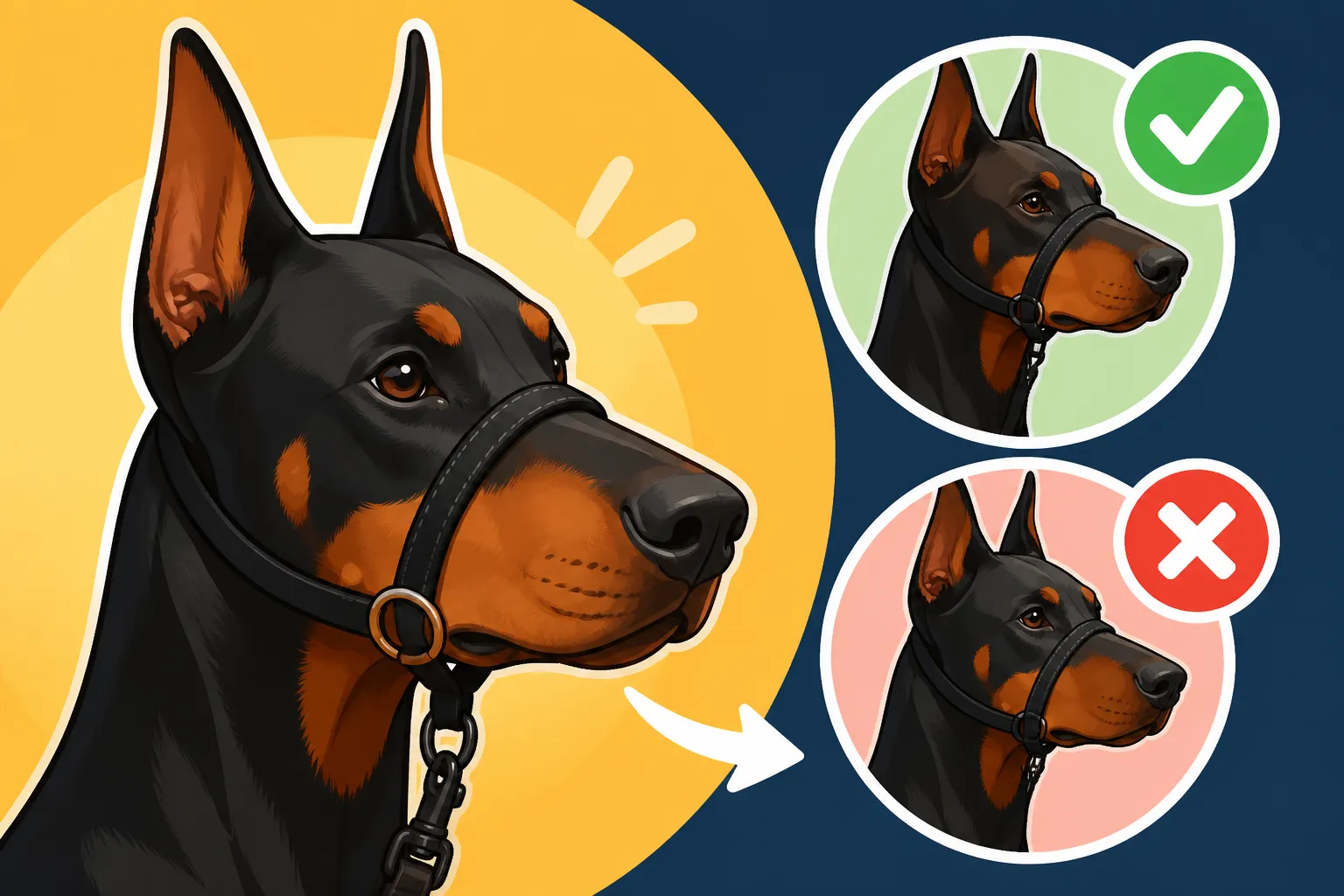
Whether a Doberman’s Long Nose Fits a Head Halter
If you've ever found yourself being pulled down the street by your powerful Doberman, feeling like your arm might just get yanked clean off, you know the frustration of trying to manage their incredible strength and drive on a leash. It's a common struggle for Doberman owners, and it often leads us to explore different tools to make walks more enjoyable and safe for everyone. One such tool that frequently comes up in conversation is the head halter, but many wonder if a Doberman's distinctive long nose actually suits such a device. This guide will dive deep into how head halters work for our long-nosed companions, what to look for, and how to introduce them successfully.
Understanding the Doberman's Unique Head Shape
Dobermans are truly magnificent dogs, aren't they? Their sleek, athletic build and noble presence are unmistakable. But beyond their striking appearance, there are specific anatomical features that owners need to consider, especially when it comes to equipment like head halters. Their head shape, characterized by that elegant, elongated muzzle, is a prime example.
The Doberman's Long, Elegant Muzzle
That long, refined muzzle isn't just for show; it's a key characteristic of the Doberman breed standard, contributing to their intelligent and alert expression. It's designed for efficient breathing, keen scent work, and a powerful bite, all remnants of their working heritage. However, this same feature can sometimes present a challenge when trying to find off-the-rack equipment. Unlike a flatter-faced breed or one with a broader, shorter snout, the Doberman’s head tapers gracefully.
Think about it: you want a piece of equipment that fits snugly without pinching or obstructing their vision, yet allows full range of motion for sniffing, panting, and taking treats. If a head halter isn't designed with a longer muzzle in mind, it can end up sitting too high on the face, rubbing against the eyes, or conversely, being too loose around the nose, allowing the dog to easily paw it off. This isn't just uncomfortable for your Doberman; it can also render the tool ineffective, and nobody wants to invest in something that doesn't work. We want our Dobermans to be comfortable and happy, even when wearing something new.
Why Standard Halters Might Not Fit
The market is flooded with various types of head halters, and many are designed with a "one-size-fits-all" or generic approach that simply doesn't account for the unique proportions of a Doberman. You might pick up a halter labeled for a "large dog" and find that while the neck strap fits, the nose loop is either far too short, riding uncomfortably close to their eyes, or too long, dangling awkwardly and interfering with their ability to drink or take a treat.
Imagine trying to wear a hat that's either too shallow, barely perching on your head, or so deep it covers your eyes. That's how it can feel for a Doberman in an ill-fitting head halter. The key areas where a standard halter often fails a Doberman are the length of the nose band and the overall depth of the muzzle area. If the nose band is too short, it pulls the head piece too far forward, creating pressure points. If it’s too long, it sags, losing its ability to provide gentle steering control. This is why many Doberman owners feel disheartened after trying a few options; it’s not the tool itself, but often the fit that's the issue. Whether a Doberman's Long Nose Fits a Head Halter is a valid concern that requires careful consideration.
How Head Halters Work and Their Benefits for Dobermans
Despite the initial fit challenges, head halters can be an absolute game-changer for walking a strong Doberman. They offer a completely different kind of control than a traditional neck collar or even many chest harnesses, working with your dog's natural instincts rather than against them.
The Mechanics of a Head Halter on a Doberman
A head halter works on a very simple, yet incredibly effective, principle: where the nose goes, the body follows. Think of it like the reins on a horse; a gentle pressure on the nose or side of the head can easily redirect the entire animal. For a Doberman, whose strength can easily overpower an owner holding a leash attached to a neck collar, this means gaining leverage without needing brute force. When your Doberman tries to pull forward, the leash, attached under their chin, gently guides their head to the side or downwards, making it difficult for them to maintain forward momentum.
This redirection mechanism is key, especially if you have an energetic Doberman who gets overly excited by squirrels, passing cars, or other dogs. Instead of feeling like you're playing tug-of-war with a freight train, a subtle adjustment of the leash can break their focus and allow you to regain their attention. It's about communicating more effectively with your dog, teaching them that pulling simply doesn't get them where they want to go faster. This method is much less likely to cause neck strain than a traditional collar, which is always a concern with such a powerful breed.
Training Benefits for a Strong, Intelligent Breed
Dobermans are highly intelligent dogs, eager to learn, and incredibly sensitive. This sensitivity, combined with their strength, means that harsh corrections or constant pulling on a traditional collar can quickly become counterproductive, leading to a frustrated dog or even a shut-down one. The beauty of a head halter is that it provides a very clear, gentle form of communication. It's not about punishment; it's about guidance.
For Dobermans prone to lunging or reactivity, a head halter can be invaluable. It allows you to redirect their gaze away from triggers, giving you a precious second to intervene with a positive interrupter or a treat before they escalate. This can be crucial in managing behaviors that might otherwise lead to a dog reacting at every passerby or dog on the street. A Doberman That Lunges at Passing Dogs can be a major stressor for owners, and a head halter provides a tool to build better habits.
It also gives you better control for teaching good leash manners. Rather than constantly battling their pulling, you can use the gentle guidance of the head halter to teach them to walk politely by your side. This frees you up to use positive reinforcement, rewarding them for loose-leash walking, which is far more effective for a Doberman's intelligent mind than constant physical struggle. Think of it as a tool to facilitate learning, rather than just a way to restrain. Many online training resources, including those from BAXTER & Bella, emphasize positive reinforcement techniques that work wonderfully in conjunction with tools like head halters to foster a happy, well-behaved companion. Leash Manners for an Eighty-Pound Doberman become much more achievable when you have effective communication tools at your disposal.
Choosing the Right Head Halter for Your Doberman
Given the Doberman's distinct head shape, selecting the right head halter isn't a matter of grabbing the first one you see. It requires a bit of research and understanding of what features will best accommodate their long muzzle.
Key Features to Look For in a Doberman Head Halter
When you're searching for a head halter for your Doberman, you'll want to prioritize adjustability and design features that cater to their unique facial structure.
Here are some specifics to keep in mind:
- Adjustable Nose Loop: This is paramount. The nose loop needs to be long enough to sit comfortably down the length of their muzzle, away from their eyes, but also adjustable enough to prevent it from slipping off. Some halters have a fixed nose loop size, which will likely be problematic. Look for those with ample adjustability in this specific area.
- Padded Nose Band: Doberman skin, especially on the muzzle, can be quite sensitive. A padded nose band will prevent chafing and make the halter much more comfortable for your dog, encouraging quicker acceptance. Materials like neoprene or fleece lining are excellent for this.
- Secure Yet Flexible Fit: The halter should feel secure without being rigid. It needs to allow your Doberman to open their mouth to pant, drink, and take treats without restriction. If it's too tight around the muzzle, it will cause discomfort and stress. If it's too loose, they'll likely rub it off.
- Quality Materials and Construction: Dobermans are strong. You need a halter made from durable webbing and strong hardware that can withstand their power without breaking. Check seams and buckle quality.
- Connection Point: Most head halters have a ring under the chin where the leash attaches. Ensure this ring is robust and positioned in a way that provides effective leverage without twisting the halter uncomfortably.
| Feature | Why it Matters for a Doberman | What to Look For |
|---|---|---|
| Adjustable Nose Loop | Accommodates their long, tapering muzzle without riding up or slipping. | Generous range of adjustment for length. |
| Padded Nose Band | Prevents chafing on their sensitive skin and enhances comfort. | Neoprene, fleece, or soft webbing. |
| Flexible/Comfortable Fit | Allows full mouth movement for panting, drinking, and treats. | Doesn't restrict jaw movement; comfortable around eyes. |
| Durable Materials | Withstands the strength of a powerful Doberman. | Strong nylon webbing, robust metal hardware. |
| Proper Leash Connection | Provides effective steering and control without discomfort. | Secure ring under the chin; well-balanced design. |
When shopping, especially online through retailers like Amazon, pay close attention to the product descriptions and customer reviews. Often, owners of specific breeds, including Dobermans, will share their experiences with fit. Don't be afraid to try a couple of different brands or styles to find the perfect match.
Fitting and Acclimation Tips
Once you have a head halter that appears to be suitable, the next critical step is proper fitting and, perhaps even more importantly, acclimation. A Doberman, like any intelligent dog, needs to be introduced to new equipment positively.
First, the fit:
- Neck Strap: The strap around the back of their neck should be snug, but not tight. You should be able to comfortably slip one or two fingers under it, just like a regular collar. It should sit high on the neck, behind the ears.
- Nose Loop: This is where the magic happens for a Doberman. The nose loop should sit well down the bridge of their nose, not up near their eyes. It should be loose enough to allow them to open their mouth fully to pant, bark, or take treats, but not so loose that it can easily be pawed off or slip over their snout. When they close their mouth, the loop should gently rest on their muzzle, creating the leverage point. It should not be pulled tight at any point.
Now, for acclimation. This isn't a tool you just strap on and go for a walk. Dobermans are sensitive and will likely react to something new on their face.
- Short, Positive Introductions: Start by simply putting the halter on for a few seconds, immediately followed by a high-value treat and praise. Then take it off. Repeat this several times a day, gradually increasing the duration. Make it the best thing ever!
- Distraction and Association: Once they tolerate wearing it for a minute or two, try distracting them with a favorite toy or a training game while they wear it. Never force it or make it a negative experience. If they scratch at it, calmly redirect them with a treat, then remove the halter.
- Leash Attachment, Then Movement: After they are comfortable wearing it, attach the leash, but don't walk yet. Just let them wear it with the leash attached inside, perhaps for a few minutes while you offer treats. Then, take a few steps. The moment they walk nicely, release the pressure and reward them.
- Consistent Positive Reinforcement: Every time they don't pull while wearing the halter, reward them lavishly. This is crucial for teaching them that the halter is a tool for good things, not a punishment. Rewards a Doberman Will Work For will be key here.
Many owners find that using a double-ended leash, with one clip on the head halter and one on a regular flat collar, provides extra security and a smoother transition. You can use the head halter for gentle guidance and the collar as a backup. Remember, patience is absolutely essential. Rushing this process can create a negative association that is hard to overcome. Online training programs, such as those offered by BAXTER & Bella, often have excellent step-by-step guides on how to introduce new equipment like head halters effectively, focusing on positive reinforcement to ensure your Doberman accepts it happily.
Common Concerns and Best Practices
While head halters can be incredibly beneficial, it’s only natural for owners to have questions and concerns. Let’s address some of the most common ones and outline best practices for their use with a Doberman.
Addressing Misconceptions and Potential Drawbacks
One of the biggest misconceptions about head halters is that they are "muzzles" or a cruel form of control. This couldn't be further from the truth. A head halter is designed for guidance, not to prevent barking or biting, and when fitted correctly, it allows full freedom for panting, drinking, eating, and even playing. Its purpose is to give you more effective communication and control, which in turn can prevent your Doberman from practicing undesirable behaviors like strong pulling or reactivity, which can be dangerous for both dog and owner. Stopping a Doberman From Pulling You Over is a safety concern, not a desire to inflict discomfort.
However, there are a few potential drawbacks or things to watch out for:
- Initial Resistance: As mentioned, many Dobermans initially try to paw off the halter. This is normal, but if not handled with patience and positive reinforcement, it can lead to frustration for both of you. Never use the halter to yank or punish your dog, as this will only create a negative association.
- Risk of Injury if Pulled Forcefully: While designed for gentle guidance, if an owner yanks hard on the leash attached to a head halter, it could potentially cause neck injury. It's crucial to use the halter with a light touch and primarily for redirection, not force. This means you still need to be mindful of how you're handling the leash. Why Yelling Shuts a Doberman Down applies to physical force too – Dobermans respond much better to gentle, clear communication.
- Public Perception: Unfortunately, some people might mistakenly perceive a head halter as a muzzle and react with fear or judgment. You might encounter comments or wary looks. Being prepared to calmly explain its purpose as a training aid, rather than a device for aggression, can help.
It’s important to remember that a head halter is a tool, and like any tool, its effectiveness and safety depend on how it's used. It's not a magic fix for all behavior problems, but it can be a valuable aid in the training process, especially for breeds with the Doberman's strength and drive.
Integrating a Head Halter with Positive Reinforcement Training
The head halter works best when integrated into a comprehensive positive reinforcement training program. It's not meant to be a substitute for teaching your Doberman good manners; instead, it's an accelerator for those lessons. Think of it as giving you the ability to physically demonstrate what you want your Doberman to do (e.g., "walk beside me," "look at me instead of the squirrel") more easily, while you reward them for making those desired choices.
Here's how to make it work seamlessly:
- Pair with Treats and Praise: Every single time the head halter allows you to redirect your Doberman or they choose to walk politely, immediately mark that behavior with a verbal "yes!" or a click, followed by a high-value treat. This positive association is critical.
- Focus on What You Want: Instead of only using the halter to stop unwanted behavior, use it proactively to guide towards desired behavior. For example, if you see a potential trigger approaching, gently guide your Doberman's head towards you and reward them for making eye contact or walking calmly past.
- Keep Sessions Short and Fun: Especially in the beginning, limit walks or training sessions with the head halter to short, positive experiences. Dobermans are intelligent and can learn quickly, but too much too soon can lead to burnout. Five-Minute Sessions With a Young Doberman can be incredibly effective for learning new concepts.
- Seek Professional Guidance: If you're struggling to introduce the head halter or integrate it effectively into your training, don't hesitate to seek help from a certified professional dog trainer. Look for someone who has experience with Dobermans and uses positive reinforcement methods. They can provide tailored advice and hands-on demonstrations to ensure you're using the tool correctly and safely. Finding a Trainer Who Has Worked With Dobermans is crucial for effective training.
Ultimately, the goal is to get your Doberman to walk calmly on a loose leash, whether they are wearing a head halter or eventually just a regular collar. The head halter is a bridge to that goal, giving you the control you need to teach and reinforce those good habits without resorting to physical struggles or harsh methods. It's an investment in a more harmonious walking experience for both you and your magnificent Doberman.
Disclaimer
This article is for general informational purposes only and does not constitute professional advice. Laws, prices and regulations vary by location and change over time. Consult a qualified professional for guidance on your specific situation.