Ticks Found on a Doberman’s Bare Belly
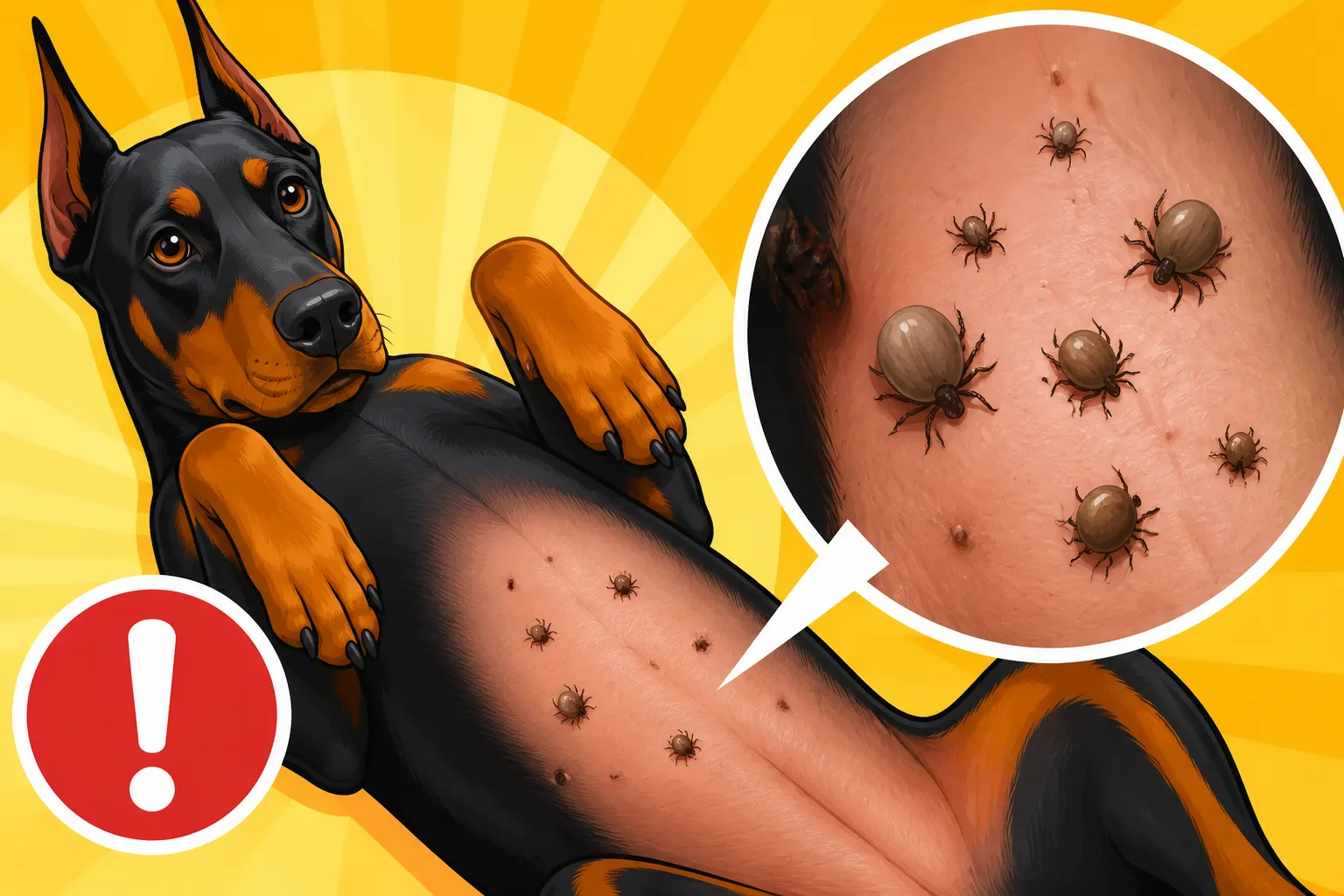
That moment when you’re petting your beloved Doberman, enjoying their sleek, warm fur, and your fingers brush against something small, hard, and wrong on their usually bare belly. Panic sets in, right? It’s a tick, and suddenly your relaxed cuddle session turns into an urgent mission to remove the unwelcome hitchhiker and protect your best friend. This guide is here to walk you through why Dobermans are so prone to ticks, how to spot these tiny pests on their exposed skin, the safest way to remove them, and crucial steps to prevent them in the first place, helping you keep your Doberman safe and sound.
Why Your Doberman's Bare Belly Is a Tick Hotspot
Dobermans, with their striking, short coats and often minimal body fat, have certain physical traits that can make them particularly vulnerable to ticks. While every dog breed can pick up a tick, our Dobes often present an easier target, especially on those soft, sparsely-furred areas. It’s not just paranoia; there’s a real reason why you find them there.
The Thin Coat and Exposed Skin Factor
Unlike breeds with thick double coats or dense, wiry fur, a Doberman's coat is short, fine, and lies close to the skin. This means there's simply less protective barrier for ticks to navigate. Imagine a dense forest versus a wide-open field – which one is easier to traverse? For a tick, your Doberman's coat is often the open field. They don't have to burrow deep through layers of fur; they can quickly get right down to the skin.
Furthermore, areas like the belly, armpits, inner thighs, and around the groin are often even more sparsely haired than the rest of their body. These spots offer ticks direct access to the skin and its blood supply. When your Doberman is romping through tall grass, exploring the woods, or even just rolling around in your backyard, these vulnerable spots are often making direct contact with tick-laden vegetation. A tick simply latches on, and because there's so little fur, it's less likely to be brushed off and more likely to secure a firm hold. This is particularly true for that soft, almost hairless skin on their tummy, which often presses right into the ground or brush. It’s a bit of a double-edged sword: we love their sleek look, but it does mean we need to be extra vigilant. For general coat care and understanding your Doberman's unique skin, you might find information in Doberman Grooming on a Coat With No Undercoat helpful.
Warm, Moist, and Hard-to-Reach Areas
Ticks aren't just looking for easy access; they're also looking for a prime feeding location. They prefer warm, moist, and protected areas where they can feed undisturbed for days. Your Doberman's belly, especially in the creases of the groin or armpits, provides exactly these conditions. These spots retain warmth, can get a bit sweaty, and are less likely to be scratched or licked directly by your dog.
Think about it: when your Doberman curls up to sleep, these areas are often tucked in and protected. When they run, the friction and warmth can make these spots even more appealing to a waiting tick. Add to that the fact that these are often areas you might not check thoroughly during a quick pat-down. It's not uncommon to discover a tick that has been feasting for a while because it found such a cozy, hidden nook. This is especially important for breeds with delicate skin, as explored in Thin Doberman Skin and Everyday Cuts, where tick bites can sometimes lead to localized irritation.
Finding and Safely Removing Ticks from Your Doberman
Finding a tick can be unsettling, but with a systematic approach and the right tools, you can remove it safely and minimize the risk of disease transmission. Early detection is key, so regular checks are essential, especially after outdoor adventures.
The Art of the Tick Check
Making tick checks a routine part of your Doberman's daily care, especially during warmer months or after walks in wooded or grassy areas, is non-negotiable. Don't just visually scan; get your hands on your dog.
Start by gently running your hands over your Doberman's entire body, paying close attention to those vulnerable areas we just discussed. Feel for any bumps or lumps. Ticks can range in size from a poppy seed (when unfed) to a small grape (when engorged), so you’re looking for anything unusual.
Here's a systematic approach:
- Head and Ears: Check around their muzzle, chin, and especially inside and around their ears. Ticks love to hide in the folds of the ear leather. Even with cropped ears, there are still nooks and crannies. You can learn more about general ear health in Chronic Ear Infections in a Cropped Doberman.
- Neck and Chest: Run your hands along their neck, feeling for bumps, and then down to their chest.
- Legs and Paws: Check all four legs, focusing on the armpits and groin. Don't forget between their paw pads and around their toes – ticks can easily latch here, especially if your Doberman has walked through dense undergrowth.
- Belly and Flanks: This is the prime suspect area. Gently part any fur on their belly and meticulously inspect the skin. Feel for any small, firm bumps. Don't be shy about getting a good look at that soft, bare skin.
- Tail and Rear: Check under their tail and around their rear for any hidden ticks.
Remember, ticks can be tiny, especially deer ticks, which are notorious for carrying Lyme disease. Good lighting is your friend, and don't hesitate to use a magnifying glass if you suspect something but can't quite see it clearly. For Dobermans with specific coat colors like blue or fawn, whose skin can sometimes be even more delicate, thorough but gentle checks are paramount, as discussed in Skin and Coat Care for a Blue or Fawn Doberman.
Tools and Technique for Safe Removal
Once you've found a tick, the goal is to remove it swiftly and completely, without squeezing its body or leaving its head embedded in your Doberman's skin.
What you'll need:
- Fine-tipped tweezers or a specialized tick removal tool: These are superior to regular blunt tweezers as they allow you to grasp the tick closer to the skin. You can find excellent options on platforms like Amazon or Chewy.
- Gloves: To protect yourself from potential pathogens.
- Antiseptic wipe or rubbing alcohol: To clean the bite area after removal.
- Small container with rubbing alcohol: For disposing of the tick.
- Magnifying glass (optional): For better visibility of tiny ticks.
Step-by-step removal:
- Prepare: Put on your gloves. Calm your Doberman with gentle words and reassurance. A few treats can go a long way to distract them.
- Position: Part your Doberman's fur to expose the tick and the skin around it.
- Grasp: Using your fine-tipped tweezers or tick removal tool, grasp the tick as close to your Doberman's skin as possible. Do not grasp the tick's body, as this can squeeze fluids into your dog, increasing the risk of disease. The aim is to get a firm hold on its head/mouthparts.
- Pull: Pull upward with steady, even pressure. Do not twist or jerk the tick, as this can break off the mouthparts and leave them embedded. It might take a moment of continuous pulling for the tick to release its grip.
- Inspect: Once removed, examine the tick to ensure it's intact and all mouthparts are out. Also, check the bite area on your Doberman to confirm nothing was left behind. The bite site might be slightly red or irritated, which is normal.
- Dispose: Place the removed tick into a small container with rubbing alcohol. This will kill it and preserve it if you need to show it to your vet later (e.g., if your Doberman develops symptoms of illness).
- Clean: Clean the bite area on your Doberman with an antiseptic wipe or rubbing alcohol. Wash your hands thoroughly.
It might feel a little gross, but you’ve done a great job protecting your Doberman!
Preventative Measures: Keeping Ticks at Bay
Preventing ticks is always better than removing them. Thankfully, there are many effective strategies available today that can significantly reduce your Doberman's risk of tick exposure and tick-borne diseases.
The Power of Preventatives
The most effective line of defense against ticks comes in the form of veterinary-prescribed preventatives. These products work in different ways to either repel ticks, kill them quickly if they attach, or prevent disease transmission.
Here are the main types:
- Oral Medications: These are pills your Doberman takes, typically monthly or every three months, that circulate in their bloodstream. When a tick bites your Doberman, it ingests the medication and dies. Brands like Bravecto, NexGard, and Simparica are popular choices. They are highly effective and aren't affected by swimming or bathing.
- Topical Spot-Ons: These liquid medications are applied to your Doberman's skin, usually between the shoulder blades, and are absorbed or spread over the body. They typically last for a month. Frontline Plus and K9 Advantix II are common examples. Be sure to apply them correctly and avoid bathing your dog immediately before or after application.
- Collars: Certain collars release active ingredients that repel or kill ticks before they can bite. Seresto is a well-known brand that offers up to 8 months of protection. It's crucial that these collars fit snugly and continuously contact the skin to be effective.
Your veterinarian is the best resource to help you choose the right preventative for your Doberman, taking into account their lifestyle, local tick prevalence, and any specific health concerns. Remember, these preventatives are an ongoing cost of Doberman ownership, and you can often find competitive pricing and convenient delivery for these medications through online pet pharmacies or retailers like Chewy. Details on general preventive costs can be found in Preventives Priced for an Eighty-Pound Doberman.
Environmental Management and Smart Habits
Beyond medication, there are practical steps you can take to make your Doberman's environment less tick-friendly and minimize their exposure.
- Yard Maintenance: Ticks thrive in tall grass, leaf litter, and dense brush. Keep your lawn mowed short, clear away leaf piles, and create a barrier of wood chips or gravel between wooded areas and your lawn. This reduces tick habitats.
- Post-Walk Routine: After every walk, especially in areas known for ticks, perform a quick visual and tactile check on your Doberman, focusing on their belly, legs, and ears. This quick scan can catch ticks before they have a chance to attach firmly.
- Avoid High-Risk Areas: During peak tick seasons, try to avoid walking your Doberman through tall grasses, dense bushes, or heavily wooded trails. If you must, consider dressing your Doberman in protective gear like a lightweight dog vest, though for a Doberman's sleek build, finding one that fits perfectly can be a challenge. You might find ideas for general protective wear in Whether a Doberman Needs a Raincoat.
- Consider Pet-Safe Insecticides for Your Yard: If you live in a high-tick area, you might consult with a professional pest control service about pet-safe yard treatments. Always ensure any products used are explicitly safe for pets.
By combining preventative medications with smart environmental management and diligent checks, you create a robust defense system for your Doberman.
After the Bite: Monitoring for Tick-Borne Illnesses
Removing a tick is a victory, but the battle isn't entirely over. The real concern with ticks isn't just the creepy-crawly factor; it's the diseases they can transmit. Even with careful removal, there's always a small risk, so knowing what to look for afterward is crucial.
Common Tick-Borne Diseases in Dogs
Several diseases can be transmitted by ticks, with Lyme disease being one of the most well-known. Others include Anaplasmosis, Ehrlichiosis, and Rocky Mountain Spotted Fever, though their prevalence varies geographically.
Here’s a quick overview of potential symptoms:
| Disease | Common Symptoms (May Vary) | Tick Type Often Responsible | Onset Time (after bite) |
|---|---|---|---|
| Lyme Disease | Lameness (shifting leg lameness), joint swelling, fever, lethargy, loss of appetite, swollen lymph nodes. | Deer Tick (Blacklegged Tick) | Weeks to Months |
| Anaplasmosis | Lameness, joint pain, fever, lethargy, loss of appetite, bruising, vomiting, diarrhea. | Deer Tick, Western Blacklegged Tick | 1-7 days or longer |
| Ehrlichiosis | Fever, lethargy, loss of appetite, weight loss, nosebleeds, bruising, eye inflammation, neurological signs. | Lone Star Tick, Brown Dog Tick | 1-3 weeks or longer |
| Rocky Mountain Spotted Fever | Fever, lethargy, loss of appetite, joint pain, swelling in limbs/face, neurological changes. | American Dog Tick, Rocky Mountain Wood Tick | 2-14 days |
It’s important to remember that not every tick bite leads to disease, and many dogs won't show immediate symptoms. The type of tick, how long it was attached, and your Doberman's immune system all play a role. However, if you notice any of these signs in the weeks or months following a tick bite, it's vital to contact your vet.
When to Call the Vet and What to Expect
If you find a tick and successfully remove it, the first step is always to keep a close eye on your Doberman. Make a mental note of the date the tick was found and where on the body it was located.
Call your veterinarian immediately if:
- You couldn't remove the entire tick, and mouthparts are still embedded. While often harmless, it can cause local irritation or infection.
- The bite area becomes swollen, very red, painful, or shows signs of infection (pus, warmth).
- Your Doberman develops any of the symptoms listed above, even if it's weeks or months after the bite. Early diagnosis and treatment are critical for positive outcomes.
- Your Doberman seems generally unwell, lethargic, or loses their appetite after a tick bite.
When you contact your vet, be prepared to provide details about when you found the tick, its appearance (if you still have it), and any symptoms your Doberman is exhibiting. Your vet may recommend blood tests to screen for tick-borne diseases. These tests often look for antibodies or directly for the presence of the disease-causing organisms. Some vets perform yearly blood screenings that include tests for common tick-borne diseases during your Doberman's annual check-up, as part of The Yearly Checkup a Doberman Still Needs.
Treatment for tick-borne diseases typically involves a course of antibiotics, which can be quite effective, especially if started early. In severe cases, your Doberman might require more intensive care, which can lead to significant Emergency Vet Fees for a Collapsing Doberman. This highlights why prevention and vigilance are so vital. Don't hesitate to reach out to your vet with any concerns – they are your partner in keeping your Doberman healthy.
Disclaimer
This article is for general informational purposes only and does not constitute professional advice. Laws, prices and regulations vary by location and change over time. Consult a qualified professional for guidance on your specific situation.