Bedding for an Old Doberman’s Elbows
Watching our beloved Dobermans gracefully age is a beautiful, yet sometimes challenging, journey. One common frustration many of us face is seeing those tell-tale calluses develop on their elbows, sometimes hardening and even cracking, causing discomfort when they lie down. It's heartbreaking to think our loyal companions might be in pain just from resting. This guide is here to walk you through understanding why these issues arise in senior Dobermans and, more importantly, how to choose the perfect bedding to keep their elbows cushioned, comfortable, and healthy for years to come.
Understanding the Vulnerabilities of an Aging Doberman's Joints and Skin
As Dobermans enter their senior years, typically around The Doberman Years When Everything Shows Up, their bodies, once athletic and robust, start to show the wear and tear of a life well-lived. This is particularly evident in their joints and the delicate skin over prominent bony areas. It’s not just about getting old; it’s about how the Doberman's unique physical characteristics contribute to specific issues.
Why Dobermans Are Prone to Elbow Issues
Dobermans are, by nature, lean, elegant, and powerfully built. This striking physique, however, comes with a trade-off as they age: very little natural fat padding over their joints. Think about your Doberman's short, sleek coat – it offers little insulation and even less cushioning. When they were younger, many Dobermans loved to sprawl on cool, hard surfaces like tile or hardwood floors, especially after a good run, to regulate their body temperature. This habit, over time, starts a process where the skin thickens in response to repeated pressure and friction, leading to calluses.
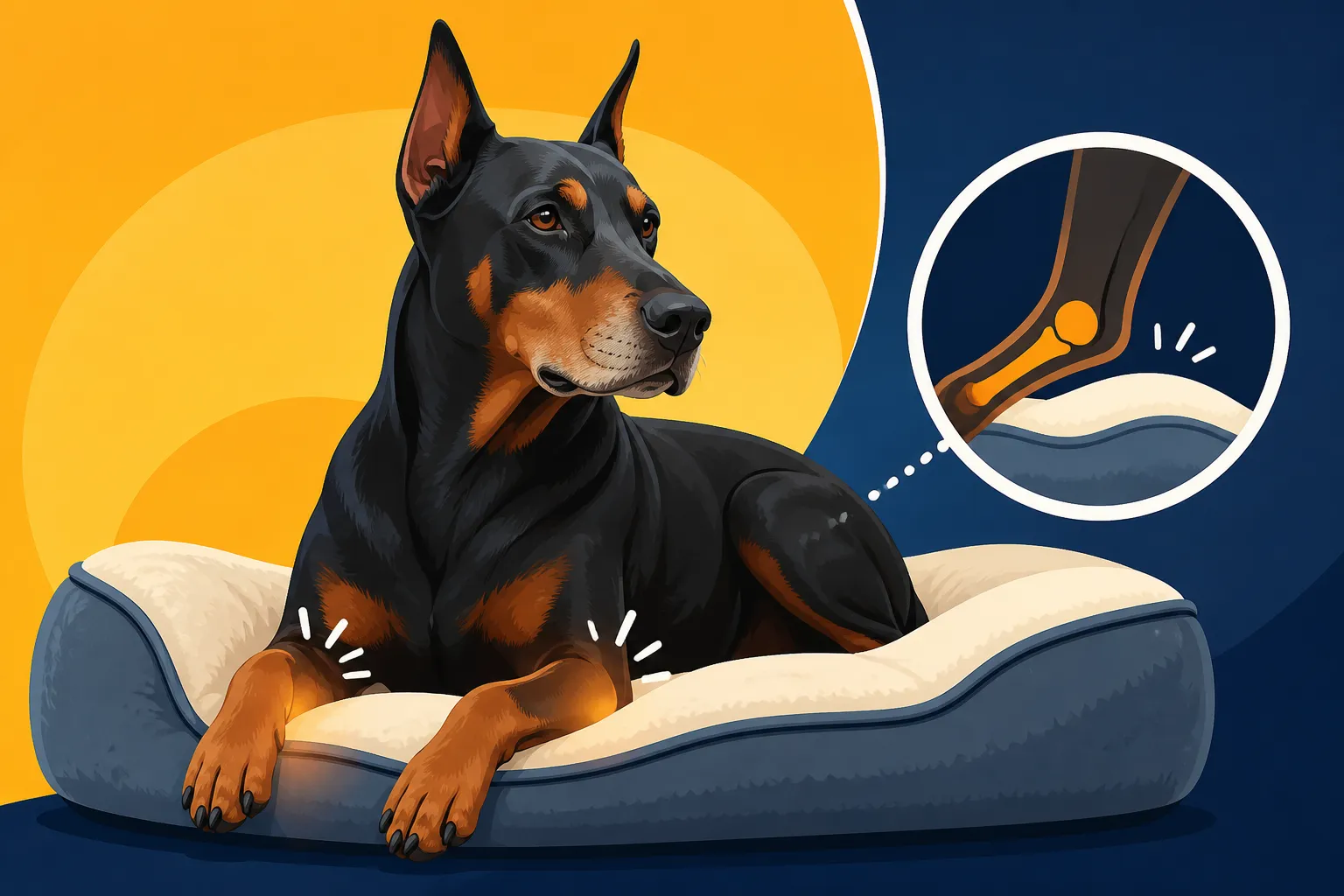
What often begins as a small, harmless patch of thickened skin on the elbow can, in an older Doberman, become a significant problem. As they lose muscle mass, which is a natural part of aging, their bones become even more prominent. This means their elbows bear an even greater brunt of their body weight when they lie down. The continuous pressure on these unpadded points restricts blood flow and can lead to hair loss, further exposing the skin to damage. Without adequate protection, these calluses can become dry, cracked, and even develop into painful pressure sores, also known as hygromas, which can become infected and require veterinary intervention. It's a cruel irony that their athletic build, which we admire so much, contributes to this vulnerability in their golden years.
Recognizing the Signs of Discomfort and Potential Problems
Being observant is key to catching these issues before they become severe. The earliest signs of elbow problems often begin subtly. You might first notice a small, hairless patch on one or both elbows, which feels slightly thicker than the surrounding skin. This is the formation of a callus. As it progresses, the skin can become visibly darker, rougher, and may even appear dry or flaky. Imagine the skin on your own heel becoming hard and cracked – it's a similar process.
If left unaddressed, these calluses can start to swell, indicating fluid accumulation underneath the skin, forming a hygroma. This swelling can range from soft and movable to firm and painful. You might notice your Doberman licking or chewing at their elbows more frequently, a clear sign of irritation or pain. They might also become reluctant to lie down quickly or may shift positions repeatedly, trying to find a comfortable spot. Some Dobermans might even start to favor one side, or show a subtle lameness after resting for a while, indicating joint stiffness or pain exacerbated by the pressure on their elbows. If you gently feel around their elbows, you might detect warmth, which can be a sign of inflammation or infection. Any open sores, discharge, or foul odor from the elbow area warrants immediate veterinary attention, as these can be serious infections that require antibiotics or even drainage.
Essential Features of Orthopedic Bedding for Senior Dobermans
When your Doberman starts to show these signs of aging, investing in quality orthopedic bedding isn't just a luxury; it's a crucial part of their daily care. Not all dog beds are created equal, especially when it comes to supporting a large, bony breed like a Doberman. You need something specifically designed to cradle their joints and alleviate pressure.
The Importance of High-Density Memory Foam
The absolute cornerstone of good orthopedic bedding for an aging Doberman is high-density memory foam. Forget those fluffy, poly-fill beds that look comfortable but flatten into pancakes after a few weeks. Those beds offer no real support for a dog weighing upwards of 60 or 70 pounds, let alone a male Doberman pushing 90 or more. A Doberman truly needs a bed that can withstand their weight and distribute it evenly across the surface.
High-density memory foam does exactly this. It conforms to your Doberman's body shape, providing customized support and cradling their prominent joints like elbows, hips, and shoulders. This even distribution of pressure is vital because it prevents any one spot from bearing the full brunt of their weight, which is what leads to calluses and pressure sores. When you press your hand into good memory foam, it should slowly rebound, not spring back instantly or stay compressed. Look for beds that clearly state they use "human-grade" or "medical-grade" orthopedic foam, as this often indicates a higher density and better quality. Brands available on Chewy and Amazon often carry a wide range of beds meeting these criteria, so it’s worth reading reviews specifically from owners of large, heavy breeds. This specialized support can make a world of difference in reducing pain, improving sleep quality, and preventing further skin damage for your senior Doberman.
Material and Cover Considerations for Durability and Hygiene
Beyond the internal foam, the external features of an orthopedic bed are just as important, especially for senior Dobermans. As our dogs get older, accidents can happen – whether it's a dribble from an aging bladder or a little regurgitation. This is why a waterproof internal liner is non-negotiable. This liner protects the memory foam from moisture, odors, and bacteria, extending the life of the bed and making cleanup much easier. Without it, the foam can quickly become soiled and unsanitary.
The outer cover needs to be durable, easily removable, and machine-washable. Look for sturdy fabrics like denim, canvas, or heavy-duty microsuede that can withstand repeated washing without falling apart. Zippers should be robust and ideally hidden to prevent your Doberman from chewing on them. Some Dobermans, even in their old age, might still have a mischievous streak or a tendency to "nest" aggressively, so a resilient fabric is key. It's incredibly frustrating to invest in a great orthopedic bed only to have the cover shred within a few months. Having a spare cover is also a wise idea, allowing you to wash one while the other is in use. Keeping the bed clean and fresh will encourage your Doberman to use it regularly and contribute to overall hygiene, which is particularly important for dogs with thinning skin or existing calluses. Many reputable brands on Amazon and Chewy offer beds with excellent, easily washable covers, often with replacement options available.
Choosing the Right Size and Style for Your Doberman's Comfort
Finding the right bed isn't just about the internal components; it's also about ensuring it perfectly fits your Doberman's size and accommodates their natural sleeping habits. Dobermans are not small dogs, and their distinctive body shape means they need space to truly relax.
Ensuring Ample Space for Stretching and Sprawling
Dobermans are long, lean dogs with powerful limbs. Unlike some breeds that curl into a tight ball, many Dobermans love to stretch out completely, whether on their side, back, or in a full "superman" sprawl. An undersized bed will force them to compromise on their sleeping position, leaving limbs or their head unsupported, or, more critically, leaving their elbows hanging off the edge, negating the very purpose of an orthopedic bed.
When measuring for a bed, observe your Doberman in their most stretched-out, relaxed sleeping position. Measure them from nose to tail-base, and then add at least 10-12 inches to that length. Do the same for width. A bed that is too small can create new pressure points as they try to fit themselves onto it, or simply make them avoid it altogether. The goal is to provide a generous surface where they can shift, stretch, and get comfortable without feeling constrained. For many adult Dobermans, this means looking at "extra-large" or even "jumbo" sized beds, ensuring that there's plenty of room for their impressive length and all their limbs to be fully supported. Remember, a bed that's slightly too big is always better than one that's too small. For a Bedding a Doberman With No Body Fat, ample space and cushioning are paramount.
Elevated Beds vs. Floor Beds and Their Benefits
When it comes to the style of the bed, you generally have two main choices for orthopedic support: traditional floor beds or elevated beds. Each has its own set of benefits, and the best choice often depends on your Doberman's specific needs, your climate, and your home environment.
Floor Beds: These are the most common and often feature a thick slab of memory foam directly on the floor.
- Pros: They offer excellent stability, which can be comforting for an older dog with mobility issues who might be a bit wobbly. They are often very plush and insulating, providing warmth in colder climates. Many offer higher density foam configurations perfect for pressure relief. Brands like PetFusion or Big Barker (often available through Chewy or Amazon) specialize in these types of heavy-duty orthopedic floor beds.
- Cons: They can absorb and retain heat in very warm climates, and some Dobermans might still seek out cool, hard floors if they overheat. Getting up from a very low bed might still be a challenge for some dogs with severe arthritis, despite the support.
Elevated Beds (Cot-style): These beds typically consist of a sturdy frame with a stretched fabric surface, lifting the dog off the ground.
- Pros: They provide excellent airflow, keeping your Doberman cool in warmer weather, and lift them off cold, hard floors in winter. The taut fabric surface often provides a gentle, hammock-like support that can be very comfortable for arthritic joints, making it easier for them to stand up as there's less "sag." This can be particularly beneficial for Stiffness in a Doberman That Used to Sprint.
- Cons: While some offer orthopedic memory foam overlays, the primary support comes from the tension of the fabric, which might not offer the same targeted pressure relief as a thick memory foam block. Some dogs might find them less stable or prefer the solid feel of a floor bed.
Consider your Doberman's preferences, mobility level, and the temperature regulation in your home. If your Doberman frequently seeks out cool tiles, an elevated bed might be a good option. If they shiver easily even indoors (a common Doberman trait due to their thin coat and lack of body fat), a thick, insulating floor bed, possibly paired with Winter Coats and Cold-Weather Gear for a Doberman, might be more appropriate.
Here's a quick comparison of popular orthopedic bedding types:
| Bedding Type | Primary Benefit for Senior Dobermans | Key Consideration |
|---|---|---|
| High-Density Memory Foam | Superior pressure relief, joint cushioning, even weight distribution | Must be truly high-density to prevent flattening |
| Orthopedic Foam (Layered) | Combines support layers for stability and comfort | Ensure top layer is memory foam for pressure points |
| Elevated Cot-Style | Excellent airflow, off cold floors, easier to get up | May need added pad for targeted elbow cushioning |
| Bolster Beds (Orthopedic) | Provides head/neck support, sense of security, good for curling up | Ensure center foam is robust and large enough to stretch |
Integrating New Bedding and Ongoing Care Strategies
Bringing home a new bed is a fantastic step, but it’s part of a larger picture of holistic care for your senior Doberman. Getting them to use it, and combining it with other health strategies, will ensure maximum comfort and well-being.
Introducing the New Bed and Encouraging Use
Dobermans, like many dogs, can be creatures of habit. Even if their old bed is flattened and uncomfortable, they might be hesitant to immediately embrace a new one. The key is to make the introduction a positive and inviting experience. Start by placing the new bed in a familiar spot where your Doberman already likes to rest. Don't immediately remove their old bed; have both available for a few days if space allows.
Encourage them to explore the new bed with positive reinforcement. Toss a favorite treat onto it, or praise them enthusiastically when they sniff or step onto it. You can also place their favorite blanket or a toy with their scent on the new bed to make it feel more familiar. Some Dobermans respond well to a calming spray or even a pheromone diffuser near the bed. Patience is crucial; don't force them. If they choose to lie on the old bed, that's fine. Continue to make the new bed appealing. Within a few days, most Dobermans will discover the comfort and support the new orthopedic bed offers and make it their preferred resting spot. For instance, if your Doberman is accustomed to a specific treat from Ollie, scattering a few on the new bed can create an immediate positive association.
Beyond Bedding: Holistic Approaches to Elbow Health
While excellent orthopedic bedding is paramount for an old Doberman's elbows, it's truly just one piece of the puzzle. A holistic approach will provide the best quality of life as they age.
First, maintain a healthy weight. An overweight Doberman places even more stress on their joints and elbows. Regular, gentle exercise appropriate for their age, combined with a carefully portioned diet, can help them stay lean. Paying attention to The Waist a Doberman Should Show From Above is crucial. Talk to your vet about the right caloric intake for your senior Doberman; sometimes Softer Meals for a Senior Doberman can be more palatable and easier to digest.
Second, consider joint supplements. Glucosamine, chondroitin, and omega-3 fatty acids (like fish oil) are commonly recommended by veterinarians to support joint health and reduce inflammation. While these aren't miracle cures, they can contribute to overall comfort and flexibility. If your Doberman is also managing other breed-specific conditions like Copper Liver Disease in Doberman Females, discuss how any supplements might interact with their existing medications or dietary needs, such as a Low-Copper Diets for a Doberman.
Third, regular veterinary check-ups are non-negotiable. Your vet can monitor existing calluses for signs of infection, assess joint mobility, and recommend pain management strategies if needed. They can also prescribe specific treatments for hygromas or other skin conditions that might arise. An annual or even bi-annual check-up is vital to catch any new issues early.
Finally, daily comfort and prevention matter. Keep your Doberman's nails trimmed to ensure proper paw alignment, which impacts gait and joint stress. If their elbows are already dry or cracked, your vet might recommend a topical moisturizer or balm. In colder weather, remember that Dobermans have minimal body fat and a short coat, making them susceptible to the cold. Winter Coats and Cold-Weather Gear for a Doberman can help keep them warm and reduce stiffness, encouraging them to move more comfortably and minimizing the impact of cold floors. All these efforts combined create an environment where your senior Doberman can thrive, enjoying their golden years in comfort.
Disclaimer
This article is for general informational purposes only and does not constitute professional advice. Laws, prices and regulations vary by location and change over time. Consult a qualified professional for guidance on your specific situation.