What Went Into the First Dobermans
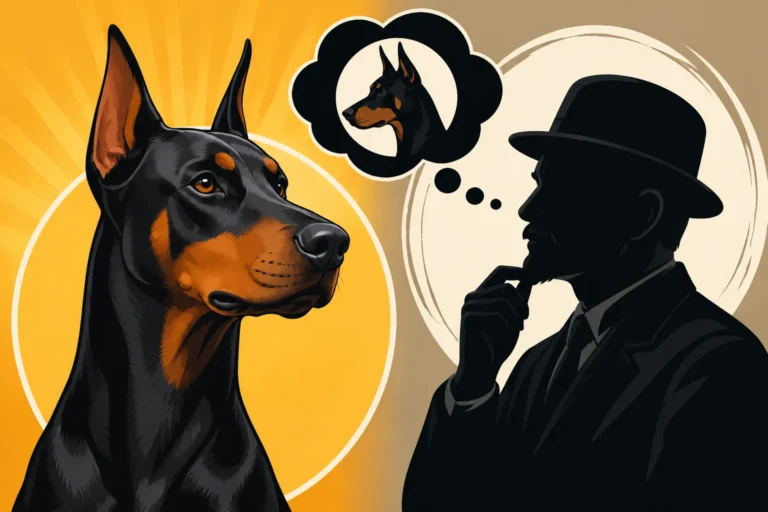
It’s easy to look at the sleek, powerful Doberman of today and marvel at its refined appearance and intelligent demeanor, but have you ever stopped to wonder where it all began? For many Doberman enthusiasts, the exact lineage of this magnificent breed remains a bit of a mystery, shrouded in the mists of late 19th-century Germany. This guide will take you on a journey back in time, delving into the fascinating story of how the Doberman Pinscher came to be, exploring the motivations of its creator and the various ancestral breeds believed to have contributed to its unique combination of traits.
The Vision of Karl Friedrich Louis Dobermann
The story of the Doberman Pinscher isn't one of ancient lineage or accidental development; it's the tale of a man with a very specific vision and the determination to bring it to life. Karl Friedrich Louis Dobermann was that man, and his professional and personal circumstances in the town of Apolda, Thuringia, in the late 19th century, were the perfect crucible for creating a new type of dog.
The Man Behind the Breed
Karl Dobermann was quite the character, holding several roles in his community. He was, famously, a tax collector, a profession that often required him to travel with significant sums of money and deal with people who weren't always thrilled to see him. Beyond that, he also served as the local dog catcher and worked as a night watchman. These were not jobs for the faint of heart, and they put him in situations where personal safety, and the security of his collections, were paramount. It’s no wonder he felt the need for a formidable companion. He wasn't just looking for any dog; he needed a canine partner that was unwavering in its loyalty, fearless in its defense, and intelligent enough to act on command in potentially dangerous situations. He had access to a diverse pool of local dogs through his role as a dog catcher, which provided him with a unique opportunity to selectively breed for the exact traits he desired. It was a practical endeavor, born out of necessity, rather than a whimsical pursuit of a new fancy breed. His work laid the foundation for the Doberman we know today, a testament to his focused breeding program. You can learn more about his personal journey and motivations in Karl Dobermann and the Dogs He Needed.
Traits Dobermann Sought
Dobermann’s occupations demanded a dog with a very specific set of characteristics. Firstly, he needed a dog with an unshakeable temperament – one that was courageous and resolute, unafraid to stand its ground, but not recklessly aggressive. This was a protector, not a brawler. Secondly, intelligence was crucial. A dog that could understand and execute complex commands, think independently in a crisis, and adapt to different scenarios was invaluable. This wasn’t about brute force; it was about smart, effective guarding. Thirdly, he required keen senses, particularly hearing and scent, to alert him to potential threats long before they became immediate dangers. And finally, endurance and physical prowess were essential for a dog that would accompany him on long, often solitary rounds, regardless of weather or terrain. He wasn't just breeding for looks, though a striking appearance certainly helped project an air of authority and deter would-be troublemakers. Every selection Dobermann made was geared towards creating the ultimate personal protection dog, a canine bodyguard perfectly suited to his demanding life. This relentless pursuit of purpose shaped the very essence of the Doberman Pinscher.
The Early Influences: Unraveling the Genetic Tapestry
Pinpointing the exact breeds that went into the Doberman is a bit like trying to solve an old puzzle with some missing pieces. Karl Dobermann, being a practical man rather than a meticulous record-keeper by today's standards, didn't leave behind detailed breeding logs. However, through historical accounts, breed characteristics, and anecdotal evidence from his contemporaries, a strong consensus has emerged regarding the most likely contributors to this formidable breed.
The Rottweiler Connection
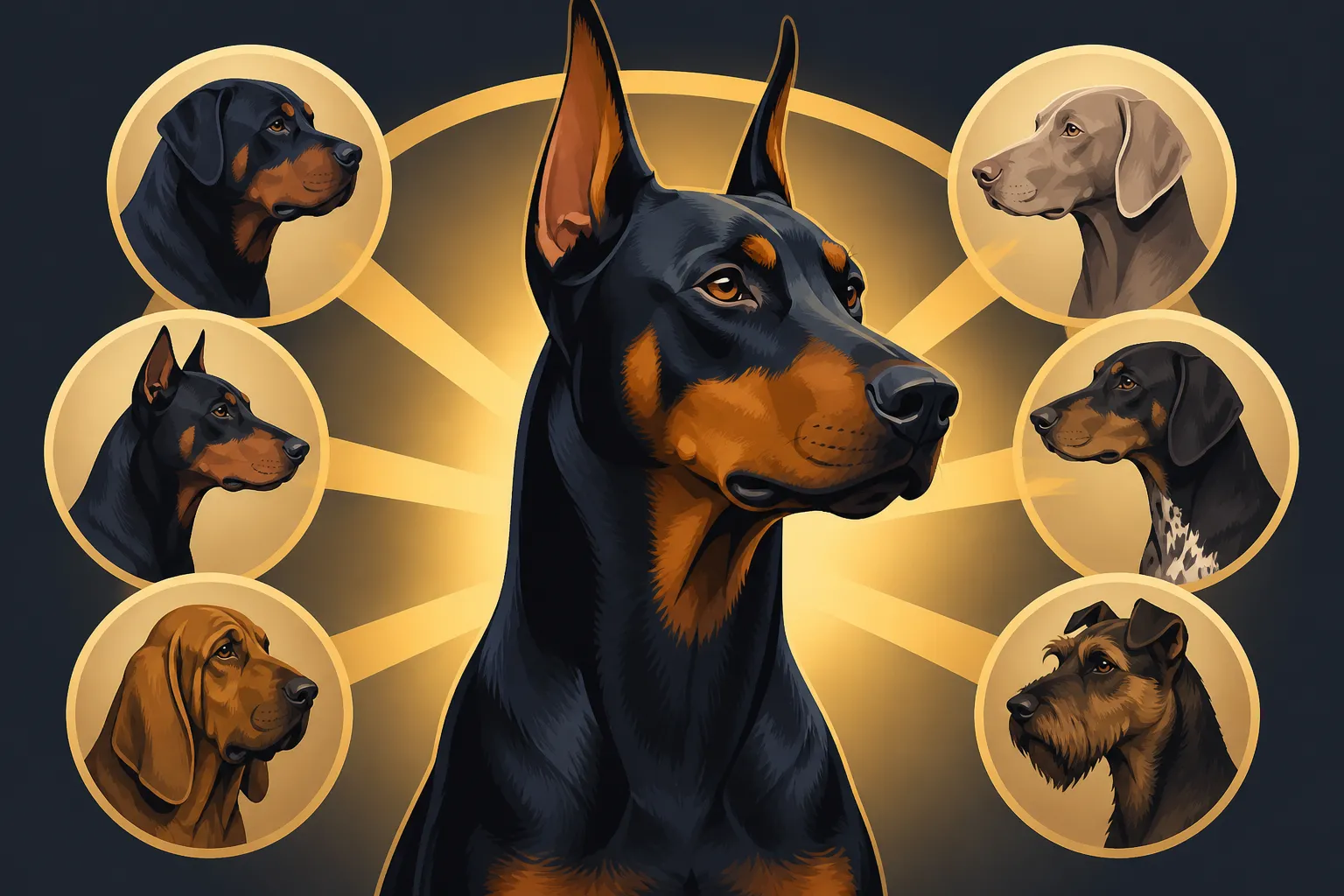
One of the most widely accepted and probable ancestors of the Doberman is the Rottweiler. At the time, Rottweilers (or rather, their ancestors, the German Butcher's Dogs) were robust, fearless animals primarily used for driving cattle and guarding property. They were known for their powerful build, protective instincts, and black and tan coloring, which is a hallmark of the Doberman. Imagine Dobermann seeing these dogs working in the marketplace, their imposing presence and natural guarding ability making a strong impression. It's highly likely that he sought to incorporate their strength, territorial instincts, and formidable presence into his evolving breed. The Doberman's deep chest and powerful musculature certainly echo the Rottweiler, and the shared black and tan coat pattern is a strong indicator of this ancestral link. It’s believed these dogs provided much of the Doberman’s raw power and guardian spirit. Many breed historians firmly believe that Whether the Rottweiler Is in the Doberman is not a question of 'if' but 'how much'.
These early "butcher's dogs" were not quite the uniform breed we recognize as the Rottweiler today; they were more of a landrace, varied in type but consistent in their function and general appearance. They were selected for their ability to protect livestock and money, making them invaluable companions for merchants and drovers. Dobermann, with his similar need for a steadfast protector, would have seen an obvious synergy. The Rottweiler’s stoic, confident demeanor and inherent protective drive would have been highly desirable qualities to embed within his own burgeoning line. This foundational genetic contribution helped establish the Doberman as a serious working dog from its very inception.
The German Pinscher's Role
Another crucial and often cited contributor is the German Pinscher. The "Pinscher" in Doberman Pinscher itself hints at this connection. German Pinschers were medium-sized, intelligent, and lively dogs, valued for their vermin-catching abilities and alert nature. They possessed a sharp, quick intelligence and a tenacious spirit, traits that Dobermann would have found highly appealing for an alert guard dog. While smaller than the Rottweiler, the German Pinscher would have contributed significantly to the Doberman's agility, quick reflexes, and inherent "snappiness" – that alert, ready-for-action temperament. Their sleek, short coat and elegant head structure might also have influenced the Doberman's more refined appearance compared to the heavier-boned Rottweiler ancestors. The German Pinscher likely refined the Doberman's speed and neurological quickness, making it not just powerful but also incredibly responsive and agile.
The German Pinscher’s contribution wasn’t just physical; their energetic and alert disposition was equally vital. These dogs were always on watch, quick to react to any perceived intrusion, and incredibly focused on their task. This vigilance and quickness of mind were perfect complements to the Rottweiler's robust physical presence. By combining these attributes, Dobermann was able to breed a dog that was not only physically capable of deterring threats but also intellectually sharp and keenly aware of its surroundings. The German Pinscher helped infuse the Doberman with that characteristic "electricity"—a readiness to spring into action that defines the breed.
Early Shepherds and Terriers
Beyond the two most prominent influences, historical accounts suggest that Dobermann likely used a variety of local farm dogs, early shepherd types, and even terriers to achieve his desired outcome. These "street dogs" or local working breeds were often unpedigreed but possessed specific useful traits. For example, some believe that early German Shepherds or similar herding dogs contributed to the Doberman's trainability, intelligence, and perhaps even its loyal, "one-person" bonding tendency. Their natural aptitude for understanding and responding to human direction would have been invaluable.
Terriers, such as the Manchester Terrier, might have contributed to the Doberman's tenacious grip, fearless nature, and perhaps further refined its sleek, smooth coat. Whether the Manchester Terrier Shaped the Doberman is a question debated among breed historians, but the similarities in coat and certain aspects of temperament make it a plausible theory. The goal was always functionality, so Dobermann wouldn't have shied away from using any dog that displayed a desirable characteristic, regardless of its specific "breed" label at a time when formal breed standards were still nascent. The exact mix is lost to time, but the underlying principle was always selective breeding for purpose.
Here's a simplified look at the likely influences:
| Ancestral Dog Type | Key Contributions to Doberman |
|---|---|
| Rottweiler (Butcher's Dog) | Power, strength, guarding instinct, black & tan coloration, loyalty |
| German Pinscher | Agility, quick reflexes, intelligence, sleek coat, alertness |
| Early German Shepherds | Trainability, intelligence, strong bonding, herding instinct (adaptable) |
| Manchester Terrier (or similar) | Tenacity, fearlessness, keen senses, refined coat, vermin drive |
| Greyhound (or similar sighthound) | Speed, elegance, lean musculature, athleticism |
This table provides a snapshot of the mosaic of traits Dobermann was piecing together. Each element was chosen for a reason, contributing to the ultimate functional design of the breed. For instance, the lean musculature and explosive speed of a sighthound type, possibly a Greyhound, would have enhanced the Doberman’s ability to cover ground quickly, a vital asset for a personal protector. This blend of brawn, brains, and athleticism truly defined Dobermann's creation.
Refining the Breed: The Contributions of Otto Goeller and Beyond
While Karl Dobermann laid the groundwork for the breed, it was the efforts of subsequent breeders, particularly Otto Goeller, that truly refined and standardized the Doberman Pinscher into the recognizable form we appreciate today. Dobermann himself passed away relatively early in the breed's development, leaving others to carry on his work.
Standardizing the Doberman
Otto Goeller is often credited as the "father of the breed" in its more modern sense, despite Dobermann being its originator. Goeller took Dobermann's functional working dogs and began to focus on establishing a consistent type, both in appearance and temperament. He was instrumental in forming the first Doberman Pinscher Club in Apolda in The Doberman Club Goeller Founded in 1899, and in creating the initial breed standard. This was a critical step. Before standardization, dogs within the "Doberman" line might have varied considerably in size, shape, and even disposition. Goeller and his contemporaries sought to create a uniform ideal, ensuring that a Doberman from one breeder would broadly resemble and behave like a Doberman from another. This meant careful selection, often involving line breeding and even some outcrossing to solidify desired traits and eliminate undesirable ones. Their work transformed Dobermann's practical mongrels into a distinct, recognizable breed with predictable characteristics. This formalization was essential for the breed's acceptance and propagation beyond its local origins. You can delve into the details of these early efforts in The 1900 German Doberman Standard.
This standardization wasn't just about aesthetics; it was deeply rooted in maintaining the breed’s working integrity. Goeller understood that for the Doberman to continue as an effective protector and companion, its core attributes of courage, intelligence, and trainability had to be consistently reproduced. He emphasized the importance of a stable temperament, ensuring that the breed remained formidable without becoming overly aggressive or unstable, a common pitfall for dogs bred primarily for guarding. The breeders of this era rigorously selected for mental fortitude and physical soundness, believing that a truly capable working dog must excel in both domains. This dedication to a balanced standard helped cement the Doberman’s reputation as a reliable and noble guardian.
Introducing Other Bloodlines
Even after the initial foundation, breeders continued to introduce other bloodlines to refine specific traits. For example, some theorize that the graceful lines and athleticism of the Greyhound or even the noble appearance of the Weimaraner might have been sparingly introduced to enhance the Doberman's elegance, speed, and overall refinement. The aim was to create a dog that was not just powerful but also aesthetically pleasing and agile. These carefully selected outcrosses were not about diluting the original working purpose but about perfecting the physical package that housed those working instincts. The focus was on improving conformation, gait, and perhaps even refining the temperament further to ensure an intelligent, biddable, and steadfast companion. The result was a dog that moved with purpose and carried itself with an air of sophisticated strength, a true athlete in a polished coat.
It's important to remember that such introductions were done with extreme caution and clear objectives. Any new blood had to align with the overarching goal of producing a superior guardian dog. For instance, if a sighthound was introduced, it would be for its speed and sleekness, without sacrificing the Doberman's protective drive or robust health. These selective introductions were about fine-tuning, akin to a sculptor refining their work, carefully chipping away imperfections and enhancing the most striking features. This continuous refinement process is why the Doberman Pinscher quickly gained a reputation for its striking appearance and formidable capabilities, becoming a sought-after breed for protection and companionship.
The Dobermann Pinscher Club
The establishment of the Dobermann Pinscher Club in Apolda in the late 19th century was a pivotal moment. This club provided a formal structure for breeders, fostering a collaborative environment for discussions on breeding practices, temperament, and health. It was through the club that the breed standard was developed and upheld, ensuring consistency and preventing the breed from diverging into disparate types. The club also played a crucial role in registering dogs, tracking pedigrees, and organizing shows and working trials, all of which contributed to the breed's recognition and preservation. Without the dedicated efforts of these early club members, the Doberman might have remained a regional curiosity rather than becoming a globally recognized and admired breed.
The club served as a powerful unifying force, bringing together individuals who shared a passion for Karl Dobermann's creation. It wasn't just a social gathering; it was a serious commitment to the breed's future. They understood the importance of meticulous record-keeping, health screening (as primitive as it was then), and careful selection to avoid pitfalls like aggression or genetic weaknesses. The club members were the custodians of the Doberman's legacy, ensuring that the breed evolved responsibly while retaining the essential characteristics that made it unique. Their foresight and dedication were instrumental in spreading the Doberman's reputation and establishing its presence on the world stage.
Physical Traits Inherited from Ancestors
The Doberman's distinctive appearance isn't accidental; it's a carefully curated blend of traits inherited from its diverse ancestry, molded by human selection for both function and form. Every curve, every muscle, and even the texture of its coat can be traced back to the foundational breeds that Dobermann and his successors utilized.
Structure and Build
Look at a Doberman, and you see an athlete. Its lean, muscular build, deep chest, and powerful hindquarters speak volumes about its working origins. This robust yet elegant structure likely comes from a combination of the heavy-boned strength of the Rottweiler ancestors and the streamlined agility of sighthound-like dogs. The Rottweiler would have provided the foundational substance, the power to deter and engage, while the lighter, faster breeds contributed to its endurance and explosive speed. The Doberman's balance – powerful but not cumbersome, agile but not frail – is a testament to this careful blend. Its long, clean lines enable efficient movement, making it equally adept at sprinting across a field or executing quick turns in protection work. This body was built for purpose, designed to be formidable, fast, and enduring, capable of keeping up with its human companion through all manner of tasks.
The Doberman's elegant gait, characterized by a long, reaching stride, also has its roots in this ancestral mix. A dog designed to cover ground quickly and tirelessly would naturally develop such an efficient movement. This blend ensures that the Doberman possesses both the intimidating presence of a guard dog and the athletic grace of a working companion. The development of a strong, level topline and well-angulated hindquarters, as described in the breed standard, further emphasizes this functional design, ensuring maximum power transmission and agility. It's a structure that commands respect while showcasing unparalleled athleticism, a true testament to the discerning eye of its early breeders.
Coat and Color
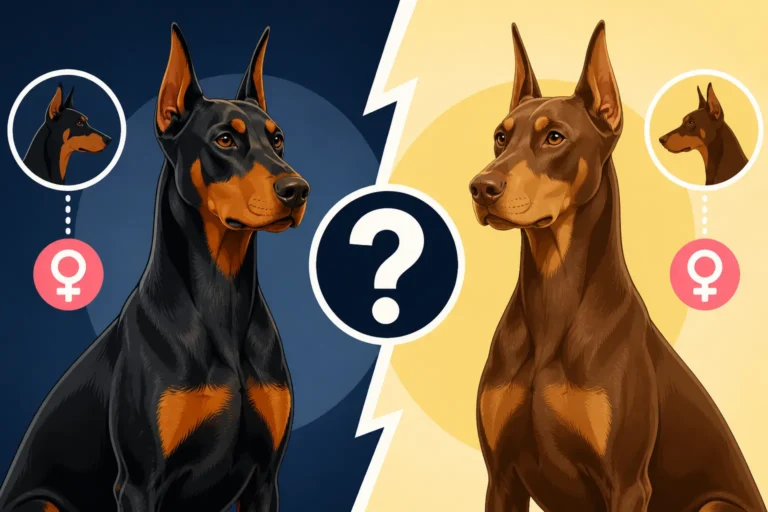
The Doberman's classic black and rust coloration is arguably its most iconic feature, and this too is a direct inheritance. The striking black and tan pattern is characteristic of many German working breeds, most notably the Rottweiler and the German Pinscher. These dogs naturally carried the genes for this distinct pattern, and Dobermann purposefully selected for it, likely appreciating its sharp contrast and commanding appearance. While black and rust is the most common and often preferred color, the breed also comes in red, blue, and fawn, all with rust markings. The blue and fawn varieties, however, are a result of a dilution gene, which can sometimes be linked to specific coat and skin issues like Color Dilution Alopecia.
The Doberman's short, hard, and close-lying coat is also an ancestral trait, perfectly suited for a working dog. This type of coat is low-maintenance, sheds dirt easily, and offers some protection against the elements without being cumbersome. It speaks to a heritage where practicality was prioritized over elaborate grooming. The lack of an insulating undercoat, while contributing to its sleek look, means the Doberman is more susceptible to cold than many other breeds, a detail owners must be mindful of. This sleek coat, accentuating its musculature, is another nod to the athletic and functional design Dobermann envisioned. The Black and Rust Doberman remains the most recognized, but all colors share this utilitarian coat type.
Ear and Tail Tradition
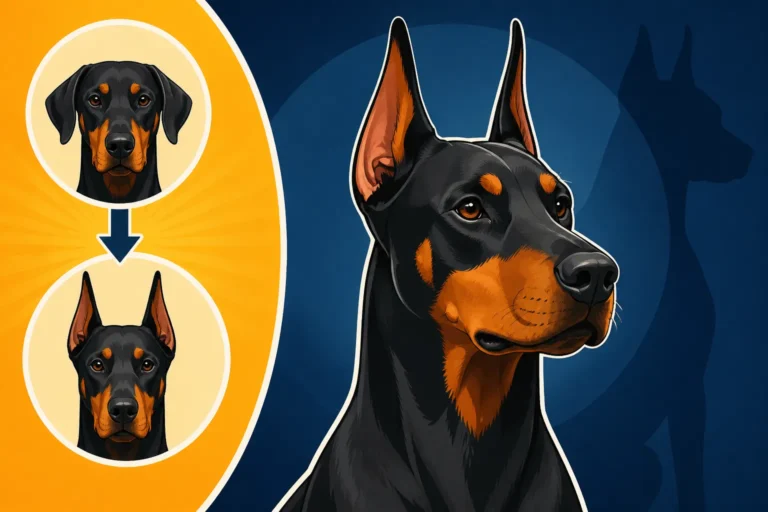
The Doberman's famously cropped ears and docked tail are not natural features but rather traditions rooted in the breed's working history and aesthetic preferences. In the late 19th and early 20th centuries, ear cropping and tail docking were common practices for working dogs. Docking the tail was believed to prevent injury during work (e.g., cattle driving or protection work), and cropping the ears was thought to give the dog a more intimidating appearance and reduce potential grab points in a confrontation. These modifications contributed to the "sharp" and alert look that became synonymous with the Doberman.
While ear cropping and tail docking are now controversial and even illegal in many parts of the world, they remain part of the historical image of the Doberman, enshrined in breed standards like the AKC's. The original rationale was purely functional, ensuring the dog was as effective and protected as possible in its duties. Today, many Dobermans are left with natural ears and tails, and while they may look different from the traditional image, their underlying temperament and capabilities remain unchanged. The decision to crop or dock is now a personal one for owners, influenced by local laws and personal preferences, but the historical context ties directly back to the breed's founding principles.
Temperament and Drive: A Legacy of Purpose
The Doberman's temperament is perhaps its most defining characteristic, a complex blend of intelligence, courage, and intense loyalty. These traits aren't accidental; they are the direct result of Karl Dobermann's original vision and the focused breeding efforts of those who followed him. Every aspect of the Doberman's disposition was carefully selected for its utility in a personal protection dog.
Guarding Instincts
At its core, the Doberman is a guardian. This instinct is deeply ingrained, inherited from its formidable ancestors like the Rottweiler. Dobermann needed a dog that would instinctively protect him and his property, acting as a deterrent and, if necessary, a defender. This means a Doberman is naturally alert, often suspicious of strangers until properly introduced, and quick to assess new situations. They possess an innate ability to distinguish between friend and foe, often making them excellent judges of character, though training and socialization are crucial to ensure this instinct is channeled appropriately. Without proper guidance, this protective nature can easily tip over into undesirable behaviors. Early exposure to a wide variety of people, places, and sounds is absolutely critical for a Doberman puppy to develop into a stable, confident adult who can discern true threats from harmless everyday occurrences.
Their guarding behavior isn't about uncontrolled aggression; it's about vigilance and a willingness to act when truly needed. A well-bred and well-socialized Doberman will display an intelligent watchfulness, observing situations keenly before reacting. They are not typically dogs that bark indiscriminately, but rather those that assess and alert with purpose. This makes them superb family guardians, always aware of their surroundings and their family's safety. Understanding Doberman Guarding Instinct and Where It Tips Over is key for any prospective owner. This innate drive is a powerful tool, but like any powerful tool, it requires responsible handling and consistent reinforcement to ensure it serves, rather than dictates, the dog's behavior.
Intelligence and Trainability
The Doberman consistently ranks among the most intelligent dog breeds, a trait actively sought by Dobermann and refined by subsequent breeders. Its sharp mind and eagerness to please make it highly trainable, capable of mastering complex commands and excelling in various dog sports. This intelligence, likely inherited from a mix of Pinscher and perhaps early shepherd types, manifests as a quick grasp of new concepts and an impressive problem-solving ability. However, this high intelligence comes with a caveat: a bored Doberman is often a destructive Doberman. They require constant mental stimulation, whether through training, puzzle toys (you can find a great selection on Chewy, for instance), or engaging activities.
Their trainability is legendary, but it's not a passive trait. Dobermans thrive on consistency, clear communication, and positive reinforcement. They form strong bonds with their handlers and respond best to methods that build trust and mutual respect. This keen intellect, combined with a strong desire to work alongside their human, makes them exceptional partners for those willing to invest the time and effort. Many Doberman owners find themselves continuously amazed by their dog's capacity to learn and adapt, making the training journey a deeply rewarding experience. If you're considering a Doberman, be prepared for a dog that is Training a Doberman That Is Smarter Than You Expect.
The "Velcro" Trait
One of the most endearing, and sometimes overwhelming, traits of the Doberman is its intense desire to be close to its human family, often referred to as the "Velcro Doberman" syndrome. This deep bonding is a direct legacy of its origins as a personal protection dog. Dobermann needed a dog that was inextricably linked to him, attentive to his every move and command. This profound loyalty and need for proximity mean that Dobermans thrive on human companionship and can struggle if left alone for extended periods.
This "Velcro" quality is what makes them such devoted family members. They want to be wherever you are, whether it's sitting on your feet while you work, following you from room to room, or curling up on the couch with you. While this intense bond is a source of great comfort and connection for many owners, it also means they are prone to separation anxiety if not properly conditioned to tolerate alone time from a young age. Their devotion is absolute, making them incredibly loving and affectionate companions to those they consider their pack. This is an integral part of Living With a Doberman That Follows You Everywhere.
The Modern Doberman: A Reflection of Its Past
The Doberman of today, whether gracing a show ring or patrolling a family home, is a direct descendant of those carefully selected individuals from Apolda. Its journey from a practical necessity to a globally recognized breed reflects an ongoing evolution, shaped by different breeding philosophies and regional preferences, yet always connected to its foundational purpose.
American vs. European Lines
Over the decades, different breeding programs have emerged, leading to distinct variations within the Doberman breed, most notably the American and European lines. While both adhere to the core Doberman standard, there are noticeable differences that highlight diverging priorities in breeding. European lines often maintain a stronger emphasis on working ability, retaining more of the original drive and robust physical characteristics. They tend to be heavier-boned, with larger heads and a more powerful, substantial build, often appearing more "rustic" or imposing. This focus on working aptitude means that many European Dobermans come from lines heavily involved in Schutzhund or IPO sports, ensuring their protective instincts and trainability are rigorously tested.
American lines, conversely, have often leaned towards a more refined, elegant appearance, prioritizing graceful lines, a lighter build, and a temperament that is generally considered softer and more adaptable to a purely companion role. While still highly intelligent and protective, the intensity of their drive might be less pronounced than their European counterparts. This divergence is a fascinating example of how selective breeding can subtly alter a breed over time, even while staying true to its essential nature. Understanding How a European Doberman Is Built Differently can help prospective owners decide which lineage might be a better fit for their lifestyle and expectations. Both lines, however, are unmistakably Dobermans, carrying the legacy of Karl Dobermann’s vision.
Health Considerations Linked to Ancestry
Unfortunately, the focused breeding that gave us the Doberman's remarkable traits also introduced some significant health challenges. Like many purebred dogs, Dobermans are predisposed to certain genetic conditions, some of which may have origins in the limited gene pool of its founding stock or in the subsequent intensive breeding for specific characteristics. Dilated Cardiomyopathy (DCM), a devastating heart condition, is notoriously prevalent in the breed. While not directly inherited from a specific ancestral breed, the intense selection within a relatively small gene pool over generations, coupled with possible environmental factors, has unfortunately concentrated the genes responsible for this and other conditions. It's a sobering reminder that while breeders strove for perfection, unforeseen health issues can arise. The Heart Disease That Reaches Most Dobermans is a major concern for owners.
Other conditions like von Willebrand's Disease (a bleeding disorder) and Wobbler Syndrome (a cervical spine condition) are also significant concerns. Responsible breeders today engage in extensive health testing to try and mitigate these risks, but they are a stark illustration of the consequences of shaping a breed. Prospective owners must be acutely aware of these predispositions and be prepared for the health screening and potential costs associated with managing these conditions throughout their Doberman's life. This ongoing challenge underscores the responsibility inherent in owning and breeding Dobermans, ensuring that health is as much a priority as temperament and conformation.
Preserving the Legacy
The Doberman's story is a compelling one, a testament to human ingenuity and selective breeding. From a tax collector's need for a protector to a sophisticated, intelligent companion, the breed has come a long way. Preserving this legacy means understanding its origins, appreciating the unique blend of traits that make it special, and committing to responsible ownership and breeding practices. It means valuing the Doberman's guarding instincts while ensuring they are channeled through proper training and socialization. It means recognizing their profound intelligence and providing the mental and physical stimulation they need to thrive. And perhaps most importantly, it means prioritizing their health and well-being, working to overcome the genetic challenges that have emerged over time.
For anyone considering a Doberman, or simply admiring them from afar, learning what went into the first Dobermans offers a deeper appreciation for this magnificent breed. It explains why they are the way they are – loyal, intelligent, courageous, and deeply connected to their human families. Resources found on Chewy or at reputable breed clubs often emphasize the importance of understanding a Doberman's needs, from diet to training tools, all of which contribute to a long and healthy life. It’s a breed that demands respect, commitment, and a loving hand, and in return, offers unparalleled companionship and devotion. To truly honor Karl Dobermann's vision, we must strive to raise Dobermans that are not only excellent guardians but also healthy, well-adjusted, and cherished members of our families. The journey of the Doberman is far from over, and its future rests in the hands of those who truly understand and respect its remarkable past. The Owner a Doberman Actually Needs is one who is prepared for this profound responsibility and joy.
Disclaimer
This article is for general informational purposes only and does not constitute professional advice. Laws, prices and regulations vary by location and change over time. Consult a qualified professional for guidance on your specific situation.