Which Breeds Went Into the Doberman
It’s easy to look at a sleek, powerful Doberman today and marvel at their unique blend of elegance, intelligence, and protective instincts. But have you ever stopped to wonder where that incredible combination truly came from? Many Doberman owners, myself included, are fascinated by the breed's origins, keen to understand the diverse genetic tapestry that shaped our loyal companions. This guide will take you on a journey back in time, exploring the foundational breeds believed to have contributed to the creation of the Doberman Pinscher, helping you better appreciate the rich, complex heritage behind your beloved dog.
The Visionary Behind the Doberman Breed
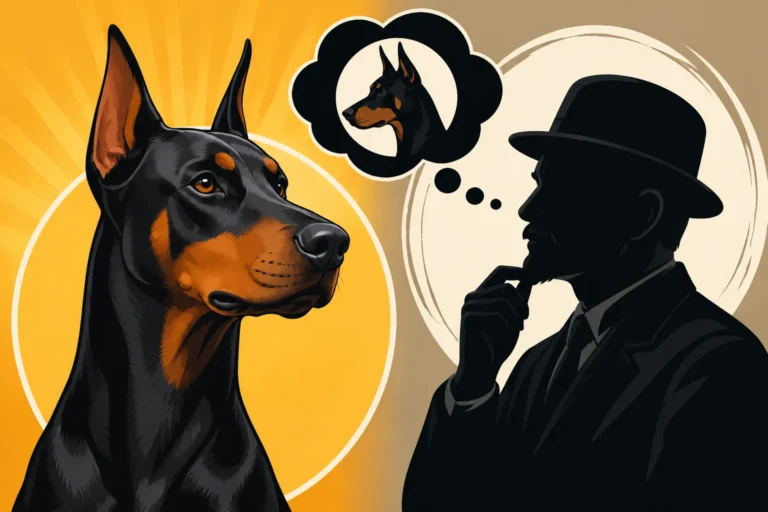
The Doberman Pinscher wasn't the result of a scientific breeding program conducted by an established kennel club. Instead, it was the brainchild of one determined man with a very specific need: Karl Friedrich Louis Dobermann. Living in Apolda, Thuringia, Germany, in the late 19th century, Dobermann held several crucial and often dangerous jobs. He was a tax collector, a night watchman, and also ran the local dog pound. Imagine being a tax collector in an era before armored cars and security systems, carrying significant sums of money through potentially unsafe areas. It quickly becomes clear why Dobermann needed a dog that was more than just a pet; he needed a fearless, intelligent, and utterly devoted protector.
The Need for a Guardian
Dobermann’s motivation was purely practical: self-preservation. He needed a dog that was intimidating enough to deter potential assailants, smart enough to respond to commands in high-stress situations, and loyal enough to defend him without hesitation. This wasn't about creating a beautiful show dog or a gentle family pet; it was about survival. He wanted a dog that was "sharp" and tenacious, qualities he found lacking in many of the breeds available to him. He was looking for courage, strength, and a keen sense of alertness, traits that would become hallmarks of the Doberman breed. The dogs he gathered from the local pound, or perhaps acquired through other means, were chosen for their inherent protective instincts and robust constitutions, regardless of their specific pedigree or appearance.
Practical Breeding, Not Purebred Science
Given Dobermann’s lack of formal breeding expertise and the informal nature of his work, his initial breeding efforts were more akin to a personal project than a meticulously documented scientific endeavor. He wasn't working with established studbooks or genetic testing. Instead, he observed the dogs he encountered, recognizing traits he desired and pairing individuals he believed would pass those traits on. This pragmatic approach meant that many of the early pairings were likely based on trial and error, and the exact mix of breeds used remains a subject of historical debate, as detailed in Karl Dobermann and the Dogs He Needed. We don't have definitive records of every dog that went into his program, which is why tracing the Doberman's exact lineage requires a degree of educated guesswork and historical inference. His focus was on function above all else, creating a dog that could serve as an uncompromising personal bodyguard.
The Core Ancestors: Tracing the Most Probable Lines
While the precise genetic recipe for the Doberman remains somewhat shrouded in the mists of time, historical accounts and expert consensus point to several breeds as the most likely primary contributors. These dogs were common in the region around Apolda during Dobermann’s time and possessed many of the characteristics he was seeking. Understanding these foundational breeds gives us a clearer picture of how the Doberman’s distinctive traits were forged.
Rottweiler's Strength and Courage
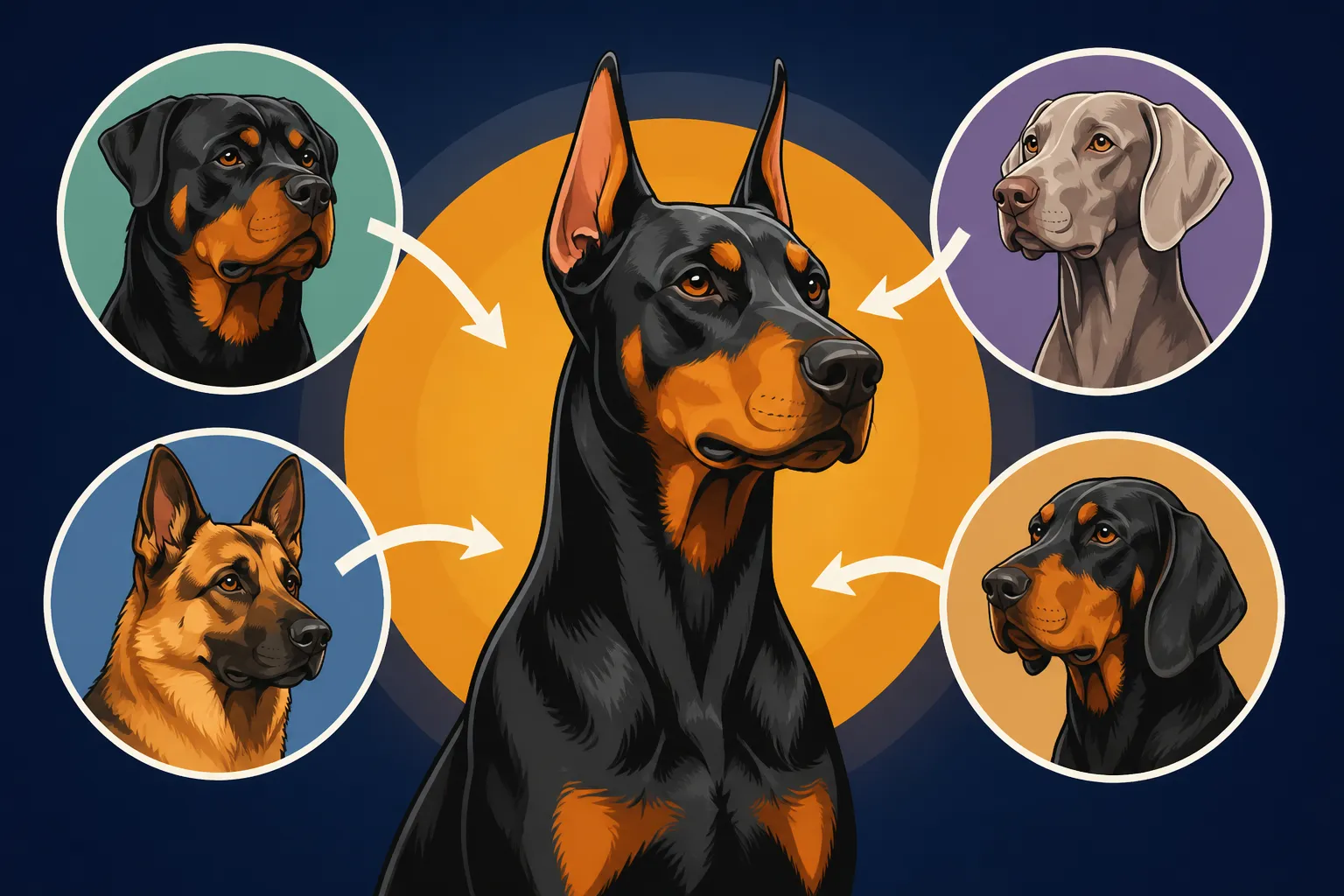
One of the most widely accepted ancestors of the Doberman Pinscher is the Rottweiler. At the time, Rottweilers were known as "butcher's dogs" – robust, powerful animals used to drive cattle to market and guard the butchers' money. They possessed immense physical strength, unwavering courage, and a natural guarding instinct that would have been invaluable to Dobermann. The Rottweiler’s sturdy build, deep chest, and protective nature align perfectly with the Doberman's development. It's believed that the Rottweiler contributed significantly to the Doberman's physical presence, its powerful bite, and its inherent protective temperament. The black and tan coloring, which is so iconic for Dobermans, is also a trait shared with the Rottweiler, although it's found in other breeds as well. If you've ever felt the sheer power of a Doberman leaning into you, you can almost sense the Rottweiler's influence.
German Pinscher's Alertness and Agility
Another crucial component in the Doberman's genetic makeup is the German Pinscher. These medium-sized dogs were known for their alertness, intelligence, and spirited nature. They were excellent ratters and farm dogs, quick on their feet and highly responsive. The German Pinscher likely contributed to the Doberman's keen senses, its sharp intelligence, and its characteristic "pinscher" look – a compact, elegant build with a watchful expression. This breed would have imbued the nascent Doberman with the agility and quickness necessary for a formidable guardian, contrasting with the heavier build of the Rottweiler. They brought that quick wit and intense focus that Doberman owners know so well. You can still see this ancestral connection when observing the Doberman's intense gaze and energetic movements, sometimes earning them the nickname "Velcro dog" due to their constant desire to be near their owner.
Black and Tan Terrier's Drive and Elegance
The old Black and Tan Terrier, now largely extinct but considered an ancestor of today's Manchester Terrier, is also often credited with shaping the Doberman. These terriers were agile, fearless, and possessed a strong prey drive, making them excellent vermin hunters. From them, the Doberman likely inherited its refined head, sleek coat, and overall elegant lines. The Black and Tan Terrier's energetic disposition and tenacity would have contributed to the Doberman's drive and determination. Furthermore, their distinctive black coat with rust markings is a clear visual link. This lineage provided the "pinscher" part of the Doberman Pinscher's name, signifying its terrier-like qualities of determination and quickness. Even today, Dobermans possess that keen terrier intelligence and drive, making them incredibly trainable for the right owner. You can find many robust training tools on Chewy to channel that drive into productive activities.
Other Influential Candidates: Debated Contributions
While the Rottweiler, German Pinscher, and Black and Tan Terrier are generally accepted as primary ancestors, historical accounts and breed characteristics suggest other breeds might have played a role, though their influence is often debated or considered less direct. These secondary influences would have helped fine-tune certain aspects of the Doberman's physique, temperament, or working ability.
The Greyhound's Speed and Grace
The Greyhound is sometimes mentioned as a possible contributor to the Doberman's lineage, particularly for its influence on the Doberman's distinctive elegant gait and lean, athletic build. Dobermann himself may have sought to imbue his new breed with greater speed and agility, and the Greyhound, renowned for its incredible swiftness and sleek physique, would have been an obvious choice. While the Doberman isn't a sighthound, its long, powerful stride and slender profile do hint at such an influence. This would have been less about adding bulk and more about refining the Doberman's athletic prowess, allowing it to cover ground quickly to pursue or intercept. The Doberman's elegant, almost floating movement in the show ring today, often described as a "reaching" gait, perhaps owes a debt to these swift ancestors, a topic explored further in The Greyhound Line Behind Doberman Speed.
Weimaraner's Hunting Prowess and Endurance
The Weimaraner, a German hunting dog known for its endurance, keen scenting ability, and striking grey coat, is another breed occasionally cited. While less visually obvious than the Rottweiler or terrier influences, the Weimaraner's attributes could have been attractive to Dobermann. Its intelligence, trainability, and stamina would have been beneficial for a working guardian dog. Some believe that the Weimaraner might have contributed to the Doberman's strong prey drive or its ability to focus and work alongside a human handler for extended periods. However, direct evidence for this connection is scarce, and its influence, if any, was likely diluted compared to the core breeds. Yet, the Doberman's innate athleticism and unwavering focus during training sessions sometimes echo the dedication of a seasoned hunting dog.
Great Dane's Imposing Stature
The imposing Great Dane, a breed known for its enormous size and noble presence, is sometimes hypothesized as an ancestor, particularly in discussions about the Doberman's ultimate size and elegant carriage. While Dobermann aimed for a formidable dog, the Great Dane’s sheer bulk might have been counterproductive to the agility he also desired. However, a less substantial contribution could have helped to solidify the Doberman's overall stature and confident bearing without adding excessive mass. The Doberman's head, in particular, with its long, clean lines, sometimes shares a certain refined quality with the Great Dane. It's plausible that a touch of the Great Dane's impressive physical presence could have been selectively incorporated to achieve the Doberman's intimidating yet graceful silhouette.
The Evolution and Standardization of the Early Doberman
Dobermann’s initial breeding was functional, focusing on raw talent rather than consistent appearance. However, after his death, other breeders recognized the immense potential in his creations. They took up the mantle, working to refine the breed, standardize its appearance, and temper some of its sharper edges, transforming it from a personal protector into a recognized and admired breed.
Otto Goeller's Contribution to the Breed
After Karl Dobermann's pioneering efforts, the task of standardizing the Doberman Pinscher largely fell to breeders like Otto Goeller, one of the founders of the National Doberman Pinscher Club of Germany in 1899. Goeller and his contemporaries focused on establishing a consistent type, refining the temperament, and documenting pedigrees. They aimed to create a more uniform look while preserving the protective instincts and intelligence Dobermann had so valued. It was through their systematic breeding that the Doberman began to resemble the dog we know today. They moved the breed from a collection of "Dobermann's dogs" to the Doberman Pinscher, a distinct and recognizable breed. You can read more about his pivotal role in Otto Goeller and the First Doberman Club. This period saw a more deliberate selection for physical traits and a more stable temperament, laying the groundwork for the breed standard.
Early Doberman Temperament
The early Dobermans were reputedly much sharper and more intense than their modern counterparts. Dobermann specifically sought out dogs with aggressive tendencies to fulfill his need for protection. Over time, as the breed gained popularity and moved beyond its singular role as a personal bodyguard, breeders began to select for a more stable and manageable temperament. This didn't mean sacrificing their protective instincts, but rather ensuring that these instincts were channelled appropriately and balanced with trainability and loyalty. The transformation from a fiercely sharp protector to the more biddable, yet still formidable, Doberman of today is a testament to careful breeding decisions. Understanding this evolution is key to appreciating how the Doberman’s temperament has been shaped, a topic further explored in Why the Doberman Softened After the 1950s. Even with these changes, responsible Doberman ownership requires a commitment to continued training and socialization, and resources like those on Chewy can provide valuable information on behavior and training.
Unraveling the Genetic Tapestry: Challenges and Modern Insights
Even with historical accounts and breeder notes, pinning down every single ancestral breed with absolute certainty is a challenge. The informal nature of early breeding, combined with the passage of time and the extinction or significant alteration of some contributing breeds, creates gaps in our knowledge.
The Challenge of Undocumented History
One of the biggest hurdles in precisely identifying all the breeds that went into the Doberman is the lack of comprehensive, written records from Karl Dobermann's initial work. Unlike modern breed development, which often involves meticulous documentation of crosses and outcomes, Dobermann's breeding was driven by immediate necessity. He wasn't thinking about future historians or geneticists. He was simply trying to create the most effective guard dog possible using the resources at hand. This means that much of what we know about the Doberman's origins is based on anecdotal evidence, logical deduction, and the visible traits shared with contemporary breeds. The "pinscher" type dogs Dobermann used were often mixed-breed animals themselves, making the exact genetic contributions even harder to disentangle. This inherent ambiguity adds to the mystique of the Doberman's creation.
Modern Genetic Insights and Their Limits
Today, with advancements in canine DNA testing, one might think it would be straightforward to definitively trace the Doberman's ancestry. While genetic panels can identify common breed groups and sometimes even specific breeds in a mixed-breed dog, applying this to a historical breed like the Doberman presents unique challenges. Many of the "old" breeds that contributed to the Doberman, such as the old Black and Tan Terrier, either no longer exist in their original form or have evolved significantly. This makes direct genetic comparison difficult. Furthermore, early Doberman breeders introduced various other breeds to refine the type, potentially diluting the original ancestral markers. While DNA tests like those from Embark or Wisdom Panel are fascinating tools for individual dogs, and can be explored when considering What Doberman DNA Panels Cost, they can't fully reconstruct the precise, undocumented foundation of a breed like the Doberman Pinscher. They offer tantalizing clues but often leave some questions unanswered, reinforcing the importance of historical research and breeder knowledge.
Summary of Ancestral Contributions
To help visualize the primary influences on the Doberman Pinscher, here's a quick look at the commonly accepted and debated ancestral breeds and the traits they likely contributed:
| Ancestral Breed (Likely) | Primary Contributions | Secondary Contributions |
|---|---|---|
| Rottweiler | Strength, guarding instinct, courage, black and tan coloring | Robust build, loyalty |
| German Pinscher | Intelligence, alertness, quickness, compact physique | Sharp senses, distinctive "pinscher" look |
| Old Black & Tan Terrier | Agility, drive, tenacity, elegant lines, coat pattern | Fearlessness, keen hunting instincts |
| Greyhound (Debated) | Speed, elegant gait, lean build | Athletic prowess, refined movement |
| Weimaraner (Debated) | Endurance, scenting ability, focus | Trainability, stamina |
| Great Dane (Debated) | Imposing stature, noble presence | Refined head, overall confident bearing |
This table illustrates the rich mix of traits Dobermann and subsequent breeders sought to combine, creating a truly unique and capable canine.
Disclaimer
This article is for general informational purposes only and does not constitute professional advice. Laws, prices and regulations vary by location and change over time. Consult a qualified professional for guidance on your specific situation.