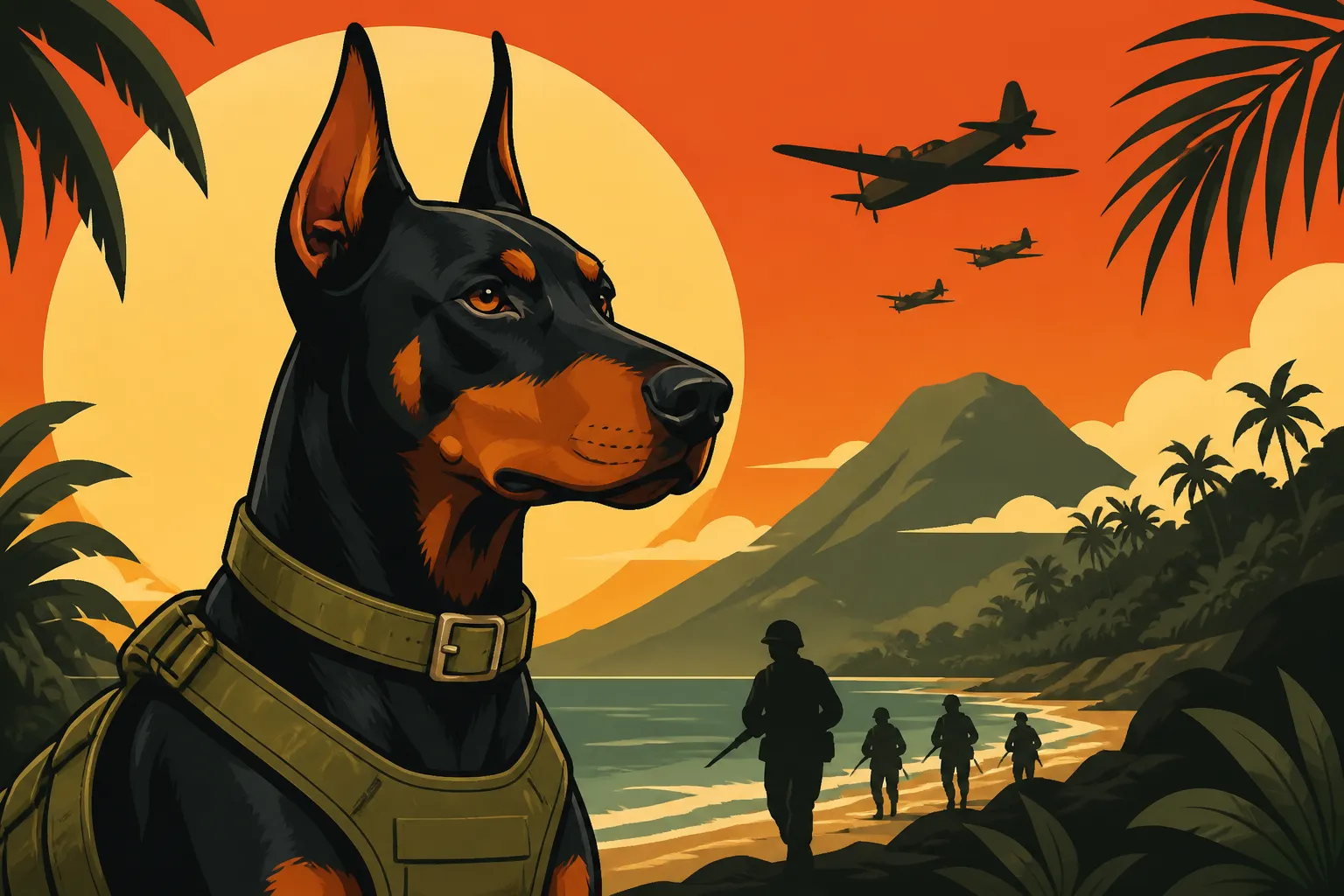
The Marine Corps Dobermans of the Pacific
When we talk about Dobermans, many people immediately picture a sleek, powerful guardian, perhaps even a formidable police or protection dog. What often gets overlooked, though, is their incredible, often heartbreaking, service during one of humanity's darkest hours. This guide delves into the remarkable history of the Dobermans who served with the U.S. Marine Corps in the Pacific Theater during World War II, a legacy that forever etched their courage into the annals of canine heroism.
The Call to Service: Dobermans in World War II
The onset of World War II presented unprecedented challenges, and the military quickly realized the untapped potential of dogs in combat roles. While many breeds were considered, the Doberman Pinscher emerged as a standout candidate, particularly for the grueling conditions of the Pacific. Their unique combination of traits made them ideal partners for Marines facing a hidden enemy in dense, unforgiving jungles.
Why Dobermans? A Breed Built for the Task
The Doberman's natural attributes were almost tailor-made for the demands of wartime service. They possessed an innate intelligence that allowed for rapid learning and complex task execution, far beyond simple obedience. This made them exceptionally trainable, able to grasp intricate commands and adapt to novel situations quickly, which was crucial in the unpredictable environment of combat. Their loyalty to their handlers was fierce and unwavering, forging bonds that were essential for mutual trust under extreme duress. Furthermore, their courage was undeniable; they were not dogs to back down from a threat, a vital characteristic when facing an armed enemy.
Physically, Dobermans were athletic and agile, capable of navigating challenging terrain with ease. Their short, dense coats, unlike those of longer-haired breeds, were less prone to snagging on jungle undergrowth and helped them cope better with the tropical heat and humidity, reducing the risk of overheating and making grooming simpler even in the field. Their powerful build and keen senses—particularly their exceptional hearing and scenting abilities—meant they could detect the presence of an enemy long before any human could, providing invaluable early warnings. These traits, honed over generations for guardianship and protection, found their ultimate purpose on the battlefields of the Pacific. It was a testament to What Went Into the First Dobermans that they were so well-suited to such a critical role.
Establishing the War Dog Program
The formal establishment of the U.S. Marine Corps K9 program, often known as "Dogs for Defense," was a pioneering effort. Civilians were encouraged to donate suitable dogs to the war effort, and Dobermans quickly became one of the most sought-after breeds. These donated dogs, many of them beloved family pets, underwent a profound transformation. Initial training centers were set up, often in remote locations, to mimic the harsh and unpredictable conditions they would face overseas. The goal was not just to teach commands but to instill an unwavering focus and resilience in the dogs, preparing them for the ultimate test.
The unique challenges of jungle warfare meant that the training couldn't be generic. Dogs needed to be accustomed to the sounds of gunfire, explosions, and the general chaos of battle, all while remaining calm and focused. They learned to work silently, to patrol without drawing attention, and to understand subtle cues from their handlers that often meant the difference between life and death. This rigorous process separated the truly exceptional from the merely capable, shaping civilian pets into hardened, indispensable military assets. It was an intense, often heartbreaking, period for both the dogs and their initial civilian families, but the urgent need for their abilities was clear.
Training for the Unseen Enemy: Jungle Warfare Specialists
Training a Doberman for combat in the Pacific was an entirely different beast than typical obedience work. These dogs weren't just learning to sit and stay; they were learning to save lives in a landscape teeming with hidden dangers. The unique environment of dense jungles, unseen enemies, and constant threats required an innovative and incredibly thorough training approach that transformed them into specialized jungle warfare operatives.
Specialized Training Regimens
The training regimens for these Marine Corps Dobermans were designed to make them utterly proficient in detecting the unseen. They were taught silent patrolling, a skill that meant moving through thick undergrowth without rustling leaves or snapping twigs, relying solely on their keen senses to pick up the faintest sign of human presence. Imagine a Doberman moving with the stealth of a cat, its ears constantly swiveling, its nose working tirelessly, even as its powerful physique carried it through dense vegetation. Their ability to detect tripwires, hidden ambushes, and even camouflaged snipers from a distance was phenomenal. They learned to signal their handlers discreetly, often with a subtle change in body language or a silent alert, preventing patrols from walking into deadly traps.
Beyond detection, some Dobermans were trained in tracking, not just for enemy movements but also to locate wounded soldiers, bringing them critical aid. They had to be impervious to the terrifying sounds of battle—explosions, machine-gun fire, human shouts—and remain focused on their task. Handlers would expose them to simulated combat environments, complete with blank ammunition and pyrotechnics, gradually building their resilience and ensuring they wouldn't panic when faced with real danger. This wasn't about aggression; it was about acute awareness, disciplined response, and an unwavering commitment to their handler and mission. It required a level of Training a Doberman That Is Smarter Than You Expect, pushing both dog and handler to their limits.
The Handler-Dog Bond: A Lifeline in Combat
The bond between a Marine handler and his Doberman was unlike any other. These were not just dogs; they were partners, confidantes, and often, each other's only constant source of comfort in a brutal landscape. The handlers were responsible for the complete care of their dogs, from feeding them to ensuring their health and well-being. This included sourcing food and supplies, sometimes even from civilian outlets like a local general store that might stock pet essentials or even from a large online retailer like Chewy, if such a thing existed then! This daily reliance, combined with shared life-or-death experiences, forged an unbreakable trust. The Doberman literally became the handler's extra set of eyes and ears, and the handler became the dog's protector and provider.
In the terrifying silence of the jungle night, a Doberman's soft nudge or a low growl was often the only warning a Marine would get before an enemy attack. This mutual reliance meant that a dog's safety was paramount to its handler, and vice-versa. There are countless stories of handlers risking their own lives to protect their dogs from enemy fire or disease, understanding that the dog's senses were essential for the survival of the entire patrol. Psychologically, having a loyal, non-judgmental partner by their side offered immense comfort in a war zone, helping to combat the profound loneliness and stress of combat. It was a bond that transcended species, a true brotherhood forged in fire.
On the Front Lines: Dobermans in the Pacific Theater
Once their intensive training was complete, these remarkable Dobermans and their Marine handlers were deployed to the treacherous islands of the Pacific, where their skills would be put to the ultimate test. The jungle, with its oppressive heat, dense vegetation, and ever-present danger, became their new battleground. They faced challenges unimaginable in peacetime, and time and again, they proved their worth, earning the moniker "Devil Dogs" alongside their human counterparts.
Guardians of the Night and Day
The primary roles of these Doberman war dogs were often centered around vigilance and detection. During the day, they would lead patrols, silently sniffing out hidden enemy positions, tripwires, or booby traps that human eyes might miss. Their ability to move with incredible stealth, often just ahead of their handlers, meant they could provide crucial seconds of warning, allowing Marines to prepare for an ambush rather than walk blindly into one. On remote outposts or during night watches, they served as invaluable sentries. While a human might struggle to see or hear in the pitch-black, humid jungle, a Doberman's senses were amplified. They could detect the approach of an enemy patrol long before any human sentry, often giving a subtle signal to their handler like a stiffening body or a low, almost inaudible growl.
These Dobermans saw action in some of the most brutal campaigns of the Pacific. On islands like Guam, Iwo Jima, and Okinawa, where the Japanese forces often employed desperate and cunning tactics, the Doberman's ability to locate hidden bunkers, tunnel entrances, and camouflaged positions was critical. They were not attack dogs in the sense of charging the enemy; rather, they were early warning systems, living radar, that significantly reduced casualties. Their presence alone often boosted morale, as Marines knew they had an extra layer of protection, a loyal guardian whose senses surpassed their own. The Doberman That Saved Marines in the Pacific is a testament to this, with many stories of dogs preventing devastating ambushes.
Heroic Actions and Sacrifice
The annals of World War II are filled with incredible stories of Doberman bravery and sacrifice. One of the most famous examples is that of Kurt, a Doberman who served on Guam. During a particularly fierce battle, Kurt alerted his handler to an approaching enemy force, saving many Marine lives from a surprise attack. Tragically, Kurt was killed in action, becoming the first of 25 Marine war dogs to die during the Guam campaign. His sacrifice, and that of many others, did not go unnoticed. He is honored at the War Dog Memorial on Guam, a solemn tribute to the Dobermans who gave their lives.
These dogs were true heroes. There are accounts of Dobermans carrying vital messages through enemy lines, bringing back intelligence, or even locating wounded soldiers in impossible terrain, guiding corpsmen to their positions. They faced the same dangers as their human counterparts—enemy fire, disease, starvation, and the psychological toll of constant combat. Many returned home with injuries, both physical and emotional, while others never made it back, their final resting places often alongside the Marines they served. Their selfless dedication and courage earned them profound respect, cementing their place as indispensable members of the Marine Corps. This was The Doberman's War Record in its rawest, most heroic form.
The Doberman's Legacy: Beyond the Battlefield
The end of the war brought a different kind of challenge for these canine heroes and their human partners. Having been trained for the intensity of combat, the transition back to civilian life was far from straightforward. However, their service had left an indelible mark, not just on the Marines they served alongside, but on the public perception of the Doberman breed itself.
Post-War Challenges and Reintegration
Bringing a war dog home was a complex process. Many of these Dobermans had spent their formative years in highly specialized, high-stakes environments, where every instinct was honed for detection and survival. They were not simply pets; they were military assets, programmed for war. Reintegrating them into civilian homes, with their unfamiliar sights, sounds, and lack of constant threat, often proved difficult. Some dogs struggled with anxiety, hyperactivity, or over-protective behaviors that were assets in combat but problematic in a neighborhood park. It took immense patience and understanding from their handlers and civilian families to help them adjust.
The U.S. military made efforts to rehabilitate these war dogs. They underwent de-training programs designed to soften their combat edge and help them adapt to a more relaxed existence. Some were reunited with their original civilian families, while others were adopted by their handlers or other compassionate individuals. It was a stark reminder that heroes, whether human or canine, carry the scars of war. The goal was to give these brave dogs the peaceful, loving lives they deserved after their extraordinary service, providing them with the comfort items, like sturdy beds and quality food often found on platforms like Chewy, to ease their transition.
Remembering Their Service: Memorials and Honors
The profound impact of the Marine Corps Dobermans was formally recognized through various memorials and honors, ensuring their sacrifices would not be forgotten. The most prominent of these is the War Dog Memorial on the island of Guam, dedicated in 1994. This powerful sculpture depicts a Doberman standing guard, symbolizing the 25 Dobermans who died liberating the island. The memorial, often referred to as "Always Faithful," serves as a poignant reminder of their loyalty and ultimate sacrifice.
Beyond Guam, other monuments and tributes exist across the United States, honoring the service of all war dogs, with Dobermans frequently featured as the face of these brave animals. Their stories are told in books, documentaries, and museum exhibits, educating future generations about the critical role these intelligent and courageous dogs played. The Marine Corps officially recognized their Dobermans as true Marines, a testament to the respect and gratitude they earned through their unwavering courage and loyalty. This enduring recognition highlights the deep bond formed and the profound impact these dogs had, making them truly legendary. The Doberman Memorial on Guam stands as a solemn testament to their valor.
The Enduring Impact on the Breed's Perception
The wartime service of the Doberman Pinschers fundamentally reshaped public perception of the breed, moving them beyond mere guard dogs to symbols of courage, loyalty, and unwavering dedication. This legacy continues to influence how Dobermans are viewed and utilized today, both in working roles and as cherished family companions.
Shaping Public Opinion and Breed Popularity
Before World War II, the Doberman Pinscher was already recognized as an intelligent and capable guardian. However, their heroic actions in the Pacific elevated their status dramatically. News stories and official reports detailing their bravery, their ability to save lives, and their incredible bond with their handlers captivated the American public. This transformed their image from simply a formidable protector to a noble war hero. The public developed a newfound respect and admiration for the breed, appreciating not just their strength but their intelligence and loyalty.
This shift in perception led to an increase in their popularity. More people became interested in owning Dobermans, seeking a companion with such admirable traits. Breeders began to emphasize not only the physical prowess but also the stable temperament and trainability that had made these dogs such effective war heroes. The wartime service provided undeniable proof that a well-bred and well-trained Doberman was a remarkable partner, capable of incredible feats. This laid the groundwork for the breed's continued prominence in working dog circles and as highly valued family members. Understanding Doberman Temperament as the Standard Describes It helps us appreciate how perfectly suited they were.
The Doberman in Modern Working Roles
The legacy of the Marine Corps Dobermans lives on in the breed's continued success in a variety of modern working roles. Their inherent drive, intelligence, and protective instincts are still highly sought after. Today, Dobermans can be found serving in police K9 units, often in roles requiring detection and protection, though methods have evolved significantly since WWII. They excel in search and rescue operations, leveraging their keen sense of smell and agile physiques to locate missing persons in diverse environments.
Furthermore, Dobermans are prominent in various protection sports, such as Schutzhund, IPO, and French Ring. These sports test a dog's courage, obedience, and protective instincts in a controlled environment, demonstrating the breed's continued capability for high-level work. Owners dedicated to these sports often invest heavily in specialized equipment, training aids, and high-quality nutrition, readily available from pet supply retailers like Chewy, to ensure their Dobermans are performing at their peak. These modern applications are a direct continuation of the working spirit that defined the Dobermans of the Pacific, proving that with careful breeding and dedicated training, the Doberman remains one of the most versatile and capable working breeds in the world. Their participation in The Working Sports a Doberman Was Built For showcases their enduring talent.
Table: Key Roles and Impact of Marine Corps Dobermans
| Aspect | Description | Impact on War Effort | Legacy for the Breed |
|---|---|---|---|
| Sentry/Guard Duty | Alerted Marines to approaching enemy forces, ambushes, and hidden positions, especially during night patrols. | Prevented countless surprise attacks, saved many lives, boosted troop morale. | Highlighted Doberman's natural protective instincts, keen senses, and reliability. |
| Scouting & Patrol | Moved silently ahead of patrols, detecting tripwires, booby traps, and camouflaged enemies. | Reduced casualties from hidden dangers, allowed tactical advantage. | Demonstrated Doberman's stealth, intelligence, and ability to work independently. |
| Message Carriers | Carried vital messages between units, sometimes under fire, ensuring communication in dense jungle. | Maintained crucial communication lines, especially when human messengers were at risk. | Showcased Doberman's speed, obedience under pressure, and loyalty to mission. |
| Tracking | Located wounded soldiers and, in some instances, enemy combatants or intelligence. | Aided in rescue efforts, provided tactical information. | Emphasized Doberman's strong scenting ability and perseverance. |
| Morale Booster | Provided companionship and emotional support to Marines in stressful combat zones, reducing feelings of isolation. | Improved mental well-being of soldiers, fostered strong handler-dog bonds. | Revealed Doberman's capacity for deep emotional connection and companionship. |
| Post-War Image | Transformed public perception from "guard dog" to "heroic war dog," widely admired for courage and loyalty. | Increased public support for war dogs and military K9 programs. | Boosted breed popularity, emphasized importance of temperament and trainability in breeding. |
Conclusion: A Legacy of Courage
The story of the Marine Corps Dobermans of the Pacific is one that resonates deeply, a powerful testament to the extraordinary capabilities and unwavering loyalty of these magnificent animals. From being donated by patriotic civilians to undergoing rigorous training for unimaginable conditions, these dogs redefined what it meant to be a military partner. They faced the horrors of jungle warfare with incredible courage, saving countless lives through their acute senses and steadfast dedication.
Their sacrifices, like that of the brave Doberman Kurt, are immortalized in memorials and in the hearts of those who remember their service. The legacy of these "Devil Dogs" continues to shape the breed's reputation, reminding us of the Doberman's intelligence, trainability, and deep-seated desire to protect. Whether in modern K9 units, competitive protection sports, or simply as cherished family members, the spirit of the WWII Dobermans lives on, a constant reminder of their pivotal role in history and their enduring place as truly faithful companions. Why the Marine Corps Chose Dobermans is a question answered by their unparalleled contribution. They continue to demonstrate that a Doberman, responsibly bred and properly trained, is a companion of unparalleled loyalty and capability, always ready to face the world by your side, perhaps even with a durable toy or a comfy bed from Chewy waiting for them at home.
Disclaimer
This article is for general informational purposes only and does not constitute professional advice. Laws, prices and regulations vary by location and change over time. Consult a qualified professional for guidance on your specific situation.