Which Breeds Historians Credit in the Doberman
When you look at your Doberman, perhaps curled up on your sofa or patrolling the yard with that intense, watchful gaze, have you ever wondered about their lineage? It’s a common question, and one that often sparks a lot of debate among enthusiasts: exactly which breeds contributed to creating this magnificent, loyal, and sometimes misunderstood companion? Understanding the foundation breeds gives us a deeper appreciation for the Doberman's unique blend of athleticism, intelligence, and protective instincts. This guide dives into the historical puzzle of the Doberman's origins, exploring the most commonly credited ancestors and what traits they likely passed down.
The Man Behind the Breed: Karl Friedrich Louis Dobermann's Vision
It's truly fascinating to consider that a single individual, Karl Friedrich Louis Dobermann, is credited with intentionally creating an entire dog breed. He wasn't some fancy noble with endless resources; he was a tax collector, dog catcher, and night watchman in Apolda, Germany, in the late 19th century. This wasn't a hobby for him; it was a practical necessity. His daily work put him in situations where he needed a fearless, intelligent, and utterly dependable canine partner – one that could deter potential threats and keep him safe during his rounds.
Imagine him, out collecting taxes or patrolling dimly lit streets, knowing that a strong, alert dog by his side could make all the difference. He wasn't looking for a cuddly lapdog; he needed a dog with an imposing presence, sharp senses, and an unwavering loyalty to its handler. This practical, no-nonsense approach dictated his breeding choices. He wasn't just mixing dogs willy-nilly; he was carefully selecting individuals with the traits he most valued, aiming to distill a specific set of characteristics into a new breed. His work laid the groundwork for the Doberman we know today, a dog born out of a very real, tangible need for protection and companionship. It's a testament to his vision that the breed bears his name. Who Karl Friedrich Louis Dobermann Was
The Necessity of a Protector
In Karl Dobermann's time, the streets of Apolda could be a dangerous place, especially for someone in his line of work. As a tax collector, he often carried money, making him a target. As a night watchman, he faced potential confrontations in the dark. A dog that could not only alert him to danger but also act as a formidable deterrent was indispensable. This wasn't about aesthetics or winning dog shows; it was about personal safety and doing his job effectively.
His desire for a dog that was fiercely loyal, brave, and intelligent enough to assess situations quickly drove his breeding program. He needed a dog that was easily trainable, responsive to commands, and possessed an innate protective instinct, but also one that wouldn't turn on him or his family. The stories suggest he had access to various dogs from his role as a dog catcher, giving him a unique pool of genetics to draw from, allowing him to handpick those individuals that best fit his rigorous criteria. This focused intent is what makes the Doberman's origin story so distinct and impactful. Why a Tax Collector Bred the First Dobermans
The Early Breeding Pool
Unfortunately, Karl Dobermann didn't keep meticulous records of his exact crosses, which leaves us with a fascinating puzzle to piece together. We don't have a definitive "recipe" with exact proportions of each breed. Instead, historians and breed enthusiasts rely on anecdotal evidence, physical traits of the early Dobermans, and knowledge of the dog breeds prevalent in the region at the time. This lack of concrete documentation is both frustrating and exciting, as it allows for a degree of educated speculation.
However, the consensus points to a foundation built from a few key types of working dogs. These weren't necessarily purebreds as we understand them today, but rather distinct types with established characteristics. They were dogs known for their utility, their courage, and their ability to perform specific tasks. It's safe to assume he started with the dogs he had immediate access to through his role in animal control, selecting for disposition and working ability rather than strict breed lines. The Years Dobermann Spent Breeding
The Likely Ancestral Candidates
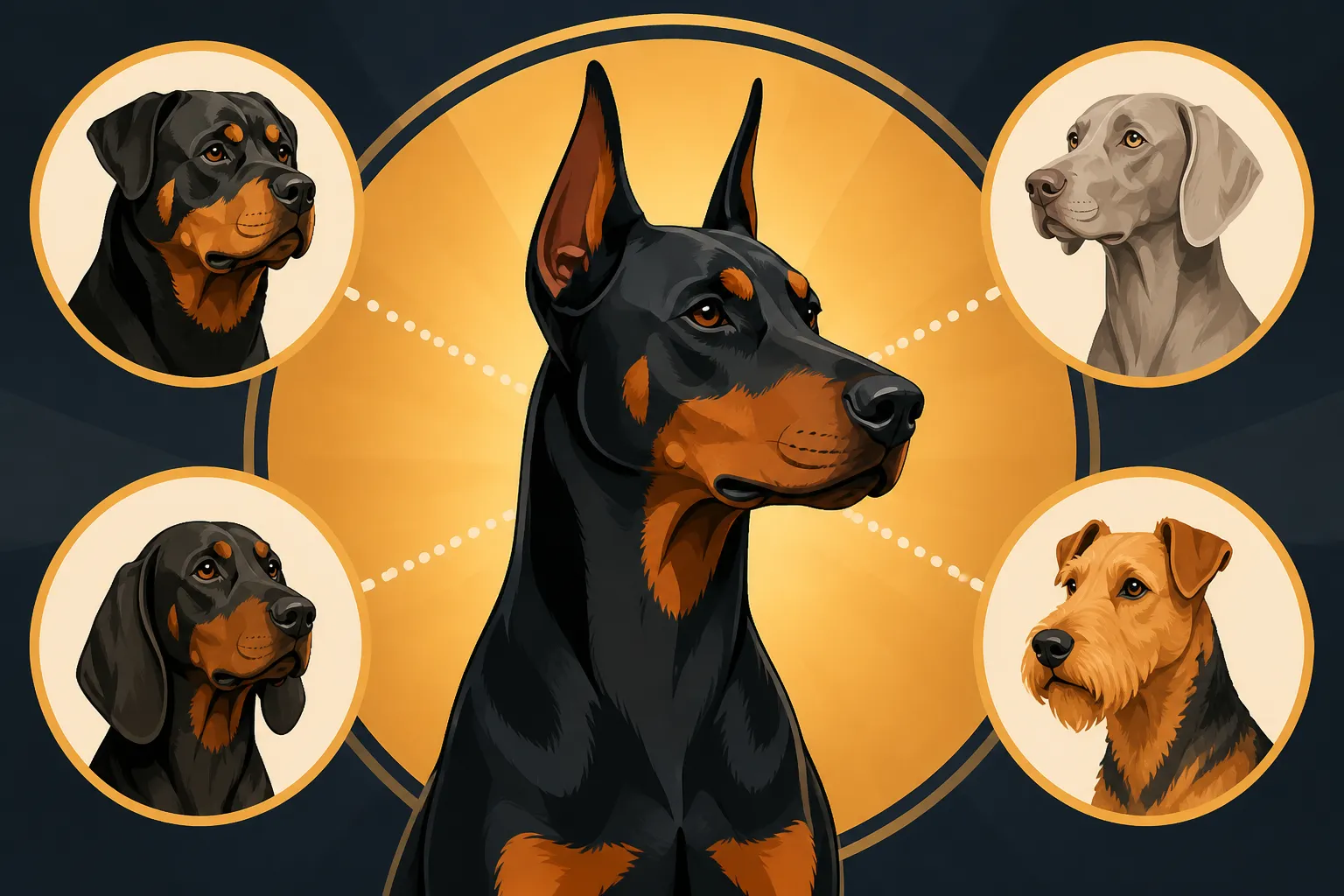
While we can't draw a perfect family tree, several breeds are consistently mentioned as significant contributors to the Doberman's genetic makeup. These candidates make sense when you consider the traits Karl Dobermann was aiming for: strength, intelligence, speed, and an intimidating presence. It's a blend that results in the athletic, sharp-witted Doberman we know and love today.
The Rottweiler Connection
Perhaps the most commonly cited ancestor, the Rottweiler's influence on the Doberman is widely believed to be substantial. These powerful dogs were (and still are) renowned for their strength, guarding instincts, and imposing physique. In Dobermann's time, Rottweilers were often used as cattle drovers and butchers' dogs, roles that required courage, physical robustness, and an unwavering protective nature.
It's easy to see how a dog with the Rottweiler's build and temperament would appeal to Dobermann. Their natural guarding abilities would have been invaluable for his purposes. The Rottweiler likely contributed to the Doberman's deep chest, strong bone structure, and the serious, watchful expression that is so characteristic of the breed. While the Doberman is much more refined and agile than a typical Rottweiler, that underlying power and protective drive probably trace back to these stocky guardians. Whether the Rottweiler Is in the Doberman
The German Pinscher's Contribution
Another strong contender for Doberman ancestry is the German Pinscher. This breed, smaller and more compact than the Doberman, is known for its elegant yet sturdy build, keen intelligence, and spirited nature. Pinschers were ratters and farm dogs, agile and quick, with an alert disposition.
The German Pinscher could have imparted the Doberman's characteristic clean, short coat, its refined head, and perhaps its remarkable intelligence and trainability. The "Pinscher" in Doberman Pinscher itself hints at this connection, as "pinscher" is a German word generally referring to a type of terrier-like dog with a distinct bite and a tendency to "pinch" or snap at vermin. This breed's alertness and quick reflexes would have been highly desirable for Dobermann's goal of creating a responsive and agile protector.
The Greyhound and Manchester Terrier Influence
To achieve the Doberman's incredible speed, grace, and sleek outline, many historians suggest the inclusion of sighthounds, particularly the Greyhound. While it might seem counterintuitive to mix a swift hunter with a guardian breed, the elegance, speed, and aerodynamic build of a Greyhound would have added a crucial dynamic to the Doberman's overall athleticism, allowing it to cover ground quickly and with minimal effort. This infusion of speed would make the Doberman not just a deterrent, but a highly effective pursuer if needed. The Greyhound Line Behind Doberman Speed
The Manchester Terrier, or a similar type of local terrier, is also often cited. These dogs are known for their sharp intelligence, determination, and intense prey drive. They also contribute to the Doberman's distinctive black and tan (or rust) markings. The terrier's tenacious nature and quick, agile movements would have provided a valuable counterpoint to the heavier guarding breeds, adding quickness and a fearless attitude. The Doberman's signature "fire" and assertive demeanor could easily be traced back to these feisty smaller dogs. Whether the Manchester Terrier Shaped the Doberman
Other Potential Ancestors and Their Impact
While the Rottweiler, German Pinscher, Greyhound, and Manchester Terrier are the most frequently mentioned, the early Doberman was likely a complex mosaic of various local dogs. It's important to remember that Dobermann was working with the dogs available to him, and not necessarily adhering to strict "purebred" lines as we understand them today. The genetic pool was probably quite diverse, with influences from a range of working dogs prevalent in 19th-century Germany.
Old German Shepherds and Shepherding Dogs
Some theories propose that old German Shepherds or similar local herding dogs might have played a role. While not the German Shepherd Dog we recognize today, these historical shepherding breeds were intelligent, biddable, and possessed strong working drives. Their ability to work closely with humans and their inherent protectiveness over their flock (or handler) would have been highly valuable. Such dogs could have contributed to the Doberman's famed intelligence and desire to please, making them highly trainable companions.
Weimaraner or German Shorthaired Pointer
Another less common but sometimes discussed possibility involves breeds like the Weimaraner or German Shorthaired Pointer, or similar hunting dogs. These breeds are known for their athleticism, strong scenting abilities, and keen intelligence. While their primary role wasn't guarding, their stamina, alertness, and striking appearance (especially the Weimaraner's noble head and short coat) might have been desirable for certain aspects of the Doberman's developing form. However, evidence for these contributions is less robust than for the other key breeds.
The Blended Traits and What They Mean Today
The table below summarizes the most likely ancestral breeds and the key characteristics they are believed to have contributed to the Doberman, painting a picture of a carefully constructed working dog.
| Ancestral Breed | Credited Contributions to Doberman |
|---|---|
| Rottweiler | Physical strength, deep chest, strong bone, powerful guarding instincts, imposing presence. |
| German Pinscher | Leaner build, short and sleek coat, intelligent expression, high prey drive, quick reflexes, elegant head. |
| Manchester Terrier | Black and rust markings, tenacious spirit, sharp intelligence, fearlessness, agile movement. |
| Greyhound | Speed, refined athleticism, sleek body outline, graceful movement, long and powerful stride. |
| Old German Shepherd/Herding Dogs | Intelligence, strong work ethic, trainability, loyalty, protective instincts, biddable nature (less certain but plausible). |
Understanding this blend helps us appreciate why Dobermans are so unique. They are not just powerful dogs, but intelligent, fast, and intensely loyal creatures. This combination can make them challenging for inexperienced owners, but incredibly rewarding for those who understand and respect their heritage. Whether Old Dobermans Were More Aggressive
Refining the Breed: Beyond Karl Dobermann
While Karl Dobermann laid the foundation, the Doberman breed didn't spring forth fully formed. After his passing, other dedicated breeders picked up the torch, refining the breed and establishing the first official standards. Otto Goeller, in particular, is often credited with much of this subsequent development. He recognized the potential in Dobermann's creation and worked tirelessly to stabilize the breed's characteristics, focusing on consistency in appearance, temperament, and working ability.
This period of refinement was crucial. It involved selective breeding to solidify desirable traits, eliminate undesirable ones, and ensure that the Doberman became a recognized and respected working dog. The goal was to produce dogs that not only met the practical requirements of a protector but also exhibited a consistent conformation and a stable, reliable temperament.
Otto Goeller and the First Standards
Otto Goeller was instrumental in establishing the first Doberman club in 1899 and, shortly thereafter, the initial breed standard. This was a critical step in moving the Doberman from a collection of "Dobermann's dogs" to a distinct and recognized breed. The breed standard provided a blueprint, defining the ideal physical appearance, temperament, and gait. This gave breeders a common goal and helped ensure uniformity in the developing breed.
The initial German standard emphasized courage, intelligence, and a strong, compact build, reflecting the breed's working origins. It detailed everything from ear set and tail length to coat color and overall proportionality. This rigorous standardization process helped cement the Doberman's identity and ensured that its unique blend of qualities would be preserved and passed down through generations. What Otto Goeller Changed in the Doberman
The 1900 German Doberman Standard
The adoption of the first official breed standard in 1900 by the Doberman Pinscher Club of Apolda marked a pivotal moment. This document outlined the desired physical traits and temperament, giving breeders a clear guide. It described a dog of medium size, powerfully built, elegant, and with a proud carriage. The standard called for a keen, alert, and determined expression, reflective of the Doberman's protective nature.
Temperament was heavily emphasized, seeking a dog that was fearless but not vicious, intelligent, and highly trainable. These foundational guidelines ensured that while the Doberman remained a formidable guardian, it would also be a loyal and manageable companion. The emphasis on both form and function truly captured the essence of what Karl Dobermann had set out to create. The 1900 German Doberman Standard
The Legacy of the Ancestral Mix in the Modern Doberman
Today's Doberman carries the echoes of its diverse ancestry in every stride, every alert gaze, and every protective impulse. The blend of power, speed, intelligence, and unwavering loyalty is a direct result of the careful selection and breeding choices made by Karl Dobermann and those who followed him. When you observe a Doberman, you can see the raw power of the Rottweiler, the sharp intelligence of the German Pinscher, and the sleek athleticism of the Greyhound, all harmoniously integrated into one magnificent animal.
This understanding of their historical roots is incredibly important for modern Doberman owners. It helps explain why they are so prone to being "Velcro dogs," always wanting to be by your side – a trait stemming from their guardian origins. It clarifies their intense focus during training and their need for mental stimulation, a legacy of their intelligent and driven forebears. The Doberman the AKC Standard Describes
Temperament and Working Ability
The Doberman's temperament, as described in breed standards around the world, directly reflects its ancestry. Phrases like "fearless," "alert," "determined," and "loyal" are not just arbitrary descriptors; they are a direct nod to the traits sought by Karl Dobermann and refined by subsequent breeders. A well-bred Doberman should be confident and watchful, possessing an innate protective instinct without being overly aggressive or unstable.
This balance is crucial. While they are formidable protectors, a properly socialized Doberman is also a devoted family member, capable of forming deep bonds and showing remarkable gentleness with those it considers its own. This dual nature is a testament to the careful selection process, aiming for a dog that could be a guardian when needed but a calm, intelligent companion in everyday life. Doberman Temperament as the Standard Describes It
Physical Characteristics and Health Considerations
The physical traits of the Doberman, from its lean, muscular build to its short, dense coat, are also direct reflections of its ancestors. The deep chest and tucked abdomen hint at the Greyhound's influence, while the powerful jaws and strong neck speak to the Rottweiler's contribution. Even the common colors – black and rust, red and rust, blue and rust, and fawn and rust – are legacies of the original breeds used.
However, this carefully engineered genetic blend also comes with responsibilities for owners. The Doberman's deep chest, for example, makes it more susceptible to bloat, or gastric dilatation-volvulus (GDV), a life-threatening condition. Understanding the breed's history and physical predispositions reinforces the importance of responsible care, from feeding habits to regular veterinary check-ups. Why a Doberman's Narrow Deep Chest Twists Similarly, the intense breeding for specific traits may have inadvertently concentrated certain genetic predispositions, which is why health testing is so critical today. The Health Testing a Doberman Breeder Must Show
The Doberman in the Modern World
Today, the Doberman is cherished as both a loyal family companion and a highly capable working dog in various fields, from police and military work to search and rescue, and competitive dog sports. This versatility is a direct result of its carefully selected ancestral traits: intelligence, athleticism, courage, and a strong desire to work alongside its human partner.
For new owners, understanding this rich history isn't just a fun fact; it's a guide to responsible ownership. It tells you that your Doberman isn't just a pretty face; it's a dog with a purpose, a deep need for mental and physical engagement, and a profound loyalty that requires dedicated commitment from its family. It’s a dog designed for a job, and providing that "job"—whether it's advanced obedience, scent work, or simply being your vigilant shadow—is key to a happy, well-adjusted Doberman.
Disclaimer
This article is for general informational purposes only and does not constitute professional advice. Laws, prices and regulations vary by location and change over time. Consult a qualified professional for guidance on your specific situation.