The Doberman Neck and Topline Judges Want
One of the most defining characteristics of a Doberman, especially when you see one beautifully stacked in the show ring or just standing proudly, is that elegant arch of their neck flowing seamlessly into a strong, level topline. Many aspiring Doberman owners and even seasoned enthusiasts struggle to understand the nuances of what makes a truly "typey" Doberman in terms of its overall silhouette, and what exactly judges are looking for when they evaluate this crucial area. This guide will walk you through the specifics of the Doberman neck and topline, helping you appreciate the artistry and function behind these breed standard requirements.
The Ideal Doberman Neck: A Study in Elegance and Power
When you look at a Doberman, its neck isn't just a connection between its head and body; it's a statement of elegance, strength, and athletic capability. The breed standard describes a Doberman's neck with very specific terms, and understanding these can truly open your eyes to the subtleties of conformation.
Length, Arch, and Musculature Requirements
The Doberman standard calls for a neck that is "moderately long, dry, and muscular." What does "moderately long" actually mean in practice? It's not so long that it appears weak or swan-like, and certainly not so short that the dog looks clunky or bull-necked. It needs to be in proportion to the rest of the dog, contributing to an overall balanced appearance. Think of it as a graceful extension of the head, allowing for both reach and powerful movement.
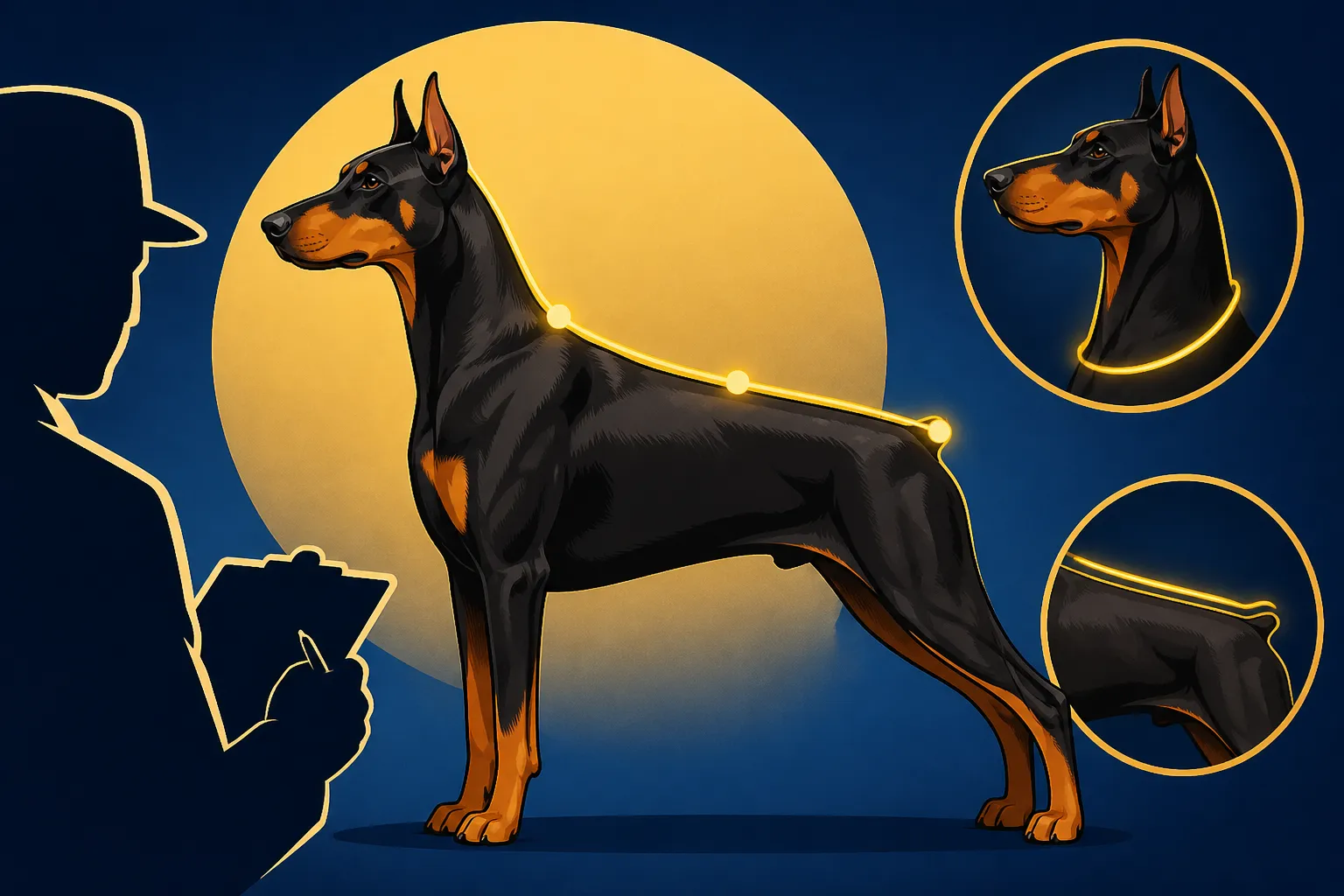
Beyond length, the "dry" aspect refers to a lack of loose skin or excessive throatiness. You shouldn't see wattles or folds of skin hanging beneath the jawline. This contributes to that clean, elegant look. And "muscular"? Well, Dobermans are athletes! Their neck muscles should be well-developed, hinting at the power they possess. You should see a beautiful, slight arch from the nape (the back of the skull) flowing down into the shoulders. This arch, often called the crest, is what gives the Doberman its proud carriage. Imagine a Doberman standing at attention, head held high, and that neck should curve smoothly and powerfully. It’s a vital part of what makes The Doberman the AKC Standard Describes so iconic.
How the Neck Connects to the Shoulders
The connection of the neck to the shoulders is just as important as the neck itself. The standard wants the neck to "rise proudly from the withers," which means it shouldn't appear to "melt" into the shoulders in a flat line. There should be a distinct, yet smooth, transition. A properly laid-back shoulder assembly is crucial for this. If a Doberman has straight shoulders, the neck can appear shorter and less elegant, losing that graceful arch and proud carriage.
When you're observing a Doberman, try to envision where the neck ends and the shoulder blade begins. The muscles should blend seamlessly, but the angles beneath them are doing all the work. A well-constructed Doberman will have shoulder blades that lay flat against the rib cage, forming a sharp angle at the top, allowing the neck to emerge with strength. This isn't just about looks; it's about efficient movement. A Doberman needs to be able to extend its forelegs powerfully, and the shoulder and neck connection is fundamental to that action. This anatomical precision is something breeders strive for, and judges pay close attention to, as it directly impacts The Reaching Stride a Doberman Is Judged On.
The Topline: Foundation of Doberman Structure and Movement
The topline of a Doberman is arguably one of its most defining structural features. It’s the outline of the dog's back from the withers to the tail set, and it speaks volumes about the dog's overall build and balance. A correct topline is crucial for both aesthetics and functionality.
Withers, Back, Loin, and Croup: Defining Each Segment
Let's break down the Doberman topline into its key segments:
- Withers: This is the highest point of the shoulder blades, where the neck transitions into the back. In a Doberman, the withers should be well-defined and slightly higher than the highest point of the croup, forming a gentle slope from the withers to the back. A Doberman that looks flat across the top, or whose neck appears to plunge directly into the back without a noticeable rise at the withers, isn't meeting the ideal.
- Back: The section immediately behind the withers, extending to the loin. The Doberman's back should be short, strong, and straight. It's not meant to be long and 'racy' like a Greyhound, nor short and cobby like some other breeds. It provides the strength for transmitting power from the hindquarters. A dip or sag in the back is a significant fault, as is a roach (a convex curve).
- Loin: This is the muscular section between the last rib and the pelvis. The Doberman's loin should be well-muscled and of moderate length, allowing for flexibility but still maintaining that overall impression of a short, powerful body. An excessively long or weak loin compromises the dog's ability to drive forward and can make the topline appear soft.
- Croup: The part of the body extending from the pelvis to the set of the tail. The Doberman standard describes the croup as "well rounded, not flat." It should fall away with a slight incline, blending smoothly into the tail set. A flat croup or one that is too steep can affect the dog's hindquarter angulation and movement.
Together, these segments should form a level and firm line when the Doberman is standing. This isn't just about static appearance; this robust structure is essential for the Doberman's powerful and efficient gait. Proper nutrition, which you can find a huge variety of on platforms like Chewy, plays a role in supporting the muscle development that defines these segments.
Why a Level Topline is Prized in the Ring
The requirement for a level topline is paramount in the Doberman show ring. Judges are looking for a Doberman that, when standing naturally and when moving, maintains a firm, horizontal line from the withers to the tail. Why is this so important?
Firstly, it's about breed type. This level topline, combined with the elegant neck and well-developed hindquarters, creates the distinctive silhouette of the Doberman Pinscher. It screams strength, athleticism, and purpose. It's the hallmark of a dog designed for speed, agility, and power.
Secondly, and perhaps more crucially, a level topline is indicative of sound underlying structure. A soft or dipping back often suggests weakness in the ligaments and muscles, which can lead to inefficient movement and, over time, potential orthopedic issues. A roach back can also impede proper movement and is considered a fault. When a Doberman moves, that level topline should remain steady, acting like a bridge that transfers energy from the powerful hindquarters through to the forequarters. Any bounce, roll, or sway in the topline during movement signals structural weakness. Judges will meticulously observe this during the gaiting portion of the examination. You'd be surprised how often a perfectly sound dog on paper can reveal a less-than-ideal topline in motion. This is part of The Doberman Faults a Judge Cannot Overlook.
Why These Features Matter: Function, Breed Type, and Judging
Understanding the Doberman's neck and topline isn't just about memorizing arbitrary rules for dog shows. These features are deeply rooted in the breed's original purpose and functional requirements.
The Role of Structure in Doberman Function
The Doberman was originally bred as a personal protection dog, requiring speed, agility, and immense power. Every aspect of its structure, including the neck and topline, contributes to these capabilities.
- Neck: That moderately long, arched, and muscular neck isn't just for show. It provides the leverage and strength needed for gripping and holding, if the dog were to engage in protection work. It also allows for broad visibility and quick head movements, essential for a vigilant guard dog. A short, thick neck would limit range of motion, while a weak, spindly one wouldn't offer the necessary power. Think of the sudden movements and pivots a working Doberman might make – the neck needs to be robust enough to handle the stresses.
- Topline: A strong, level topline provides the stable platform from which the Doberman operates. It allows for efficient transmission of power from the hind legs to the front, facilitating that powerful, ground-covering trot so characteristic of the breed. When a Doberman springs into action, whether it's chasing a ball or performing in a sport, that strong back is what propels it forward and allows for rapid changes in direction. A weak back would compromise its athletic ability, leading to fatigue and potential injury. This structural integrity is what enables a Doberman to excel in various disciplines, as explored in The Working Sports a Doberman Was Built For.
The functional aspects are paramount. While show dogs are judged on appearance, that appearance is inextricably linked to the dog's ability to perform its original duties.
How Judges Evaluate Neck and Topline in the Ring
When a Doberman steps into the show ring, judges perform a systematic evaluation that includes both static examination and observation of movement.
- Static Examination: As the dog stands still, often "stacked" by its handler, the judge will run their hands over the dog's back, feeling for firmness, muscle tone, and the correct set of the withers, back, loin, and croup. They're looking for that level, firm line. They'll also assess the neck for its length, arch, and clean throat line. They're checking for any dips, humps, or softness in the topline that might be masked by coat or clever stacking. They'll also gauge the proportionality – does the neck fit the body? Does the topline appear balanced?
- Movement Evaluation (Gaiting): This is where the rubber meets the road. The judge will ask the handler to gait the dog, usually in a down-and-back pattern and then in a triangle or circle. During this phase, the judge is looking for the topline to remain rock-solid and level. Any wobbling, dipping, or rising indicates a structural flaw. The neck carriage is also observed; a proud, elevated neck is desired, with the head held confidently. The Doberman's gait should be effortless, powerful, and ground-covering, and a correct neck and topline are fundamental to achieving this. The harmony between all parts of the dog in motion is what truly impresses a judge. Finding high-quality grooming tools on sites like Chewy can help ensure your Doberman's coat is pristine, allowing the judge to clearly see the definition of these crucial structural lines.
Common Faults and How They Impact a Doberman's Conformation
Unfortunately, not every Doberman will possess the ideal neck and topline. Certain structural faults can significantly detract from a Doberman's conformation and its ability to function optimally.
"Ewe Neck" and "Bull Neck"
These are two common neck faults that stand in stark contrast to the breed standard.
- Ewe Neck: This describes a neck that has a concave (hollowed out) curve on the top line, often appearing thin and lacking muscle. Instead of rising proudly with an arch, it dips down. A Doberman with an ewe neck often struggles to carry its head high and can appear weak or unbalanced. This fault can sometimes be associated with a poorly laid-back shoulder, making the entire front assembly look incorrect. It’s a definite mark against a Doberman in the ring, as it compromises both elegance and functional strength.
- Bull Neck: On the opposite end of the spectrum is the bull neck. This is a short, thick, heavily muscled neck that lacks elegance and often appears to plunge straight into the shoulders without the desired arch. It makes the dog look cobby and less refined, losing that distinctive Doberman silhouette. While it might seem powerful, it often restricts proper head carriage and can indicate an overall lack of balance in the dog's proportions. Neither of these extremes aligns with the standard's call for a "moderately long, dry, and muscular" neck with a "proud rise." Grooming care items for such areas, like gentle shampoos and conditioners, can be found on Chewy to maintain the skin and coat around the neck, but they won't correct structural faults.
"Roach Back" and "Sway Back" Toplines
Faults in the topline are equally, if not more, impactful on a Doberman's conformation.
- Roach Back: This is a convex curve or arch over the loin area, making the back appear rounded. While some breeds are meant to have a slight arch (like a Greyhound), it is a serious fault in a Doberman. A roach back can compromise flexibility and impact the smooth transmission of power through the body. It often suggests an imbalance in the angulation of the hindquarters or weakness in the muscles that support the spine.
- Sway Back (or Hollow Back): This is the opposite of a roach back, characterized by a concave dip or hollowness in the back, typically behind the withers or in the loin area. A sway back is a significant structural weakness. It suggests poor muscle tone, weak ligaments, or even underlying spinal issues. A Doberman with a sway back will have difficulty maintaining a level topline, especially when moving, making it appear soft and inefficient. It compromises the dog's athleticism and can lead to discomfort or injury over time. Both roach and sway backs compromise the ideal "short, firm, and straight" description of the Doberman's back. Doberman Hip Dysplasia is another structural concern, though it affects a different part of the dog's anatomy, it too impacts overall movement and stability.
The Impact of Tail Set on Topline Perception
While not strictly part of the topline itself, the tail set greatly influences how the topline is perceived. The Doberman standard requires the tail to be docked "to about the second joint," and to be carried "approximately horizontal with the topline."
A correctly set tail, carried level with the topline, provides a visual continuation of that strong, firm line. However, a tail that is set too low (giving the impression of a "gay tail") or carried too high can disrupt the visual flow of the topline. Even if the underlying bone structure of the back is correct, an incorrect tail set can make the entire rear assembly appear unbalanced or give the illusion of a poor croup. While tail docking practices vary and are subject to personal preference and regional regulations, the intended appearance described in the standard for show purposes emphasizes a harmonious blend. For Doberman owners interested in the nuances of breed presentation, even small details like tail set are critical, and topics like Docked Tails and the Modern Doberman delve deeper into these considerations.
Maintaining a Healthy Neck and Topline
While genetics play a huge role in a Doberman's inherent structure, proper care throughout its life is essential for maintaining a strong, healthy neck and topline. It's about supporting what nature gave them.
Exercise and Conditioning
Regular, appropriate exercise is paramount for developing and maintaining the musculature that supports a Doberman's neck and topline. This isn't just about letting them run around; it's about controlled, strengthening activities.
- Controlled Leash Walking: Daily walks, especially on varied terrain, help build core strength and reinforce good posture. Avoid excessive pulling, as this can strain the neck and back. Harnesses that distribute pressure evenly across the chest, rather than solely on the neck, are often preferred for strong-pulling Dobermans.
- Swimming: This is an excellent low-impact exercise that builds muscle uniformly without stressing joints. The resistance of the water helps strengthen the back and neck muscles naturally. Just ensure your Doberman is comfortable and supervised.
- Trotting and Cantering: Allowing your Doberman to trot and canter on soft surfaces like grass helps them develop their gait and strengthen their hindquarters and core. Avoid excessive high-impact activities or long runs on hard surfaces, especially when they are young and still growing, to protect their joints.
- Core Strengthening: Simple exercises like 'cavaletti poles' (walking over raised poles) or gentle slopes can encourage them to engage their core muscles, which are crucial for supporting the topline. These activities, whether for sport or general fitness, can often benefit from quality gear, which you can find through online retailers. Agility With a Doberman's Long Frame is a great example of how careful conditioning benefits a Doberman.
Remember, consistency is key. Short, regular bursts of appropriate exercise are often more beneficial than infrequent, intense sessions.
Nutrition and Weight Management
A Doberman's diet directly impacts its muscle development, bone health, and overall condition, all of which contribute to a beautiful neck and topline.
- High-Quality Diet: Feed a balanced, high-quality dog food appropriate for your Doberman's age, activity level, and size. Look for ingredients that support muscle development and joint health. If you're unsure, consult your veterinarian or a canine nutritionist. Many excellent options, including specialized diets, are available from trusted sources like Chewy.
- Protein and Fat: Dobermans are active, muscular dogs. Their diet should have adequate protein to support lean muscle mass and healthy fats for energy and coat condition. However, balance is crucial; too much of any nutrient can be detrimental.
- Weight Management: Maintaining an ideal weight is critical. An overweight Doberman will put undue stress on its joints and spine, potentially leading to a soft or saggy topline. Conversely, an underweight Doberman may lack the muscle mass to properly support its structure. You should be able to easily feel your Doberman's ribs without seeing them prominently, and they should have a discernible waist when viewed from above. Regularly checking Reading Ribs and Hip Points on a Doberman can help you assess their condition.
Proper nutrition isn't a quick fix for structural flaws, but it's an indispensable component of supporting a Doberman's inherent conformation and helping it achieve its full physical potential.
Avoiding Injury and Supportive Care
Even with the best genetics, exercise, and diet, Dobermans can still be prone to injuries or conditions that affect their neck and topline. Being proactive and providing supportive care can make a big difference.
- Protecting the Spine: Avoid activities that involve excessive twisting, high jumps from significant heights, or sudden, uncontrolled stops, especially with young, still-growing Dobermans. Such activities can stress the spine and lead to injuries.
- Proper Lifting Techniques: If you need to lift your Doberman, always support their chest and hindquarters simultaneously to distribute their weight and prevent spinal strain. This is especially important for larger Dobermans or those with mobility issues.
- Comfortable Bedding: Provide supportive, orthopedic bedding, particularly for older Dobermans or those prone to joint issues. This helps alleviate pressure on joints and supports a natural spinal alignment during rest. Beds That Cushion a Bony Doberman are a smart investment.
- Regular Vet Check-ups: Routine veterinary examinations can catch potential issues early. Your vet can assess your Doberman's gait and posture and advise on any concerns regarding their musculoskeletal health. Early intervention for any stiffness, pain, or changes in movement can prevent minor issues from becoming major problems. For example, some Dobermans might develop Wobbler Syndrome in the Doberman, a serious neck and spinal condition, which benefits greatly from early diagnosis and management.
By being diligent in these areas, you're not just aiming for a beautiful show dog; you're ensuring your Doberman lives a comfortable, active, and healthy life, embodying the strength and elegance that the breed is known for.
| Neck and Topline Feature | Ideal Standard Description | Common Faults and Their Impact |
|---|---|---|
| Neck Length | Moderately long, proportionate to body | Too short (bull neck), too long (weak, swan-like) – affects balance and elegance |
| Neck Arch | Slight arch, rising proudly from withers, dry and muscular | Ewe neck (concave dip), no arch, excessive throatiness – compromises power and aesthetics |
| Shoulder Connection | Smooth, strong transition into well laid-back shoulders | Abrupt, poorly defined, or straight shoulder lay – affects reach and gait |
| Topline Firmness | Firm, level, muscular | Soft, sagging, or undulating – indicates weakness, impedes efficient movement |
| Back Segment | Short, strong, straight | Too long, dipped (sway back), humped (roach back) – reduces strength, impacts gait |
| Loin Segment | Well-muscled, moderate length | Weak, excessively long, or overly short – compromises flexibility and power transmission |
| Croup | Well-rounded, slight incline, not flat or steep | Flat, overly steep, or abrupt drop – affects hindquarter angulation and tail set |
| Tail Set | Docked to second joint, carried approximately horizontal | Set too high or too low, carried incorrectly – disrupts visual flow of topline and overall balance |
Disclaimer
This article is for general informational purposes only and does not constitute professional advice. Laws, prices and regulations vary by location and change over time. Consult a qualified professional for guidance on your specific situation.