Reading Ribs and Hip Points on a Doberman
One of the most common worries Doberman owners face, especially from well-meaning friends or even strangers at the dog park, is the incessant comment that their beloved Doberman looks "too thin" or "starved." It's a frustrating experience when you know you're feeding them well, but their naturally lean, athletic build often gets mistaken for malnourishment. This comprehensive guide is here to help you confidently assess your Doberman's body condition, understand what a healthy Doberman should look and feel like, and equip you with the knowledge to maintain their optimal weight for a long, vibrant life.
The Doberman's Naturally Lean Physique
Dobermans aren't built like many other breeds you might encounter; they possess a distinct, athletic physique that often surprises those unfamiliar with the breed. Their sleek appearance, characterized by minimal body fat and a short, single coat, means that what might look "thin" on another dog is perfectly normal – even ideal – for a Doberman.
Why Dobermans Aren't Built Like Other Breeds
When Karl Friedrich Louis Dobermann first developed this breed, he envisioned a dog that was agile, powerful, and enduring. The Doberman's history as a protector and working dog instilled in them a metabolism geared for lean muscle and efficient energy use. They don't carry the heavy bone structure or thick undercoat that would pad out their frame like a Labrador Retriever or a German Shepherd. Instead, their build is all about functionality: speed, agility, and stamina. This means they naturally have less subcutaneous fat covering their skeletal structure. You should be able to see the outline of their last few ribs, feel their spine without pressing hard, and notice a distinct waist tuck. This isn't a sign of underfeeding; it's simply how a Doberman is designed to be. Their elegance comes from their powerful, yet un-bulky, musculature.
The "Starved" Misconception
It's a conversation every Doberman owner has had. You're out on a beautiful day, your Doberman prancing proudly beside you, and someone approaches with concern etched on their face, asking, "Is he getting enough to eat? He looks so skinny!" It can be incredibly disheartening, making you second-guess yourself, even when you know in your heart your dog is healthy and thriving. This misconception stems from a general lack of understanding about the Doberman's breed standard and ideal body composition. Most people are used to seeing dogs with a bit more cushion, and a Doberman's taut, defined physique can appear alarming to the uninitiated. Your Doberman is meant to look lean and athletic, not stocky or heavily muscled. Their skin sits close to their body, highlighting their musculature and bone structure in a way that can be mistaken for emaciation. It's a frustrating reality for many of us who pour our hearts into their care.
Understanding the Body Condition Score (BCS)
Navigating the nuances of your Doberman's weight can be tricky, especially when external opinions are constantly chipping away at your confidence. That's why understanding the Body Condition Score (BCS) is an invaluable tool. It offers an objective, standardized way to assess your dog's physical state, moving beyond subjective "looks" to tangible indicators of health.
What a BCS Is and Why It Matters for Dobermans
The Body Condition Score (BCS) is a universally recognized scale, typically ranging from 1 to 9 (with 1 being emaciated and 9 being obese), or sometimes a 1-5 scale. It's designed to help pet owners and veterinarians evaluate an animal's fat reserves, giving a clear picture of whether they are underweight, ideal, or overweight. For Dobermans, this tool is especially critical. This breed is known for its predisposition to certain health issues, particularly Dilated Cardiomyopathy (DCM), a devastating heart disease. Excess weight, even a few extra pounds, puts undue strain on the heart and other organ systems, potentially exacerbating existing conditions or contributing to new ones. An ideal BCS helps to minimize this strain, supporting cardiovascular health and joint integrity. Knowing how to accurately assess your Doberman's BCS empowers you to make informed decisions about their diet and exercise, directly contributing to their longevity and quality of life. Think of it as another vital piece of their preventative health puzzle, alongside Annual Echo and Holter Screening for a Doberman and The Health Testing a Doberman Breeder Must Show.
Hands-On Assessment: Palpating Your Doberman
While visual cues are important, the most accurate way to assess your Doberman's body condition is by getting hands-on. Their short coat means you might see more than you would on a fluffier breed, but touch provides deeper insight into the fat and muscle coverage over their bones.
Here’s how to do a tactile assessment:
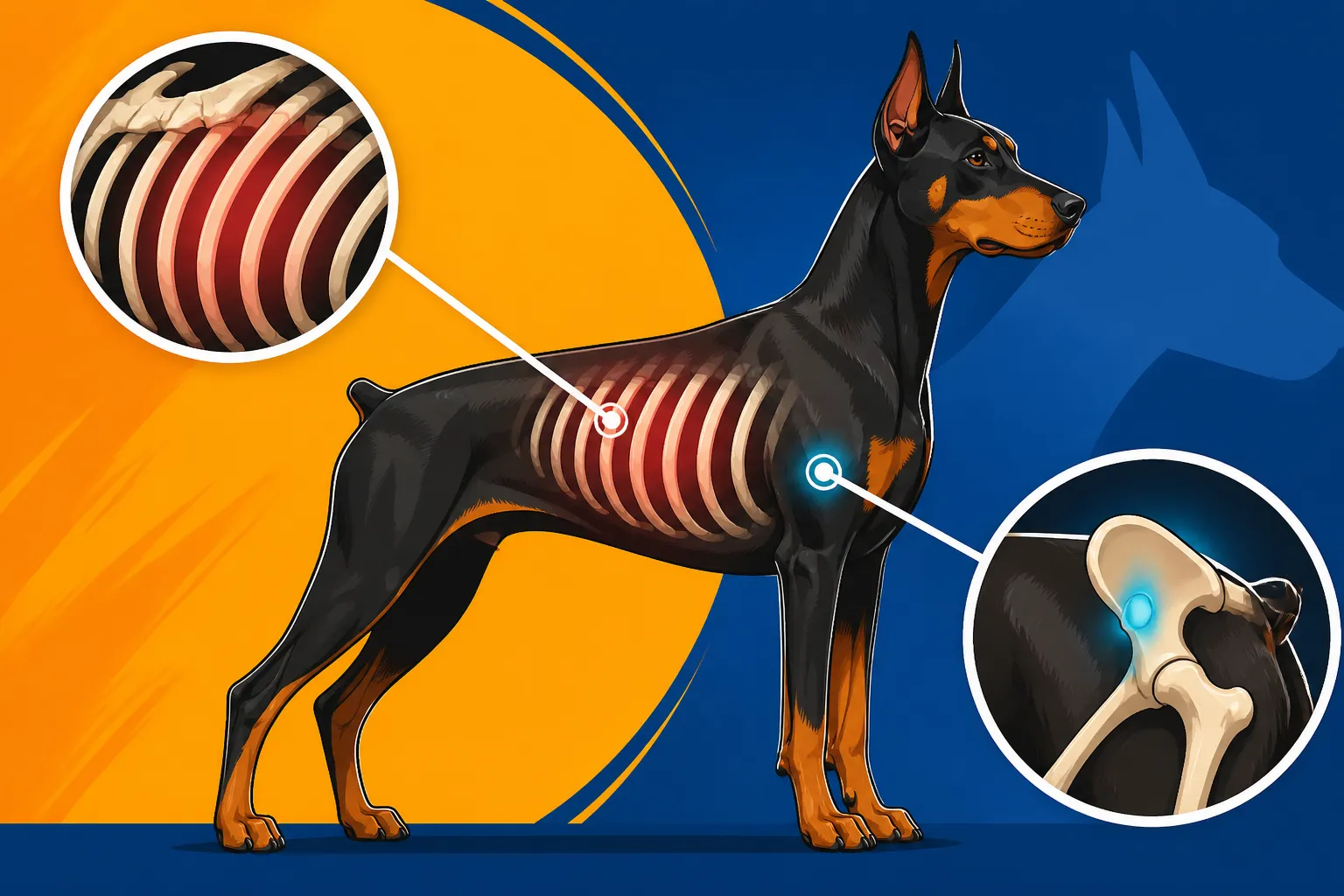
- Ribs: Gently run your flat palms along your Doberman's sides, just behind their shoulder blades. You should be able to easily feel individual ribs, much like feeling the knuckles on your hand, without pressing hard. If the ribs feel prominent and sharp with little to no muscle or fat covering them, your Doberman might be underweight. If you have to press firmly to locate them, or if they feel well-padded, they might be carrying too much weight. The ideal is feeling them distinctly, but with a thin layer of tissue over them.
- Spine: Run your hand down their backbone. You should be able to feel the bumps of the vertebrae without them feeling sharp or protruding. A Doberman at an ideal weight will have a slight, smooth undulation as you run your hand along their spine, indicating good muscle coverage. If the individual vertebrae are clearly visible and feel very sharp to the touch, it's a sign they could use a few more pounds.
- Hip Bones (Pelvis): Next, feel around their hips. You should be able to feel the top of the hip bones (the ilium) and the points of the pelvis (the ischia and greater trochanter) without them jutting out excessively. Like the ribs and spine, a light covering of muscle and fat is ideal. If these bones appear very prominent and have no cushioning, it's another indicator of being too thin. Conversely, if you can't easily locate them, there's likely too much fat covering them.
This hands-on approach provides a much more accurate picture than just looking, helping you differentiate between a naturally lean Doberman and one who genuinely needs a dietary adjustment.
Visual Cues: What to Look For (and Not Overreact To)
Beyond touch, visual assessment also plays a crucial role in determining your Doberman's body condition. However, it's essential to understand what to look for that's specific to their lean build, and what not to overreact to, which is often where the "he's too skinny!" comments come from.
When you look at your Doberman from above:
- Waist: They should have a clearly defined waist. This means the body should narrow significantly behind the rib cage, almost like an hourglass figure, before flaring slightly over the hips. A straight, blocky line from ribs to hips suggests they're carrying too much weight.
- Ribs: From above, you might see the subtle outline of the last two or three ribs, especially when they move or stretch. This is usually normal. If you can see all their ribs clearly defined from above without them moving, it might lean towards being too thin.
When you look at your Doberman from the side:
- Abdominal Tuck: Dobermans should have a pronounced abdominal tuck. This means their belly should slope upwards sharply from their chest to their hind legs, not hang low or run straight back. This deep tuck is characteristic of the breed and indicates a healthy body condition. A flat or sagging belly is a sign of excess weight.
- Ribs: Again, from the side, the last one to three ribs might be visible, particularly when they're standing or breathing deeply. This is typically within the healthy range for a Doberman. Seeing more than this, or having them appear very prominent and angular, would suggest they are underweight.
- Hip Points: The tops of their hip bones might be subtly visible or easily discernible, again, with a thin covering of muscle. They shouldn't be sticking out sharply like coat hangers.
Remember, what looks "skinny" on a Golden Retriever is often perfect for a Doberman. It's about proportion and definition, not bulk. Whether a Doberman Is Meant to Look Thin often comes down to these visual cues.
Decoding Ribs and Hip Points in a Doberman
The visibility and feel of your Doberman's ribs and hip points are some of the most telling indicators of their body condition. Knowing the difference between what's normal for their athletic build and what signals a need for adjustment is key to their health and your peace of mind.
The Ribs: Visible vs. Palpable
For a Doberman, the relationship between visible and palpable ribs is often a source of confusion. It’s absolutely normal and desirable for you to be able to easily feel your Doberman’s ribs when you gently run your hands over their chest and sides. This means you shouldn't have to press hard to locate them. They should feel like distinct, rounded bars with just a thin layer of muscle and skin over them, not like a heavily padded cushion.
When it comes to visibility, it's a bit more nuanced. It is perfectly common, and even expected, to see the outline of the last two or three ribs on a Doberman at an ideal weight, especially when they stretch, turn, or are in motion. Their short coat and low body fat percentage simply don't hide these bony structures the way a fluffier or heavier-set dog's coat and body composition would. However, if you can clearly see all of their ribs prominently defined, resembling a washboard, without any effort, and without them moving, then your Doberman is likely too thin. There's a fine line, and understanding this distinction is crucial to avoiding both underfeeding and overfeeding, as both can have long-term health consequences.
The Hip Points and Spine: How Prominent is Too Prominent?
Just like with the ribs, your Doberman's hip points and spine will naturally be more discernible than on many other breeds. When you observe your Doberman from above, you should typically see a slight prominence or clear definition of the hip bones. When you run your hand along their back, you should be able to feel the individual bumps of their vertebrae without applying much pressure.
The key here is "prominent" versus "jutting." At an ideal weight, the hip points and spinal processes should feel palpable with a thin covering of muscle, not sharp or angular to the touch, and not appear as though they are sticking out starkly. If the hip bones are highly visible and angular, resembling sharp protrusions rather than smooth points, or if the individual spinal vertebrae are very distinct and feel like sharp knobby projections with no discernible muscle coverage, then your Doberman is likely underweight. This lack of cushioning can indicate a need for more calories and, potentially, an increase in muscle mass. Conversely, if you can’t easily find the hip points or feel the spine, it’s a good sign that your Doberman is carrying too much weight, and that excess fat is obscuring these important skeletal landmarks.
The "Waist" and Abdominal Tuck: A Doberman's Signature Silhouette
The distinctive waist and abdominal tuck are hallmark features of the Doberman's athletic silhouette, and they are critical indicators of good body condition. This isn't just about aesthetics; it reflects a healthy lean body mass and minimal internal fat.
When you view your Doberman from above, their body should narrow significantly behind their rib cage, creating a noticeable "waist." This indentation should be clearly visible and symmetrical on both sides. If your Doberman has a straight or even bulging line from their ribs to their hips, they are likely overweight. From the side, the "abdominal tuck" refers to the upward slope of the belly from the bottom of the rib cage to the groin area. A healthy Doberman will have a deep, clean tuck, meaning their abdomen doesn't hang low or appear saggy. It should look streamlined and taut. This tuck is a direct result of their deep chest and lean body composition. A Doberman without a visible waist from above or a distinct abdominal tuck from the side is carrying excess weight, even if you can still feel some ribs. This extra weight can place additional stress on their joints and, importantly, their heart, which is a significant concern for Doberman owners given the breed's prevalence of DCM.
When to Adjust Your Doberman's Diet
Maintaining your Doberman's ideal weight is a continuous balancing act. Their activity levels, age, and even genetics can influence their caloric needs. Knowing when to increase or decrease their food intake is crucial for their long-term health and well-being.
Signs Your Doberman Might Be Underweight
It’s easy to dismiss concerns about an underweight Doberman, especially with the constant "he looks skinny" comments from strangers. However, there are genuine signs that your Doberman might truly be underweight and in need of more calories and nutrients. Beyond the obvious visual cues of too many ribs showing, or sharply protruding hip bones and spine, keep an eye on these indicators:
- Low Energy Levels: While Dobermans are known for their boundless energy, an underweight dog might appear lethargic, tire easily during walks or playtime, or simply not have the drive they once did. They might start A Doberman That Tires Faster Than It Used To.
- Poor Coat Quality: A dull, dry, or brittle coat, sometimes accompanied by excessive shedding (beyond their normal year-round minimal shedding), can be a sign that your dog isn't getting adequate nutrition.
- Muscle Loss: If your Doberman’s muscles, particularly over their hindquarters and shoulders, start to appear less defined or feel softer than usual, they could be losing muscle mass, which is critical for their powerful build. You might notice them losing definition around their thighs or the top of their rump.
- Reluctance to Play: A healthy Doberman should be eager for interaction. If they're turning down opportunities for walks, games of fetch, or seem generally disinterested, it could be a subtle sign of an underlying issue or simply not having enough fuel in the tank.
- Frequent Illnesses: A compromised immune system due to inadequate nutrition can lead to more frequent infections or a longer recovery time from minor ailments.
If you suspect your Doberman is underweight, the first step is always a vet visit to rule out any underlying medical conditions like parasites, malabsorption issues, or The Thyroid Numbers That Slow a Doberman Down that might be preventing them from gaining weight. Once health issues are excluded, a gradual increase in high-quality, calorie-dense food is usually recommended, often spread across multiple smaller meals rather than one large one. You can find excellent high-protein, energy-dense kibbles or fresh food options on platforms like Chewy, making it easier to select a diet appropriate for Daily Calories for an Adult Doberman or getting weight onto an underweight Doberman.
Signs Your Doberman Might Be Overweight
While less common to hear unsolicited comments about an overweight Doberman (because of their lean build, people are usually surprised when they are), the reality is that many Dobermans can, and do, carry excess weight without it being immediately obvious to the untrained eye. This is especially true as they age or if their activity levels decrease. The subtle signs are important to catch early, as even a few extra pounds can have significant long-term health consequences for a breed prone to cardiac issues.
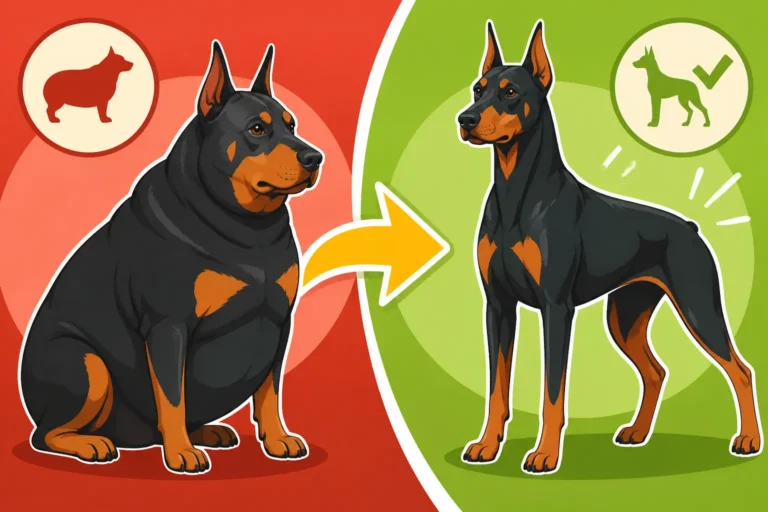
- Ribs Hard to Feel: This is the primary indicator. If you have to press firmly to feel your Doberman’s ribs, or if they feel very padded, they are likely overweight.
- Less Defined Waist and Abdominal Tuck: The distinct hourglass shape from above and the sharp tuck from the side will become less apparent. The body might appear more straight or even a bit barrel-like.
- Reduced Stamina: Your Doberman might seem to tire faster on walks, lag behind, or show less enthusiasm for vigorous exercise. A Doberman That Tires Faster Than It Used To can be an early sign.
- Difficulty with Movement: They might struggle to jump into the car, climb stairs, or seem generally less agile than before. Stiffness after resting is also a red flag.
- Excessive Panting: While Dobermans pant after exertion, excessive panting after minimal activity, or even while resting in a moderate temperature, can be a sign their body is working harder to compensate for extra weight.
- Bulging Fat Pads: Check the base of their tail – an overweight Doberman might develop a small fat pad there.
For Dobermans, being overweight can drastically increase the burden on their cardiovascular system, potentially accelerating the progression of conditions like DCM. It also puts undue stress on their joints, predisposing them to arthritis and other musculoskeletal problems, especially as they enter The Doberman Years When Everything Shows Up. Catching these signs early and making dietary adjustments can significantly improve their quality of life and potentially extend their lifespan.
Practical Steps for Weight Management
Once you’ve identified that your Doberman needs a weight adjustment, whether up or down, the next step is to implement a practical and sustainable plan. Always start with a consultation with your veterinarian. They can rule out any underlying medical conditions and help you determine an appropriate target weight and calorie intake.
For Underweight Dobermans:
- Increase Calories Gradually: Don't suddenly double their food. Introduce more calories slowly over a week or two.
- Choose High-Quality, Calorie-Dense Food: Look for foods with good protein and fat content. Many premium brands offer "performance" or "active dog" formulas. Brands like Ollie provide fresh, human-grade food that can be excellent for controlled weight gain due to its high nutritional value and precise portioning. You can explore a vast range of options on Chewy as well, reading reviews for those focused on healthy weight gain.
- Add Small, Frequent Meals: Instead of two large meals, try three or four smaller meals throughout the day. This can aid digestion and nutrient absorption.
- Healthy Snacks/Toppers: Consider adding small amounts of healthy, calorie-dense toppers like cooked chicken, plain yogurt, or canned pumpkin (not pie filling) to their meals.
- Monitor Progress: Weigh your Doberman weekly and re-assess their BCS every two weeks. Adjust as needed.
For Overweight Dobermans:
- Reduce Calories Slowly: Just like gaining, losing weight should be gradual. A sudden drastic reduction can be detrimental.
- Opt for "Weight Management" or "Light" Formulas: These foods are typically lower in calories but still provide essential nutrients.
- Measure Portions Accurately: This is non-negotiable. Use a measuring cup or, even better, a kitchen scale to ensure you're feeding the exact amount. Remember that How Many Cups an Adult Doberman Eats needs to be precise.
- Increase Exercise: While diet is primary, increasing their activity level can help burn calories and build lean muscle. This could mean longer walks, more vigorous playtime, or even introducing a new sport like Agility With a Doberman's Long Frame.
- Limit Treats: Treats are often calorie bombs. Switch to low-calorie options or use small pieces of their regular kibble as rewards.
- Consistency is Key: Stick to the plan daily. Weekend indulgences can undo a week's worth of effort.
- Stay Hydrated: Ensure constant access to fresh water.
- Consider Supplements: Discuss with your vet if supplements like L-carnitine might be beneficial, especially for Taurine and Carnitine for a Doberman Heart. You can often find vet-recommended supplements on Amazon.
Remember, the goal is not just to reach an ideal weight, but to maintain it. It's a lifestyle change for both you and your Doberman. Slimming a Doberman That Has Thickened is a journey that requires patience and dedication.
Common Pitfalls and Doberman-Specific Considerations
Keeping a Doberman in peak physical condition means understanding their unique needs and anticipating how various factors can influence their weight and overall health. It’s not a one-size-fits-all approach.
The Impact of Exercise Levels on Body Condition
Dobermans are highly active, high-energy dogs. Their natural athleticism and drive mean they require significant daily exercise to stay physically and mentally fit. An adult Doberman involved in activities like Schutzhund, agility, or even just long, brisk daily runs will naturally burn through more calories than a Doberman who only gets short leash walks. This is a crucial factor when assessing their body condition.
An active Doberman might look naturally leaner because they convert calories into muscle and energy rather than storing it as fat. If your Doberman’s exercise routine changes, whether due to an injury, age, or a shift in your own lifestyle, their caloric needs will also change. Continuing to feed an active-dog portion to a less active Doberman will quickly lead to weight gain, while not adequately feeding a highly active Doberman can result in them becoming underweight despite ample food. It's a delicate balance; you need to match their fuel intake to their output. For instance, a Doberman training intensely for Protection Sport With a Doberman will need a more calorie-dense diet than one who spends most of their day as a couch companion. Always observe your dog's energy levels and adjust their food accordingly, ensuring they remain in their ideal body condition.
Age-Related Changes in Body Condition
A Doberman's body condition naturally evolves throughout their life stages. What's ideal for a puppy will be different from an adult, and different again for a senior. Understanding these changes can help you maintain their health at every age.
- Puppyhood and Adolescence: Doberman puppies grow rapidly, and it's essential to monitor their weight without overfeeding, which can stress developing joints. They tend to be gangly and lean during their adolescent growth spurts. It's normal for them to look a bit "leggy" or less filled out before they hit maturity and start adding muscle mass. Doberman Puppies and Their First Heart Check is important from day one.
- Adulthood (2-6 years): This is typically when Dobermans are at their physical peak. They should have excellent muscle tone, a well-defined waist, and a prominent tuck. Their weight should be stable, reflecting their consistent activity levels and diet. This is the period where they truly embody the breed's athletic ideal.
- Maturity (6-8 years): As Dobermans enter their more mature years, their metabolism might begin to slow down slightly, and their activity levels may decrease. This is a critical time to be vigilant about calorie intake. It's easier for them to put on a few extra pounds, which, as we've discussed, can be detrimental to their heart health. This is a crucial period for screening, as it's The Age Doberman Heart Disease Usually Starts.
- Seniority (8+ years): Older Dobermans, particularly past The Nine to Twelve Year Doberman Lifespan mark, often experience muscle atrophy and a further slowdown in metabolism. They might become thinner due to muscle loss, even if their fat reserves remain stable or increase. Conversely, some seniors can gain weight if their activity drops significantly. Nutritional needs change, often requiring highly digestible foods tailored for senior dogs, and supplements for joint health. Screening an Older Doberman More Often is vital, as is careful monitoring of their weight and body condition score.
Regular vet check-ups are paramount, especially as your Doberman ages, to ensure their diet and exercise regimen are appropriate for their current life stage and any emerging health concerns.
Health Conditions That Affect Weight
Sometimes, changes in your Doberman's body condition aren't simply about diet and exercise. Several underlying health conditions can significantly impact their ability to maintain an ideal weight, making a vet visit crucial if you notice sudden or unexplained changes.
One of the most concerning conditions for Dobermans, and one that can influence weight in later stages, is Dilated Cardiomyopathy (DCM). While early stages might not directly affect weight, as the disease progresses and the heart's efficiency declines, a Doberman might start to lose muscle mass or appear generally unwell, even if they're still eating. The Heart Disease That Reaches Most Dobermans is a silent killer, and inexplicable weight loss can be a late-stage symptom.
Another common culprit is Hypothyroidism, an underactive thyroid gland. Dobermans are unfortunately predisposed to this condition. The Thyroid Numbers That Slow a Doberman Down can lead to weight gain despite no increase in food, lethargy, and a dull coat. Conversely, a less common condition called hyperthyroidism (overactive thyroid) could lead to weight loss.
Parasites are a classic cause of weight loss in dogs that are otherwise eating normally. Internal parasites like worms compete for nutrients, leading to a thin appearance and sometimes a distended belly. Regular deworming protocols, as advised by your vet, are essential.
Gastrointestinal issues such as inflammatory bowel disease or malabsorption syndromes can prevent your Doberman from properly digesting and absorbing nutrients, leading to chronic weight loss despite adequate food intake. Dental disease can also make eating painful, leading to a reduced appetite and subsequent weight loss.
Kidney disease or liver disease can also manifest as weight loss, often accompanied by changes in appetite, increased thirst, and lethargy. Copper Liver Disease in Doberman Females is another breed-specific concern that can impact overall health and, indirectly, body condition. Finally, cancer can cause significant, unexplained weight loss, even in its early stages.
If your Doberman is losing or gaining weight rapidly, or if their body condition changes despite no alterations to their diet or exercise, do not hesitate to contact your veterinarian. Early diagnosis and intervention for any of these conditions are critical for your Doberman's health.
Communicating With Your Vet and Others
Navigating the waters of Doberman body condition often involves more than just observation and adjustments at home. It frequently means discussions with your veterinarian and, inevitably, addressing comments from the general public. Being prepared and confident in your knowledge makes all the difference.
Preparing for a Vet Visit: What to Observe and Document
When you’re concerned about your Doberman’s weight or body condition, a vet visit is essential. To make the most of that appointment, it helps to arrive prepared with clear, detailed information. Vets appreciate owners who come with observations and data.
Here’s what you should observe and document:
- Current Food: Be specific. Note the brand, formula (e.g., "adult chicken & rice," "large breed puppy"), and the exact amount you feed per meal and per day in cups or grams.
- Feeding Schedule: How many meals a day? At what times?
- Treats and Chews: Account for all extra calories. How many treats, what kind, and how often? Do they get dental chews, raw bones, or table scraps?
- Exercise Routine: Detail their daily activity. How long are walks? How intense? Do they run, play fetch, or engage in any sports? How many days a week?
- Weight History: If you weigh your Doberman at home (or at the vet/pet store), keep a log of their weight over time.
- Body Condition Score (Your Assessment): Perform your own hands-on and visual BCS assessment using the guidelines above, and be ready to explain what you've observed.
- Changes in Appetite/Thirst: Have they been eating more or less? Drinking more?
- Energy Levels: Any noticeable changes in their usual energy, stamina, or willingness to play?
- Other Symptoms: Note any vomiting, diarrhea, coughing, lameness, or changes in coat quality.
- Photos: Sometimes, taking photos from above and the side can be helpful, especially if their appearance changes between your observation and the vet appointment.
Presenting this organized information will give your vet a comprehensive picture, helping them to quickly pinpoint potential issues and recommend the most appropriate course of action, whether it's a dietary change, further diagnostic tests like The Blood Test That Flags a Doberman Heart, or a specialist referral.
Educating Family and Friends
Dealing with well-intentioned but misinformed comments about your Doberman's weight can be emotionally draining. It's a common struggle for owners of lean, athletic breeds. While it's tempting to get defensive, a calm, educational approach is often more effective.
Here are some tips for addressing concerns from others:
- Validate Their Concern (Briefly): Start by acknowledging their intent. "I appreciate your concern, he does look very lean, doesn't he?" This disarms them slightly.
- Educate Gently: Explain that Dobermans are a specific breed known for their athletic, lean build, and that what looks "thin" on another dog is actually their healthy, ideal weight. "Dobermans are a working breed; they're meant to be very lean with a lot of muscle, not much fat. You should actually be able to see the last few ribs and feel their hip bones easily." You can also mention The Doberman the AKC Standard Describes includes a very lean, athletic build.
- Focus on Health: Emphasize that their current condition is what their veterinarian recommends for optimal health, especially concerning their joints and heart. "Our vet says his weight is perfect for his breed and keeps him healthier in the long run, especially with how active he is."
- Offer a Comparison (if appropriate): You might compare their build to a human athlete versus a powerlifter – both strong, but with different body compositions.
- Change the Subject: Once you've provided the information, redirect the conversation. "So, how about those Yankees?"
- Don't Over-Explain: You don't need to give a full lecture. A concise explanation is usually sufficient. Some people might not be receptive, and that's okay. You've done your part.
By calmly and confidently explaining the nuances of Doberman body condition, you not only protect yourself from unnecessary worry but also help to spread accurate information about this magnificent breed.
Body Condition Score (BCS) Guidelines for Dobermans
| Score | Description | Visual Cues | Palpation Cues | Doberman Specific Notes |
|---|---|---|---|---|
| 1 | Emaciated | Ribs, spine, pelvis, and all bony prominences visible from a distance. No discernible body fat. Obvious loss of muscle mass. | Ribs, spine, pelvis, prominent and easily felt with no fat/muscle covering. | Severe underweight. All bones sharply visible and palpable. Muscle wasting. Urgent vet attention needed. |
| 2 | Very Underweight | Ribs, spine, pelvis easily visible. No discernible body fat. Some loss of muscle mass. | Ribs, spine, pelvis easily felt with minimal fat/muscle covering. | Underweight. More bones visible than ideal, but less extreme. Often accompanies illness or extreme activity. |
| 3 | Underweight | Ribs easily visible. Top of lumbar vertebrae visible. Pelvic bones becoming more prominent. Obvious waist and abdominal tuck. | Ribs easily palpable with minimal fat covering. Spinous processes easily palpable. | Borderline too thin. Might see 3-4 ribs from a distance, hip bones too prominent. |
| 4 | Ideal (Lean) | Ribs easily palpable with minimal fat covering. Waist easily noted when viewed from above. Abdominal tuck apparent. Last 2-3 ribs may be visible. | Ribs easily felt. Spinous processes easily palpable. | Excellent. Last 2-3 ribs often subtly visible. Distinct waist and tuck. |
| 5 | Ideal | Ribs palpable without excess fat covering. Waist noted when viewed from above. Abdominal tuck apparent. | Ribs palpable. Top of spine felt with slight pressure. | Good. Ribs felt with light pressure. Waist and tuck present. |
| 6 | Overweight | Ribs palpable with slight excess fat covering. Waist discernable but not prominent. Abdominal tuck may be diminished. | Ribs palpable with difficulty. Slight fat deposits over lumbar area. | Slightly heavy. Ribs harder to feel. Waist starting to disappear. Slight tummy bulge. |
| 7 | Heavy | Ribs palpable with difficulty. Heavy fat deposits over lumbar area and base of tail. Waist absent or barely visible. No abdominal tuck. | Ribs palpable with significant pressure. Heavy fat deposits. | Overweight. Ribs difficult to feel. Noticeable fat over hips and tail base. No waist. |
| 8 | Obese | Ribs not palpable without significant pressure. Heavy fat deposits over chest, spine, and base of tail. Abdominal distention. | Ribs not palpable. Extensive fat deposits. | Significantly overweight. Very rounded appearance. |
| 9 | Grossly Obese | Massive fat deposits over chest, spine, neck, limbs, and tail base. Abdominal distention. | Massive fat deposits everywhere. | Extreme obesity. Impaired mobility, breathing. Serious health risks. Vet intervention. |
Disclaimer
This article is for general informational purposes only and does not constitute professional advice. Laws, prices and regulations vary by location and change over time. Consult a qualified professional for guidance on your specific situation.